Health & WellnessS


Ambulance

New Drug-resistant Superbugs Found in 3 States

Image
© AFP/HO/FileSerious public health risks due to a lack of new antibiotics at a time of rising antibiotic-resistant "superbugs" will be the main focus of a top microbiology conference in Boston that starts Sunday.
Boston - An infectious-disease nightmare is unfolding: Bacteria that have been made resistant to nearly all antibiotics by an alarming new gene have sickened people in three states and are popping up all over the world, health officials reported Monday.

The U.S. cases and two others in Canada all involve people who had recently received medical care in India, where the problem is widespread. A British medical journal revealed the risk last month in an article describing dozens of cases in Britain in people who had gone to India for medical procedures.

How many deaths the gene may have caused is unknown; there is no central tracking of such cases. So far, the gene has mostly been found in bacteria that cause gut or urinary infections.

Pills

Researchers: Sleeping Pills are Not 'Candy' and May Increase Risk of Death

Image
© GettySleeping pills are not candy and might increase the risk of dying by a third, research has warned.
Research has found that people taking the drugs are at least a third more likely to die during the 13-year study than those not on them.

One suggested reason for the effect is that sleeping pills and anti-anxiety drugs affect people's response times, alertness, and co-ordination.

Magic Wand

Making Meditation Accessible

Image
© unknown
Meditation looks like the simplest thing in the world. After all, what could be easier than sitting on a cushion and doing nothing? For many who try meditation the simple answer is: anything. Why? Because when people begin to meditate and park themselves on their meditation cushions, their brains often hit Mach 5. They're often unable to stop from thinking about every little worry in their lives. In my early years of meditation, I would frequently rise from my cushion with a fresh to-do list. I was reminded of this recently when a group of yogis who hadn't had much luck in adult meditation classes asked if I could give their kids lessons for 40 days. I agreed, and now the yogis, along with a couple hundred people in our mindfulness together online community, are practicing mindfulness four minutes a day twice a day for 40 days.

Comment: For more information about an easy to use approach to Meditation check out the Eiriu Eolas Stress Control, Healing and Rejuvenation Program here.


Info

Study finds that sorghum bran has more antioxidants than blueberries, pomegranates

A new University of Georgia study has found that select varieties of sorghum bran have greater antioxidant and anti-inflammatory properties than well-known foods such as blueberries and pomegranates.

Researchers measured polyphenolic compounds, which naturally occur in plants to help fight against pests and disease, and found that the black and sumac varieties of sorghum have significant levels of antioxidants. Many fruits also contain these compounds, they said, though sorghum bran may prove to be the richest and cheapest source.

Cow

I Was Wrong About Veganism. Let Them Eat Meat - But Farm It Properly

The ethical case against eating animal produce once seemed clear. But a new book is an abattoir for dodgy arguments

This will not be an easy column to write. I am about to put down 1,200 words in support of a book that starts by attacking me and often returns to this sport. But it has persuaded me that I was wrong. More to the point, it has opened my eyes to some fascinating complexities in what seemed to be a black and white case.

In the Guardian in 2002 I discussed the sharp rise in the number of the world's livestock, and the connection between their consumption of grain and human malnutrition. After reviewing the figures, I concluded that veganism "is the only ethical response to what is arguably the world's most urgent social justice issue". I still believe that the diversion of ever wider tracts of arable land from feeding people to feeding livestock is iniquitous and grotesque. So does the book I'm about to discuss. I no longer believe that the only ethical response is to stop eating meat.

In "Meat: A Benign Extravagance," Simon Fairlie pays handsome tribute to vegans for opening up the debate. He then subjects their case to the first treatment I've read that is both objective and forensic. His book is an abattoir for misleading claims and dodgy figures, on both sides of the argument.

Arrow Up

The Cure for the American Diet: Nutrient Density

Image
© unknown
The American diet causes disease. It is composed of 25 percent animal products and 62 percent processed foods and only 5 percent of calories from fruits and vegetables.(1) We could not have designed a more effective cancer-causing, heart-attack-causing diet if we had scientifically planned it. Our nation's food choices have produced a population with widespread chronic illness and health care costs spiraling out of control. You cannot escape from the biological law of cause and effect - food choices are the most significant cause of disease and premature death. We cannot win the war on these diseases by putting more money into medical interventions or drugs. We must unleash the disease-fighting artillery in our own kitchens.

The key to excellent health and longevity is to eat a high ratio of micronutrients to macronutrients. Macronutrients contain calories - fat, carbohydrate and protein - thereby supplying us with energy. Micronutrients - vitamins, minerals, and phytochemicals - don't contain calories, but have other essential roles. Thousands of these compounds work synergistically to detoxify carcinogens, deactivate free radicals, enable DNA repair, and maintain immune defenses. Lack of phytochemicals due to a low-micronutrient diet has an inevitable consequence: chronic disease. Low-nutrient foods also stimulate overeating. Low-nutrient, high-calorie food is known to be physiologically addictive, having effects on the brain similar to those of illegal drugs.(2) Dieting by portion control doesn't work because one is constantly fighting addictive drives. However, the drive to over-consume calories is blunted by high-micronutrient food.

Health

Inflammation Is Associated With Lower Intelligence and Premature Death

Inflammation is associated with lower intelligence and premature death, according to Swedish scientists from the Karolinska Institute in Stockholm, Sweden. "Those with low-grade inflammation performed more poorly on standardised intelligence tests, even after excluding those with signs of current illness. Inflammation also predicted an increased risk of premature death," said lead researcher Dr Hakan Karlsson.

The research, recently published in Brain, Behavior and Immunity, used large population-based registers containing data collected over several decades. Inflammation and intelligence were measured at 18-20 years of age in nearly 50,000 young men, and deaths over the following 35 years were recorded.

"Although we knew that inflammation associated with infection or cardiovascular disease could impair brain function, this is the first time that similar associations have been shown in healthy young people," said Dr Karlsson. "This suggests that even low levels of inflammation can have detrimental consequences for health and brain function," he added.

Attention

Ten Reasons to Reject a Suspicious Fish

Image
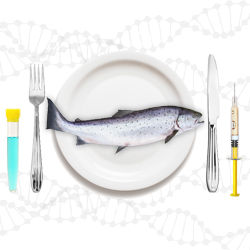
The FDA is close to approving genetically engineered salmon for our plates, but here are ten reasons to stop them.
The FDA is uncomfortably close to approving AquaBounty's AquAdvantage® GE salmon for our kitchen tables, and they are trying to move the process along rather quickly. While the agency is downplaying the potential dangers of bringing GE salmon to market, there are legitimate concerns that every consumer should consider. Proponents of genetically modified food might attempt to distract consumers by making false claims and empty reassurances. Here are ten reasons why the FDA should stop the application process to approve GE salmon for human consumption.

Bulb

More than a Feeling: Prescribing Music to Alter Moods

Image
© Scott Adelson
I've just discovered this satellite radio channel called 1st Wave. It plays alternative '80s rock that's mined right out of my undergrad years. The Cure, REM, The Smiths, Pretenders, The Clash. I guess it's kind of like my oldies station. (Guh. I can't believe I even have an oldies station.) I drive around listening to this stuff and the memories pour in. Not just where or when I heard a song (read: what party, with whom and how wasted), but deeply visceral sensations, echoes of entire swaths of time and their accompanying gestalts - i.e., that summer of love or that winter of discontent. It's about memories, yes, but it's more than that. These songs actually reproduce a mood. It's an odd sensation that I've chalked up to some kind of clinical nostalgia.

But maybe not. My editor just sent me this story from the BBC: "Study to develop 'musical prescriptions' for patients."

Turns out these scientists at Glasgow Caledonian University are using a "mixture of psychology and audio engineering" to see how music can elicit specific responses. The plan is to analyze everything from tone, to pitch, to lyrics and even "associated thoughts" to accurately chart listeners responses and perhaps one day create music regimens that can take care of emotional needs. The potential here is to write music prescriptions to "help those suffering physical pain or conditions like depression."

Bell

Most Americans Still Not Eating Enough Fruits, Veggies

Image
© aicrblog.org
In 2000, the U.S. government set modest goals for the amount of fruit and vegetables people should eat, but a decade later the majority of Americans are not even close to reaching those thresholds, health officials said Thursday.

In fact, according to the U.S. Centers for Disease Control and Prevention, in 2009, 67.5 percent of adults ate fruit less than two times daily and 73.7 percent ate vegetables less than three times per day. The goals of Healthy People 2010 were for 75 percent of people to eat at least two servings of fruit and 50 percent to eat at least three servings of vegetables every day.

"Over the last decade we have looked at behavioral intervention, like counseling to get people to include their fruits and vegetables," said report co-author Dr. Jennifer Foltz, a researcher in the CDC's National Center for Chronic Disease Prevention and Health Promotion. "But it's not so easy."