Health & WellnessS


Info

Reefer Madness: Marijuana Throws Brain Regions Out of Sync

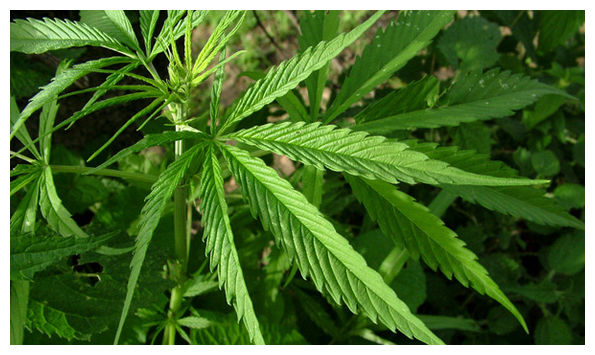
Marijuana Leaf
© Live Science

Marijuana hurts memory and cognition, and a new rat study indicates this is because it causes once-coordinated brain regions to fall out of sync with each other. The result resembles the effects of schizophrenia, the neuroscientists found.

The researchers measured the electrical activity in nerve cells of rats given a drug that mimics the effect of the psychoactive ingredient in marijuana, called tetrahydrocannabinol (THC). The drug had only subtle effects on individual brain regions; however, it disrupted the coordinated activity between regions of the brain.

Specifically, they found the drug disrupted the coordinated fluctuations in electrical activity - called brain waves - across the hippocampus and prefrontal cortex. The result resembled two instruments within an orchestra playing out of sync.

A lack of synchronization between the hippocampus and the prefrontal cortex - areas of the brain associated with memory and decision-making - is also associated with schizophrenia.

Cheeseburger

The Myth of the Ethical 'Vegan'

Image
Ethical vegans allow themselves a pretense of moral and ethical superiority with no real effort.

Veganism dates back to 1944, when British Vegan Society co-founder Donald Watson coined the term to mean "non-dairy vegetarian." The Society expanded the definition in 1951 to state that "man should live without exploiting animals." Vegans eschew animal products in food, clothing, household products, or for any other reason.

There are a variety of reasons why people "go vegan." Some simply don't like the taste of meat. Some claim veganism is "green," and that a vegan lifestyle minimizes impact on the environment.

In 1997, a survey revealed three percent of the people in the U.S. claimed that they had not used animals for any purpose in the previous two years. Rutgers School of Law professor Gary Francione argued in 2010 that "all sentient beings should have at least one right - the right not to be treated as property."

Do ethical vegans live up to this stated standard? Do their actions live up to their own stated ethical principle, that animals have the right not to be treated as property? Do their actions really result in zero animal use? The parallel in human terms would be slavery, which no rational person thinks is ethically acceptable. Slaves are the property of masters; they live and die at their owner's sufferance.

Unfortunately for the ethical vegan, the production of their food alone reduces their claim to impossibility. Animals are killed in untold millions, in the course of plant agriculture. Some are killed accidentally in the course of mechanized farming; some are killed deliberately in the course of pest control. Animals are killed, every day. Every potato, every stick of celery, every cup of rice, and every carrot has a blood trail leading from field to plate.

Comment: For more information on the health hazards of vegan/vegetarian diets and the myth of their sustainability, see Lierre Keith on 'The Vegetarian Myth - Food, Justice and Sustainability'


Cookie

Worst Food Additive Ever? It's in Half of All Foods We Eat and Its Production Destroys Rainforests and Enslaves Children

Palm oil plantation
© n/aPalm oil plantation
The production of this ingredient causes jaw-dropping amounts of deforestation (and with it, carbon emissions) and human rights abuses.

On August 10, police and security for the massive palm oil corporation Wilmar International (of which Archer Daniels Midland is the second largest shareholder) stormed a small, indigenous village on the Indonesian island of Sumatra. They came with bulldozers and guns, destroying up to 70 homes, evicting 82 families, and arresting 18 people. Then they blockaded the village, keeping the villagers in -- and journalists out. (Wilmar claims it has done no wrong.)

The village, Suku Anak Dalam, was home to an indigenous group that observes their own traditional system of land rights on their ancestral land and, thus, lacks official legal titles to the land. This is common among indigenous peoples around the world -- so common, in fact, that it is protected by the United Nations Declaration on the Rights of Indigenous Peoples.

Indonesia, for the record, voted in favor of the Declaration on the Rights of Indigenous Peoples in 2007. Yet the government routinely sells indigenous peoples' ancestral land to corporations. Often the land sold is Indonesia's lowland rainforest, a biologically rich area home to endangered species like the orangutan, Asian elephant, Sumatran rhinoceros, Sumatran tiger, and the plant Rafflesia arnoldii, which produces the world's largest flower.

Cheeseburger

Pesticides Are Good for You: Big Food's Co-optation of Nutrition Professionals

Coke expo
© Michele Simon
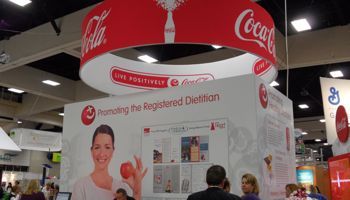
For years now, I have been hearing about the food industry's influence on the annual conference of the American Dietetic Association -- the nation's largest gathering of nutrition professionals--with some 7,000 registered dietitians in attendance. Last month, I witnessed it for myself and discovered the corporate takeover by Big Food was worse than I even imagined.

The top-paying sponsors, whom ADA called "partners," were Coca-Cola, Aramark, the National Dairy Council, and Hershey (their "Center for Health and Nutrition" - really). "Premier sponsors" included PepsiCo, Mars, and General Mills.

The exhibit hall seemed more like a processed food trade show than a nutrition conference. I saw very few booths with actual information, apart from that being peddled by the likes of Nestle, Kraft, and McDonald's, along with (of course), ubiquitous product samples, tastings, and myriad swag. (Oddly, Monsanto's booth featured its branded, soy-based lip balm.)

But the worst cooptation came during the "educational sessions," which should have been off limits to marketing. Numerous panels were hosted by industry players, including, "Dairy Innovations," brought to you by (surprise!) the National Dairy Council, which also hosted a media-only session, as did others.

Magic Wand

Best of the Web: Can Humans Live Longer? Vitamin C - The Missing Anti-Aging Hormone

Vitamin C
© cancer.maxawareness.com
Can humans really do anything to prolong life? A recent article by Christopher Wanjek in the Washington Post said "Humans can reap no such benefits from the continuing flood of anti-aging potions and precepts, which are at best naively optimistic and at worst fraudulent and harmful. Wanjeck goes on to say that "every book, powder or pill that promises a fountain of youth..... is just plain wrong."

"There is no intervention that has been proven to slow, stop or reverse aging. Period," says Leonard Hayflick, professor of anatomy at the University of California, San Francisco, a leader in the study of aging. Even New Age physician Deepak Chopra chimed in by saying legitimate anti-aging remedies can only keep a person from dying young, but they don't increase the life span.1

Human growth hormone, widely extolled on radio infomercials across America for its anti-aging properties, may produce side effects including the elevation of growth hormones that trigger the growth of tumors. Growth hormone is more appropriate for very old adults who have lost muscle mass and can't get up out of a chair any longer, not for middle-aged adults fighting the first signs of aging.2

So is there anything that adults can do to lengthen the human life span? Scientists want you to wait (as if everybody has the time) for gene therapy. The latest breakthrough is the so-called Methuselah gene, a portion of DNA that confers healthy old age to those who carry its active form.3 But don't wait around for genetics to prolong life. Gene therapy has yet to cure any disease, is likely to be too costly for the average person to afford and is more likely to be inserted in new genes in the offspring of the next generation.

Why wait for an antioxidant breakthrough?

Thomas Johnson at the University of Colorado-Boulder, is looking in another direction. Johnson found that by tweaking a certain gene in roundworms he could create a super antioxidant gene that would double the worm's life span.4

But while researchers conduct their antioxidant studies on roundworms, what can we do? Actually youth seekers need look no further than the vitamin shelf at local stores for a well substantiated. anti-aging compound - vitamin C. While researchers attempt to make careers out of their research and thus delay any conclusions indefinitely, vitamin C may be the anti-aging miracle humanity can begin to use today. The story is not new, it's just not been widely told.

Comment: In a paleo-diet, you can get all vitamins and minerals from organ meats and animal sources. In fact, you get what your body really needs from eating meats to an even greater extent than when eating veggies, including the most crucial vitamins. Except perhaps for vitamin C. To be precise, there is a very small amount of vitamin C in animal foods. But perhaps that is really enough? See the following:
Vitamin C is needed to hydroxylate the amino acids lysine and proline into hydroxylysine and hydroxyproline- connective tissue. That is why scurvy is characterized by a degeneration of connective tissue. However, unknown to most, red meat already contains hydroxylysine and hydroxyproline which is absorbed into the bloodstream when eaten. Thus, less vitamin C is needed to hydroxylate proline and lysine, because they are already present in the blood in the hydroxylated state.

However, one might ask about the role vitamin C plays in antioxidant function. Sure, a purely carnivorous diet will prevent scurvy, but will it replace the other biochemical functions of vitamin C? While those who regularly consume liver and brains do not need to concern themselves too much here, what about those carnivores who consume primarily muscle meat and eggs? Sure, they may be free from scurvy, but are there some other unseen health effects, such as excessive free radical damage from lack of vitamin C?

First of all, a ketogenic metabolism produces less free radicals than a carbohydrate-burning metabolism. Secondly, there are numerous other substances, endogenous and dietary, that act as antioxidants present on a purely carnivorous diet. But what if this is insufficient? Should meat and eggers be worried?

Fortunately, the answer no. And the answer may lie in uric acid.

Uric acid is derived from purines in meat. They are the final metabolic end-product of purine compounds. This is because the genes encoding for the production of the enzyme uricase, needed to break down uric acid, have been absent from primate DNA for millions of years.

The thing that makes ascorbate as a molecule useful is the property of being a strong electron donor. Uric acid is also a strong electron donor (1). In fact, it may even be a better electron donor than vitamin C (2). Because of this, uric acid is a powerful antioxidant, similar to vitamin C. Thus, it follows that the loss of the enzyme uricase and the consequent increase in blood levels of uric acid in primates has probably provided a substitute for ascorbate in certain biochemical functions, including antioxidant activity.

Since meat is rich in purines, uric acid is inevitably abundant in the bloodstream of someone who consumes a large amount of muscle meat and organ products. Conclusion: Even if a human carnivore does not consume vitamin C-containing animal products, a purely carnivorous diet is still sufficient to produce the biochemical functions that vitamin C is normally responsible for.
This seems to be the case:
In humans and higher primates, uric acid is the final oxidation (breakdown) product of purine metabolism and is excreted in urine. In most other mammals, the enzyme uricase further oxidizes uric acid to allantoin.[8] The loss of uricase in higher primates parallels the similar loss of the ability to synthesize ascorbic acid, leading to the suggestion that urate may partially substitute for ascorbate in such species.[9] Both uric acid and ascorbic acid are strong reducing agents (electron donors) and potent antioxidants. In humans, over half the antioxidant capacity of blood plasma comes from uric acid.[10] The Dalmatian dog has a genetic defect in uric acid uptake by the liver and kidneys, resulting in decreased conversion to allantoin, so this breed excretes uric acid, and not allantoin, in the urine.[11]
Uric acid is created when the body breaks down purine nucleotides. Purines are found in high concentration in meat and meat products, especially internal organs such as liver and kidney.

In addition to that, vitamin C uses the same receptors as glucose to enter the cell membrane. So if we have eaten a lot of simple sugars, as in sweets, cool drink, but also complex carbohydrates which are broken down to glucose after being digested, less Vitamin C can be absorbed because the receptors are already in use.

So it seems that a mutation happened to those who were already eating meat, especially organ meats. With a meat diet, you will receive much more nutrients than you will ever get from eating fruit. Indeed, one actually needs LESS Vitamin C on a meat/fat diet.

Beaker

Girls' Behavior Problems Linked to Prenatal Bisphenol A Exposure

Image
© fisita Angry girl
Exposure in the womb to bisphenol A, a chemical used to make plastic containers and to line cans of food, is associated with behavior and emotional problems in young girls, new research has shown for the first time.

The study was led by researchers at Harvard School of Public Health, Cincinnati Children's Hospital and Medical Center, and Simon Fraser University in Vancouver, British Columbia.

BPA is found in many consumer products, including canned food linings, polycarbonate plastics, dental sealants, and some cash register receipts made from thermal paper.

Most people living in industrialized nations are exposed to BPA. The chemical has been shown to interfere with normal development in animals and has been linked with cardiovascular disease and diabetes in people.

Attention

10 Reasons Why Flu Shots Are More Dangerous than A Flu

Image
© setyoufreenews.com
The verdict is out on flu shots. Many medical experts now agree it is more important to protect yourself and your family from the flu vaccine than the flu itself. Let's take a look at the reasons behind this verdict:

1.) There is a total lack of real evidence that young children even benefit from flu shots. A systematic review of 51 studies involving 260,000 children age 6 to 23 months found no evidence that the flu vaccine is any more effective than a placebo. Also the shots are only able to protect against certain strains of the virus, which means that if you come into contact with a different strain of virus you will still get the flu.

2.) Medical journals have published thousands of articles revealing that injecting vaccines can actually lead to serious health problems including harmful immunological responses and a host of other infections. This further increases the body's susceptibility to the diseases that the vaccine was supposed to protect against.

3.) Ever noticed how vaccinated children within days or few weeks develop runny noses, pneumonia, ear infections and bronchiolitis? The reason is the flu virus introduced in their bodies which creates these symptoms. It also indicates immuno-suppression i.e. lowering of the immunity. The flu vaccines actually do not immunize but sensitize the body against the virus.

4.) Its a known fact that Flu vaccines contain strains of the flu virus along with other ingredients. Now think about the impact such a vaccine can have over someone with a suppressed immune system? If you have a disease that is already lowering your body's ability to fight a virus, taking the flu shot will put your body in danger of getting the full effects of the flu and make you more susceptible to pneumonia and other contagious diseases.

5.) The Flu vaccines contain mercury, a heavy metal known to be hazardous for human health. The amount of mercury contained in a multi-dose flu shot is much higher than the maximum allowable daily exposure limit. Mercury toxicity can cause memory loss, depression, ADD, oral health problems, digestive imbalances, respiratory problems, cardiovascular diseases and many more such serious health ailments.

Health

Does Soda Cause Violence?

Soft Drink
© CorbisIs the soft drink grocery store aisle a potential hazard for teens?

Teenagers who drink lots of soft drinks get into more fights and carry more weapons than their peers who drink less, found a new study.

And while the study couldn't determine whether soft drinks actually cause violence, the findings add to a growing -- yet still controversial -- body of research on the effects of nutrition on behavior.

"We were surprised at how large the effect was," said David Hemenway, director of the Harvard School of Public Health's Injury Control Research Center in Boston.

"It was maintained even when we controlled for alcohol and tobacco and family stuff like eating dinners together," he said. "There was a very strong, stable relationship between more soft drinks that people said they drank and more fights with things like pushing and shoving."

There has long been interest in how diet affects behavior, not just among scientists, but also among legal experts. In a notorious 1979 San Francisco murder trial, lawyers blamed the killer's actions on his recent switch from a health-food diet to one filled with Coca-Cola and other junk food.

Their argument worked. Instead of a homicide ruling, the defendant was convicted of a lesser offense of voluntary manslaughter. The legal strategy became known as the "Twinkie Defense," and the precedent raised a number of questions that persist, despite years of research on the subject.

Bomb

The Cancer Time Bomb Sitting in Your Refrigerator - Will You Stop Consuming It?


Story Highlights
  • rBGH is the largest selling dairy animal drug in America. But it is banned in Canada, Japan, Australia, New Zealand, and in the 27 countries of the European Union because of its dangers to human health
  • IGF-1 in rBGH is common in non-organic milk and increases your risk for breast cancer by promoting conversion of normal breast tissue cells into cancerous ones
  • Non organic dairy farms frequently have RBGH-injected cows that suffer at least 16 different adverse health conditions, including very high rates of mastitis that contaminate milk with pus and antibiotics
  • Those who have attempted to expose the truth about the health dangers of rBGH in milk have been threatened with "dire consequences" by Monsanto's lawyers
  • The best way to avoid rBGH is to drink only raw milk from a small dairy farmer you know and trust or is certified organic, which prohibits the use of rBGH

Cheeseburger

The Steve Jobs Diet, Dr. Dean Ornish, and Vegetarian Cancer

Steve Jobs
© Unknown
I hesitated to even write this post. I do not want to capitalize on the death of a visionary man like Steve Jobs, but I do want to let it help as many people as it can. Last week in New York, I met with an old friend and entrepreneur who just signed his company's first billion-dollar deal. He explained why Steve Job's death hit seems personal to so many of us.

He explained, "Steve Jobs was only 56. As a tech 'superhero' with all the money in the world, he couldn't beat the cancer. It makes me feel more mortal. How much more time do I have? I need to do more to make a difference." But is it really true that Steve "couldn't" beat the cancer? Or did Steve make some well-intentioned lifestyle choices that made it really hard to cure his cancer?

Most media reports state that Jobs used a "special diet" for almost a year before going for Western medicine approaches, but it's almost impossible to figure out what that diet was. After a couple hours of research, it appears that Steve Jobs was using the Dr. Dean Ornish Cancer Diet, which is almost a mirror image of the Bulletproof Diet. In case you haven't heard of him, Dean Ornish, MD, author of Eat More, Weigh Less is one of the leaders of a small group of radical physicians who tout incredibly low fat diets with strict avoidance of (healthy) saturated fats as the path to health, despite years of research showing how misguided that is. (See Gary Taubes epic work Good Calories Bad Calories or any competent body building coach for more info...)