Health & WellnessS


Health

Magnificent Magnesium: The Neglected Mineral We Cannot Live Without

Image
© magnesiumrichfoods.com
Magnesium is an alkaline earth metal, the eighth most abundant mineral found in the earth's crust. Because of its ready solubility in water, magnesium is the third most abundant mineral in sea water, after sodium and chloride. In the human body, magnesium is the eleventh most plentiful element by mass - measuring about two ounces. Most magnesium contained in the body is found in the skeleton and teeth - at least 60 to 65 percent of the total. Nearly the entire remaining amount resides in muscle tissues and cells, while only one percent is contained in our blood.

The importance of magnesium ions for all life itself, as well as for overall vibrant health, is hard to overstate. Magnesium is required to give the "spark of life" to metabolic functions involving the creation of energy and its transport (ATP, the body's fundamental energy currency), and the creation of proteins - the nucleic acid chemistry of life - RNA and DNA, in all known living organisms. In plants, a magnesium ion is found at the center of every chlorophyll molecule, vital for the creation of energy from sunlight. Magnesium is an essential element for both animals and plants, involved in literally hundreds of enzymatic reactions affecting virtually all aspects of life.

Pills

Medical mafia in Australia to force parents to medicate ADHD children

ADHD medication
The typical treatment recommendation for children diagnosed with psychiatric or mental health conditions such as bipolar disorder or attention deficit hyperactivity disorder (ADHD) includes a combination of behavior and drug therapies. Such treatments are legally optional, but the Australian government's National Health and Medical Research Council (NHMRC) is actually considering mandating that parents of diagnosed children accept the prescribed drug treatments or else face the wrath of child protective services.

Australia's Sky News reports that authorities originally crafted the proposed measure as a guidance for doctors in how to treat children with such conditions, writing in a draft paper that "combined behavoural-pharmacological treatment is most effective" for normalizing child behavior. In the process, these authorities are essentially pushing a draconian form of medical tyranny that will eliminate health freedom of choice, and force parents to take the drug route with their children.

Light Saber

Saving Nutritional Supplements: A Battle For Nature, Truth, and Life Itself

Image
© foodfreedom.wordpress.com
We know how hard people are fighting now to save the economy, to stop the wars, to prevent more nuclear power plants, mountain top mining, fracking, and more drilling, to stop genetic engineering, and incredibly importantly - save our farmers and ranchers.

But what is happening to supplements is little noticed but is of ultimate importance. The battle to save supplements is a battle to save nature and the accumulated wisdom of thousands of years of using it to heal.

All the issues listed above involve fighting the original robber barons - the Rockefellers who got rich in oil, banking, steel, ... but then they went into pharmaceuticals, following, it seems in the footsteps of John D Rockefeller's father.

Health

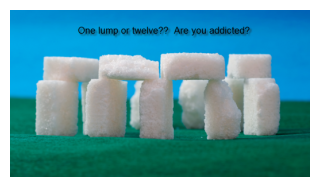
Sugar Addiction Quiz?

Sugar Cubes
© Gluten Free Society
This week I thought I would focus on sugar because we are in the middle of the holiday season and the problem becomes much more pronounced socially due to parties, family visits, eating out, etc. We all know that gluten in a major problem in our diets, but most people accept sugar without thinking of it's detrimental properties. A little sugar here, a little there...before you know it you are sick and incorrectly blaming the aging process, not the food.

Take the quiz here.

Most people like sugar, but can you actually be addicted to it? There is a big difference between someone who eats sugar every once in a while compared to someone who eats it constantly, craves it voraciously, and lets it impact their health to the point of feeling physically and emotionally sick. You may or may not be addicted to sugar - read on to decide for yourself...

So to answer the question, "Can you really be addicted to sugar?" You bet you can! It's not an addiction that is talked about much yet, because it's so socially acceptable. My friend, who is known as the Sugar Addiction Specialist, Samantha Taylor says, "It's when that white substance starts to be something you don't want to live without; starts to affect your health negatively and you don't know how to get yourself to stop eating it - that, my Friend, is when there is a problem."

Yes, that is hard question to ask, "Could I possibly be addicted to sugar?" I know that many who love sugar don't really ask themselves that question yet when they do ask it and they honestly look at their life, they usually say, "Oh my gosh, I think I am addicted to sugar!" It can be a rather shocking moment because you always knew something was 'off' but you surely didn't connect that you were addicted to sugar, I mean, come on...it's only sugar, right?

Laptop

New Research: Laptops Harm Fertility

Laptop
© GreenMedInfo.com

Technologies like laptops, while freeing us from the altar-like monolith of the traditional desktop, may have unique adverse effects to the human body. After all, they are lap tops -- ​beneath which are situated our reproductive organs and glands.

I confess that for many years I have secretly cringed at the thought of what the electromagnetic radiation issuing from this device is doing to my capability to reproduce, and the quality of my future progeny -- which is why I always positioned the device away from my groin. It is for this reason that the new study published in The Journal of Fertility and Sterility showing Wi-Fi radiation from laptops damages sperm, comes at no surprise.

In the first study of its kind, researchers exposed human sperm to internet-connected laptop by Wi-Fi for 4 hours, resulting in "a significant decrease in progressive sperm motility and an increase in sperm DNA fragmentation." The reseachers concluded:
"To our knowledge, this is the first study to evaluate the direct impact of laptop use on human spermatozoa. Ex vivo exposure of human spermatozoa to a wireless internet-connected laptop decreased motility and induced DNA fragmentation by a nonthermal effect. We speculate that keeping a laptop connected wirelessly to the internet on the lap near the testes may result in decreased male fertility. Further in vitro and in vivo studies are needed to prove this contention."
[Entire Abstract]

Laptop

Laptop Wi-Fi Said to Nuke Sperm, but Caveats Abound

Image
© unknown
The digital age has left men's nether parts in a squeeze, if you believe the latest science on semen, laptops and wireless connections.

In a report in the venerable medical journal Fertility and Sterility, Argentinian scientists describe how they got semen samples from 29 healthy men, placed a few drops under a laptop connected to the Internet via Wi-Fi and then hit download.

Four hours later, the semen was, eh, well-done.

A quarter of the sperm were no longer swimming around, for instance, compared to just 14 percent from semen samples stored at the same temperature away from the computer.

And nine percent of the sperm showed DNA damage, three-fold more than the comparison samples.

The culprit? Electromagnetic radiation generated during wireless communication, say Conrado Avendano of Nascentis Medicina Reproductiva in Cordoba and colleagues.

Info

5 Surprising Culprits Behind Obesity and Weight Gain

Image
© newscenter.lbl.gov
There is no doubt that the Western diet holds most of the weight regarding the escalating obesity epidemic we are facing today.

Ingesting overly large portions of foods containing fat-promoting ingredients coupled with an inactive lifestyle is the perfect recipe for a gigantic disaster.

While these obesity contributors are widely known, there are actually some other very surprising factors to consider when analyzing the reason for the nation's continued growth.

Pills

Pay Attention: The Great American Adderall Drought

Image
© ThinkstockThe ADD drug deficit is blowing minds nationwide.
A widespread shortage of the popular ADD pill is distracting a nation of Adderall users. Naturally, it's all about Big Pharma profits.

When Jay V.'s pharmacist told him about the nationwide Adderall shortages last weekend, he reacted as any economically rational finance professional would, and attempted to bribe her. Whatever the cost, "it's cheaper than cocaine," his reasoning went. And even if it isn't, you can't put a price on never having to go back to doing bumps in the work bathroom to get through late night deal committee meetings, can you?

Jay's pharmacist said she was reserving her supply for regular customers, but that the price had doubled and the clock was ticking. "They're down to one bottle," Jay said, "and if I don't get them a prescription by the end of next week I forfeit my right to it." So long as he can tear himself away from one of the 16-hour days he cites as the reason he needs Adderall to begin with, he'll be fine. At least, for the next month or so....

Health

Addicted to Sugar?

evil sugar diabetes
© UnknownSugar is highly addictive drug that create cravings, tolerance and withdrawal symptoms.
Tis The Season to Gorge on Sugar?

How did you do this weekend? Lots of sugar and processed food? Feeling bloated, tired, overstressed, or sick?

We all know that sugar is bad for us. We all grew up being told - don't eat too much or you'll get sick. Many people enjoy the flavor of sugar but don't really consider themselves to be addicted to it. I recently had the pleasure of speaking with my good friend, Samantha Taylor. Samantha is a fitness guru and renowned sugar addiction specialist.

When you hear about the symptoms of sugar addiction, you might find that they hit pretty close to home, so make sure you stay tuned this week, because I will be talking about the detriments of sugar and exposing sugar addiction for what it really is. I've even got a quiz for you to take to help identify whether sugar addiction is part of your problem.

What is Sugar Addiction?

Basically a sugar addiction is something that a person finds themselves in when they eat sugar regularly, over consume it, don't feel like they want to live without it, feel compelled to eat it when its front of them, can't just have 1 cookie....it turns into 5 to 10 of them, have sugar in some form or fashion at least every few days or typically every day and don't feel like they know how to stop eating sugar.

So how can you even get addicted to sugar? Sugar is known as a toxic, poison and wrecks havoc on the body when it's over consumed. It highly affects your blood sugar levels and insulin, causes a spike in the chemicals in your brain like beta-endorphins and serotonin, and causes hormone disruption.

Since it makes so many processes in your body spike that also means there will be a crash. It's many times during the "crash" that you crave sugar more. It's this never ending cycle of frustration that makes you feel like you are just out of control and you don't know how to stop eating it all together or how to not eat way too much of it when you do.

Samantha says, "When you look up the word 'addiction' in the dictionary and study the characteristics of what an addiction is, people that struggle with eating too much sugar fit the criteria of having an addiction. You decide for yourself by checking this out...."

Health

Genetic Trigger for Sleep Duration Discovered

Women Sleeping
© redOrbit

An international team of researchers have reportedly discovered a gene that regulates how long a person needs to sleep, and could explain why some individuals seem to possess an internal alarm clock.

The research, led by chronobiologists Professor Till Roenneberg and Dr. Karla Allebrandt of the Ludwig Maximilians University (LMU) of Munich, could also explain why some individuals are light sleepers, able to stay active and thrive on just a few hours worth of slumber each night.

"Clearly, individuals vary with respect to how much sleep they need. Indeed, sleep duration is influenced by many factors," LMU representatives said in a press release Thursday. "Apart from seasonal and other variables, age and sex play a role, as does one's sleep-wake cycle or chronotype, i.e. whether one is a lark (early to bed, early to rise) or the converse, an owl."

They add that this research has "identified the first genetic variant that has a significant effect on sleep duration and is found frequently in the general population. The variant was discovered in the course of a so-called genome-wide association study, in which the researchers scanned individual genomes for variations that were correlated with sleep patterns."

According to the Daily Mail, the gene is called ABCC9 and has been nicknamed the "Thatcher gene" in honor of former British Prime Minister Margaret Thatcher, who famously is said to have governed on as little as four hours of sleep per evening.