Health & WellnessS


Question

India: 'Mysterious' disease still baffles government

Although, every year encephalitis hits north and central Bihar areas of Muzaffarpur, Gaya and adjoining districts, the state government has not been able to take effective steps for saving the lives of innocent children. In fact, months after the outbreak of the mysterious disease in Muzaffarpur, the government is still clueless on whether it was encephalitis or Japanese encephalitis (JE).

Health secretary, Sanjay Kumar, admits it, "As far as Muzaffarpur goes, we are still groping in the dark on whether it was JE or encephalitis. As far as Gaya is concerned, by and large experts have said it is JE."

Bihar has reported 386 cases of encephalitis and Japanese encephalitis this year, with the death toll being 89, according to the government.

Life Preserver

How Agriculture Ruined Your Health (and What to Do About It)

wheat
You are overweight. I'm sorry to be blunt, but it's probably true: most adults living in Western countries are overweight. A large portion is obese.

Half of you are taking at least one prescription medication. Half of seniors are taking at least three. You may not be on anything, but you know someone who is.

Does that sound normal? I mean, are perpetual chronic illness and obesity the normal state of existence for us? Is our wiring so inherently faulty that we can't keep ourselves alive without pills and doctors?

No. Absolutely not. It wasn't always like this, you know.

The first big turn happened with the Agricultural Revolution. Right around 10,000 years ago, when former hunter-gatherers began growing grain seeds in neat, organized rows, something happened. Population exploded, because we now had a steady source of calories. Villages and cities sprang up, because we no longer had to follow our food. We could simply grow it where we lived.

Hourglass

Four Clues to How Long You Will Live

Image
Ever wondered how long you might live? We've all pondered that question, and of course, there's no definitive way to learn the answer. According to a new study, however, you can learn a lot about how much longer you are likely to live by simply testing yourself on certain simple tasks - such as timing how long it takes to walk around the block...how long you're able to balance on one leg...how easily you can rise from a chair...and whether you're able to twist the lid off a sealed jar.

Too simple, you say? Actually, this study shows that the ability to easily accomplish these everyday tasks as you get older correlates with longevity. The meta-analysis (a review of 33 previous studies) was conducted at the Medical Research Council Unit for Lifelong Health and Ageing and Division of Population Health at University College in London.

Bulb

Aspirin for Prevention of Cardiovascular Disease "Ineffective or Even Harmful in the Majority of Patients" (Just Like Statins)

Image
© worldhealth.net
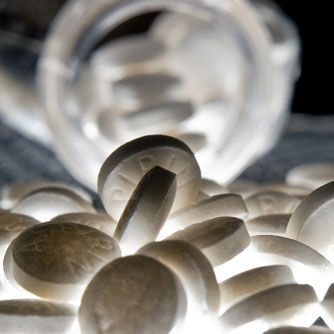
Aspirin is perhaps best known for its painkilling properties. But another of its actions in the body is to inhibit the ability of blood components called 'platelets' to stick together. It's when platelets clump together that clots are formed. In other words, aspirin partially inhibits clot formation. Small blood clots called 'trombi' are essentially responsible for the blocking off of arteries that can cause heart attacks and strokes. For this reason, many individuals are advised to take aspirin regularly to help prevent these 'cardiovascular' events.

However, there has in recent times been some challenge to the conventional wisdom on aspirin. There has been growing awareness that many people need to be treated with aspirin for one to benefit as well the fact that aspirin can cause side-effects (like bleeding in the gut) that can be extremely hazardous and even fatal, particularly in the elderly. The ardour that the medical profession once had for aspirin has cooled of late.

Further dampening of the enthusiasm is likely to come as a result of a recent study which looked at the impact of aspirin taking in women [I]. The women in this study were essentially 'healthy' in that they had no history of heart attack or stroke. In medicine, prevention in this type of person is described as 'primary prevention'. Basically, the researchers found some benefit for older women over the age of 65. However, in this group (generally deemed to be a elevated risk), it was calculated that 50 women would have be treated with aspirin for 10 years to prevent one 'cardiovascular event' (e.g. a heart attack or stroke). In other words, 49 people would take aspirin for 10 years with no benefit at all. And let's not forget there is a risk of side-effects too.

Comment: For a more in depth look at the harmful effects of Statins read the following articles:
Statin drugs concretize and institutionalize a certain myth about cardiovascular disease that the masses are only now beginning to awaken from, namely, that cardiovascular disease is caused by cholesterol and that cholesterol-suppression "therapy" reduces cardiovascular morbidity and mortality.

The 25 billion dollar-a-year commercial apotheosis of Statin drug therapy, purportedly intended to prevent and treat cardiovascular disease, represents a very real post- post-modern form of human sacrifice, implicit in the very etymolgical origin of the word "pharmaceutical"


Arrow Up

The Miracle of Magnesium

Image
© highenergyforlife.com
One patient had muscle cramps. Another had headaches. And a third had an irregular heartbeat. These were vastly different medical conditions, and yet the solution that I recommended for each patient was the same. You may be surprised to find that the remedy was none other than magnesium. It helped each of these patients - and did so quickly.

Few nutrients possess the remarkable and diverse benefits of magnesium. It is the fourth most abundant mineral in cells after calcium, phosphorus and potassium. Magnesium is found in our bones... muscles... blood... and other tissues. It is needed by the body for energy production... fat and protein synthesis... muscle relaxation... nervous system function... and calcium metabolism.

According to US Department of Agriculture data, two out of every three Americans don't meet average daily intake requirements for magnesium, which are 300 milligrams (mg) to 420 mg daily for adults. In addition, many people have a magnesium deficiency due to stress... genetics... or a medication, such as a diuretic (usually taken to control blood pressure). As a consequence, these people face an increased risk for health problems. Maintaining adequate levels of magnesium can help reduce muscle cramps, stabilize blood sugar, lower the risk for heart disease, ease migraine headaches, strengthen bones and slow the aging process.

Consider one of my patients, Robert, who limped into my clinic. He was suffering from painful leg muscle spasms that woke him at night and plagued him during the day. Muscle spasms often are related to low magnesium. Since magnesium relaxes muscles, I started Robert on an intravenous (IV) drip of magnesium sulfate. Within an hour, the pain in his leg eased. I had Robert begin taking a daily magnesium supplement, which helped to reduce subsequent leg muscle spasms.

Comment: Read the following articles for more information about the 'miracles of magnesium':

Magnesium is the Underrated Master Mineral
Magnificent Magnesium: The Neglected Mineral We Cannot Live Without
The Magic of Magnesium: A Mighty Mineral Essential to Health
Magnesium: The Miracle Mineral
Magnesium: It Might Just be Nature's Best "Chill Pill."
Magnesium: The Anti-Inflammatory Mineral


Magic Wand

Need Quick Pain Relief? Try DMSO

Image
© highenergyforlife.com
When people are in pain, they want relief - and they want it fast. When I was in medical school, one of my professors said that a doctor who can't help relieve a patient's pain quickly won't be seeing that patient again. He was right. That's why I'm pleased to be able to help patients achieve immediate pain relief for burns, sprains, back pain or arthritis with a little-known favorite remedy called dimethyl sulfoxide (DMSO), a remarkable topical alternative medication for pain that has its own remarkable history. Find out how it can help you...

Controversial DMSO

The fascinating story of DMSO began in the 1960s, when Stanley Jacob, MD, head of the organ transplant program at Oregon Health Sciences University in Portland, was investigating compounds that might help preserve organs for transplant. DMSO, which had been used as an industrial solvent, attracted his attention because of the way it penetrates skin without damaging it. He experimented with DMSO and found that it could relieve pain.

The discovery of DMSO inspired the discovery of another related sulfur remedy, methylsulfonylmethane (MSM), a compound with similar pain-relieving effects. I often recommend it be taken orally instead of NSAIDs for pain associated with headaches, fibromyalgia, heartburn and muscle and sports injuries. MSM also is known to ease allergies and asthma.

Comment: For more information about the many beneficial uses of DMSO read the thread: DMSO - Dimethylsulphoxide in the Diet and Health section of the forum.


Health

Low-carbohydrate Diets Look Good for the Prevention and Treatment of Cancer

Image
© godspeakstoday.net
In general terms, I recommend a diet lower in carbohydrate than conventional guidelines say is healthy. At least part of my thinking is based on abundant evidence linking a relatively carbohydrate controlled diet with benefits in terms of body weight and disease markers for conditions such as heart disease and type 2 diabetes. However, I came across a recent paper which made me think more about the impact a low-carbohydrate might have on risk of another important condition - cancer [1].

You can read a summary of the paper here and download a provisional pdf of the full paper here.

Beaker

Defense and Aerospace Industry Pollutant Now Found in Virtually All Humans Tested

Perchlorate is an environmental pollutant primarily associated with releases by defense contractors, military operations and aerospace programs, as it is a key ingredient in rocket fuel.

It is now found in virtually all humans tested, and it is continually making its way up the food chain through ground and drinking water, into feed and edible plants, animals products, milk and breast milk -- contaminating conventional and organically grown food, alike.

It is now distributed widely throughout North America, as depicted by the image below:

perchlorate map US
© 4.bp.blogspot.com

Pills

The worst drug fraud in history? Do you still trust them with your life?

Image
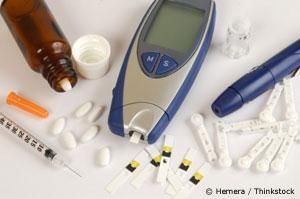
Drugmaker GlaxoSmithKline has preliminarily agreed to a $3 billion settlement over the sales and marketing practices of several of its drugs, including the diabetes drug Avandia.

This represents the largest federal drug-company settlement to date, surpassing the $2.3 billion paid by Pfizer in 2009 for illegally promoting off-label uses of four of its drugs.

The sum, though extraordinarily large by most people's standards, represents only a slap on the wrist to the drug giant, which assured investors the payments would be funded by "existing cash resources."

To put things into perspective, GlaxoSmithKline has a market value of more than $110 billion, according to the New York Times.

This massive financial clout essentially allows them to engage in criminal behavior that they can later buy their way out of - not unlike the way you might pay for a speeding ticket.

As Sidney M. Wolfe, director of Public Citizen's health research group, told the Washington Post:
"The size of the penalties, although large, are not as large as the money [the drug companies] make and so they keep doing it over again ...

The only way this is going to stop, or get reversed, is to greatly increase the size of the penalties or to start sending some of the executives to jail, if appropriate."

Health

Healthy Habits Are Most Contagious Among Similar Friends

Friends
© MyHealthNewsDaily

Obesity spreads "contagiously" through social networks, claimed a highly publicized 2007 study, and since then, some researchers have been working to use social networks to reverse the nation's obesity epidemic. A study published today suggests that may be possible.

Researchers at MIT found that by bringing people who had similar traits together into a social network, with the aim of increasing physical fitness, they increased how many people picked up a new activity that could bring about healthy lifestyle changes.

Even people who were obese were more likely to pick up the new activity when grouped with other obese people than when grouped with thinner people.

"The most effective social environment for increasing the 'willingness' of obese individuals to adopt the behavior was the one in which they interacted with others with similar health characteristics," the authors wrote in their conclusions.

The study may open up new avenues of research.

"You're going to see a lot more [weight-loss] interventions coming down the road that are thoughtfully designed around social networks. And as a result, I think those interventions are going to be more successful," said Ray Browning, a physiologist at Colorado State University who has studied health interventions and social networks, but was not involved with the new study.