In a recent update of the ongoing flood situation in Kenya, the Red Cross reported that almost 40,000 people have been displaced across the country.
In a report of 24 May, the International Federation of Red Cross (IFRC) said that since the start of the "Long Rains" as many as 39,054 people from 6,580 households have been displaced across 16 counties.
Among the hardest hit areas are in the counties of Tana River (3,864 displaced), Homa Bay (2,046), Kisumu (7,704), Busia (4,056) and Migori (5,022). IFRC said that some of those displaced are refuged in temporary camps in Ombaka (Kisumu), Nyatike (Migori), Osodo (Homa Bay) and Bunyala (Busia), while others have been housed by relatives, friends and neighbours.
It was another freezing start for many in the South today, with temperatures plunging to a bone-chilling -10C in some places.
Forecaster Niwa said Middlemarch, inland from Dunedin, hit -10.1C, which was provisionally New Zealand's lowest May temperature since 2001, excluding high-elevation locations.
The wintry conditions prompted warnings for road users, with gritted roads and freezing fog reported.
Dunedin Airport was also very cold, recording -8.4C, while inland Otago was sub-zero in most places. Further north, parts of the Mackenzie Basin were also hovering around -10C.
Nepal's Home Ministry has called for expedition agencies and tourism officials to make climbers return immediately from the mountains. For those high on Everest and Baruntse, returning is easier said than done.
While climbing permits are valid until the end of the month, the impact of Cyclone Yaas has prompted authorities to summon climbers down, the Everest News blog told ExplorersWeb. In fact, there may be little need for the official press release. On Everest, most teams at higher camps have switched their focus to getting down safely, in very tough conditions.
We still await news from Baruntse, where Marek Holecek and Radoslav Groh have been trapped after completing a new route. The exhausted pair, possibly without food or even fuel for melting water, are into their eighth day on the wall. Yesterday, they only managed to descend 100m. In Holecek's latest message, he said that they would attempt to descend during the night.
In the storm
Heavy snowfall will continue until Saturday. This is bad news for Holecek and Groh, as well as for those on Everest. Many climbers are weathering the storm in Camp 2 or trying to get down the mountain.
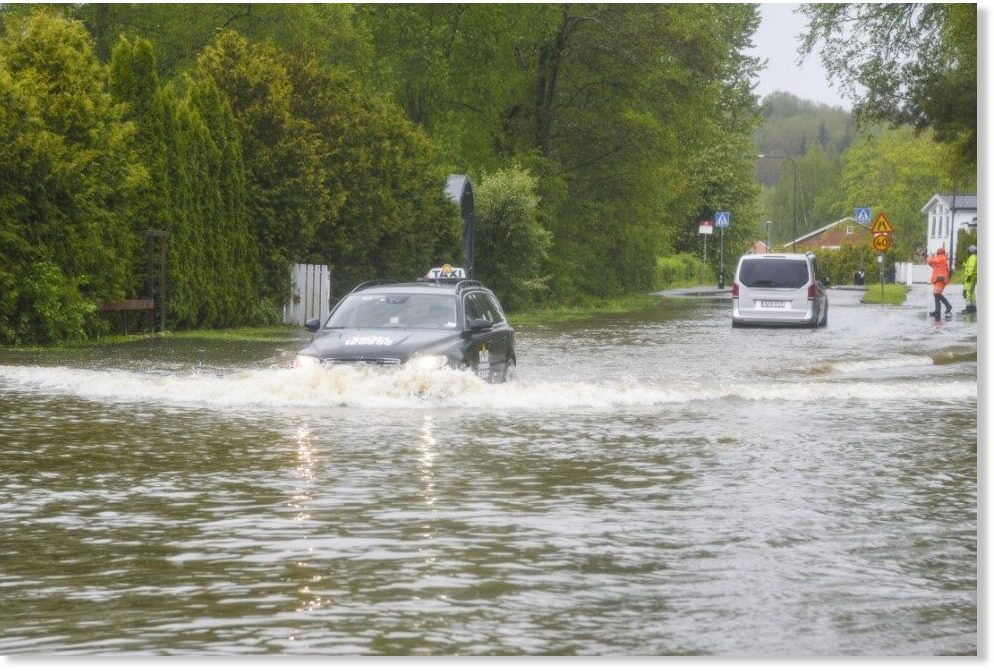
Heavy rainfall has led to hundreds of flooded buildings and roads in central Sweden that continue to disrupt traffic on Thursday.
The highest levels of rain fell in Tullinge in Botkyrka, and in Södertälje: 58 millimetres had fallen in the 24 hours leading up to Wednesday evening, according to weather agency SMHI.
Several roads have been flooded and on Thursday morning, in the six regions where an SMHI warning was in place, around 20 roads were affected by floods. The worst affected regions are Stockholm and Örebro, according to the Swedish Transport Administration.
Experts have confirmed two British killer whales which appeared off Cornwall were the most southerly ever recorded in 50 years of observations.
Nine days later the pair were seen back in the Hebrides.
Then, the following day, they were spotted by a research vessel in the waters off Lochboisdale, Scotland.
Multiple organisations confirmed this is the first sighting of this famous pair of killer whales off England and the most southerly point they have ever been recorded in five decades.
Movements of this small and unique group of killer whales have been tracked, over time, by The Sea Watch Foundation, Hebridean Whale and Dolphin Trust and the Irish Whale and Dolphin Group.
One of the killer whales is known as John Coe - and has a deep nick near the base of his dorsal fin and fluke.
A 10-month-old girl died Tuesday after being attacked by two family dogs, the Johnston County Sheriff's Office said.
Capt. Jeff Caldwell said in a news release that deputies responding to a report of an animal attack in Willow Spring found Scott Winberry trying to help his injured daughter, Malia Scott Winberry. Deputies learned that family pets had violently attacked Malia and they joined her father's efforts to help until EMS units took over care.
The girl was soon pronounced dead, officials said. Investigators quickly determined that the incident was an accident.
News outlets report that Sheriff Steve Bizzell said the attack happened after the father stepped out of the house to speak with a neighbor.
The father is a law enforcement officer in Wake County and the mother worked for Johnston County's EMS, he said.
Johnston County Animal Control has seized the two Rottweilers involved in the attack.
Nobody injured in incident in Rome's Torpignattara suburb.
Two cars ended up inside a large chasm after part of a street collapsed in the Torpignattara suburb of Rome.
There was nobody injured in the incident which took place at around 10.30 on 25 May, reports Italian newspaper La Repubblica.
The street affected is Via Zenodossio, between Via Dulceri and Via Casilina, involving an area of road and pavement measuring about 20 metres long and four metres wide.
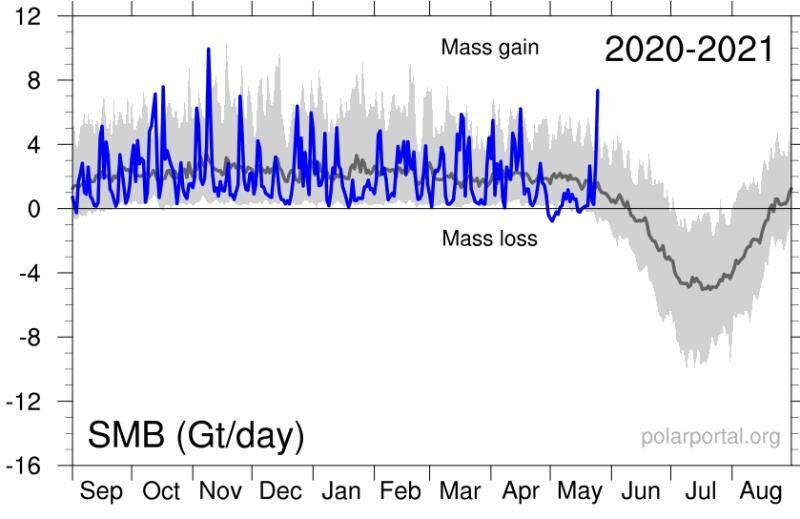
According to data provided by the Danish Meteorological Institute (DMI), Greenland is currently GAINING snow and ice at a level never before seen this late into the season.
Using the daily output from a weather forecasting model combined with a model that calculates the melt of snow and ice, the DMI calculate the "surface mass budget" (SMB) of the ice sheet.
Crucial to the survival of a glacier is its SMB, which is the difference between accumulation and ablation (sublimation and melting).
The budget takes into account the balance between snow that is added to the ice sheet vs melting snow and glacier ice that runs off into the ocean.
The budget is totaled over the course of a season, from September 1 to August 31.
Last season's SMB totaled 349bn tonnes, which was "normal," according to the DMI.
Changes in this mass-balance control a glacier's long-term behavior, and are its most sensitive climate indicators.
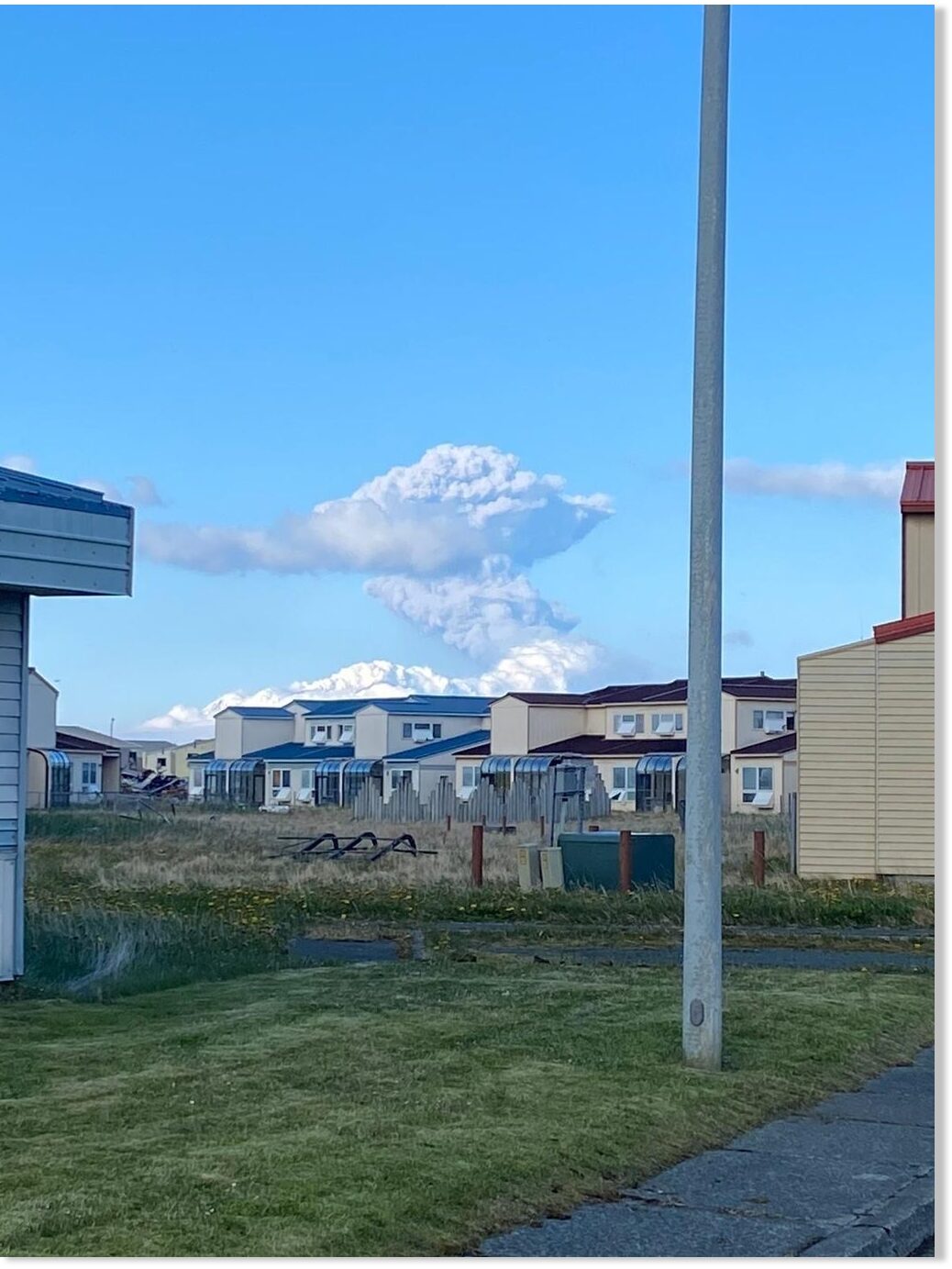
The Alaska Volcano Observatory (AVO) and the US Geological Survey (USGS) have issued a 'red warning' to aviation as the Great Sitkin volcano erupts, spewing an ash plume to 15,000ft (4,600m).
In a statement on Wednesday morning, the USGS said volcanic activity on Great Sitkin Island had been confirmed by geophysical data. The volcano started erupting at 21:04 on Tuesday, with an explosion that lasted a couple of minutes, and was continuing to erupt at the time of its latest update.
It had issued a joint 'red warning' to aviation with the AVO after observations suggested the ash plume was as high as 15,000ft (4,600m).
"Since that explosion, seismicity has decreased, and satellite images show that the ash cloud has detached from the vent and is moving towards the east," the AVO said in a recent update.