Earth ChangesS


Nuke

After The Media Has Gone: Fukushima, Suicide and the Legacy of 3.11

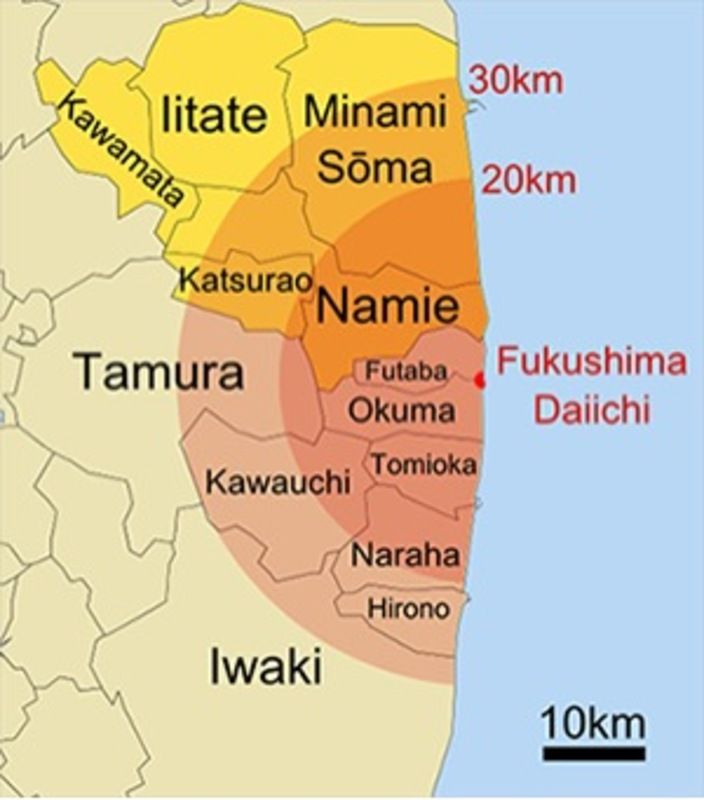
Map showing 20 kilometer evacuation zone and neighboring towns
© Asia-Pacific JournalMap showing 20 kilometer evacuation zone and neighboring towns
For the media, time is of the essence in a news story. The March 11, 2011 disaster attracted thousands of reporters and photographers from around the world. There was a brief deluge of Japanese and international media coverage on the first anniversary, this spring. Now the journalists have packed up and gone and by accident or design Japan's government seems to be mobilizing its agenda, aware that it is under less scrutiny.

The press pack has disappeared like a ghost since this April. The influx of foreign media has suddenly stopped, as I can attest since I worked as a translator and aid to many foreign journalists in the year up to the 3.11 anniversary in 2012. Using the keywords 'Fukushima' and 'nuclear plant' in Japanese to scour the Nikkei TELECOM 21 search engine shows 9,981 domestic news items in April 2012, just over half the 17,272 stories the previous month.

As if to take advantage of the precise timing of the media evacuation, the municipal government of Minami-soma city, Fukushima Prefecture began implementing a blueprint planned some time earlier. In the dead of night on Monday April 16th, the city lifted the no-entry regulations and changed evacuation zone designations that had stood since March 12, 2011. The decision allowed people to return to the district of Odaka and some parts of the Haramachi district.

Watanabe Ichie, a volunteer from Tokyo who witnessed the scene near the roadblock into the zone observed that: "several police vehicles with flashing red lights arrived after 23:00 on April 15th. By 0:15, all the vehicles had gone". "After that, all that remained was the light from the traffic signals." The following morning, cars moved freely inside the once-prohibited area.

Sun

Hot Enough for You? Warmest May to April Ever for U.S

sun, clouds, sunny day
© unknown
US, Washington - The contiguous U.S. states posted record warmth from May 2011 through April, and drought conditions spread across more than a third of this area during the first months of 2012, the National Oceanic and Atmospheric Administration NOAA.L said on Tuesday.

The contiguous United States had a national average temperature of 55.7 F (13.2 C) from May 2011 to April 2012, 2.8 F (1.6 C) above the 20th century average, NOAA said in a statement.

It was the warmest ever May-to-April period in the lower 48 states. It included the second-hottest summer, fourth-warmest winter and the warmest March. Twenty-two states posted record warmth for the period.

The first four months of the 2012 were the warmest on record. The average temperature for the contiguous states during these months was 45.4 F (7.4 C), 5.4 F (3 C) above normal.

Cloud Lightning

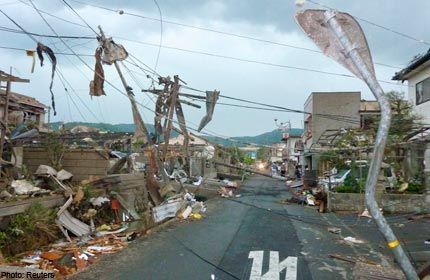
Japan tornado: Temperature differences spawned supercell storm

Japan tornado damage
© Reuters
The deadly tornado that hit a residential area in Tsukuba, Ibaraki Prefecture, on Sunday is believed to have been triggered by a temperature difference of more than 40 C between a high-altitude cold air mass and warm moist air near the ground, which developed a cumulonimbus cloud and a rotating ascending air current.

Japan Meteorological Agency radars detected a cumulonimbus cloud 10 to 20 kilometers in diameter, suggesting that a so-called supercell thundercloud developed around the time of the incident.

Supercell clouds, cumulonimbus clouds several times bigger than usual, tend to trigger powerful tornadoes.

Cloud Lightning

Britain to see month's rain in one night as severe weather warnings issued

Severe weather warnings were issued last night for large swathes of Britain as more torrential downpours are on the way.

The soaking, which has seen the soggiest April in 100 years, will ­continue with a month's rain expected to fall ­tomorrow night.

Motorists have been warned to take care as roads will be battered by gales reaching 50mph.

Bizarro Earth

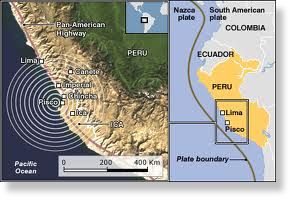
Civil Defense of Peru issues earthquake warnings after two days of abnormal tremor activity

Image
© Unknown
The Civil Defense in Peru (Indeci) intensified today a prevention drive warning of a potential massive earthquake now preceded of two daily tremors average. Indeci called on every workplace and home to ready an emergency evacuation plan after a median quake and two replicas were recorded Sunday in Ica (south) and in Lima.

Marco Tantalean, an expert from the institution, said planning must include safe routes and refuges, plus staples like your ID cards, drinkable water, first-aid material, flashlight, non perishable food and saving phone calls for emergencies to prevent the lines from collapsing.

Other prevention measures include a May 31st tsunami simulation, marking the 1970 massive quake that killed some 70,000 people in Ancash, north Peru. Scientific evidence have proven that after "long periods of rest" big quakes may occur, like those that have especially razed Lima through history; plus, Peru is located in a seismic area, adds Hernando Tavera, director of Seismology at the Institute of Geophysics, reminding of the 66 tremors of 2012 through April, near one daily.

Igloo

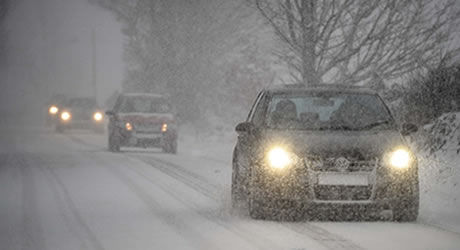
Scotland colder than the ARCTIC as country hit by snow and freezing weather

Scotland snow scene
Scotland was colder than the Arctic at the weekend with freezing temperatures and snow.

It was - 7.4C on Saturday morning on Cairngorm mountain, near Aviemore, and - 6.2C at Saughall, Ayrshire.

But in the Arctic at the most northerly village in Europe - Honningsvag in Norway - it was only 0C.

Yesterday morning was just as bad with temperatures below freezing in many parts.

Cloud Lightning

Huge Dust Storm Swallows Iowa College Campus

Watch this video of a huge dust cloud that approaches and eventually covers an Iowa college campus on Friday. This video was captured on the campus of Northwestern College in Orange City, Iowa, and posted on YouTube.


The video's caption said the cloud was caused by an almost fully formed tornado, and caused a scare on campus.

Bizarro Earth

Fears increase of big earthquake near Tokyo in the foreseeable future

Image
© Sam EatonUniversity of Tokyo seismologist Shinichi Sakai’s controversial study predicts a major earthquake is likely to hit Tokyo within the next four years.
A prominent Japanese seismologist rattled some nerves when he declared there was a 70 percent chance of a major earthquake in or around Tokyo -- in the next four years. Government scientists had proclaimed a similar risk, but over a longer timeframe, 30 years.

Shinichi Sakai points to steady, color-coded lines on a digital monitor. The screen displays real-time readings from Japan's extensive network of seismometers.

This is one of the most seismically active countries in the world, and the flat lines show that all is quiet across the region, at least for the moment.

Then, as if on cue, two of the lines start to jump violently, splashing the screen with red and yellow pixels. They're tracking a very small earthquake, centered just outside of Tokyo.

Sakai says small quakes like this happen about ten thousand times a year in Japan, and for geologists like him, even the small earthquakes are worth paying attention to. He says there's been a fivefold increase in small tremors around Tokyo since the huge quake off Japan's northeast coast in March last year. And that adds up to a mathematical omen for scientists like him.

In January, Sakai and the University's Earthquake Research Institute crunched the new numbers and came up with a shocking prediction: There's a 70 percent chance a major earthquake will hit Tokyo within the next four years.

Blackbox

Mysterious fish kill under investigation in Kuwait

Image
© UnknownSome of the dead fish found near the bay
Fish have been dying in large numbers along Kuwait bay. This incident serves as an indicator of pollution or a major imbalance in marine environment, instilling fear of a possible fish kill. According to a local Arabic daily, Salah Al-Mudhi, General Director of Environment Public Authority (EPA) has accused people of spreading rumors most of the time. He said that dead fish could have been dumped into the sea by fishermen because most belonged to the 'Giant Sea Catfish,' species.

To assess the situation better, the EPA has requested the Public Authority for Agriculture Affairs and Fish Resources (PAAAFR) to investigate the cause and supervise the area. "Since last Friday, when EPA sought our assistance, we have begun daily inspection tours in the Kuwait Bay area, noticing that the number of fish have reduced drastically compared to Friday. We are still inspecting to make sure that it is not 'fish kill' and prevent more cases from occurring," Sharik Awadh, PR of PAAAFR told Kuwait Times yesterday.

Bizarro Earth

Azerbaijan hit with strongest earthquake in 4 years- swarm of tremors follow

Image
© UnknownAzerbaijan
A moderate earthquake shook northwestern Azerbaijan on late Monday morning, injuring more than a dozen people and seriously damaging a number of houses, officials said. Shaking was also felt in neighboring Russia and Georgia.

The 5.5-magnitude earthquake at 9:40 a.m. local time (0440 GMT) was centered about 17.5 kilometers (10.8 miles) south of Zaqatala, the capital of Zaqatala Rayon along the Tala River. It struck about 10 kilometers (6.2 miles) deep, making it a shallow earthquake, according to the Republican Seismic Survey Center of the Azerbaijan National Academy of Sciences.

The United States Geological Survey (USGS), which measured the strength of the earthquake at 5.6 on the body wave magnitude (Mb) scale, estimated some 450,000 people near the epicenter may have felt moderate to strong shaking. Another 6.6 million people may have felt weak to light shaking.