Earth ChangesS


Colosseum

6.3 magnitude earthquake causes panic and infrastructural damage in Thailand and Myanmar

Image
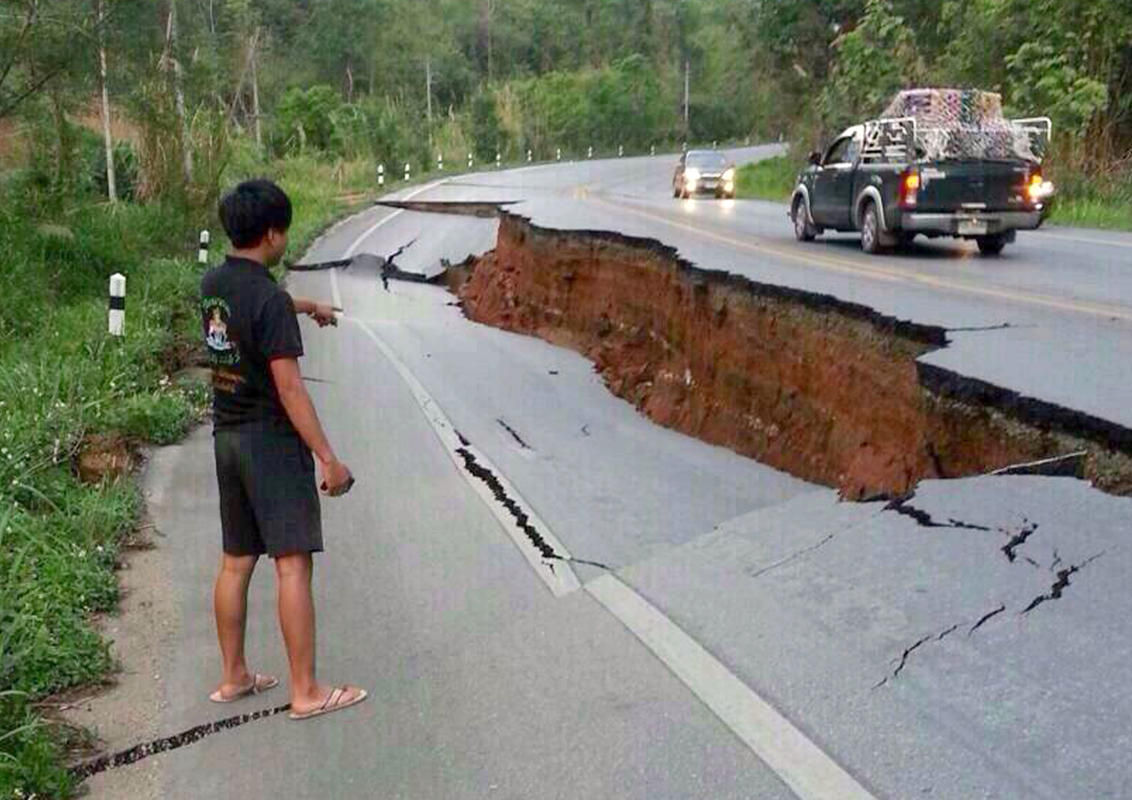
© APA man points to a large crack on a damaged road following a strong earthquake in Phan district of Chiang Rai province, northern Thailand, Monday, May 5, 2014. A strong earthquake shook northern Thailand and Myanmar Monday evening, and some light damage was reported.
A strong earthquake registering 6.3 Magnitude on the Richter Scale hit northern Thailand and Myanmar on Monday evening, damaging roads, buildings and Buddhist temples. No casualties have been reported, but buildings were evacuated in Chiang Rai, a northern Thai city near the epicenter.

The spire of the main building of the all-white Wat Rongkhun temple broke off, while display signs and sections of ceiling fell at the city's airport.

Speaking to a local TV station, the temple's architect, Chalermchai Kositpiphat, said, "I still don't know how we can sleep tonight. ... The building was shaking the whole time and then aftershocks followed four to five times. I don't know how many years it will take me to fix it. It was shaking like the earth was going to explode."

A road In Chiang Rai's Phan district was badly damaged as the land broke apart in places.

Bhuddists' prayers interrupted by the quake


Bizarro Earth

Rare earthquake warning issued for Oklahoma

Oklahoma earthquakes
© USGSOklahoma earthquakes.
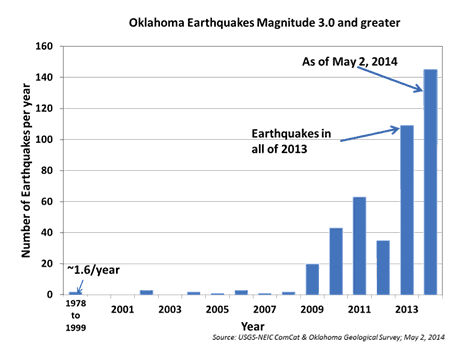
Mile for mile, there are almost as many earthquakes rattling Oklahoma as California this year. This major increase in seismic shaking led to a rare earthquake warning today (May 5) from the U.S. Geological Survey and the Oklahoma Geological Survey.

In a joint statement, the agencies said the risk of a damaging earthquake - one larger than magnitude 5.0 - has significantly increased in central Oklahoma.

Geologists don't know when or where the state's next big earthquake will strike, nor will they put a number on the increased risk. "We haven't seen this before in Oklahoma, so we had some concerns about putting a specific number on the chances of it," Robert Williams, a research geophysicist with the USGS Earthquake Hazards Program in Golden, Colorado, told Live Science. "But we know from other cases around the world that if you have an increasing number of small earthquakes, the chances of a larger one will go up."

That's why earthquakes of magnitude 5 and larger are more frequent in states such as California and Alaska, where thousands of smaller temblors hit every year.

Heart - Black

26,000 birds killed by trigger happy contractors over 5 years at JFK airport

Image
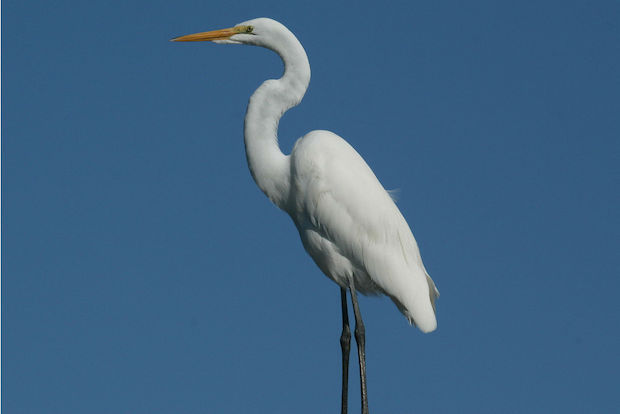
© Wikimedia Commons/Dick DanielsThe Great Egret was among more than 1,600 protected birds shot to death by the Port Authority in the past five years, internal records show.
Wildlife control contractors have shot almost 26,000 birds at John F. Kennedy International Airport over the past five years to stop them interfering with passenger flights - including more than 1,600 protected birds the airport did not have express permission to kill, internal records show.

The Port Authority of New York and New Jersey, which runs the airport, was granted limited permission to shoot "problem" species - mainly seagulls, geese and mourning doves - named on a special kill permit issued each year by the Fish and Wildlife Service.

But the authority's own records show that between 2009 and 2013, they killed 1,628 birds from 18 different species that are protected under the Migratory Bird Treaty Act and are not named on the permits.

That list includes snowy egrets, red-winged blackbirds and American kestrels.

Bizarro Earth

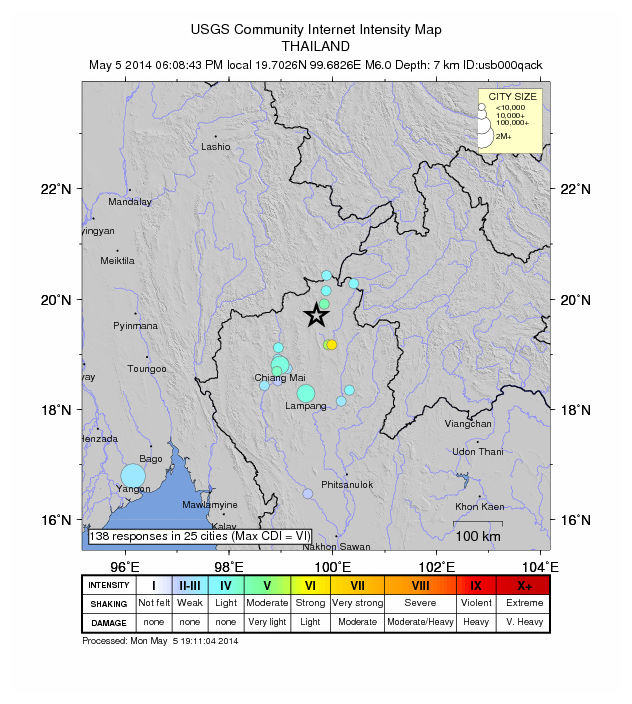
USGS: Earthquake Magnitude 6.0 - 9km S of Mae Lao, Thailand

Thailand Quake_050514
© USGS
Event Time
2014-05-05 11:08:43 UTC
2014-05-05 18:08:43 UTC+07:00 at epicenter

Location
19.703°N 99.683°E depth=7.4km (4.6mi)

Nearby Cities
9km (6mi) S of Mae Lao, Thailand
27km (17mi) SW of Chiang Rai, Thailand
39km (24mi) NW of Pa Daet, Thailand
52km (32mi) SSW of Mae Chan, Thailand
362km (225mi) WNW of Vientiane, Laos

Technical Details

Comment: Yearly summary of earthquake data.


Snowflake

Cold stagnant weather pattern turns Calgary into a winter wonderland in May

Image
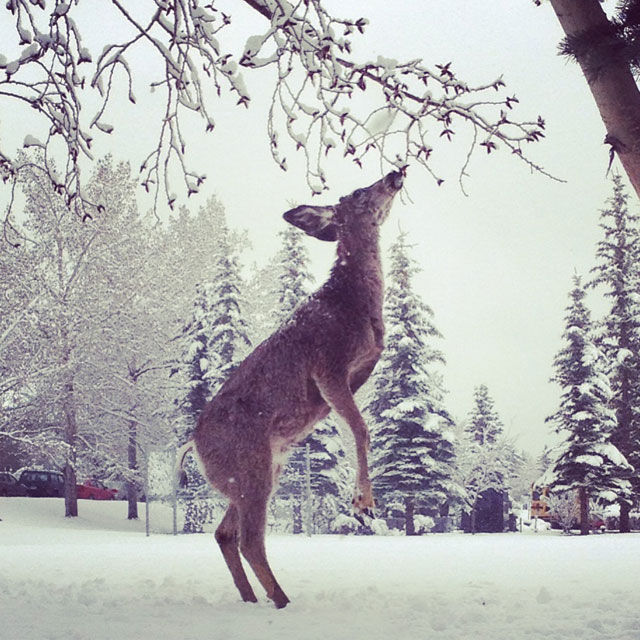
© Alexandra BakerFive deer were wandering around 90th - Glenmore Landing and Pump Hill area on a snowy May 3. This one put in the extra effort for a snack.
Calgarians traded in their slickers and umbrellas for parkas and mittens after rain turned to snow overnight, transforming the city into a winter wonderland Saturday morning.

Heather Smith, a meteorologist with the weather agency, said the snow was being generated by a strong low pressure system in the pacific pushing moisture into the province combined with an arctic high ushering in cold air.

"It's a stagnant weather pattern and not much is changing," Smith said on Saturday. "It will snow on and off for the next few days."

The spring snowstorm forced city officials to cancel the 47th annual pathway and river cleanup event, which had been scheduled for Sunday morning. Approximately 2,900 volunteers had been set to pick up thousands of garbage along 200 kilometres of pathway, the river's edge, and in city parks.

The event has been moved to May 25th.


Ice Cube

Slow ice melt on the Great Lakes could lead to chilly summer

Image
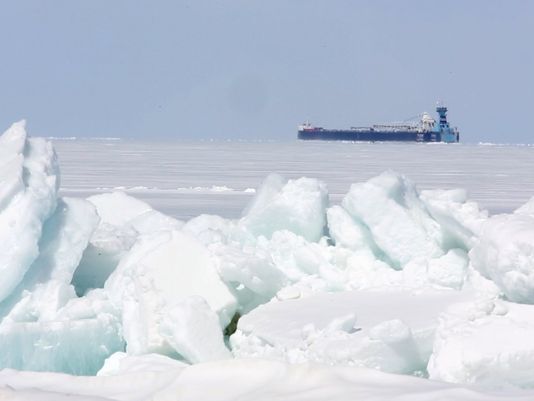
© Photo: Eric Seals, Detroit Free PressA freighter makes its way along after passing under the Mackinac Bridge on April 15. The shipping season is off to a very slow start because of unseasonably heavy ice.
The Winter of 2013-14 demands that it be remembered.

A relatively cool spring will give way to a colder-than-usual summer locally, all because of the continuing impacts of the intensely frigid, snowy winter, scientists said. And at least one Great Lakes ice researcher thinks that the domino effect could continue into a chilly fall and an early start to next winter - and beyond.

The reason is the unusually late ice cover that remains on the Great Lakes. Heading into May, the Great Lakes combined remain 26% ice-covered, with Lake Superior still more than half-blanketed in ice. By comparison, at this time last spring the lakes were less than 2% covered with ice.

The remaining levels of ice cover are amazing, said Jia Wang, an ice climatologist at the National Oceanic and Atmospheric Administration's Great Lakes Environmental Research Laboratory in Ann Arbor.

"This prolonged winter will affect summer temperatures. This summer will be cold, and then a cooler fall," he said.

In addition to wreaking havoc on the Great Lakes shipping industry and impacting fish and other aquatic species, the miles of ice cover serve as a vast, white reflector.


Ice Cube

Obama's top climate advisers make embarrassing blunder over fundamental climate patterns

'Houston, we have a dumbass problem'

I'm truly sorry about the title, but nothing else really describes the ridiculousness of the pronouncement by the White House aide John Podesta over these two satellite images in a maddeningly idiotic story from the Washington Post.
Image
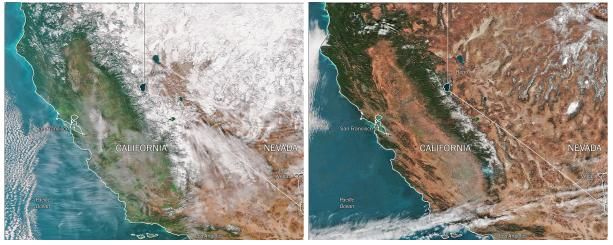
In a Feb. 24 Oval Office meeting, two of President Obama's top climate advisers presented these sharply-contrasting images of California's snowpack on Jan. 13, 2013 (left) and a year later (right), as a way to underscore how global warming is changing conditions on the ground in the United States.
The satellite images viewed by President Obama before a meeting with eight Western governors were stark, showing how snowpack in California's mountains had shrunk by 86 percent in a single year.

"It was a 'Houston, we have a problem' moment," recalled White House counselor John D. Podesta, one of two aides who briefed the president that February day. Obama mentioned the images several times as he warned the governors that political leaders had no choice but to cope with global warming's impact.

After years of putting other policy priorities first - and dismaying many liberal allies in the process - Obama is now getting into the weeds on climate change and considers it one of the key components of his legacy, according to aides and advisers.

Bizarro Earth

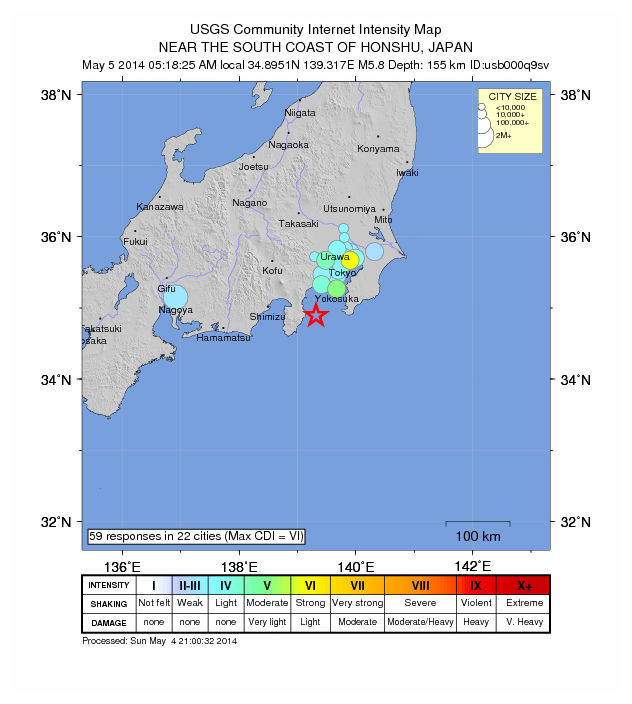
USGS: Earthquake Magnitude 6.0 - 23km ESE of Ito, Japan

Ito Quake_040514
© USGS
Event Time
2014-05-04 20:18:24 UTC
2014-05-05 05:18:24 UTC+09:00 at epicenter

Location

34.862°N 139.312°E depth=155.1km (96.4mi)

Nearby Cities
23km (14mi) ESE of Ito, Japan
33km (21mi) SE of Atami, Japan
38km (24mi) SE of Yugawara, Japan
39km (24mi) ENE of Shimoda, Japan
98km (61mi) SSW of Tokyo, Japan

Technical Details

Comment: As you can see from the chart below there have been a LOT more earthquakes recently!


Bizarro Earth

Record high levels of seismic activity at undersea volcanoes near Mariana Islands, eruptions imminent

Underwater Volcano
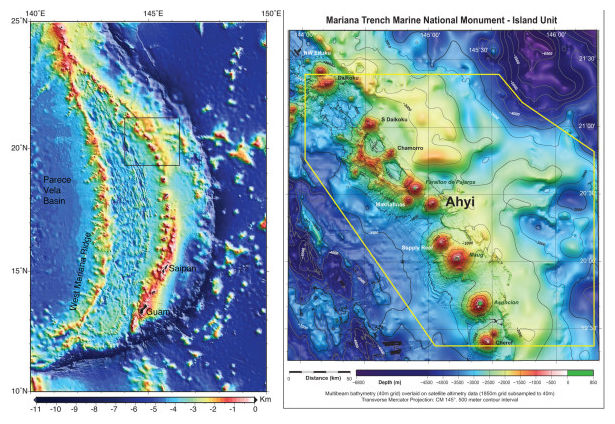
© Susan Merle/NOAABathymetric maps showing the islands and seamounts that make up the Mariana volcanic island arc (left) and the area of Ahyi seamount in the northern part of the arc (right). Susan Merle of NOAA’s Earth-Ocean Interaction Program created these maps.
During the past week, we have been keeping a close watch on the Northern Mariana Islands (NMI), as seismometers on the islands record high levels of seismicity from an undersea volcano near the island of Farallon de Pajaros.

The seismic signals almost certainly herald an eruption. In fact, submarine explosions were heard by scuba divers who are conducting coral reef research in the area. The divers even felt the shock waves from the explosions, and one of the most powerful ones reverberated through the hull of the NOAA base ship, Hi'ialakai, leading the crew to think something had happened to the ship. Shipboard personnel also reported a large sulfur slick on the southeast coastline of Farallon de Pajaros.

Unfortunately, the ship had to leave the area under threat of an advancing typhoon. If they can get back to the vicinity soon, they may be able to investigate the source of the explosions with great caution, keeping in close contact with U.S. Geological Survey (USGS) and CNMI emergency management personnel, who are monitoring the seismicity.

The CNMI emergency management office and the volcano observatories of the USGS have been working together for over 30 years to establish volcano monitoring networks and assess volcanic hazards in the Mariana Islands.

Binoculars

Rare nonmigratory Arctic bird seen on Point Peninsula, New York

Image
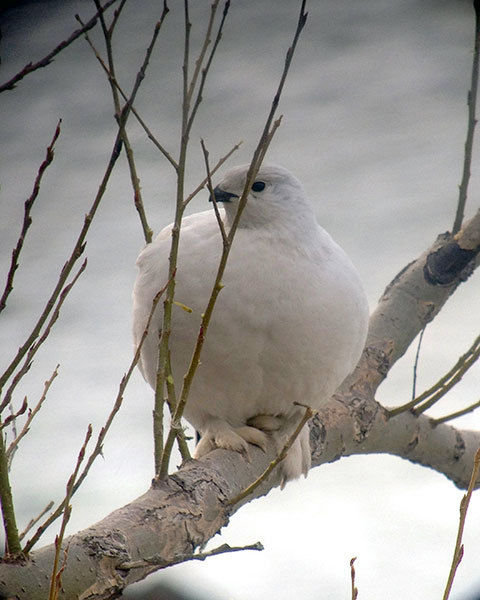
© Jeff Bolsinger.A Willow Ptarmigan along eastern Lake Ontario. The sighting this week is a first for New York State.
Carloads of birders from across the region have visited the shore of Lake Ontario, near Watertown, over the last few days hoping to glimpse a rare avian visitor from the Arctic tundra.

Late last week, Eugene Nichols was birding near Point Peninsula and found an all white bird that didn't belong in northern New York. Nichols contacted Jeff Bolsinger, a bird biologist at Fort Drum, who confirmed that it's a Willow Ptarmigan. Bolsinger says the bird normally lives only in northern Canada and Alaska. He says the sighting this week is the first documented sighting of a Willow Ptarmigan in New York State, and the second recorded in the lower 48 states in a century.

Bolsinger told Todd Moe he's not sure how the bird ended up this far south, but it's become an instant celebrity in the birding community.