Earth ChangesS


Arrow Down

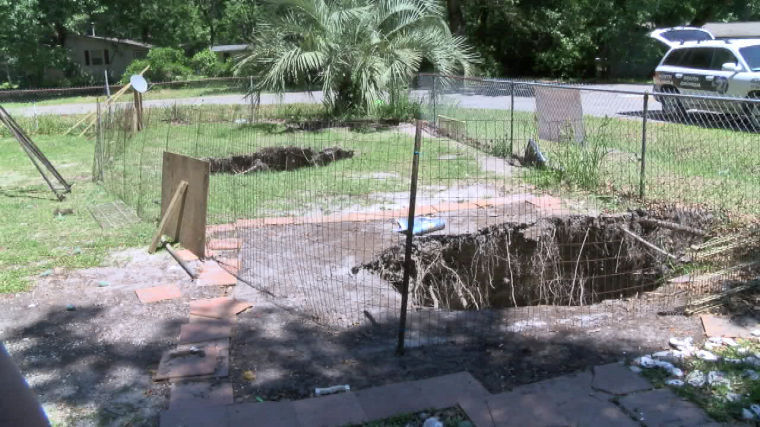
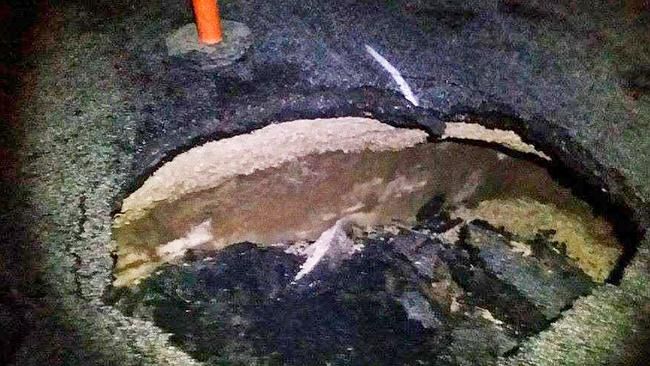
Two sinkholes open up Tallahassee family's front yard, Florida

Image
A Tallahassee family says they woke up to their dogs barking, and found their grill in a small sinkhole in their front yard.

"It's completely weird for us because even though we've lived in Florida for 14 years, we've never heard about that. Never. So for me it was a crazy thing that happened", says resident Erika Rojas.

Rojas says her family has lived in the home in front of Munson lake for two years. She says they noticed the ground was getting softer the last couple of weeks, but also says they could have never imagined they would have two sinkholes right in their front yard.

Resident Omar Perez has built a construction out of a bed frame that he says will come crashing down if the sinkhole continues to get any larger and come towards their home. He says he got the idea from living in Cuba, where they sometimes will construct things in front of the front door to alert them of intruders. He also says they have to-go back packs ready. They have water and food and they'll go to a hotel tonight, if necessary, and then make sure they can get their kids to school tomorrow.

"I've never seen anything like this before in my life. I just tried to put some noise in the night to wake us up because we won't realize what is there", says Perez.

According to the Public Works Department, because the sinkhole is on private property, the homeowner is responsible for filling the hole. Rojas says the landlord has come by and said he will fill it with concrete, but in the mean time, the family is left building homemade barriers to keep their children and pets out of the holes.

Mrs. Rojas says her family was told today that a sinkhole actually opened in the road right in front of their home shortly before they moved in. She says if their landlord had told them that, they never would have moved there in the first place.


Comment: The number of sinkhole reports across the globe has increased quite dramatically over the last 5 years or so, with the total for this year already approaching the tally for 2013, as can be seen below.


Arrow Down

3.5m-wide sinkhole appears on Bruce Highway at Bowen, Queensland

Image
The sinkhole which has closed the Bruce Highway.
The 3.5m wide sinkhole which closed the Bruce Highway in both directions for almost 14 hours has been filled in.

The Mains Roads Department says the highway has now re-opened and there are no delays.

Earlier, it was reported a sinkhole that opened up south of Bowen has forced the closure of the Bruce Highway.

The sinkhole was intially reported to be 2m wide but authorities this morning said it was now about 3.5m wide and 1.5m deep.

Main Roads engineers are assessing the damage where a large section of the northbound lane collapsed about 20km south of Bowen.


Comment: The number of sinkhole reports across the globe has increased quite dramatically over the last 5 years or so, with the total for this year already approaching the tally for 2013, as can be seen below.


Question

Unusual new penguin flu virus discovered in Antarctica

Image
© Wikimedia, Reinhard JahnAdelie penguin
A new kind of bird flu has been detected for the first time in Adelie penguins in Antarctica, though the virus does not seem to make them sick, researchers said Tuesday.

The virus is unlike any other avian flu known to science, said the report in mBio, a journal of the American Society for Microbiology.

"It raises a lot of unanswered questions," said study author Aeron Hurt, senior research scientist at the World Health Organization Collaborating Centre for Reference and Research on Influenza in Melbourne, Australia.

The findings show that "avian influenza viruses can get down to Antarctica and be maintained in penguin populations," he said.

The study is the first to report on live avian influenza virus in penguins, though previous research has found evidence of influenza antibodies in penguin blood.

Star

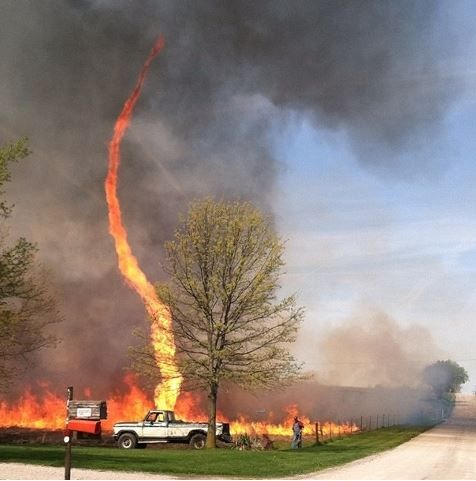
Rare 'fire tornado' photographed in Missouri

Image
© nicejalapeno on Instagram
Check out this image of a fire tornado that Instagram user Janae Copelin captured near Chillicothe, Mo.

These fire tornados can form when intense heat combines with high winds.

Copelin, who goes by the Instagram user name nicejalapeno, captured the image about a mile north of 190 Highway on Saturday, May 3rd

Copelin said she was heading out for a day in St. Joseph, Mo., with her daughter and a friend when she saw the flames.

"Thanks to my love of Instagram I chose to drive by and as I stopped to take a picture the wind whipped up the fire into this funnel," Copelin said in an email to KMBC 9 News. "The sound and heat were intense and a bit scary not knowing if it would stay put, but it only lasted a couple minutes."

Comment: An earlier fire tornado was captured in 2012, Australia:


And a ''Fire-nado' caught on tape in march; Denver, Colorado:


Alarm Clock

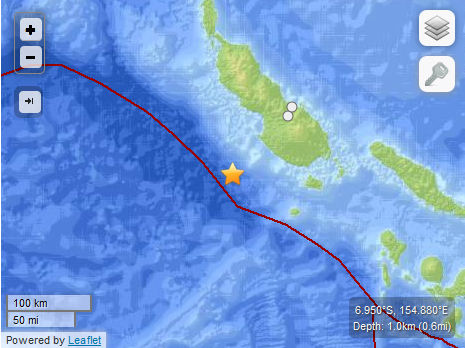
USGS: Earthquake Magnitude 6.1 - 96km SW of Panguna, Papua New Guinea

Earthquake 6.1 Papua New Guinea
© USGS
Event Time
2014-05-07 04:20:33 UTC
2014-05-07 14:20:33 UTC+10:00 at epicenter

Location
6.950°S 154.880°E depth=1.0km (0.6mi)

Nearby Cities
96km (60mi) SW of Panguna, Papua New Guinea
109km (68mi) SW of Arawa, Papua New Guinea
408km (254mi) SE of Kokopo, Papua New Guinea
546km (339mi) ESE of Kimbe, Papua New Guinea
622km (386mi) WNW of Honiara, Solomon Islands

Scientific details

Info

Over a million birds died during Deepwater Horizon disaster

Image
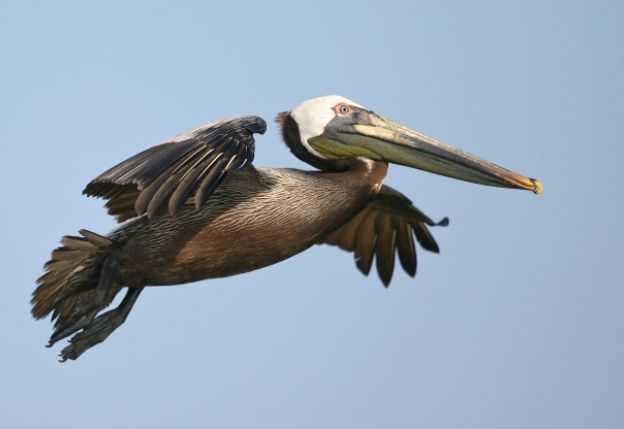
© Rebecca Field A Brown Pelican.
The 2010 BP Deepwater Horizon well blowout vomited more than 210 million gallons of oil into the Gulf of Mexico and onto its shores--the largest accidental, offshore oil spill in history. It killed wildlife, tainted fisheries, and damaged coastal ecosystems from marshes in Louisiana to beaches in Florida. But due to a paucity of data, the true extent of the damage is still not yet known, especially where bird mortality is concerned. What research does exist is confidential property of the U.S. government, and will not see the light of day until the lawsuit against BP has run its course, the next phase of which begins in 2015.

Into this vacuum step J. Christopher Haney, Harold Geiger, and Jeffrey Short, three researchers with extensive experience in environmental monitoring and post-spill mortality assessments. In their recent study, which has been accepted for publication in Marine Ecology Progress Series, the authors estimate that up to 800,000 coastal birds died as a direct result of the Deepwater Horizon spill. That number, as large as it is, is on the conservative side, says Audubon Director of Bird Conservation for the Gulf Coast and Mississippi Flyway, Melanie Driscoll. Once further studies are conducted, says Driscoll, the number will certainly exceed one million. In comparison, a quarter of a million birds are estimated to have died as a direct result of the Exxon Valdez, a spill that was much smaller than that of Deepwater Horizon.

Attention

Dead whale drifts into Port of Felixstowe, UK

Image
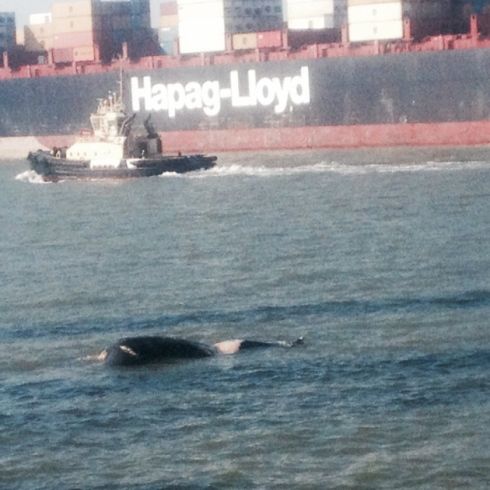
This picture of the whale was taken by a passer-by on his mobile phone
A dead whale has washed into Felixstowe port.

The whale, which is badly decomposed, washed into the River Orwell in the harbour yesterday and is currently in the process of being removed.

It is not yet known what species of whale it is.

More to follow.

Eye 2

Invasion of albino king snakes threatens Gran Canaria wildlife

Image
© GK Hart/Vikki Hart/Getty ImagesOriginally brought to the island as pets, the albino California king snakes were set loose or escaped decades ago
Soaring numbers of albino California king snakes prompts warning that they could take over 70% of Spanish island

Invasive species experts will gather in Gran Canaria this week to offer their advice on how best to control an albino variety of a popular pet snake whose population has exploded across the island in recent years, decimating local bird and lizard species.

Originally brought to the island as pets, the albino California king snakes were set loose or escaped decades ago, said Ramón Gallo, a biologist who is spearheading the effort to control the population through a project called LIFE+Lampropeltis.

In the absence of natural predators and in mild temperatures and a coastal climate similar to its native California, the king snakes have multiplied. In the past eight years, more than 2,000 of the snakes have been captured, and thousands more are thought to be living underground, said Gallo. "The word plague comes to mind."

The snakes pose little danger to humans, but are avid predators, feeding on birds, rodents and even young rabbits, said Gallo. Particularly concerning for researchers is the snake's taste for the Gran Canaria giant lizard, a species found only on the island. A recent comparison of the lizard population in areas with snakes and areas without showed a ratio of 1:10, he said. "It's an outrage. This could push the lizard to extinction."

So far their growth has been contained to two areas, of about 25 miles square, in the east and north-western part of the island.

Ice Cube

Major Arctic sea ice story lurking, but is anyone looking?

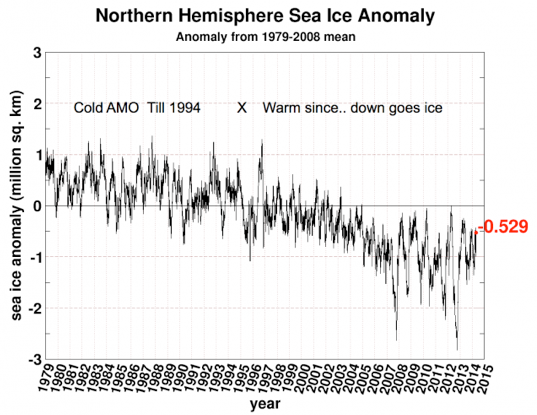
There is a huge event being forecasted this year by the CFSV2, and I don't know if anyone else is mentioning this. For the first time in over a decade, the Arctic sea ice anomaly in the summer is forecast to be near or above normal for a time! While it has approached the normals at the end of the winter season a couple of times because of new ice growth, this signals something completely different - that multiyear growth means business - and it shows the theory on the Atlantic Multidecadal Oscillation (AMO) is likely to be on target. Once it flips, this red herring of climate panic will be gone. Global and Southern Hemisphere anomalies are already unmentionable since the former is well above normal and the latter is routinely busting daily records.

Image
The biggest minimum anomalies are in the summer since this flipped, and the only peaks came very close to the height of winters once this melting was underway.

Now look at what the CFSV2 forecasted for 2012.

Phoenix

Deadly Oklahoma wildfire burns down homes, causes mass evacuation

Image
© AP
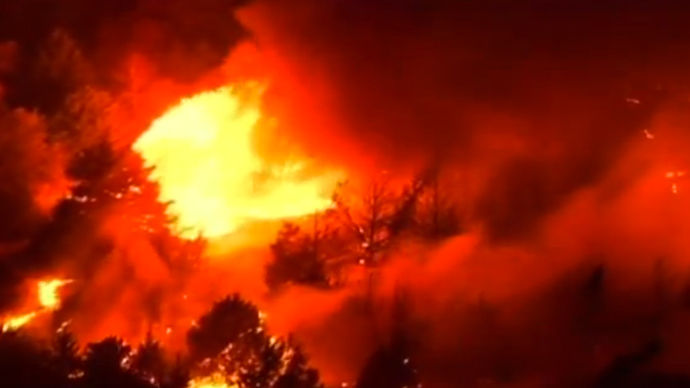
What initially began as a controlled burn in central Oklahoma quickly erupted into a massive wildfire with the help of strong winds and dry temperatures, killing one person and destroying at least six homes.

According to local news outlet KFOR, the wildfire has burned through approximately 3,500 acres of land near Guthrie, Oklahoma. Firefighting crews have managed to contain about 75 percent of the blaze - which started growing out of control Sunday afternoon - but local officials said that at least 150 homes are still at risk.

As of Monday morning, roughly 1,000 people had been evacuated from their homes due to the fire. Guthrie Fire Department Chief Eric Harlow told the Associated Press that one 56-year-old man who refused to evacuate was later found dead in his mobile home. Currently, he is the only casualty being reported.