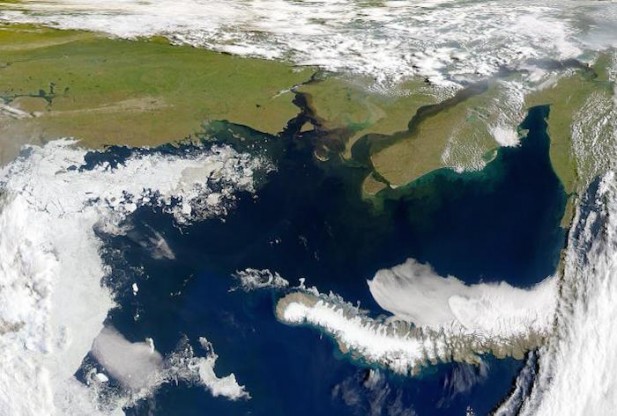
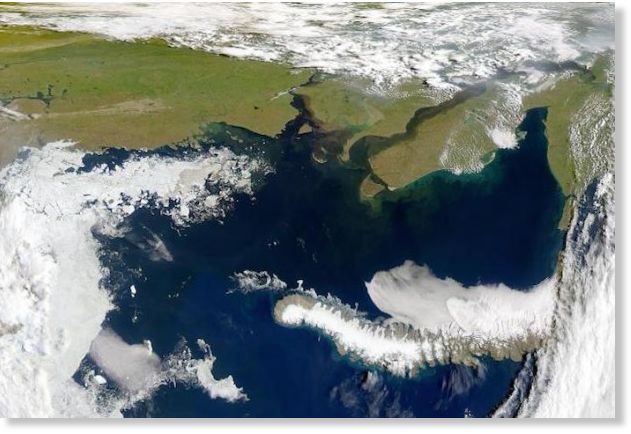
© NASAKara Sea is a section of the Arctic Ocean between Novaya Zemlya and the Yamal Peninsula on the Siberian mainland. Siberian permafrost extends to the seabed of the Kara Sea, and it is thawing.
Researchers from Norway and Russia have found significant amount of the greenhouse gas methane is leaking from an area of the Arctic seabed off the northern coast of Siberia.
According to
the team's report in the
Journal of Geophysical Research: Biogeosciences, the melting of permafrost on the seafloor of the Kara Sea is releasing previously-sequestered methane.
"The thawing of permafrost on the ocean floor is an ongoing process, likely to be exaggerated by the global warming of the world´s oceans," said study author Alexey Portnov at Centre for Arctic Gas Hydrate, Climate and Environment (CAGE) at The Arctic University of Norway.
Permafrost is considered soil that has been permanently frozen for at least two years and is usually much thicker on land where temperatures can stay far below the freezing point for months on end.
"Bottom water temperature is usually close to or above zero. Theoretically, therefore, we could never have thick permafrost under the sea," Portnov explained.
He added that 20,000 years ago, during the last ice age, the sea level dropped nearly 400 feet."It means that today´s shallow shelf area was land. It was Siberia. And Siberia was frozen," Portnov said. "The permafrost on the ocean floor today was established in that period."








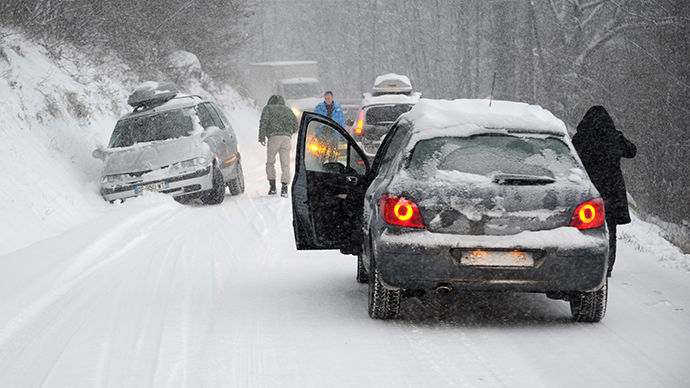


Comment: See also: Snow and icy weather sweeps across Europe, stranding drivers