Earth ChangesS


Fire

Uncontained brush fire forces evacuations in Arizona

Arizona brush fire
© David Kadlubowski/The Arizona Republic via AP
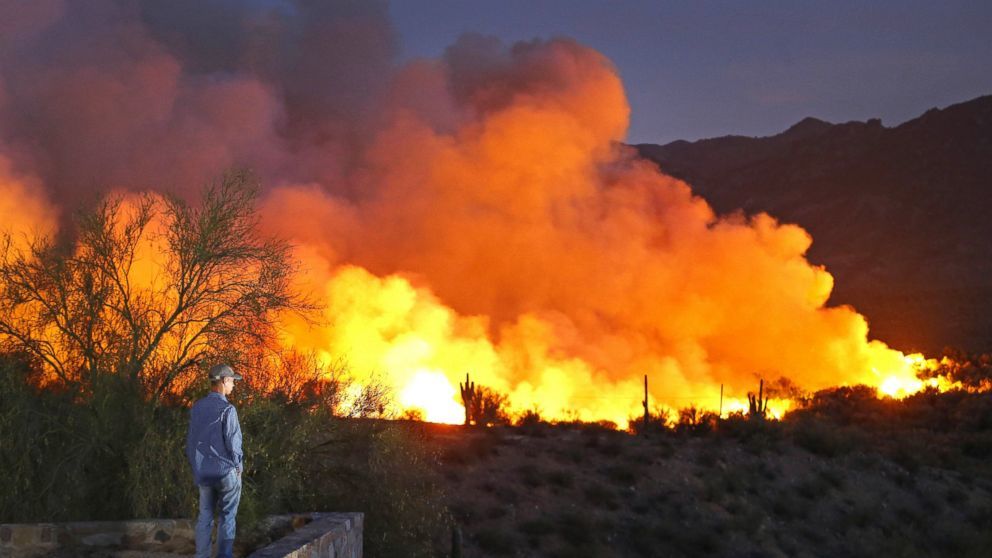
Justin Winsor watches a wildfire from the Breezeway Trailer Park Wednesday, June 17, 2015 in Kearny, Ariz. The blaze is not contained at all, but it's mostly relegated to a riverbed and about 200 firefighters have kept it burning away from the town of 2,000 residents, officials said.
A wind-aided brush fire burned without containment near a small town in central Arizona late on Wednesday, forcing authorities to evacuate an estimated 300 residents from the area.


Authorities ordered the evacuations of the roughly 100-unit Stevens Trailer Park and another 100 residences as the fire raged in a dry riverbed near the community of Kearny, about 90 miles (145 km) southeast of Phoenix.

Initial reports indicated that at least two residences and two other structures, plus a vehicle, had been scorched, said Mike Reichling, Arizona State Forestry Division. There were no reported injuries.

Arrow Up

Researchers perplexed by 'unprecedented warming' of waters off northeast U.S. coast

US northeast coast water temp
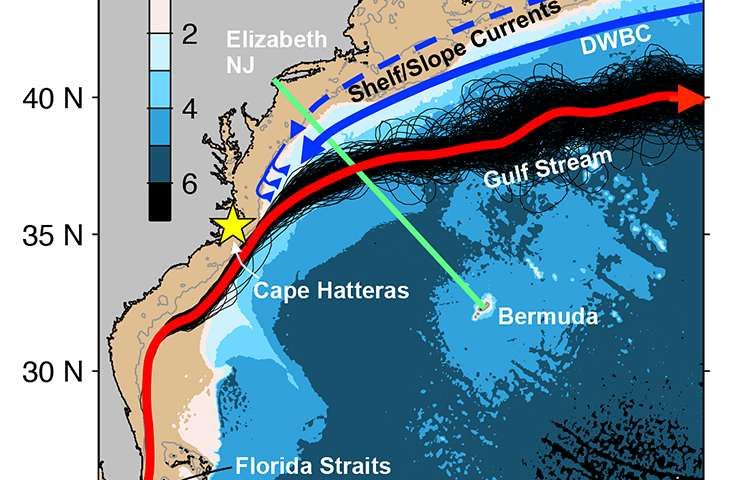
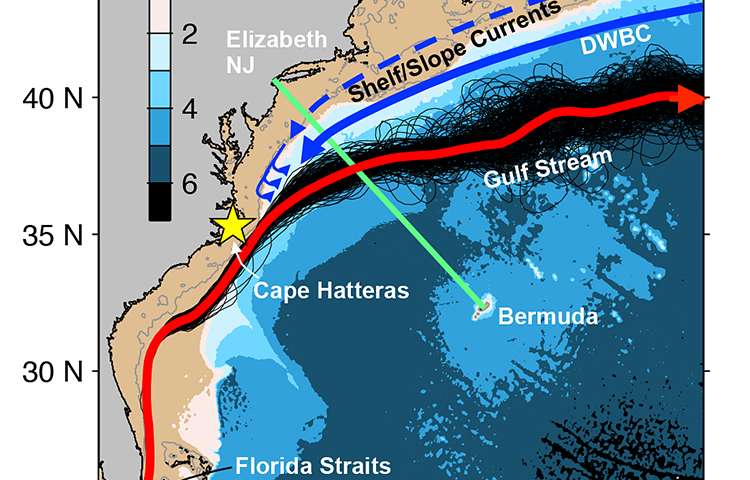
© Forsyth, et al.A new study shows that water temperatures in this continental shelf region have been trending upward, with unprecedented warming occurring over the last 13 years. The research is based upon temperature data from the waters off the northeast coast of the US that were collected in collaborative effort between scientists and the operators of the container ship Oleander, which routinely travels between Bermuda and New Jersey (green line). The mean surface circulation in the northwestern North Atlantic is shown.
A couple of unexplained large scale changes in the waters off the northeast coast of the U.S. have oceanographers perplexed: an accelerated rate of sea level rise compared to most other parts of the world; and the disturbing signs of collapsing fisheries in the region.

A new study by physical oceanographers at Woods Hole Oceanographic Institution (WHOI), published in the Journal of Geophysical Research, shows that water temperatures in this continental shelf region have been trending upward, with unprecedented warming occurring over the last 13 years. The study also suggests a connection between sea level anomalies and water temperature along the continental shelf.

"The warming rate since 2002 is 15 times faster than from the previous 100 years," says co-author Glen Gawarkiewicz, a WHOI senior scientist. "There's just been this incredible acceleration to the warming, and we don't know if its decadal variability, or if this trend will continue."

The scientists compared their findings with a study of surface waters using data collected by Nantucket Light ship, and other light ships up and down the East Coast between 1880 and 2004, previously analyzed by Steve Lentz of WHOI and Kipp Shearman of Oregon State University. The new study shows that recent accelerated warming is not confined to the surface waters, but extends throughout the water column.

"Others have reported on the temperature increase in this region," says Gawarkiewicz's colleague, WHOI assistant scientist Magdalena Andres, "but they've been confined to looking at the surface temperatures from satellites or buoys." And Gawarkiewicz and Andres wanted to understand how deep the warming went.

The research is based upon a rare collection of temperature data from the waters off the northeast coast of the U.S. that were collected in collaborative effort between scientists and the operators of the container ship Oleander, which routinely travels between Bermuda and New Jersey. The effort, which began in the late 1970s with funding from NOAA/NMFS, involved launching bathythermographs along the ship's track to collect temperature data approximately 14 times each year. Later the program was funded through the National Science Foundation and the University of Rhode Island and Stony Brook University. The bulk of the prior analysis has been on velocity data also collected by the Oleander.

Comment: Perhaps increased methane outgassing and undersea volcanic activity (it is estimated there are up to one million of these 'submarine volcanoes') are contributory factors to the "unprecedented warming occurring over the last 13 years"?

The significant increase of fish die off's and strange migratory behaviour of marine life could be considered other potential signs of such activity also.

As the number of volcanoes erupting right now is greater than the 20th century's YEARLY average, a comparable escalation in activity of their underwater counterparts seems logical.


Cloud Lightning

Lightning strikes kill 2 in Saurashtra, India

Image
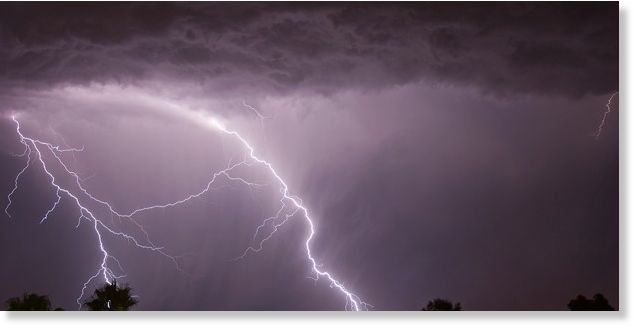
At least two persons were killed and an equal number were injured after being struck by lightning in Saurashtra and Kutch on Wednesday as moderate rains continue to lash the regions.

District flood control room officials at Bhuj said that one person died in Satapar village of Anjar taluka while another was injured. The second deceased was identified as 28-year-old Ramesh Gohil of Jesar village in Bhavnagar who died after being struck by lightning. Ebhal Gohil was injured in the accident and was rushed to a nearby hospital.

The intensity of rains in Saurashtra came down on Wednesday. Moderate rainfall was recorded in Bhavnagar, Amreli, Junagadh and Kutch districts. Maximum rainfall was recorded in Vathali (48mm), Junagadh city (36mm), Junagadh rural (36mm) and Manavadar (27mm) in Junagadh district. In Kutch, Abadasa received (24mm), Nakhatrana (16mm) and Bhachau received 26mm of rainfall.

Meanwhile, the India Meteorological Department (IMD) officials said that light to moderate rains would continue to occur at isolated places in Saurashtra and Kutch regions during the next four days. On Wednesday, people faced uncomfortable weather due to high humidity in Rajkot.

Source: TNN

Arrow Up

Alaska swelters in unusually hot temperatures

Alaska fire
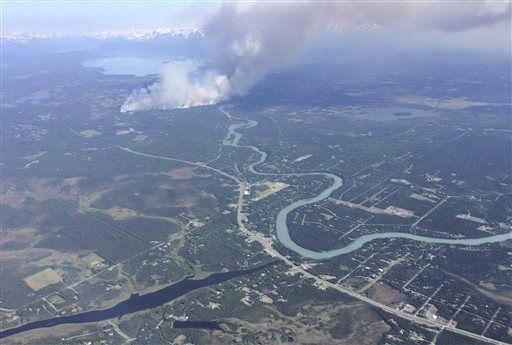
© Alaska Division of Forestry via APIn this Monday, June 15, 2015 photo released by Alaska Division of Forestry, thick white smoke rises from the Card Street Fire near the community of Sterling on the Kenai Peninsula, about 60 miles southwest of Anchorage.
Anyone visiting Alaska this week would be wise to pack plenty of shorts and T-shirts.

The far-north state is sweltering under unusually hot, dry weather that has broken records and intensified conditions fueling two large wildfires in the state.

The tinderbox setting got an early start during a warm winter with comparably little snow. Here's a brief primer on this summer's baked Alaska:

HOW HOT IS IT?

Summers can get warm even in Alaska, but this week's temperatures set records.

Anchorage, for example, had a record high of 83 degrees Tuesday, topping the old record of 82 set in 1969. The normal high for Alaska's largest city this time of year is in the low 60s, National Weather Service meteorologist Dave Snider said.

Comment: Alaska bakes while other parts of the world experience unseasonal cold. Is the world's weather reaching a tipping point of some kind with these extremes on both ends of temperature? If you are interested in reading more about why this happening and what is to come, then read Earth Changes and the Human Cosmic Connection: The Secret History of the World.


Water

'The water table is dropping all over the world' - NASA warns we're on the path to global drought

Image
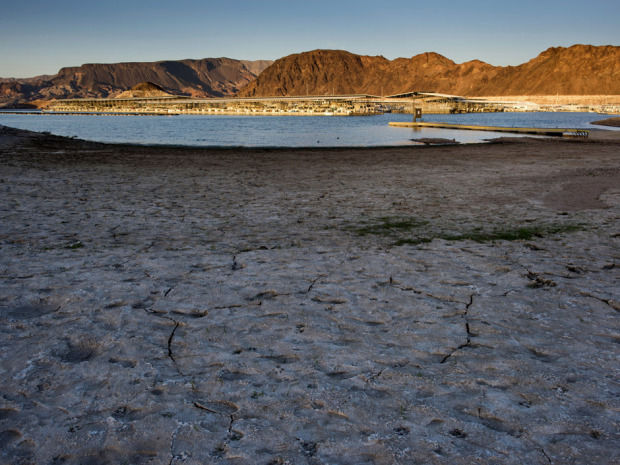
© David Paul Morris/BloombergCracked ground along the shore of Lake Mead is seen in Boulder City, Nevada, another symptom of drought research shows is becoming a global problem.
Drought-stricken California is not the only place draining underground aquifers in the hunt for fresh water.

It's happening across the world, according to two new studies by U.S. researchers released Tuesday.


Comment: It doesn't appear that this situation will reverse any time soon. Get prepared.


Magnify

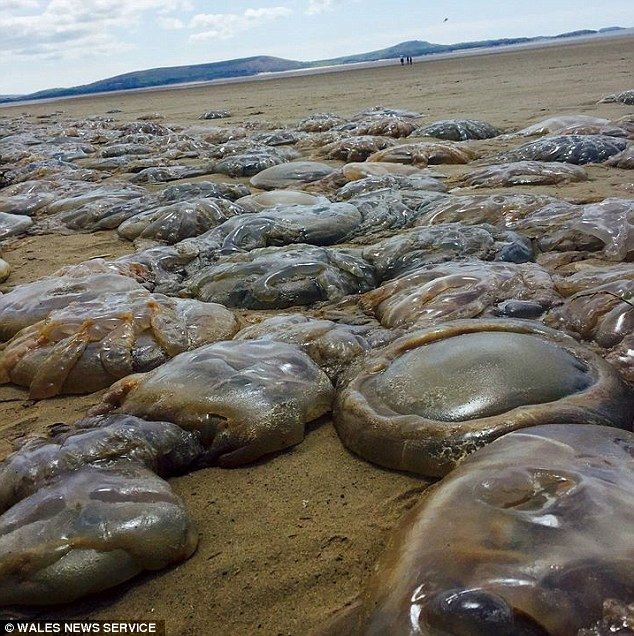
Thousands of jellyfish wash up on beach in Wales

barrel jellyfish
Beachgoers spotted hundreds of barrel jellyfish washed up at Cefn Sidan sands in South Wales.
Thousands of barrel jellyfish (Rhizostoma pulmo) have washed ashore on a beach in Carmarthenshire in the United Kingdom.

The sea creatures were found on Cefn Sidan Beach over the weekend, with 50 more jellyfish spotted at the harbor of Burry Port.

Members of the Carmarthenshire council believe the barrel jellyfish, which can grow to about 35 inches in diameter, were drawn to the area en masse because of the warm temperatures of the sea. The condition provides a suitable feeding ground for the jellyfish, as plankton are known to thrive in warm weather.

While the sea creatures do not pose an immediate threat to humans, beachgoers are still advised not to disturb or touch the jellyfish.

Bizarro Earth

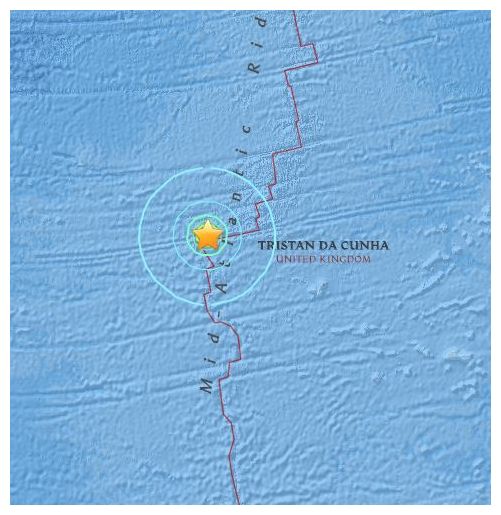
USGS: Earthquake Magnitude 7.0 - Southern Mid-Atlantic Ridge

Mid-Atlantic RidgeQuake_180615
© USGS
Time
  1. 2015-06-17 12:51:33 (UTC)
  2. Times in other timezones
Nearby Cities
  1. 494km (307mi) WNW of Edinburgh of the Seven Seas, Saint Helena
  2. 2750km (1709mi) SE of Arraial do Cabo, Brazil
  3. 2752km (1710mi) SE of Armacao de Buzios, Brazil
  4. 2755km (1712mi) SE of Cabo Frio, Brazil
  5. 3513km (2183mi) ESE of Montevideo, Uruguay
Scientific Data

Evil Rays

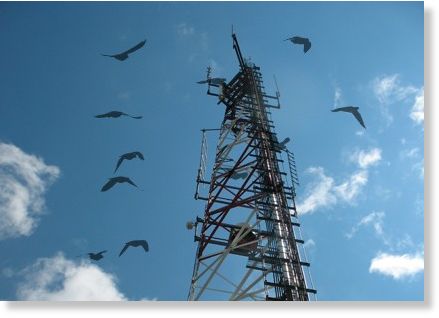
Mobile phone towers in Hyderabad, India are driving migratory birds crazy

Image
Birds near phone tower
Increasing radiation from thousands of mobile phone towers in Hyderabad is playing havoc with the natural flight paths of migratory birds, experts said on Monday. Rare species of birds are unable to find their way back home after winter, they added.

While migratory birds use the geomagnetic field as a compass to track their route from Europe to the Indian sub-continent every year, radiation emitted from these mobile phone towers (6,000 of which came up in just two years) is damaging their brain cells and sense of direction, several environmentalist groups said.

Thousands of birds from 800 different species visit the lush environs of Osmansagar and Safilguda lakes every year. But bird-watchers say hundreds of birds they tracked about a year ago have not found their way back home. Instead, they are found to be circling the city and heading back to the city lakes.

Windsock

Impressive waterspout seen off southern Thailand

waterspout off Thailand
The impressive waterspout near Koh Pu in Krabi, Thailand.
PHUKET: A waterspout put on a show for tourists and fishermen off Koh Pu in Krabi yesterday morning.

"My friends and I were going fishing at Sri Boya Island when the waterspout emerged about 1 kilometer away from us," said 50-year-old Samart Maikeaw, who was out on a fishing trip with friends.

The spout caused sudden heavy rain, but no damage was reported.

A waterspout is usually a non-supercell tornado over the water, which is connected to a towering cumuli-form or cumulonimbus cloud. Mr Samart seized the moment and took photos of the column before sharing it on the popular mobile application LINE

Cloud Precipitation

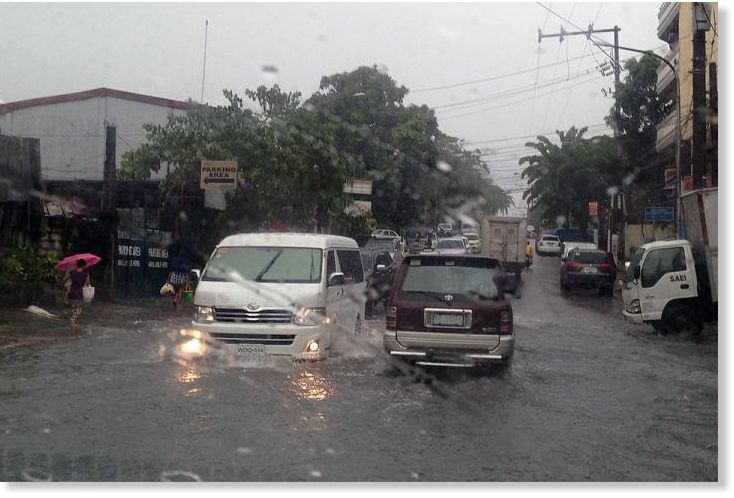
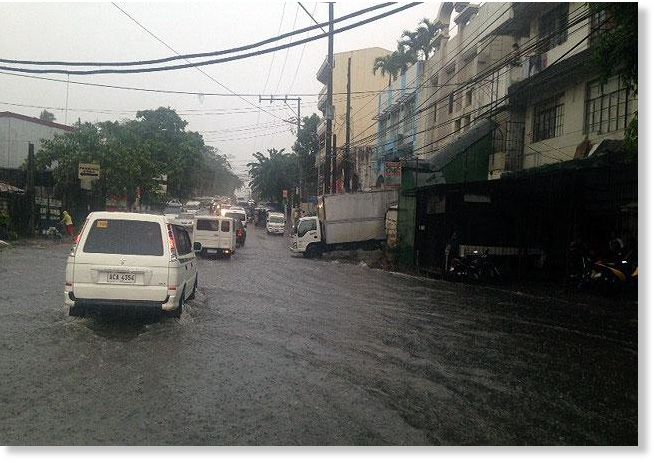
Sudden downpour causes floods on Metro Manila streets

Image
© Teresa Andrada Motorists navigate through a flooded portion of Scout Chuatoco Street in Quezon City on Wednesday, June 17, as thunderstorm dumps rain in many parts of Metro Manila.
Several roads in Metro Manila were flooded Wednesday afternoon after a thunderstorm brought heavy rain in the National Capital Region and nearby provinces.

Tweets posted by the Metropolitan Manila Development Authority (MMDA) said MacArthur Highway in Valuenzuela is not passable to all types of vehicles as of 4:30 p.m.

Gutter-deep flood, meanwhile, was reported on the loading bays along EDSA Aurora and Farmers Market, but all lanes are passable.

In Scout Lozano corner Tomas Morato in Quezon City, floods reached waist level.

Image
© Jam SisanteFloodwater in Manila