
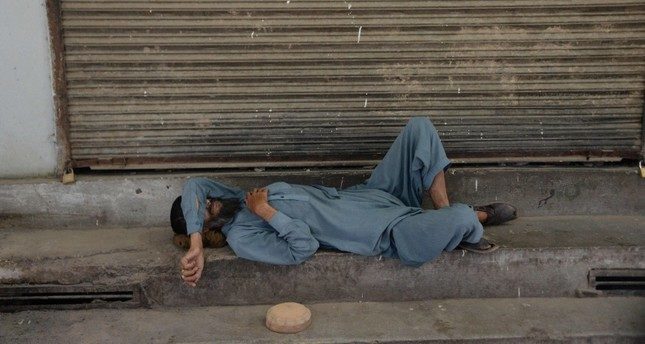
© AFPAn Afghan Muslim man sleep in front of a shop during the Islamic holy month of Ramadan in Jalalabad on May 28, 2018.
Two thirds of Afghanistan's 34 provinces have been hit by a lack of rain or snowfall since late last year, said a bulletin from the United Nations Office for the Coordination of Humanitarian Affairs (OCHA).
Some rivers and water points have totally dried up, and the last wheat harvest has been "completely lost", according to the Food and Agriculture Organization.
"Six months down the road, millions of people could be in a situation of untenable hunger without knowing where their next meal will come from," said Toby Lanzer, the U.N. humanitarian coordinator in Afghanistan.
Already, the drought has forced 21,000 people to leave their homes and settle on the outskirts of the western city of Herat, said OCHA.
The U.N. hopes to distribute cash to enable families to buy food and try to prevent further migration.
"People prefer cash, which allows them to buy what they need most," he said. "We prefer not to truck food across the country, also because doing so is expensive and can disrupt markets."
The U.N. is revising its humanitarian appeal for 2018 because of the drought, and says it needs an extra $115 million to help 1.4 million of the hardest-hit people.
Only one quarter of the $430 million the U.N. requested for 2018 was funded as of May 23.










Comment: See also: