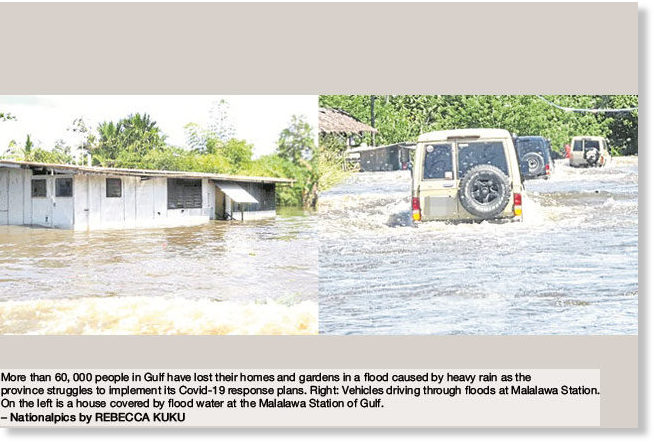
More flooding has been reported in Papua New Guinea, this time in Gulf Province.
Governor of Gulf Province, Chris Haiveta, quoted by local media, said that as many as 60,000 people have been affected by flooding in 9 Local Level Government (LLG) areas, including the provincial capital, Kerema. Local observers, via Social Media, said that flooding had been affecting some areas of the province since late March after rivers broke their banks. Provincial disaster authorities will complete damage assessments after the flood recedes, the governor said.
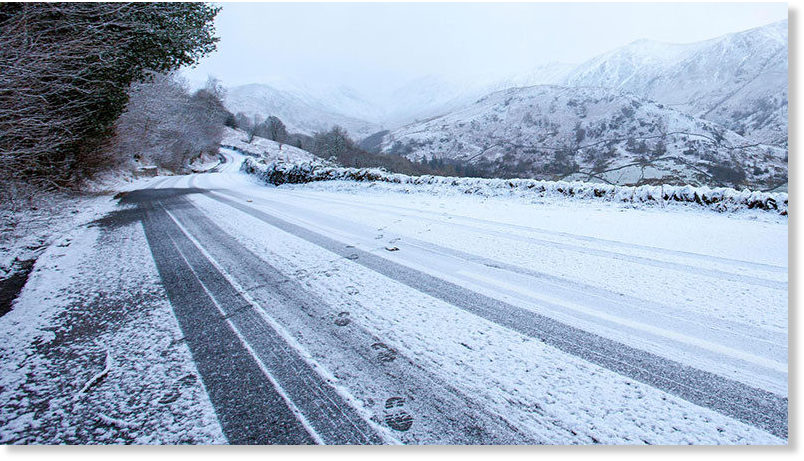
Roads in Armenia are mostly open to traffic as of 9am Tuesday, April 7, the Ministry of Emergency Situations reported.
The roadways leading to Amberd Fortress and Lake Kari of Aragatsotn Province are closed for an indefinite period of time.
Snowfalls are reported in Syunik Province, the towns of Gavar, Martuni, Chambarak (Gegharkunik Province), Tashir (Lori Province), Jermuk (Vayots Dzor Province) as well as in Dilijan serpentine and Saravan-Zanger section.
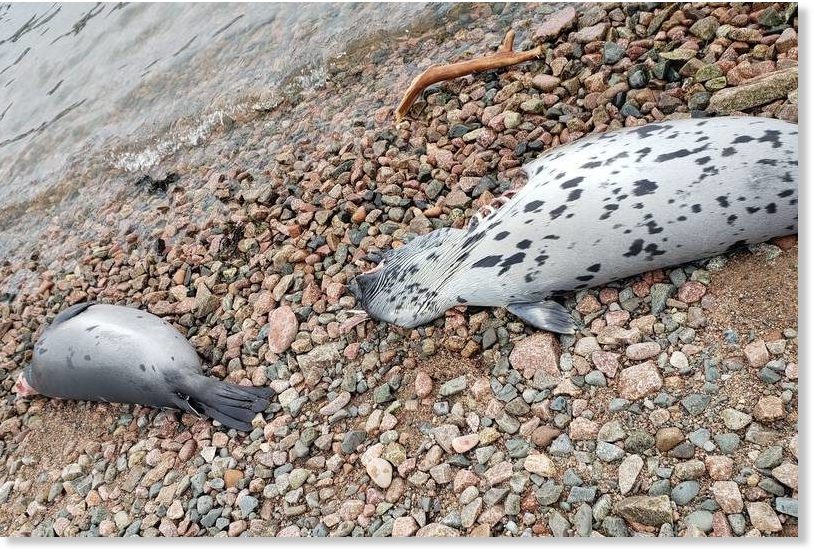
What was supposed to be a nice walk along a shore ended up being a tragic count of dead seals.
Jans Ellefsen, originally of Glace Bay and now of Halifax, was walking by the Fisherman's Wharf near the Englishtown ferry on April 4 when he noticed a couple of dead seals on the beach. As Ellefsen continued to walk, he continued to find more.
"It was shocking at first," he said. "I wondered how much further long this beach am I going to continue to see these seals? I just continued to follow the beach line and found 20 plus along there."
The seals ended up appearing to be confined along about a 500 to 1,000-foot stretch and in different stages of decay.
"Their bodies looked perfectly fine, there didn't seem to be any signs of trauma," he said.
"There were a couple carcasses that didn't have any decay at all."
A powerful storm moved into the Los Angeles region Sunday night, setting a new rainfall record in just hours. On Monday, the heavy-rainfall had officials onguard for the chance of flooding, mudslides over slopes denuded by wildfires as well and dangerous driving conditions in the mountains.
The "powerful late-season winter- like storm" was expected to drop as much as five inches of rain in the San Gabriel Mountains, snow along the Grapevine and up to two inches of rain along the coast. After the driest February on record, and a March characterized by small storms, this April storm is one of the biggest to hit the region in months. A record rainfall rate for an April 5 was recorded Sunday at Sandberg in the L.A. County portion of the San Gabriels. The 0.51 inch recorded bested the 0.5 set in 1969.
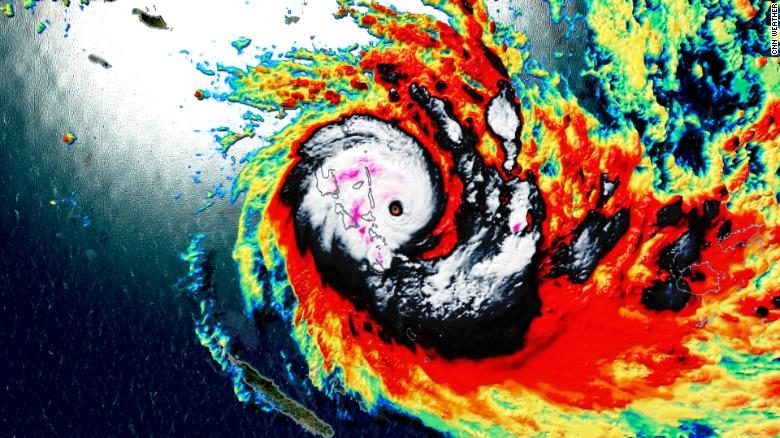
A satellite image shows Harold slamming Vanuatu on Monday
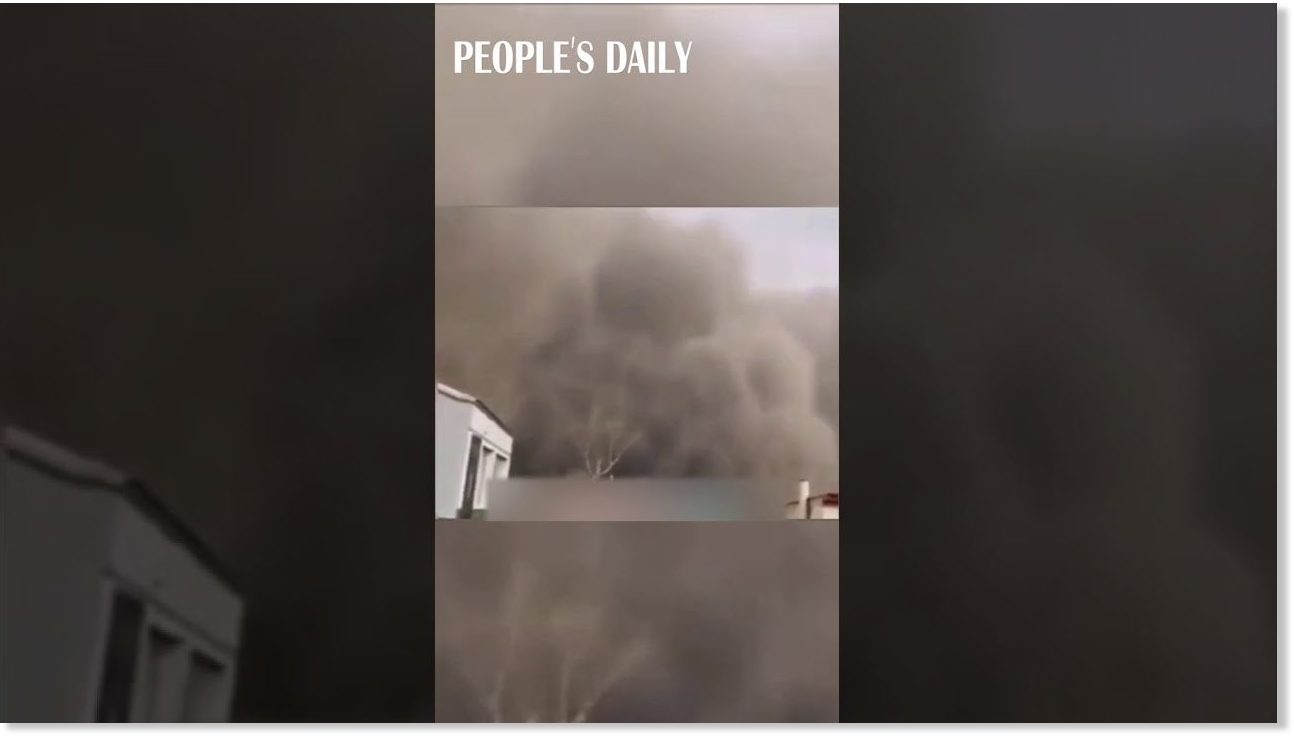
In Vanuatu, homes have been destroyed and livelihoods ruined by Tropical Cyclone Harold, which passed through the country's northern islands as a category-five system, wreaking devastation.
The total scale of the destruction is not yet clear as main communication lines to the hardest hit islands of the archipelago nation have been severed.
But pictures from Espiritu Santo and Malo Islands show villages reduced to ruins by the storm, which reportedly carried 235km/h winds, overnight.
Save The Children, which has staff in Santo and the capital Port Vila, believe the eye of the monster system travelled directly over Luganville, the country's second biggest settlement, with 17,000 people.
Comment: Severe Weather Europe reports that Tropical Cyclone HAROLD became the 2nd strongest cyclone to hit Vanuatu on record with peaks at 165 knots (912 mbar)!
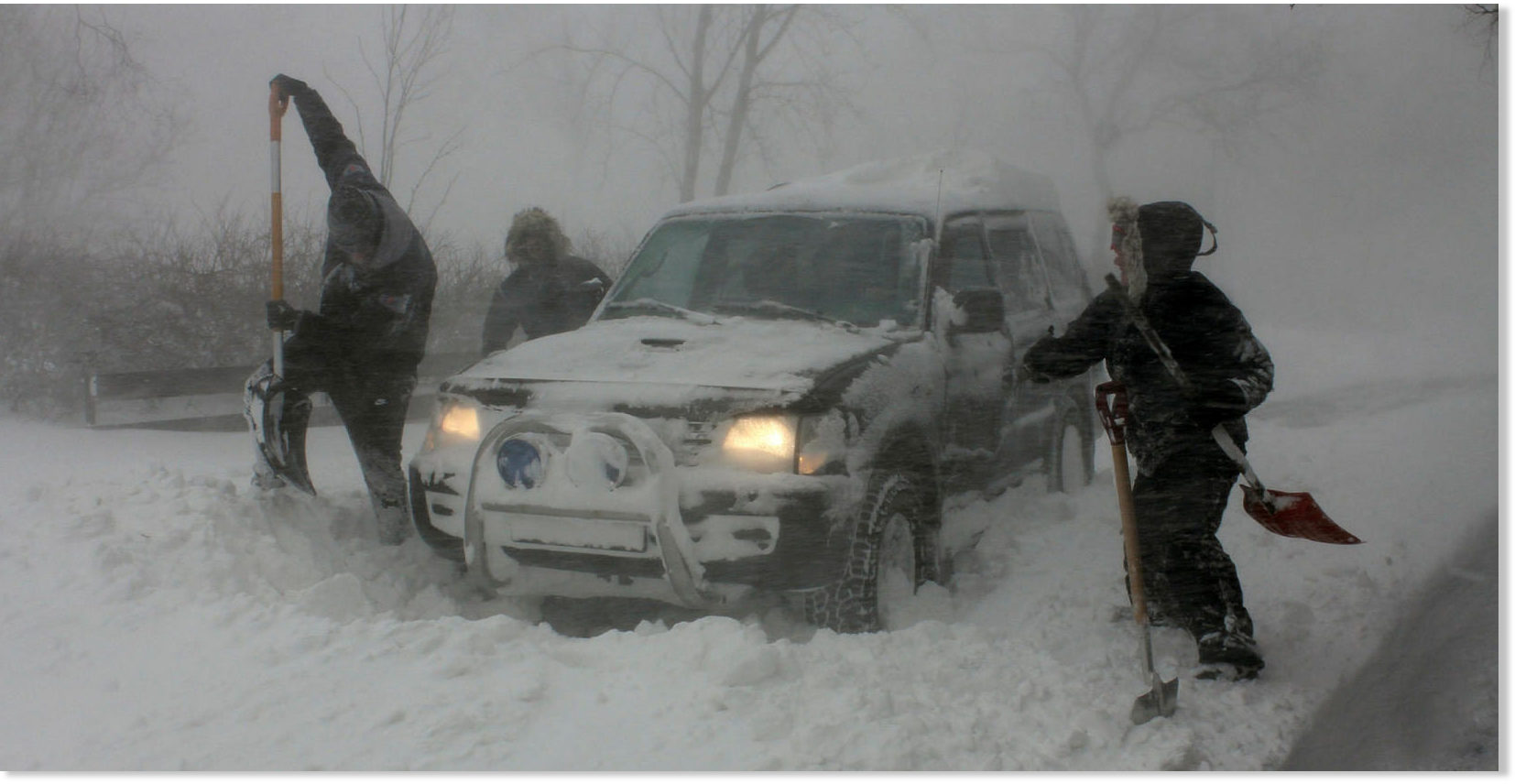
Severe weather hit every part of the country over the weekend, with the exception of the capital area, Morgunblaðið reports.
In the West Fjords, the Icelandic Coast Guard ship Þór was on stand-by in Ísafjarðardjúp fjord, where the wind speed reached 50-60 knots, and visibility was next to none.
"We are ready, should we be needed," Captain Halldór B. Nellett told Morgunblaðið yesterday. "For the past few days, roads have been impassable, and all flights have been canceled to this area. The only passable route is by ship. "
On Saturday, Þór sailed to Ísafjörður to pick up coronavirus samples, which it transported to Arngerðareyri - at the innermost part of Ísafjarðardjúp fjord. There, the ship sailed as close to the shore as possible, where some crew members went by boat the last stretch to shore. On the dock, rescue workers awaited them and received the samples, which were subsequently transported to Reykjavík for analysis.
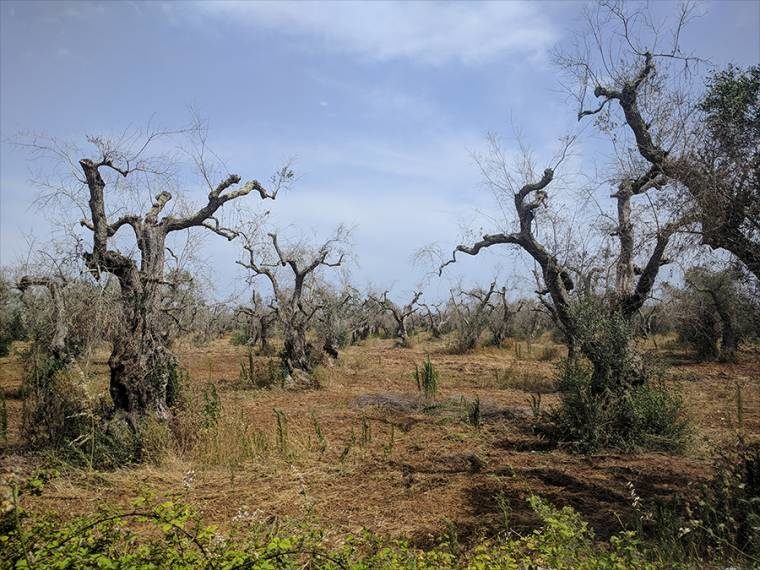
A plant disease spread by sap-sucking insects has been devastating olive and fruit orchards across southern Europe, but scientists are inching closer to halting its spread with the help of insect repelling clays, vegetative barriers and genetic analysis.
In the late summer harvest of 2013, olive farmers in the Puglia region of southern Italy noticed that the leaves on several of their trees were turning brown and their shoots withering. The problem spread from one orchard to another, as more olive farmers found their trees were drying out and beginning to die.
Genetic testing confirmed them to be infected with Xyella fastidiosa, a bacteria originally found in America. Soon outbreaks appeared throughout the Mediterranean, even briefly as far north as Germany in 2016.
Comment: Erratic seasons and extreme weather are devastating crops all over the planet, and at the same time we're seeing outbreaks of all kinds.
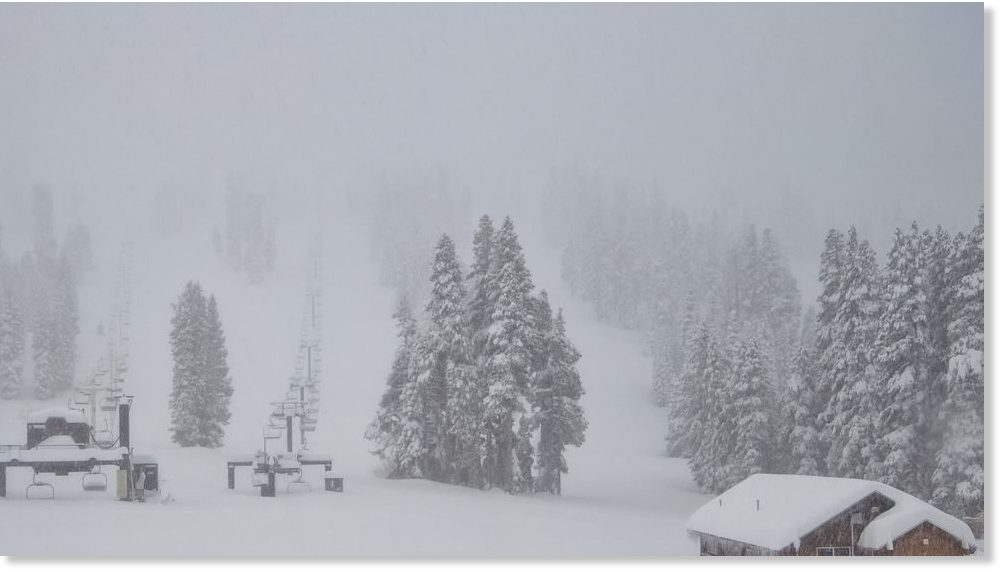
A pair of Spring storm fronts swept through the Sierra over the weekend and on Monday morning, forcing travelers to use chains on mountain passes on I-80 and Highway 50 and blanketing the region with as much as 3 feet of new snow at the higher elevations.
What would have been a late season boost to the Tahoe area ski industry has been transformed into a "what if" moment as resorts from Squaw Valley to Heavenly Valley have been shuttered for the season since late March because of the current coronavirus outbreak and social distancing requirements.
A winter weather advisory expires at noon Monday for Tahoe where 13 inches of snow fell at Incline Village. Mammoth Mountain ski resort reported 35 inches.
"The purpose of GLADIO was to attack civilians, the people - women, children, innocent people, unknown people, far removed from any political game. The reason was quite simple: to force the public to turn to the State and demand greater security. Under a strategy of tension, you 'destabilize in order to stabilize', to create tension within society and promote conservative, reactionary social and political tendencies."
~ Italian neo-fascist whose prosecution led to the discovery of NATO's 'Gladio' networks across Western Europe
- Vincenzo Vinciguerra
”
Recent Comments
Schumm and colleagues used the clock to look for evidence of dark matter, the invisible, massive substance that is thought to pervade the universe...









Comment: Severe Weather Europe reports that Tropical Cyclone HAROLD became the 2nd strongest cyclone to hit Vanuatu on record with peaks at 165 knots (912 mbar)!