
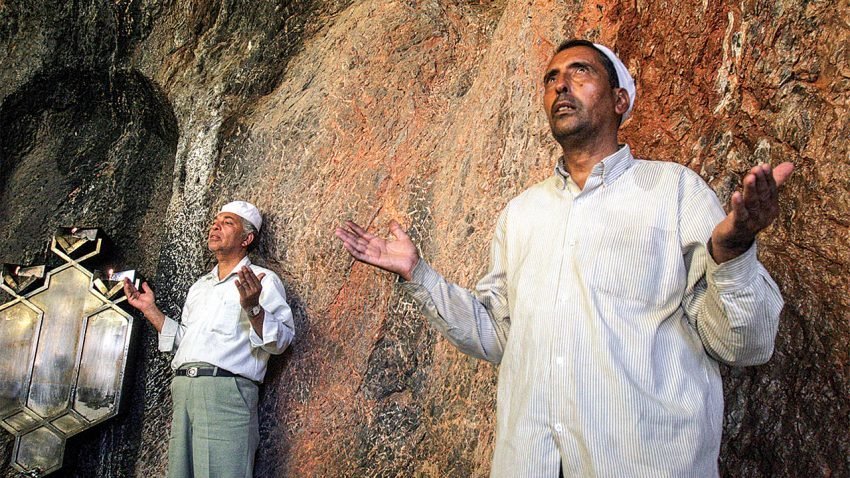
© Vahid Salemi/Associated PressZoroastrians, who practice Iran’s ancient religion, still carry DNA from the earliest farmers in the Zagros Mountains.
According to three teams who used new techniques to gain glimpses of the nuclear DNA of the world's very first farmers, farming was adopted not by one group of people, but by genetically distinct groups scattered across the region. "It was not one early population that sowed the seeds of farming in western Asia, but several adjacent populations that all had the good fortune to live in the zone where potential plant and animal domesticates were to be found and exploited," says archaeologist Colin Renfrew of the University of Cambridge in the United Kingdom, who was not involved in the work.
The research—a paper published online in Science this week and two studies posted last month on the bioRxiv server—can't pin down whether agriculture spread quickly among diverse peoples or was independently invented more than once. But the diversity of the first farmers is "very surprising," says statistical geneticist Garrett Hellenthal of University College London, a co-author of the Science paper. "These early farmers who lived pretty close to each other were completely different."













Comment: Behind the Headlines: Assassinated Heroes