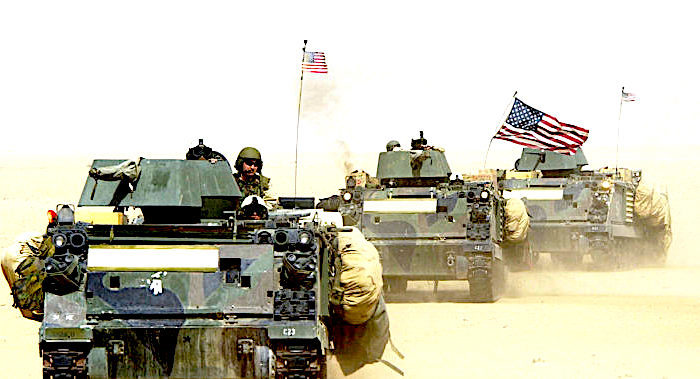
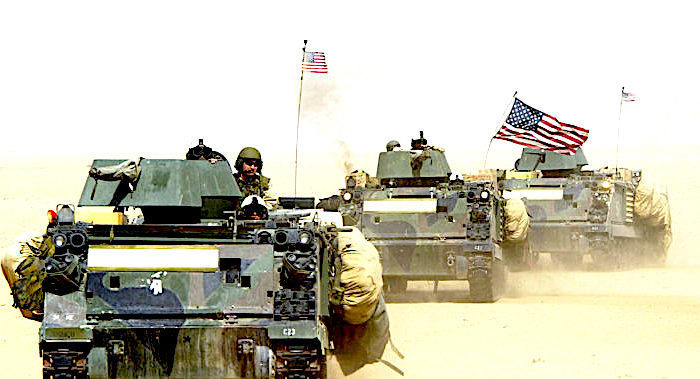
© Getty ImagesUS Troops in Iraq
Months before war was declared, a covert team of CIA paramilitaries and Green Berets slipped unnoticed into northern Iraq. They surveyed the battlespace, struck a deal with the enemy - and foresaw the disaster to come.
On March 20, America will be celebrating - if that's the right word for it - the 15th anniversary of our invasion of Iraq,
one of the most well-executed projections of U.S. military might in history. Despite
fears that we were underestimating Saddam Hussein's capabilities (not to mention an elaborate
$250 million dress rehearsal during which the team playing the enemy quickly decimated the U.S. fleet),
a coalition including American, British, Australian and Polish armed forces managed to seize control of the country within a mere 21 days, with relatively few casualties on either side.Leaving aside the difficulties presented by the subsequent occupation, Operation
Iraqi Freedom was an impressive feat of war fighting, arguably every bit the "cakewalk" that one widely mocked
column predicted it would be.
But while
military textbooks attribute the campaign's success to careful planning and coordination, an ability to improvise, superior personnel, air supremacy, and the deployment of overwhelming force, less commonly acknowledged is
the role of a minuscule advance team made up of CIA special activities division forces and special forces operators, who spent nine full months in Iraq before the Tomahawks started flying, carefully preparing the battle space. Meanwhile, they also got a preview of the U.S. military's misguided view of the Iraqi Army, which would later lead to the undoing of so much good work.













Comment: As noted above, we have to bear in mind the climate of the area and the era. In an area near the coast or that's too cold to sustain land mammals, it makes sense they would feast on sea mammals particularly since, as evidenced by their choices, they seem to have understood how vital saturated fat is in order to remain healthy - like the Inuit nowadays - even more if we consider that they've just left an ice age, with the landscape and food choices they will have had access too.