Secret HistoryS


Airplane

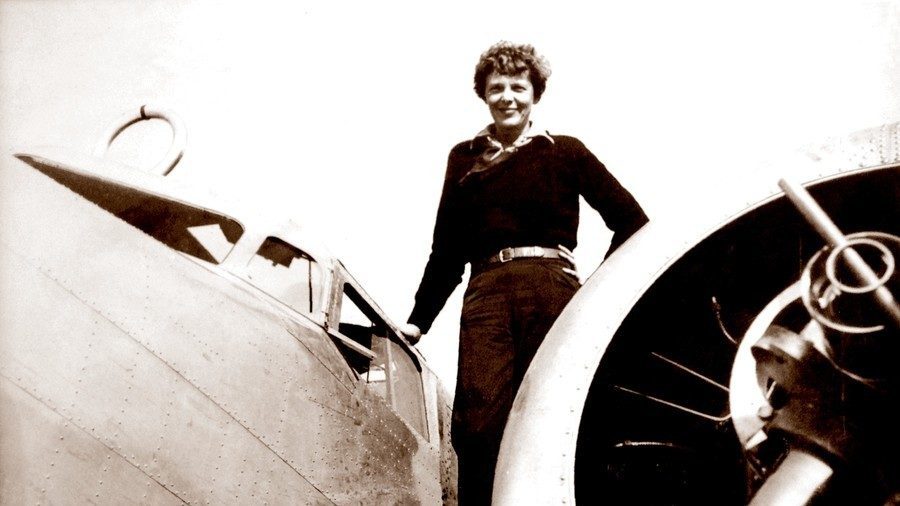
Amelia Earhart mystery finally solved, claims anthropology professor

Amelia Earhart
© Albert Bresnik / The Paragon Agency / AFPAmelia Earhart
The decades-long mystery surrounding the fate of Amelia Earhart could finally have finally been solved. Scientists studying bones discovered on a small Pacific island have identified the remains as those of to the female aviator.

Earhart's plane went missing during her 1937 attempt to circumnavigate the globe. The bones were found by a British expedition on the uninhabited island of Nikumaroro, north of Fiji, in 1940. A forensic analysis of the remains in 1941 originally linked the remains to a man, but a new study, published in the journal 'Forensic Anthropology' by Professor Richard Jantz of the University of Tennessee, rejects these findings.

Comment: Mystery deepens over bones linked to Amelia Earhart


Beer

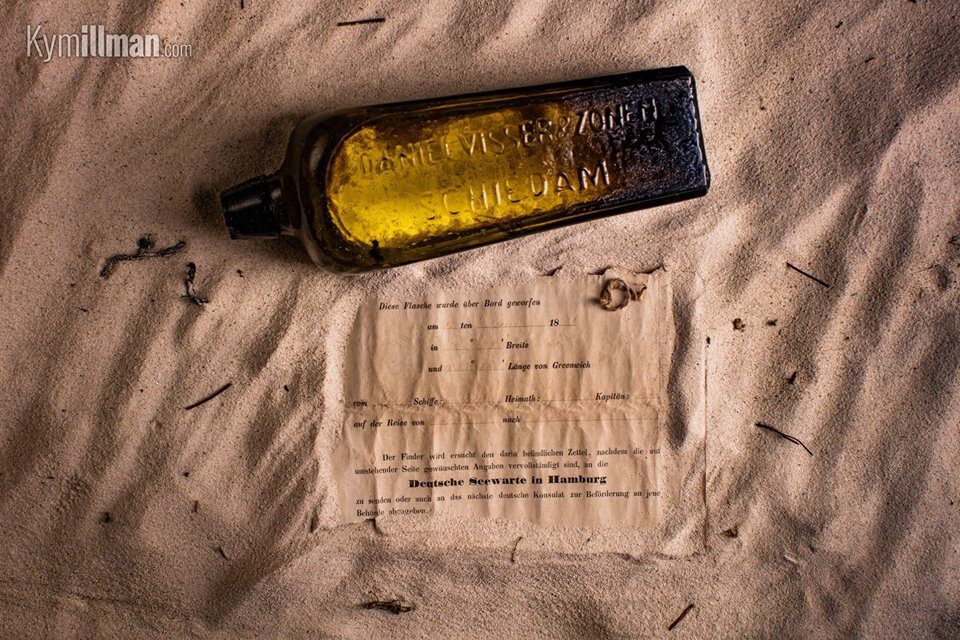
132-year old message in a bottle found on West Australian beach - world's oldest

oldest message in a bottle
© Kym Illman
The world's oldest known message in a bottle has been found half-buried at a West Australian beach nearly 132 years after it was tossed overboard in the Indian Ocean, 950km from the coast.

Until now, the previous world record for the oldest message in a bottle was 108 years, four months and 18 days between jettison and discovery.

The message is dated 12 June 1886 and was jettisoned from the German sailing barque Paula as part of a long-term German oceanographic experiment to better understand global ocean currents and find faster, more efficient shipping routes.

The bottle was found just north of Wedge Island, 180km north of Perth, by Tonya Illman near her son's car which had become bogged in the soft sand. Researchers believe the bottle and message probably washed up there within a year of being jettisoned but lay buried in a layer of damp sand which helped preserve it, until a storm surge or similar weather event uncovered it more than a century later.

Video

Long-lost footage of 1906 San Francisco earthquake found at flea market

San francisco earthquake 1906
© Courtesy of Silver Shadows Gallery Ltd.
In the dawn hours of April 18, 1906, a sudden shock rattled San Francisco. Half a minute later, one of the largest quakes in California history pummeled the sleeping city awake.

Modern geologists estimate that the 1906 San Francisco earthquake measured somewhere between magnitude 7.7 and 8.3. The shock waves and subsequent fires from the quake destroyed 28,000 buildings, killed at least 700 people and rendered more than half of the city's 400,000 residents homeless.

Now, after being lost for more than 100 years, footage of the quake's devastating aftermath has turned up. Providing hope for treasure hunters everywhere, photography collector David Silver found the rare roll of nitrate film stuffed in the trunk of a car at a California flea market.

According to Silver, it was a miracle the 9-minute reel was still intact; nitrate film is delicate and extremely flammable, and the man selling the reel was "standing there looking through a length of it with a lit cigarette hanging from his lips," Silver told SFGate.com.

Question

Unexplained booms shook New Jersey over 40 years ago

Unexplained booms in NJ 1977
© Asbury Park Press
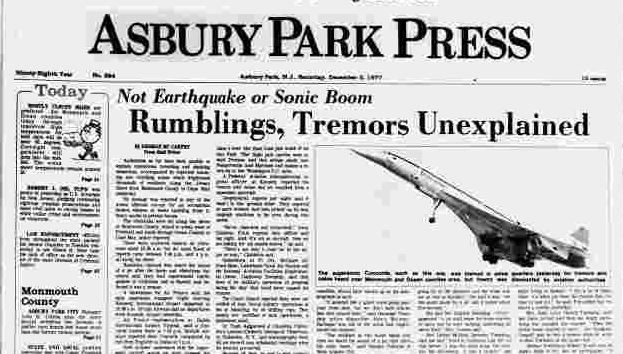
About 40 years ago, something so violent shook the Jersey Shore that the order was given to evacuate the Oyster Creek nuclear power plant in Lacey.

The date was Dec. 2, 1977, and to this day and one federal investigation later, no one is absolutely certain what happened.

"Not Earthquake or Sonic Boom: Rumblings, Tremors Unexplained," was the main headline on the front page of the Asbury Park Press the next morning.

Initially, the supersonic Concorde was thought to be the culprit. A little more than a week earlier, the British-French airliner - which could travel twice as fast as the speed of sound - had started transatlantic service into John F. Kennedy International Airport in New York.


Attention

How did 'Operation Merlin' poison US intel on Iran?

Jeffrey Sterling, Holly Sterling
© AP/Kevin WolfJeffrey and Holly Sterling leaving Alexandria Federal Courthouse, January 26, 2015.
Jeffrey Sterling, the case officer for the CIA's covert "Operation Merlin," who was convicted in May 2015 for allegedly revealing details of that operation to James Risen of the New York Times, was released from prison in January after serving more than two years of a 42-month sentence. He had been tried and convicted on the premise that the revelation of the operation had harmed U.S. security.

The entire case against him assumed a solid intelligence case that Iran had indeed been working on a nuclear weapon that justified that covert operation.

But the accumulated evidence shows that the intelligence not only did not support the need for Operation Merlin, but that the existence of the CIA's planned covert operation itself had a profound distorting impact on intelligence assessment of the issue. The very first U.S. national intelligence estimate on the subject in 2001 that Iran had a nuclear weapons program was the result of a heavy-handed intervention by Deputy Director for Operations James L. Pavitt that was arguably more serious than the efforts by Vice-President Dick Cheney to influence the CIA's 2002 estimate on WMD in Iraq.

The full story the interaction between the CIA operation and intelligence analysis, shows, moreover, that Pavitt had previously fabricated an alarmist intelligence analysis for the Clinton White House on Iran's nuclear program in late 1999 in order to get Clinton's approval for Operation Merlin.

Magic Wand

Puzzle jugs: Centuries old drinking vessels designed to confound (VIDEO)

A puzzle jug, c. 1660 - 1690.
© Artokoloro Quint Lox Limited/ AlamyA puzzle jug, c. 1660 - 1690.
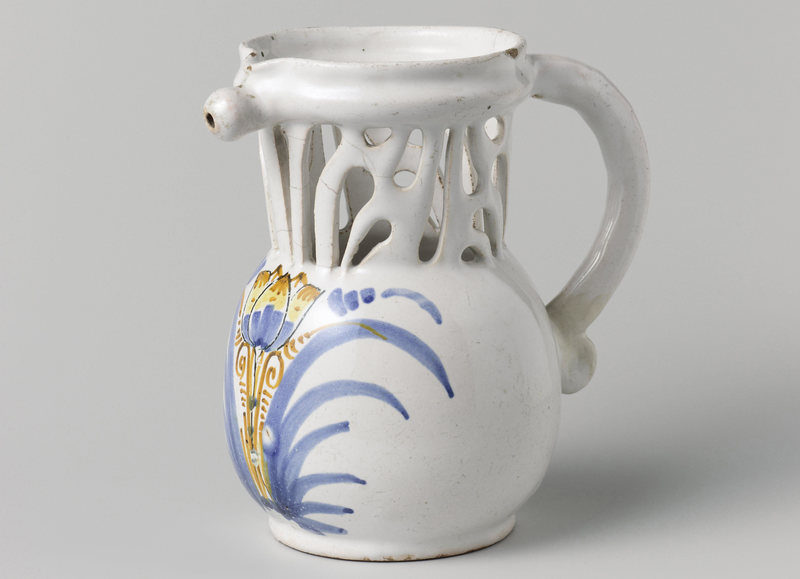
What's more fun than drinking alcohol in a pub? Guzzling it down after satisfactorily solving a puzzle, of course. In the 16th-19th centuries, Western European drinkers enjoyed playing drinking games with specially built "puzzle jugs." A puzzle jug, shaped with a bulbous middle and slender head, was a multi-spouted decanter. The challenge for the drinker was to figure out how to drink the alcohol inside without spilling any.

Multiple holes or spouts opened up onto hollow chambers with liquid inside them, and drinkers would have to plug some of them to prevent spills. But how did it work? Antiques expert Robert Aronson noted that "the hollow handle ... forms a siphon from the lower body," but the suction from the hollow handle was "broken by a small hole beneath the top of the handle." That secret hole was the most important of all; hidden away from public view, that was the one the drinker had to cover "in order to create the vacuum that allows him to suck the liquid from the jug up through the handle, around the rim and out through the one functioning nozzle."

Blackbox

Ancient Egyptians were tattooing earlier than we thought

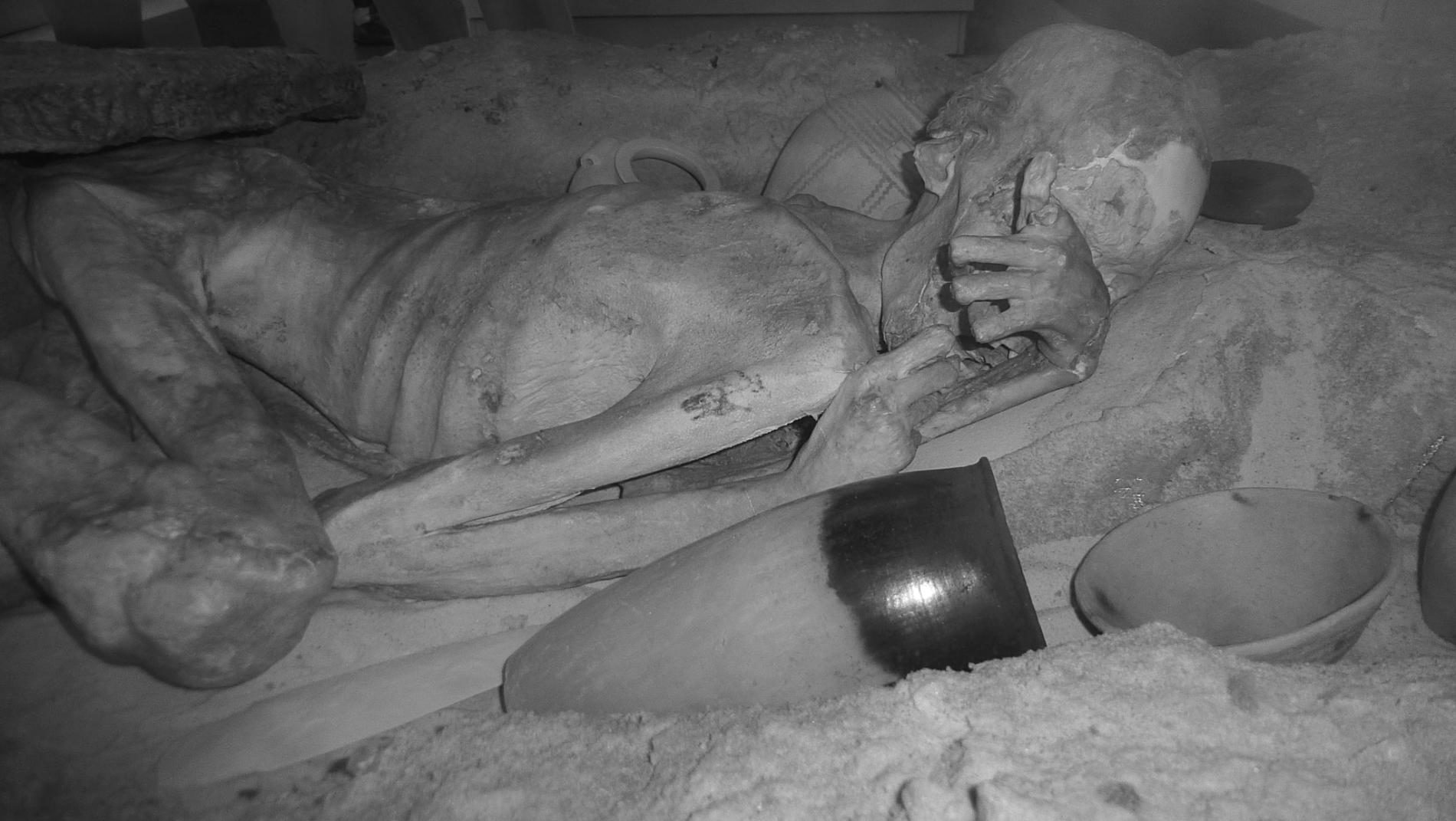
This infrared image shows the male mummy known as Gebelein Man. On his arm, you can see his tattoos.
© The Trustees of the British MuseumThis infrared image shows the male mummy known as Gebelein Man. On his arm, you can see his tattoos.
A new analysis of two mummies shows the pair were sporting tattoos. The mummies belong to a collection of six found in 1900. They were named the Gebelein mummies after the region in which they were found. Now in the possession of the British Museum, they were reanalyzed as part of an ongoing project to reexamine valuable artifacts.

Both individuals date anywhere from 3351 B.C. to 3017 B.C., making them some of the earliest known bearers of tattoos. The next known example of ancient Egyptians getting tattoos doesn't appear for more than a millennia later.

Only Ötzi the Ice Man, a cave man dating back to about 3370 B.C., has earlier evidence of tattoos.

Comment: Also See:


Boat

Pirate's crossed bones rise from ghost ship, possible remains of Captain Samuel Bellamy

The Whydah
© CC by 2.0
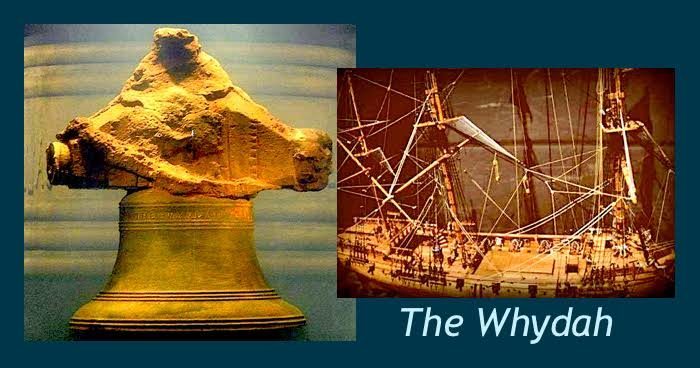
Scientists in Massachusetts will soon know if bones discovered in a pirate shipwreck belong to one of the most notorious Pirates of the Caribbean that ever sailed the seven seas - Captain Samuel "Black" Bellamy. In 2008, Forbes reported that during his time as a pirate, Bellamy amassed the equivalent of "$120 million" in today's money.

This story unfolds like a Hollywood movie and it began in 1982 when underwater explorer Barry Clifford discovered a shipwreck 20 miles off the coast of Cape Cod. Then, in 1985 he recovered the ship's bell - "THE WHYDAH GALLY 1716" - sounding a 'gong' on the first authenticated pirate shipwreck ever discovered in North America.

Built in England in 1715, The Whydah Gally was a 300-ton, 102-foot-long (31 m) English slave ship and was fitted with 18 cannons, but Bellamy beefed it up with 10 more. The ship could reach speeds of up to 13 knots (24 km/h; 15 mph) and under the command of Bellamy it plundered 54 ships in the Caribbean in 1716 and 1717. Historical reports detailing her inventory when she went down recorded "about four or five tons of silver and gold, indigo, Jesuit's bark, ivory and other precious trade goods."

Cross

Pagan Attis, Christian Jesus: Dubious connection based on bad scholarship?

cybele attis
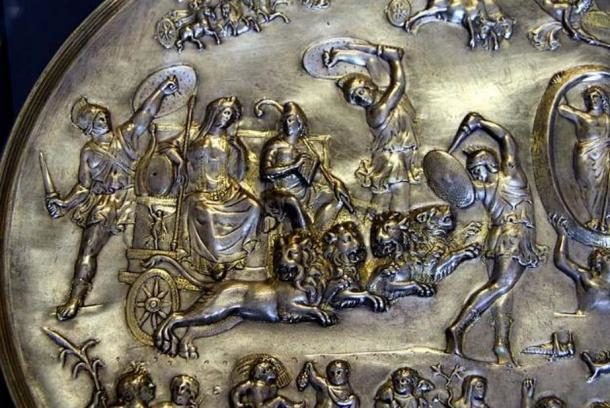
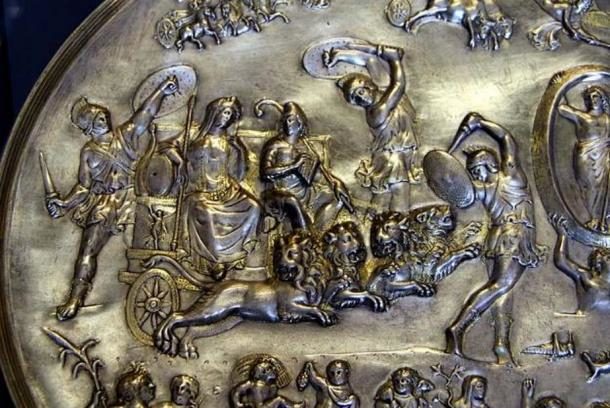
© Giovanni Dall’OrtoCybele and Attis (seated right, with Phrygian cap and shepherd's crook) in a chariot drawn by four lions, surrounded by dancing Corybantes (detail from the Parabiago plate; embossed silver, c. 200–400 AD, found in Milan, now at the Archaeological Museum of Milan).
Recently, it has been popular to suggest in some circles that Christianity was influenced, or even derived from, the ancient Roman mystery religions - religions often known to have orgiastic rituals and connection to a personal god. One pagan figure that is popular among proponents of this idea is Attis, a Phrygian god associated with vegetation and consort of the goddess Cybele. Attis is claimed to have been born of a virgin, crucified on a tree and rose again from the dead in a similar manner to Jesus. Those elements may sound similar, however closer examination shows that there is little evidence for these claims and that the original myth bears little resemblance to the Gospel narrative.

Mystery Religions and Christianity

Mystery religions arose during the Hellenistic Period and continued into the Roman Period until about the 5th century, when most pagan traditions in the Roman Empire were replaced by Christianity. They were characterized by elaborate orgiastic rituals, secret knowledge, and an emphasis on a direct personal relationship with a particular god.

The old Greek and Roman gods were distant and indifferent to human concerns. The gods of the mystery religions, however, genuinely cared about humanity and could be personally accessed with relative ease. Isis, the Egyptian goddess and the subject of a particularly popular mystery religion, fed the Nile with her tears and, in the past, was responsible for nurturing Pharaoh and giving him his divine power to govern Egypt effectively.

Attention

Strange and unknown apes of Kenya

Strange ape
© fright post
Reports of strange and unknown apes abound from all across the planet. There's absolutely no doubt that the most famous of all such creatures is Bigfoot - which is also known as Sasquatch, as if you didn't know that! You don't even need to have the slightest interest in the subject of Bigfoot to know what it is said to be. That's how incredibly famous Bigfoot has become in the last half a century or so. But, Bigfoot is far from being alone. Australia has the hairy hominid known as the Yowie. China is said to be the home of a massive ape known as the Yeren (which may well be surviving pockets of a huge ape believed to have become extinct hundreds of thousands of years ago: Gigantopithecus blacki).

The Himalayas are the domain of the Abominable Snowman - which is also known as the Yeti. And, Sumatra is the lair of the Orang-pendek, which, personally-speaking, I think will be identified in the near future. Although, I sincerely hope none will be captured, taken from their environments, and paraded for all to see in King Kong-style; that would be a major tragedy. In the last few years there have been some extremely credible, close-up encounters with this "Littlefoot"-type creature. Moving on, even the U.K. has its equivalents. They include the Man-Monkey, the Beast of Bolam, and the Shug Monkey. It must be stressed, though, that the vast majority of all the U.K. cases on record are dominated by paranormal aspects.