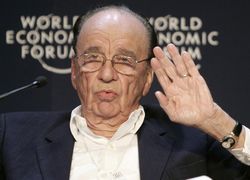
This hasn't been Rupert Murdoch's premier week. As CNN writes, "The phone-tapping allegations that forced the closure of embattled British tabloid News of the World may have a damaging ripple effect across Rupert Murdoch's vast media empire, according to some analysts."
Which brings us to BP.
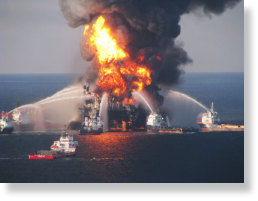
Last Friday (Associated Press) (New York Times), we learned about the grilling that former BP boss Tony Hayward, who was ousted months after the BP spill, underwent in June by lawyers for victims of the catastrophe, including governments. AP wrote about Hayward being questioned whether BP propped up the company's falling share price through his subordinates' daily briefings:
During the deposition, attorneys raised questions about Hayward's sincerity when he said he had the best interest at heart of all those hurt by the Gulf oil spill. Hayward famously infuriated Gulf residents during the height of the spill with his comment, "I'd like my life back."
In the deposition, an attorney for the state of Louisiana, Allan Kanner, asked Hayward about a June 25, 2010, email to BP's former head of exploration and production, Andy Inglis. According to Kanner, it said, "Andy, can you make sure we get the technical briefing on the relief well out today? There are all sorts of ridiculous stories going around. It's the main reason behind the share price weakness."
At the time, the well was still spewing oil into the sea. It wasn't capped until three weeks later. And it wasn't until September that a relief well finally sealed what had become the worst offshore oil spill in U.S. history.
The day of the email, BP's stock price closed at $26.53, a 6 percent drop from the previous day's close. A BP executive, Kent Wells, held a media briefing three days later saying the relief well was only 20 feet away from the blown-out well. He also told reporters that the company had a high degree of confidence in the relief well and a backup one it was drilling.
By June 30, 2010, BP's stock was back up to $28.35 -- slightly higher than what it closed at on June 24, the day before the Hayward email.