
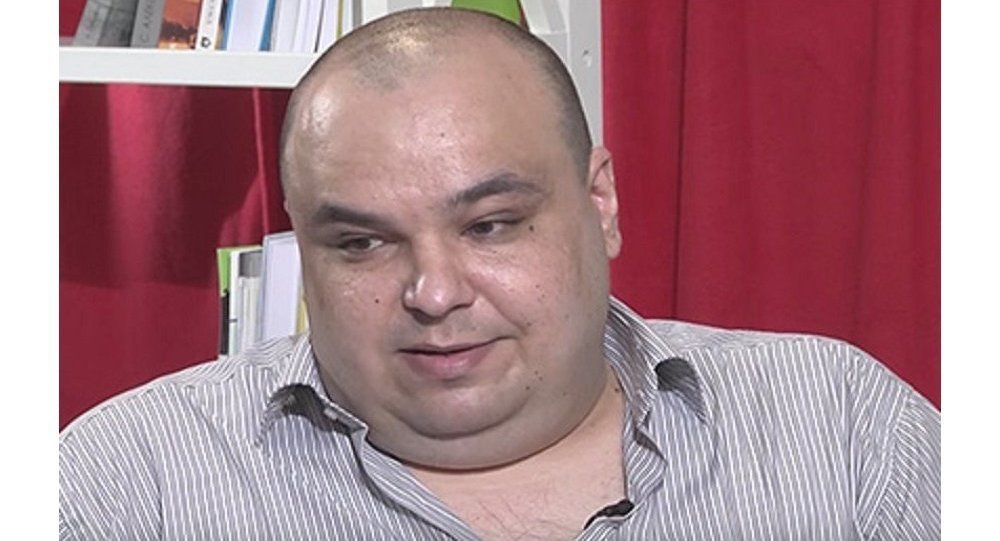
The anesthesiologist Alexander Chernov, who worked in the city of Ienakievo in the Donbass, said that in providing emergency care to veterans of the Donetsk People's Republic (DNR) he did whatever he could to cause maximum damage to patients.
In an interview with the online channel Ukrlife.tv, anesthesiologist Alexander Chernov told the chilling story of his "achievements" during fighting in eastern Ukraine. The video was posted on YouTube. According to Mr. Chernov, he only used standard resuscitation drugs.
"I inflicted maximum damage to enemy patients with medication. At first glance, it would look like a heart attack, a stroke, or simply something incomprehensible. Only careful and costly expertise can discover a person's true cause of death," said the doctor/murderer.
The Ukrainian resuscitator added that he had sent in all personal data and diagnoses of patients to the Ukrainian Security Service (SBU) by email and Skype.
"Many of my colleagues, unfortunately, believe that doctors are out of politics. But I continue to assure everyone that the Hippocratic oath should not be an excuse to help the enemy," said Alexander Chernov.
Chernov said that after leaving the DNR he continued to practice medicine in the territories under the control of Kiev.

















Comment: The post-apocalyptic rice has been deemed fit for consumption. Meanwhile, Fukushima residents have increasing rates of child thyroid cancer and radiation exposure, according to the Fukushima Medical Association. And, wildlife is registering radioactive, not to mention the ongoing reactor problems at Fukushima Daiichi. Full cleanup of the site is expected to take at least 40 years and workers are still walking around in protective suits, radiation monitors and gas masks and semi-polluted water is still being dumped into the ocean. But good news: the rice is OK.
See also: Radioactive wild boars on the rampage in Fukushima disaster zone, devastating crops and threatening residents