
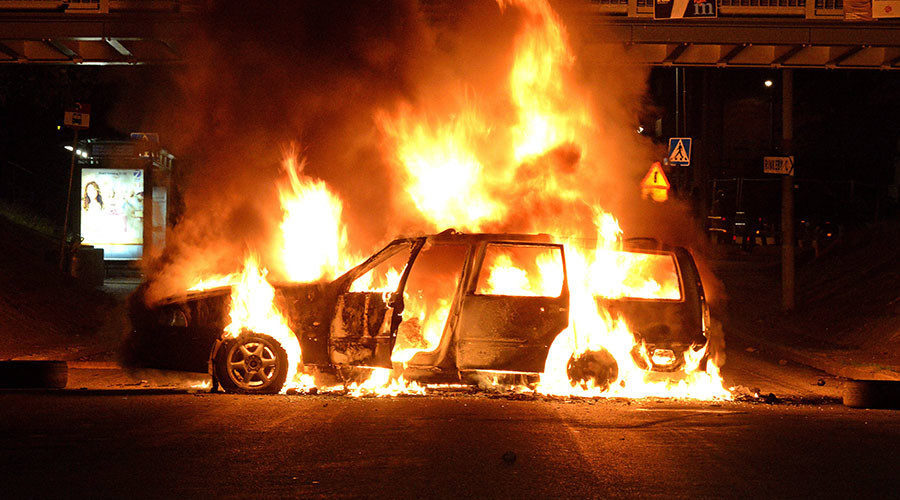
© Global Look Press Rinkeby, Stockholms ln, Sweden
Sixty-one neighborhoods throughout the country were identified in the latest Swedish police report as vulnerable areas, with 23 being categorized as particularly vulnerable, up from 15 last year. These hotspots are "characterized by a low socio-economic status where criminals have an impact on the local community," according to the police definition.
An estimated 5,000 criminals are operating in these areas, making up around 200 criminal networks in total, according to the report. Witnesses are sometimes afraid to talk to police, and the presence of criminal gangs and the high levels of poverty and marginalization makes it harder for officers to do their job.
"If you run a company in this area, insurance companies do not want to insure you," Salam Kurda, a local Kurdish shopkeeper and chairman of the corporate association in Husby, Stockholm, told RT. "One of the basic requirements for being a successful entrepreneur is safety, but the risk is quite big today."
















Comment: As Jonas Christensen says, it is a problem. It may not be as big a problem as others, or when compared to worse situations in other countries, but it's still a problem that goes widely unacknowledged or downplayed. (At the same time, it is overly exaggerated by the other side of the debate, presenting the 'no-go zones' as if they were actual war zones and crime is off the charts.) Nuance is lacking, and the extreme polarization among society continues.
For a nuanced look at the migrant and demographic problems in European nations, check out: The Truth Perspective: Weapons of Mass Migration: Interview with Michael Springmann on Europe's Migrant Crisis