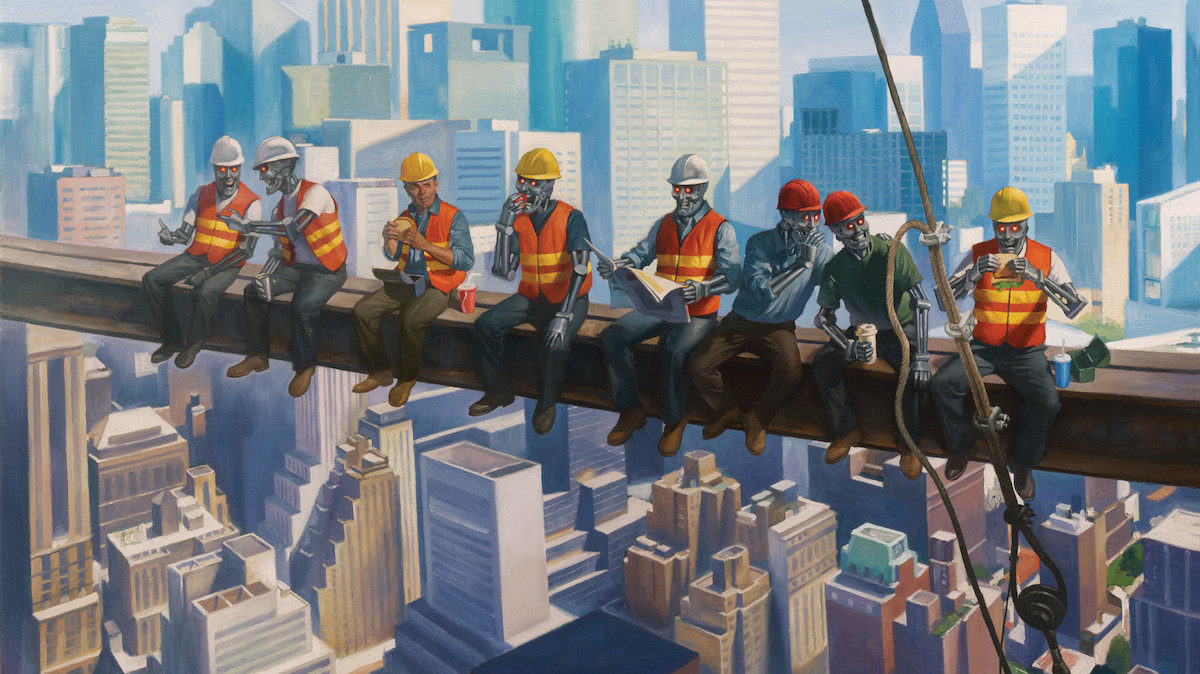
I want to tell you straight off what this story is about: Sometime in the next 40 years, robots are going to take your job.
I don't care what your job is. If you dig ditches, a robot will dig them better. If you're a magazine writer, a robot will write your articles better. If you're a doctor, IBM's Watson will no longer "
assist" you in finding the right diagnosis from its database of millions of case studies and journal articles. It will just be a better doctor than you.
And CEOs? Sorry. Robots will run companies better than you do. Artistic types? Robots will paint and write and sculpt better than you. Think you have social skills that no robot can match? Yes, they can. Within 20 years, maybe half of you will be out of jobs. A couple of decades after that, most of the rest of you will be out of jobs.
In one sense, this all sounds great. Let the robots have the damn jobs! No more dragging yourself out of bed at 6 a.m. or spending long days on your feet. We'll be free to read or write poetry or play video games or whatever we want to do. And a century from now, this is most likely how things will turn out. Humanity will enter a golden age.
But what about 20 years from now? Or 30? We won't
all be out of jobs by then, but a lot of us will-and it will be no golden age. Until we figure out how to fairly distribute the fruits of robot labor, it will be an era of mass joblessness and mass poverty. Working-class job losses played a big role in the 2016 election, and if we don't want a long succession of demagogues blustering their way into office because machines are taking away people's livelihoods, this needs to change, and fast. Along with global warming, the transition to a workless future is the biggest challenge by far that progressive politics-not to mention all of humanity-faces. And yet it's barely on our radar.















Comment: See also: Two bomb blasts strike Mogadishu, Somalia; 22 people killed