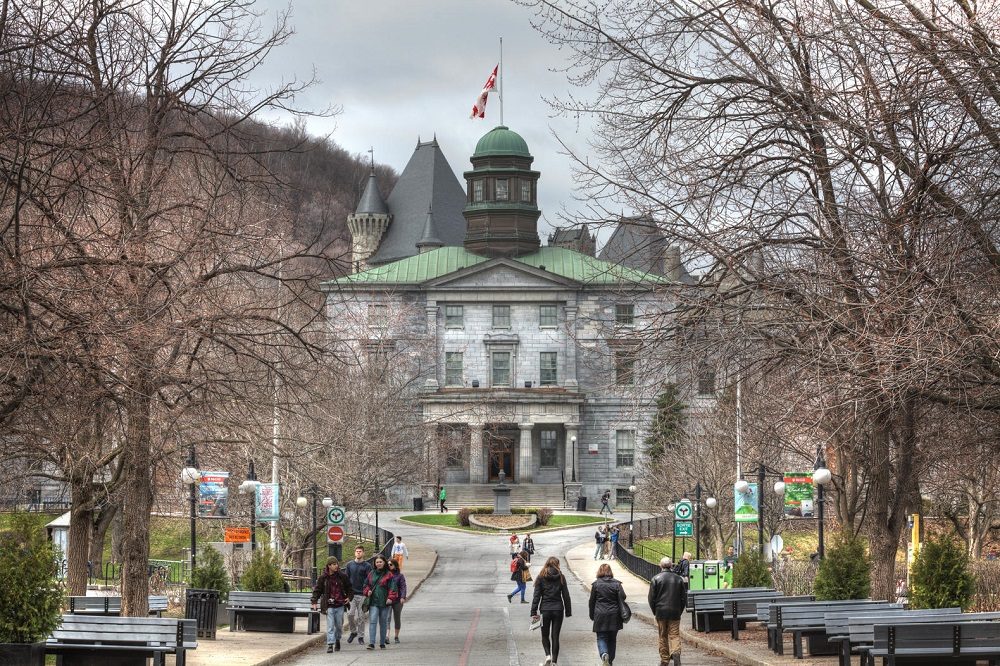
McGill University, Montreal, Quebec, Canada.
We are students, academics and medical science researchers at the University of Alberta. We've had our eye on the state of academic freedom in Canada for years, in large part due to our experiences serving on various academic-governance bodies.
In mid-2017, we began to wonder if there was any way we could quantify free speech on campus. Was there a threat? Was it widespread-or just a localized phenomenon that characterized elite American liberal-arts schools (which is where most of the most widely shared anecdotes are rooted)? Having just observed Bret Weinstein's
ordeal at Evergreen State College and Jordan Peterson's
fight for free speech at the University of Toronto, we wanted to see if concerns in this area were shared by academics at other institutions.
So we decided to start asking questions. And in the process, we collected some interesting statistics.
For example, 39% of Canadian academic respondents to our survey said that if they had more academic freedom, their students would receive a better education. We also found out how difficult it could be to ask even simple questions that touch on such a highly charged topic.In August, 2017, we formulated our survey questions and got feedback from others, which helped us fine-tune their wording. Consistent with our training, we wrote up the study design and asked our university's research ethics office to review it. This was technically research on "human subjects." And even though we were not collecting or publishing personally identifiable details, we wanted to cross the T's and dot the I's. Our research ethics office asked us to explain the questions we wanted to ask. And then things went sideways.
The research ethics office told us that they couldn't even look at our study because it was out of its jurisdiction. We disagreed: As a matter of policy, they really should want to help make research more ethical; moreover, we were students at the university, and the resources they offered should be available as much to us as to anyone else. So we appealed-more or less begging them to have a look. We thought we may at some point want to publish our results academically, and the research ethics office serves as a gatekeeper to academic publication.














Comment: See also: