I recently attended a Washington-D.C. event focused on community-building hosted by The Aspen Institute's
Weave project, which works to reduce social isolation and build bonds between Americans. During
one portion of the event, various activists described how racism had impacted their lives and their communities. Following a number of such testimonials, a white woman from southeast Ohio named Sarah Adkins spoke about
her own community work, which involves raising money to provide post-trauma support to individuals affected by tragedies.
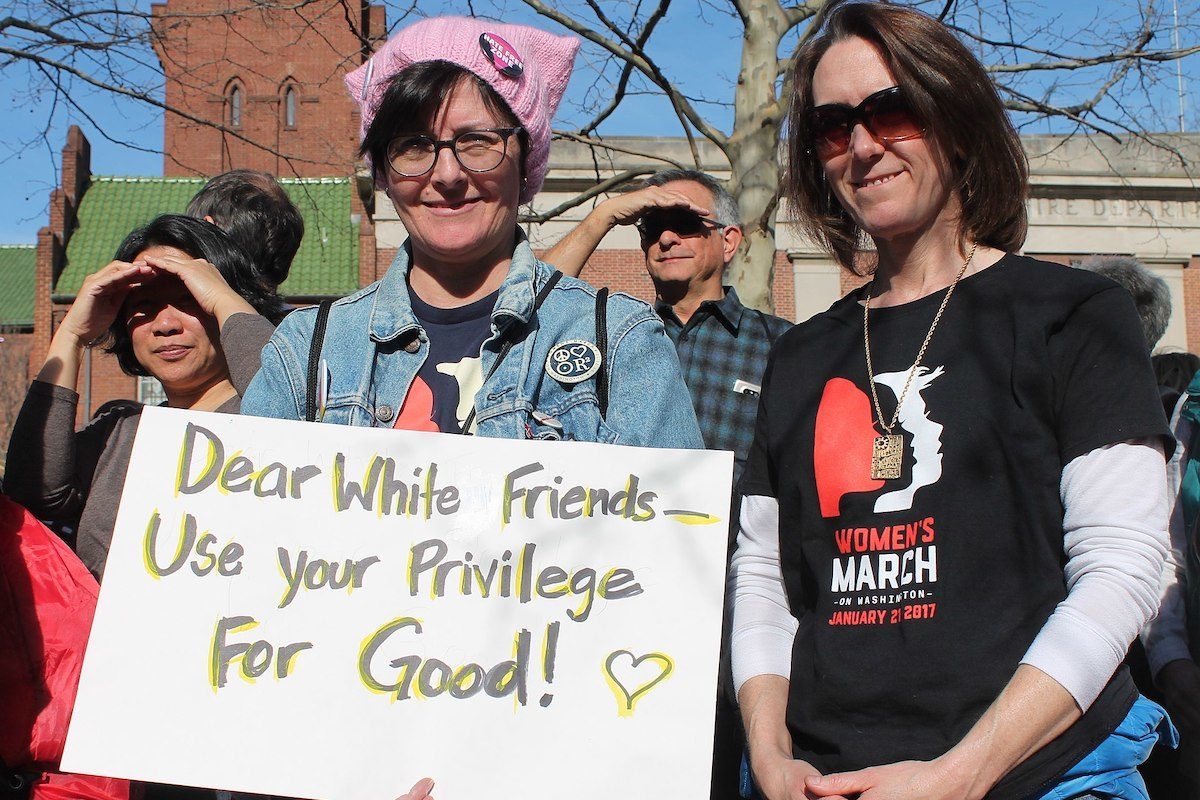
Perhaps because several speakers had discussed racism and issues related to white privilege, Adkins spoke about her own self-perceived racial privilege. "I followed the perfect mold...I did all the things, I went to college, and I keep thinking of white privilege in my head so forgive me, that's what's in my head right now, very much white privilege," she said, while reflecting on her middle class life in an affluent neighborhood.
But Adkins also went on to describe the reason she originally had become involved in community work-which is that her then-husband had killed both of her sons and then later took his own life. One can only imagine how much suffering this caused her. Yet she still viewed herself as privileged due to her race.
"I was wealthy, okay, I was a pharmacist, I made a lot of money, right? So after that happened, I really wanted to understand that for me there definitely was a lot of white privilege. I had money, I had health insurance, so people came in and cleaned up my house. I was able to pay for a funeral for my children," she said.















Comment: Pepe Escobar gives the skinny on what will not be reported in the western media