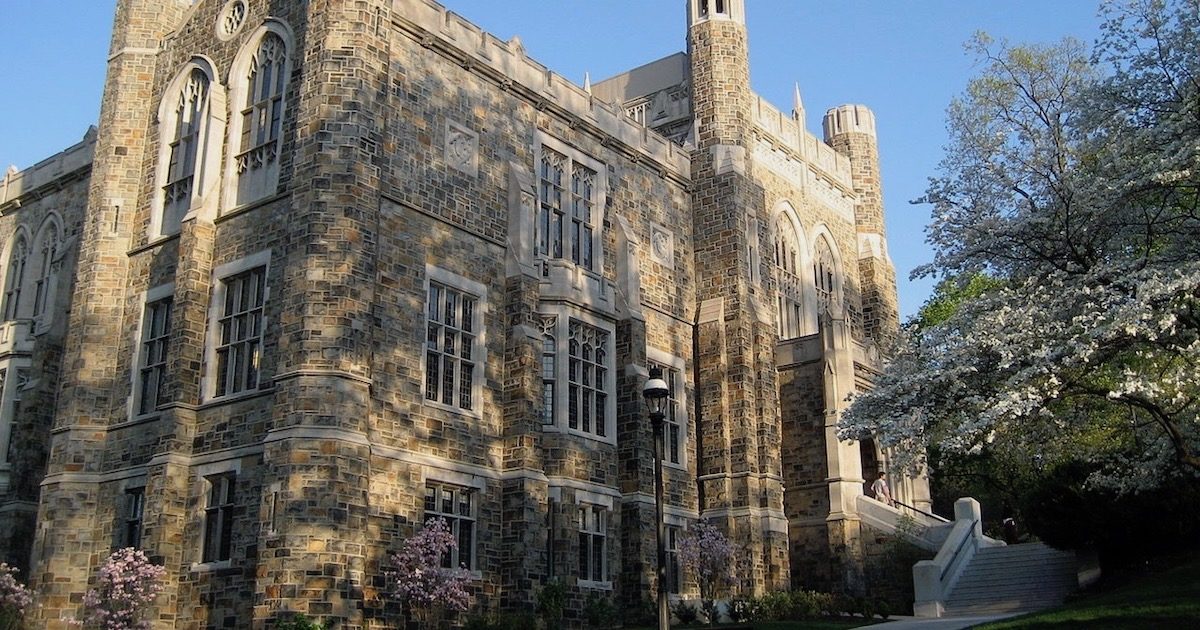
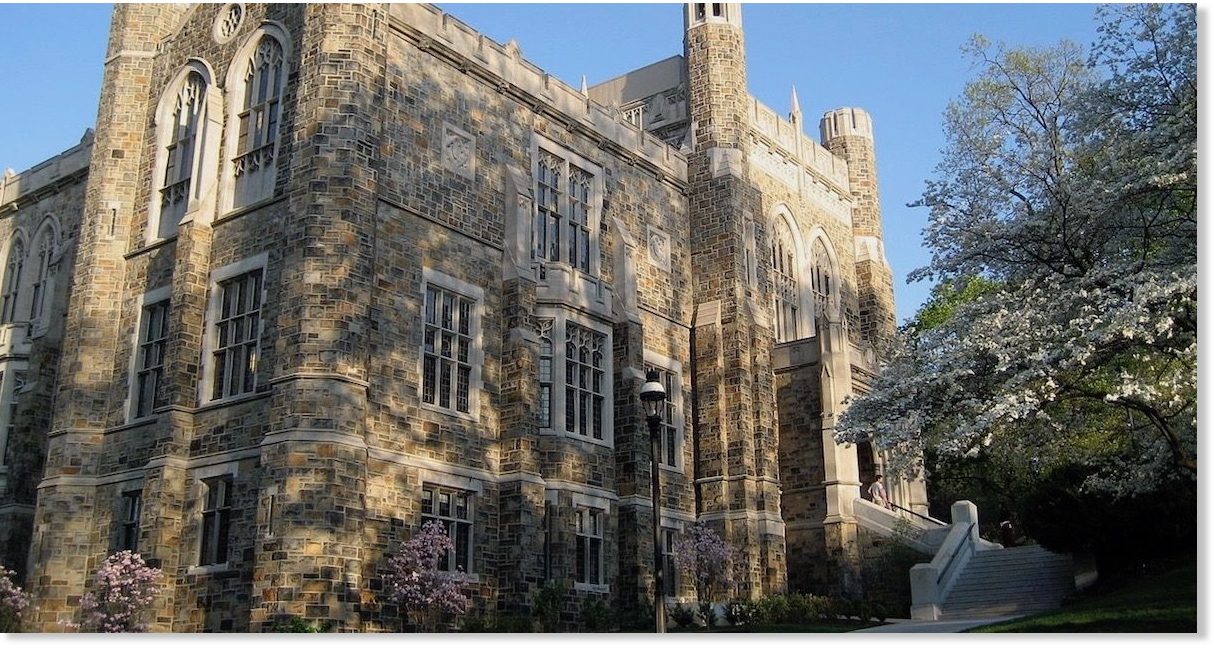
© Joseph Giansante ’76 / Wikimedia Commons
Academics are a powerful group. They produce the ideas, theories, and data that form our collective human knowledge; they educate the next generation of thinkers and leaders; they are the gatekeepers to scientific journals; they are the experts called upon to advise on many of the most consequential societal issues; they determine who receives funding to pursue their research; and, they decide who else gets to be an academic. Academics are also overwhelmingly politically liberal, as
numerous reports have now shown. Many critics have argued that this political uniformity might create systematic biases or discrimination against
non-liberal ideas and
non-liberal scholars, but empirical evidence is limited.
A
new paper just published in
Philosophical Psychology by Uwe Peters, Nathan Honeycutt, Andreas De Block, and Lee Jussim examines
whether the political views of academic philosophers are associated with willingness to discriminate against peers in grant applications, paper acceptances, symposium invites, and hiring decisions.
Spoiler alert: they are.Peters and colleagues sent a survey to an email list of philosophers and (after exclusions) collected responses from 794 philosophers (graduate students, postdocs, professors, and lecturers) primarily from Europe and North America. Participants indicated their own ideological views on a continuum from
very left-leaning to
very right-leaning. And they reported a variety of attitudes about their perceptions of ideological discrimination in the field and their own willingness to discriminate on ideological grounds.












Comment: Common sense and righteous anger over the hysterical and hystericizing lockdowns will soon be reaching a fever pitch in the US. And this is to say nothing of the anger that will boil over once the economy really collapses. We ain't seen nothing yet!
See also: