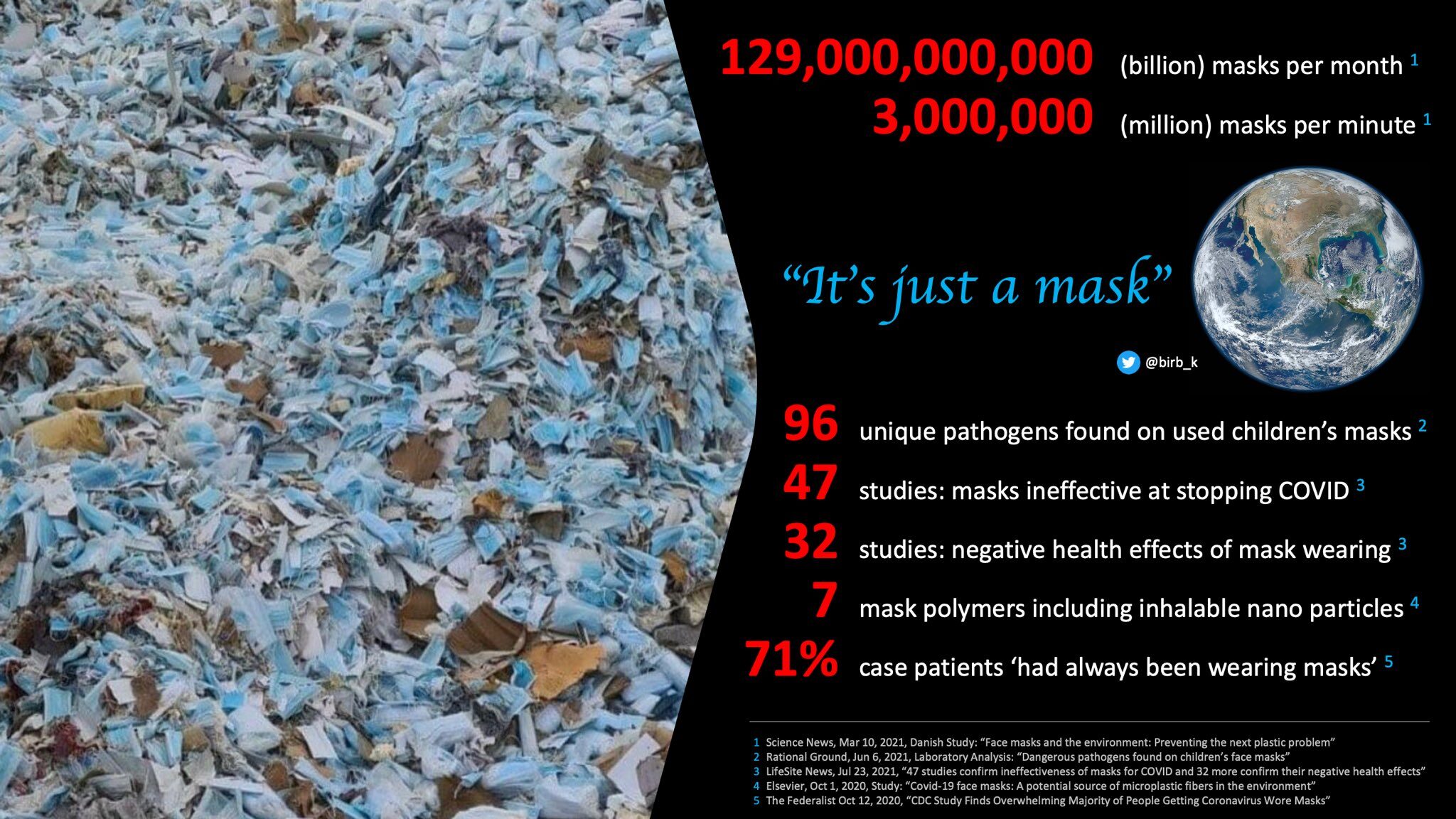
© K. Birb/Twitter“It’s just a mask”: Global impact of the face mask folly
Many 'health authorities' have relied on the
obsolete 'droplet model' of virus transmission. If this model were correct, face masks would indeed work. But in reality, respiratory droplets - which by definition cannot be inhaled - play almost no role in virus transmission. Instead, respiratory viruses are transmitted via much smaller
aerosols, as well as, possibly, some
object surfaces. Face masks
don't work against either of these transmission routes.
2) The Asian paradoxDuring the first year of the pandemic, several East Asian countries had a very low coronavirus infection rate, and many 'health experts' falsely assumed that this was due to face masks. In reality, it was due to very rapid
border controls in some countries neighboring China as well as a combination of
metabolic and immunologic factors reducing transmission rates. Nevertheless, many East Asian countries eventually
got overwhelmed by the coronavirus, too (see charts below).
















Comment: BBC journalists are masters at omitting facts. In this particular instance, it's unclear whether they are obfuscating facts for a nefarious purpose, or whether they are cowing to the anti-racist mob, we wouldn't put either past the BBC. See also: