Puppet MastersS


USA

America was never the problem

A 250th Independence Day eulogy for a Nation outgrown and discarded by the Empire.
Statue Liberty
© Knightly Knews
The United States was never the Empire.

The Rocky Mountains were never the Empire. Niagara Falls was never the Empire. The Everglades were never the Empire. The winding rivers of the Mississippi, Missouri, and Ohio were never the Empire. The Great Lakes were never the Empire.

The Empire was never Los Angeles or New York. Alaska, Texas, or Hawaii.

The Empire was never the Declaration of Independence, the Stars and Stripes, or the Constitution.

None of the roughly 340 million people - who live normal lives and just want to get on and be happy, like everyone else - were ever the Empire.

America was never the problem.

And the problem was never America.

Raytheon was never America. Neither was Pfizer, or Boeing, or Lockheed Martin, or Halliburton.

The Pentagon was never America. Neither were the three-letter monsters of the CIA, NSA, or DHS.

The politicians - who broke their oaths to the constitution almost as soon they swore them - were never America. The lobbyists and profiteers who paid them were never America.

The Federal Reserve was never America, Wall Street was never America. The vast corporate megaliths that own half the world and tie economies in knots with made-up money were never America.

And none of them will pay the price for what they have done in that name.

America was never the Empire, it was just where the Empire lived for a while.

Microscope 2

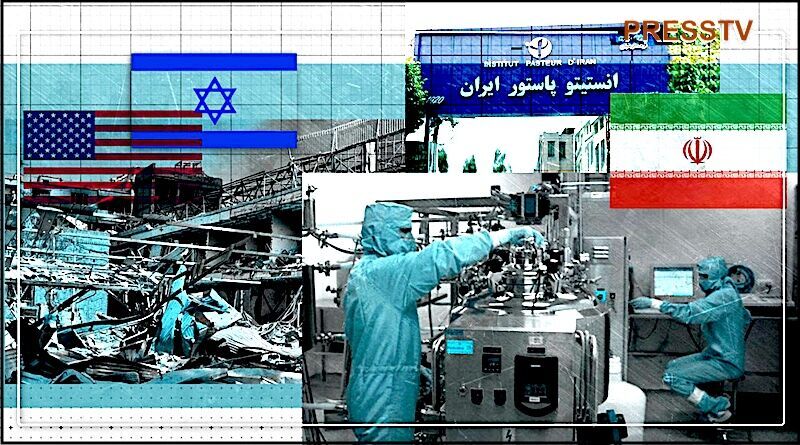
Pasteur Institute director opens up on US-Israeli attack, vows health mission will endure

destroyed Pasteur Institute
Israel destroyed The Pasteur Institute
The images of the shattered Pasteur Institute of Iran that circulated after the April 2 airstrikes were both heartbreaking and profoundly unsettling: collapsed walls, devastated laboratories, twisted medical equipment, and sections of a century-old scientific institution reduced to rubble.

For many Iranians, especially the older generation, witness to the institute's evolution over the decades and its significant contributions to society, the attack was shocking not only because of the scale of the destruction, but because of what had been targeted.

It was not a military facility, but one of the country's oldest biomedical and public health institutions, a center long associated with vaccine development, disease control, and scientific research, and one that had helped safeguard public health for more than a century.

For Iranians, it was a living symbol of the country's glorious scientific heritage and one of the enduring pillars of the nation's modern medical history.

Comment: An impressive read describing the science and research and multi-services to humanity prior to this war.


Attention

Possible changes in U.S. military aid to Israel: Considerations for Congress

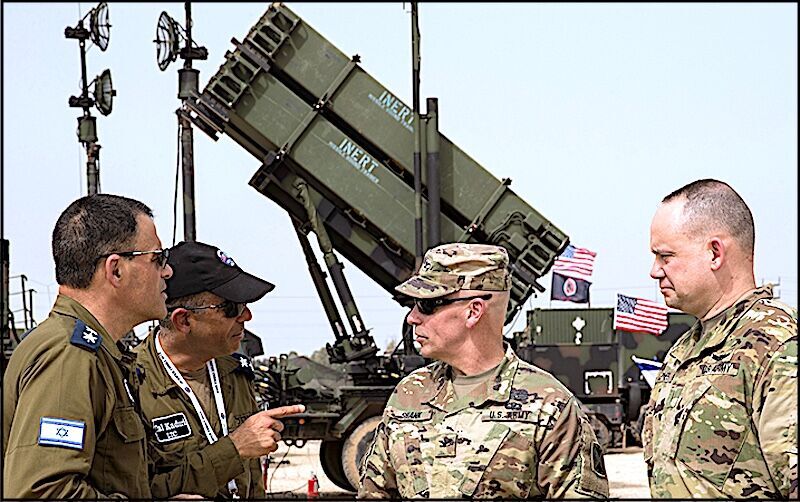
Patriot System US/Israel
© Jack Guez/Getty ImagesU.S. and Israeli army officers • US Patriot missile defense system
Overview

The Trump Administration and Israeli government are reportedly negotiating a new Memorandum of Understanding (MOU) on U.S. foreign assistance to Israel, which, if completed, would make it the fourth such bilateral understanding reached between the two countries. MOUs are not legally binding agreements like treaties and do not require Senate ratification; ultimately, lawmakers' appropriations power subjects foreign assistance levels delineated in MOUs to congressional approval.

Past MOUs have significantly influenced U.S. aid to Israel; historically, Congress has appropriated foreign aid to Israel largely according to the terms of the MOU in place at the time (with the exception of supplemental appropriations acts). Congress last authorized military aid to Israel per the terms of the current MOU in P.L. 116-283, the William M. (Mac) Thornberry National Defense Authorization Act for FY2021.

With potentially consequential elections scheduled this fall in Israel and Israel seeking munitions replenishment in light of the war in Iran and other conflicts, both sides may seek to complete a new MOU in the months ahead.

X

As in Gaza, the Israel-Lebanon 'peace' agreement is designed to fail

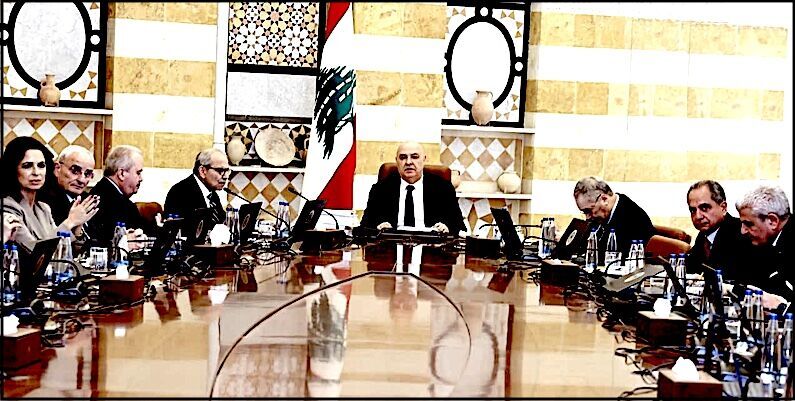
Joseph Aoun cabinet session
© Lebanese President’s Office/APA ImagesLebanese President Joseph Aoun speaking at a cabinet session on the occasion of Eid al-Adha, Beirut • May 22, 2026
Israel's conditioning of its withdrawal from southern Lebanon on the disarmament of Hezbollah mirrors its strategy in Gaza:
Insist on terms that are impossible to implement to justify its constant state of war.
Israel has finally reached an agreement to end its war on Lebanon after ambassadors from both countries signed a "framework" agreement in Washington, D.C. last week that laid out conditions for Israel's phased withdrawal from southern Lebanon. There's just one problem: the party that signed the deal from the Lebanese side isn't the same party doing the fighting, and the terms of the withdrawal are conditioned on the disarmament of the very party that wasn't a part of the negotiations to begin with.

As a result, it's hardly surprising that a section of the Lebanese political establishment regards the U.S.-brokered trilateral agreement with skepticism. The agreement ostensibly charts a pathway to ending Israel's war, but conditioned on Hezbollah's disarmament — and without it being a part of the agreement. Instead, the agreement calls on the Lebanese army to disarm the group, a feat which the Israeli army itself has been unable to achieve.

So the question becomes: why would Israel insist on terms that make the entire agreement impossible to implement? The answer becomes clearer when considering Israel's treatment of Gaza's so-called "ceasefire."

Warning

Secret Service missed 102 warnings before Trump assassination attempt in Butler

President Trump after Butler shooting
© UnknownWounded, Donald Trump carried to safety by Secret Service members after Butler rally shooting
The U.S. Secret Service missed multiple opportunities to detect, prevent, and disrupt the attempted assassination of Donald Trump in Butler, Pennsylvania, in 2024, including missing more than 102 radio transmissions warning of a suspicious person, a Department of Homeland Security report concluded.

The report, released on July 2 by the department's Office of Inspector General, chronicles a series of communication failures, inadequate planning, limited intelligence sharing, and security lapses that combined to create the conditions that allowed gunman Thomas Crooks to open fire from the roof of a nearby building during a July 13, 2024, campaign rally in Butler. Crooks was fatally shot by a Secret Service agent.

Among the report's most significant findings:
"Secret Service members did not receive 102 radio transmissions that local law enforcement officers in a separate communications room received concerning an increasingly intense search for a suspicious person.

Instead, we found that the Secret Service received only five phone calls and three text messages about Crooks.

As a result, Secret Service members did not alert President Trump's protective detail about concerns of a suspicious person."
The Secret Service would have delayed Trump's speech or removed him from the stage had they been aware of the search for Crooks, the report stated.

Comment: Five reports were not enough? Neither were 102! One patsy gunman with a backup of experts shot an earlobe. Scary impressive. Sadly a civilian in the audience paid with his life.


Airplane

US believed Israel tried to assassinate Iran's top negotiators as Ghalibaf's plane made emergency landing

Iranian plane
© Mehr NewsIranian plane pilots and passengers: Foreign Minister Abbas Araghchi and Mohammad Bagher Ghalibaf
The New York Times has issued a new report citing unnamed US officials who believe that Israel came close to assassinating Iran's top negotiators Mohammad Bagher Ghalibaf and Foreign Minister Abbas Araghchi.

According to the report, a concrete Israeli threat against Ghalibaf and the FM emerged while they were traveling back to Iran from Islamabad following talks with US Vice President JD Vance on April 12.

Prior to that point, during active fighting, Israel had worked its way through killing much of Iran's senior leadership starting with Ayatollah Ali Khamenei, but questions lingered over whether the country's top negotiators - who have come to represent Tehran on the global stage - could be deemed legitimate targets.

Even as Washington and regional brokers stepped in to try and halt the prospect of runaway conflict, wherein the US would find itself in yet another 'forever war' and quagmire, Israel still floated the potential for more assassinations targeting top Islamic Republic leadership.

Comment: Washington warned Tehran about Israeli plans to assassinate Mohammad Ghalibaf and Abbas Araghchi:
Ghalibaf and Araghchi took over the negotiating process for Iran after Israel had already killed Tehran's top national security adviser, Ali Larijani, and former Foreign Minister Kamal Kharazi, who were both involved in talks with the Americans.

Israeli Defense Minister Israel Katz claimed on Monday that new Iranian Supreme Leader Mojtaba Khamenei is also "marked for death." Araghchi responded by saying that Tehran would deliver an immediate and powerful response to any threat against its people or leadership.

Funeral processions for Ali Khamenei are set to take place in Iran between Saturday and Thursday, with Tehran warning that any strikes by the US or Israel during this period would be a major "miscalculation."


Arrow Up

Tucker Carlson unveils major political plan

Tucker Carlson (looks tuckered!)
© CopyrightTucker Carlson (looks tuckered!)
Popular podcast host Tucker Carlson has long dismissed questions about whether he would ever seek public office. But this week, he hinted at a major political move, though don't expect to see his name on the ballot.

Speaking with the Columbia Journalism Review in an interview published Wednesday, Carlson said he plans to "help build a third party," just months after publicly breaking with President Donald Trump over the U.S.'s involvement in the Israel-Iran war. He said:
"I'm going to help build a third party. There should be a good-faith effort to figure out what benefits the country."
During the same interview, Carlson insisted that he still has no interest in seeking public office.
"I don't want to be a candidate. Before I did the Times interview, someone said to me, 'They're going to ask you if you're running for president.' I was very tempted to say 'I am running — on the pro-patriarchy ticket.' Just to make sure I gain no new fans."
Carlson's support for a third party stems from what he rebuked as bipartisan support from both Democratic and Republican parties for foreign intervention.

Comment: Blowback on this idea will be fierce 'right' and 'left'.


Bizarro Earth

Geography strikes back: Sovereignty in the age of flows

broken Earth
© UnknownSuits tearing the Earth apart
Why multipolarity may signal the return of historical cores against a global system of circulation and control.

Washington has long sought to contain its designated rivals. Russia, China, Iran, and North Korea have been subjected, in different forms and at different levels, to sanctions, military pressure, financial exclusion, strategic encirclement, indirect wars, and political and ideological delegitimization. Yet the result has often been the opposite of what was intended. Instead of isolating these powers, pressure has helped bring them closer together.

Moscow, Beijing, Tehran, and Pyongyang do not share the same culture, regime, history, or immediate interests. Their convergence is not the result of sentimental friendship. It is closer to an alliance of necessity, produced by a common perception of external pressure.

This convergence is visible in expanding Russia-China energy trade, the growing use of non-dollar settlement mechanisms, military and technological cooperation, diplomatic coordination in international forums, and the search for institutions less dependent on Western-controlled financial infrastructure.

In that sense, the policy of containment has helped accelerate the very alignment it wanted to prevent. This is not merely a strategic failure. It reveals something deeper: the world does not submit indefinitely to the designs of those who believe they can possess it.

Comment: The world is moving on...you coming America?


Nuke

EU nation moves to lift nuclear weapons ban

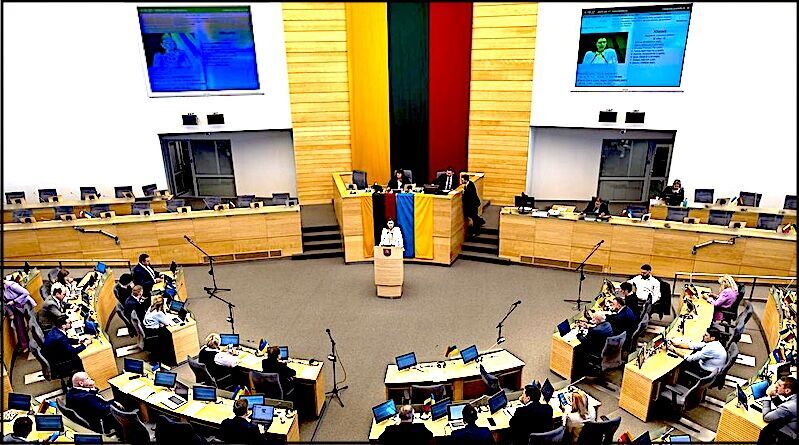
Lithuanian parliament
© Mindaugas Kulbis/APLithuanian Parliament in session
Lithuanian lawmakers have proposed a constitutional amendment after President Gitanas Nauseda called the restriction "outdated". Lithuanian lawmakers have introduced a constitutional amendment to scrap the country's ban on hosting nuclear weapons.

The proposal, backed by 51 of the Seimas' 141 members - enough for it to be formally registered - would repeal Article 137 of the constitution, which prohibits weapons of mass destruction and foreign military bases on Lithuanian territory. Vilnius says the move is needed to counter an alleged Russian threat, a notion Moscow has repeatedly denied.

The bill follows President Gitanas Nauseda's call to scrap what he described as an "outdated" restriction. Speaking after a meeting with parliamentary faction leaders on Thursday, he argued that Lithuania should not impose restrictions on itself "if new circumstances arise in the future."

He told reporters:
"Opinions were practically unanimous. Almost all parliamentary faction leaders expressed the view that Article 137 has become obsolete and should not merely be amended but removed."

Comment: Creating countermeasures creates targets.


Attention

Is the MoU cat dead, alive or in a coma?

US-Iran MoU
© Strategic Culture Foundation
These oh so meticulous Persians.

How to impart to Barbaria that they've got to implement paragraphs 1, 4, 5, 10 and 11 of the Memorandum of Understanding (MoU) their own president signed in Versailles?

Especially paragraph 1: establishing a conflict control mechanism in Lebanon; paragraph 10: on export of Iran's oil and petrochemicals; and paragraph 11: on the release of Iran's frozen assets.

Tall orders all around. Tied to the fact there's no guarantee whatsoever non-agreement capable (copyright: Sergey Lavrov) Exceptionalistan even understands that comitments are now bilateral: you break it, the counterpart also breaks it.

Cut to Iran's top negotiator, Parliament leader Ghalibaf. Earlier this week, ahead of the elaborate funeral ceremonies in Tehran, Qom and Mashhad tied to the burial of slain Leader Ayatollah Khamenei, Ghalibaf said negotiations with the US are over (italics mine).

Translation: Iran will not move an inch to discuss a possible final deal until Washington fully implements the five MoU clauses listed above.

This follows logically from the fact that Iran sent a high-level delegation to Switzerland to discuss the implementation of the 14-point MoU, and not (italics mine) to negotiate a new agreement.

Further proof: Clause 13 of the MoU specifies that final deal talks only begin after paragraphs 1, 4, 5, 10, and 11 are fulfilled.

In theory, a joint Iran-US-Lebanon committee may have been establishad to oversee implementation - but there's no official confirmation from Washington, as the US de facto is unwilliing and/or unable to control the death cult in West Asia.

The Trump naval blockade, meanwhile, has been lifted. Iran has exported nearly 50 million barrels of oil during the past few days - at roughly 20% higher prices than in the recent past.

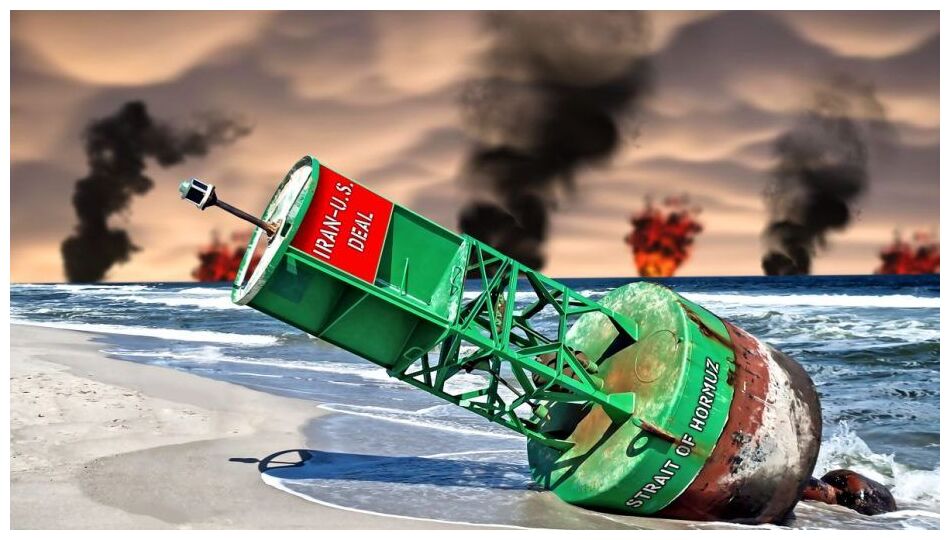
Yet free passage in the Strait of Hormuz only lasts for 60 days. After that, Tehran - and Muscat - will impose fees: after all Iran and Oman are sovereign when it comes to navigating their territorial waters.

A key point: Iran's missile program, the whole organization of the Axis of Resistance, and Iran's nuclear rights, all these are non-negotiable items, as reiterated by Ghalibaf.

He stated, bluntly, that Iran is "ready for war" if Trump 2.0 does not comply with the MoU provisions. At the same time he remarked that Iran's advantage in Hormuz comes from making it work efficiently, not keeping it closed.