The Petrodollar Wars: The Iraq-Petrodollar Connection
(Miss Part One and Two?
Start here.)Introduction to Part Three: "The Petrodollar Wars"
As we have learned from the previous articles in this series, the petrodollar system that was created in the 1970′s has served America well, both economically and politically. What began as a way to drive more demand for the U.S. dollar, in the wake of a move away from the international gold standard in 1971, has provided benefits that few could have ever imagined including the solidification of the U.S. dollar as the global currency of choice. This was important, especially following a temporary loss of dollar credibility after President Nixon's decision to close the gold window.
Put simply, this 'dollars for oil' system has greatly enriched our nation. But this national prosperity has come at the expense of other nations and their potential prosperity.
This brings us to one of the more sensitive, and therefore veiled, aspects of the petrodollar system. Namely, how it has impacted America's relations with foreign nations, especially in the Middle East.
In this third installment of our series, I will explain how America has handled the growing international challenges to the petrodollar system. The consequences have been nothing short of tragic.
I have entitled this piece, The Petrodollar Wars. This article will focus specifically on the 2003 Iraq war. A follow-up article will detail the Petrodollar connection to the Afghanistan war, the Libyan war, and now, the build up to a war with Syria and Iran.
Part 3The world currently consumes nearly 90 million barrels of oil per day.
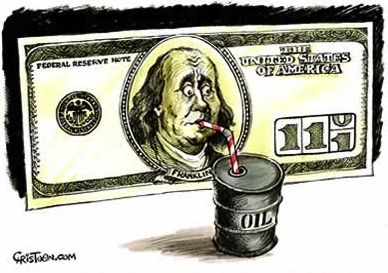
According to some projections, global oil demand will reach well over 100 million barrels per day by 2015. And thanks to the petrodollar system, growing global demand for oil leads to an increase in U.S. dollar demand. This artificial demand for U.S. dollars has provided remarkable benefits for the U.S. economy. It has also required the Federal Reserve to keep the dollar in plentiful supply.
By perpetually expanding the U.S. money supply, America's standard of living increases as well. (If this logic does not make sense, be sure to go back and
read Part One of this series.) The only problem with this situation is that the only way that it can be sustained is if the demand for the dollar and for U.S. debt securities remains consistently strong.
Grasping this last point is extremely important. For if the artificial global dollar demand, made possible by the petrodollar system, were ever to crumble, foreign nations who had formerly found it beneficial to hold U.S. dollars would suddenly find that they no longer needed the massive amounts that they were holding. This massive amount of dollars, which would no longer be useful to foreign nations, would come rushing back to their place of origin... America.
Obviously, an influx of dollars into the American economy would lead to massive inflationary pressures within our economic system.
It is difficult to overstate the importance of this concept as the entire American monetary system literally hinges on this "dollars for oil" system. Without it, Washington would lose it's permission slip to print excessive numbers of dollars.
Therefore, it should come as no surprise that America has a vested interest in maintaining the petrodollar system. And, if you are an American citizen, so do you.

















Comment: See original article for audio source