Puppet MastersS


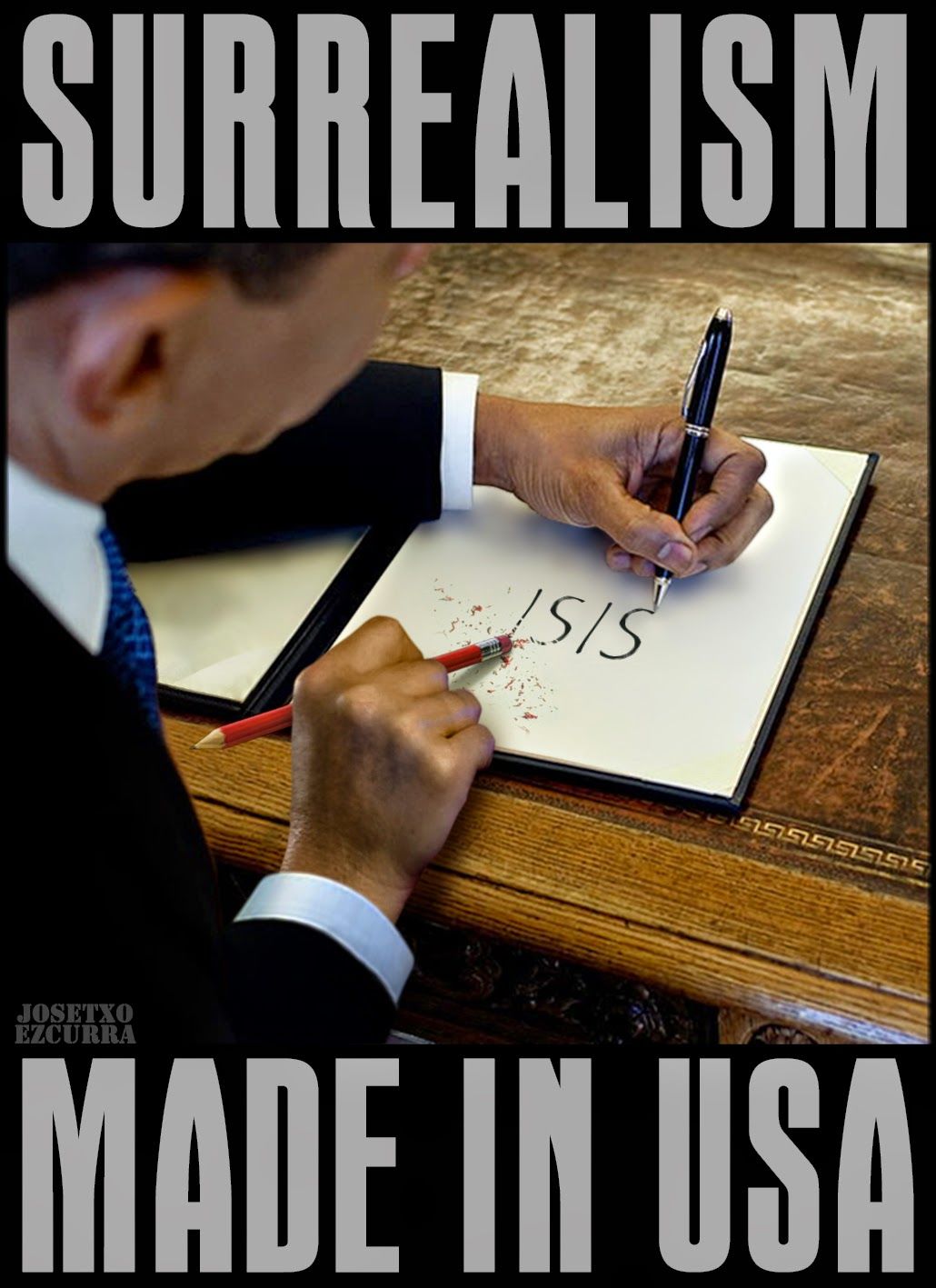
Magic Hat

Obama's sleight of hand in Syria

ISIS
© Josetxo Ezcurra
If you ask me I will tell you that America watched the Cancer of Al-Baghdadi and his Islamic State spread from Syria back into Iraq to create an excuse to bomb Bashar Al-Assad in Syria.

How?

Remember earlier Obama wanted to carry out airstrikes against Syria's government in retaliation for a highly questionable chemical attack, despite the fact that earlier in 2013 Iraq arrested over 150 Islamic State of Iraq-affiliated takfiri terrorists who were preparing chemical weapons in Baghdad with chemicals imported from Kuwait, Germany and Saudi Arabia. Obama's airstrikes plan was put on hold because the American and Western public saw through the flimsy sham. Instead of going to bomb Assad a little as punishment for using 'chemical weapons' on civilians, the American public understood he was going to use the cover of that to use the US Airforce to serve as the Free Syrian Army's air force a la Libya where Obama used the lie of protecting 'civilians' to use the US Airforce to help the rebels defeat Gaddafi.

Anyways to save face after the American public opposed his adventurism in Syria, he claimed he needed Congressional approval to bomb Syria, thinking that McCain an Lindsey Graham (the two vultures that thrive on consuming corpses) would get it for him. Surprise! He would have lost in Congress, so Putin graciously offered him a way out of his rope I.e the agreement to eliminate Syria's chemical weapons arsenal.


Comment: It was Putin too, who called the chemical attack for what it was: a false flag on the part of the rebels.

Comment: You can check out our recent coverage of the latest "war on terror" farce here: U.S. Puppet Masters ask new Iraqi PM to ask the U.S. to bomb Iraq so the U.S. can bomb Syria


Newspaper

Narendra Modi's new world: First 100 days,10 top moves

Modi
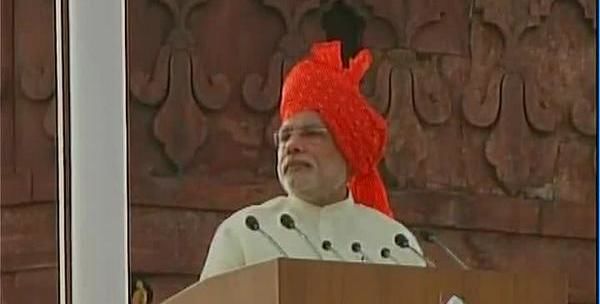
© UnknownNarendra Modi at Red Fort delivering the Independence Day speech
It's been 100 days since May 20, when Narendra Modi staked his claim to be Prime Minister after having led the Bharatiya Janata Party to an emphatic win in the Lok Sabha elections, largely on the promise of providing a cleaner, better governance model and higher economic growth. Since then, there have been some rhetorical flourishes from the PM, but the general consensus seems to be that he hasn't done enough to boost growth or taken steps to actually improve ground-level administration.

Having said that, the Modi government has taken some interesting policy decisions in the 100 days since the time he met President Pranab Mukherjee to present his claim as Prime Minister of the world's largest democracy. We take a quick look at the top 10 moves from the government since then.

1) Foreign capital welcome

One of the big ticket reforms that the NDA government has undertaken is to open up two high-capex sectors - defence and railways - to foreign direct investment (FDI). In his Budget statement, Finance Minister Arun Jaitley said 100% FDI would be allowed for some railways projects, while up to 49% foreign investment would be permissible in the critical defence sector.

Comment: In a rather rare move, Modi reportedly summoned the son of his Home Minister Rajnath Singh, accused of "bribe and misconduct", and scolded him, thus creating a political storm and damage control.

Though Modi started his rule with consolidation of power by politically isolating his party founders and other acts and appointing only "Yes PM" cabinet, he has started to show of maturity and courage in expressing his convictions.


Bad Guys

Parasitic leaders in Spain to go to any lengths to avoid independence referendum

Image
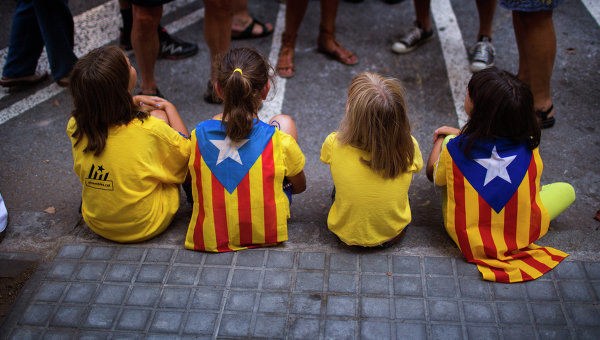
© AP Photo/ Emilio MorenattiGirls wearing “estelada” flags, that symbolizes Catalonia's independence, sit on the street in Barcelona, Spain, Thursday, Sept 11, 2014.
Spanish Foreign Minister Jose Manuel Garcia-Margallo said the Spanish government will use every possible legal measure to prevent Catalonia's secession, Europa Press reported Tuesday.

"There is a line that should not be crossed. The government will use all legal tools available to prevent a separation referendum that contradicts Spanish law, ignores the international community, and that will have dire consequences for Catalonia, Spain and the European Union," the minister was quoted as saying by the agency.


Comment: For those who bow down to IMF austerity and psychopathy that brutalizes innocent people there are no boundaries, there are no rights, and only the fearless self-determination of communities saying "enough" can prevail under these circumstances:

Comment: Fascism is back but with a mustache trim. The Catalonians fought against the psychopathic "Gladio" experiment of Francisco Franco the first time around, and still fight for their rights today:
The [Spanish Civil] war stripped away many illusions that led [George] Orwell to this personal crusade against Generalissimo Francisco Franco. Orwell quickly discovered that hard-line communists Stalin sent to stiffen the ranks of the resistance were in reality no better than the fascists in both their methods and ideology. Were he alive today, Orwell would wring his hands at the plight of Catalonians, finding themselves once again crushed by ruthless foreign invaders and looters.

I am speaking of the EU imposed austerity measures which have wrenched the entire Spanish economy to a shuddering standstill. Catalonia, which accounts for a fifth of Spain's total GDP, has responded by rekindling the spirit of independence. The province is already semi-detached but its unfortunate destiny marks it as the Spanish Tibet - lashed to Madrid, tossed some morsels of quasi-self determination but its people denied the sovereign freedom to make their own choices.


Black Magic

US and France start Syria war 2.0

The U.S. and France launch Syria war version 2.0 under the guise of combating the Islamic State. France launched its first air strikes against IS, while the U.S. Congress approved Obama's plan to train and arm some 5,000 "Syrian opposition fighters, "moderate ones", per year in Saudi Arabia.
Image
© Jonathan Ernst/Reuters Photo
French Rafale fighter jets launched the first French air strike against IS in Iraq. French President Francois Hollande explained in an official statement that the target was a logistics depot, saying:
"This morning at 9:40, our Rafale planes carried out a first air strike against a logistics depot of the terrorist organization Deash (IS - Arabic) . The objective was hit and completely destroyed. ... Other operations will follow".
France was the first nation to join the U.S. in launching airstrikes in Iraq, while Australia also deployed some fighter jets. A large part of the 600 troops Australia deploys to Iraq, however, are special forces, which according to some analysts were deployed to compensate for the U.S. political difficulties with deploying ground troops.


Comment: US policy being: If you can't go through a problem, go over it, under it, or around it.


The U.S. Chairman of the Joint Chiefs of Staff, general Martin Dempsey, was in France to meet his French counterpart General Pierre de Villiers when the air strike was launched.

It is noteworthy that Dempsey has been named as having been in command of at least parts of the chemical weapons attack that was launched by Liwa-al-Islam against the Damascus suburb of East Ghouta in 2013.

Bad Guys

Sanctions against Russia 'violate' core principles of WTO - Putin

Image
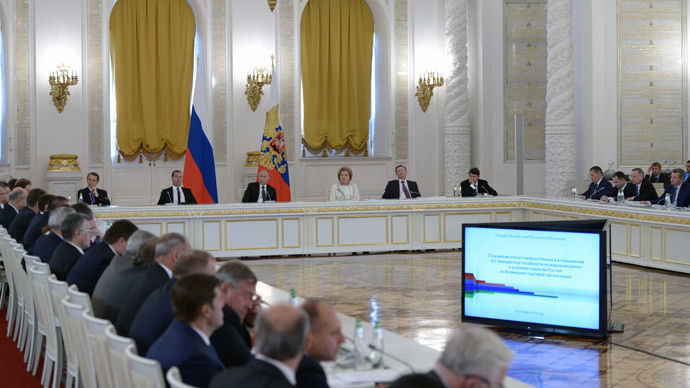
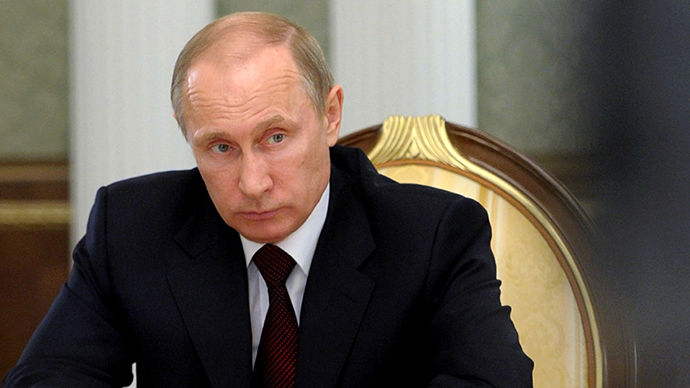
© RIA Novosti / Aleksey NikolskyiPresident Vladimir Putin at the Russian State Council meeting in the Kremlin.
President Vladimir Putin has said that sanctions against Russia directly violate World Trade Organization (WTO) principles, and that Russia will continue to defend its economy with protective measures.

The sanctions violate the main principles of equal access for all WTO members to economic activity and access to goods and services in the market, Putin said at a meeting with advisers in the Kremlin on Thursday.

"The limitations introduced against our country are nothing but a violation by some of our partners of the basic principles of the WTO," the President said, adding that sanctions "undermine free enterprise competition."

On September 12, the US and EU expanded sanctions against Russia aimed at hurting Russia's main industry - oil. The US and EU have led sanctions against Russia, along with Japan, Australia, Switzerland, and others over Moscow's alleged meddling in the Ukraine conflict.

The best way for Russia to counter these unfair advantages is to develop its domestic market, the President said.

"In response, we took protective measures, and I would like to stress that they are protective; they are not the result of our desire to punish any of our partners or influence their decision in any way."

Comment: See also: Russian CEO: Sanctions war over Ukraine only a pretext for West to pressure Russia


Shoe

Polish foreign minister Sikorski - who was caught on tape saying "We are total suckers to the USA" - is booted from office

Image
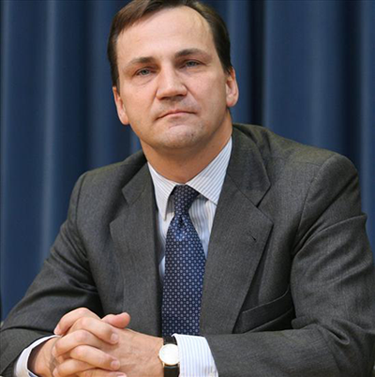
Radek Sikorski
Poland's prime minister-designate Ewa Kopacz has tapped former interior minister Grzegorz Schetyna to replace Radek Sikorski as foreign minister, AP reported Friday.

Schetyna, 51, recently headed the parliamentary commission for foreign affairs. Sikorski has been a strong supporter of neighboring Ukraine's attempts to build closer relations with its western neighbors, as well as a fierce critic of Russia's policy towards Ukraine; he is known internationally for having made some controversial remarks.

Addressing a news conference, Kopacz didn't name the reasons why Sikorski was fired, but stressed that Schetyna's appointment would ensure responsibility and continuity in foreign policy.

Anna Materska-Sosnowska, an analyst from Poland's Institute of Political Science thinks that unlike Sikorski, Schetyna will be conciliatory and soft-spoken. She also says that the government's main task is to improve the coalition's standing in the polls and ensure an electoral victory.

Comment: See also:

Reality dawning! Polish foreign minister Sikorski: "Our alliance with America isn't worth anything, in fact it's harmful"

Poland is a 'Slave Prostitute' to the USA according to Polish Foreign Minister


Colosseum

Russia's expansion? Putin rejects Ukrainian separatists aim to become part of Russia

Image
© AFP Photo / Alexey Druzhinin
The leader of the Ukrainian separatists says that their efforts to get Russia's President Vladimir Putin to accept their territory as being a part of Russia have been firmly rejected by Putin's Government; and, so, "We will build our own country." (This important statement from the rebel leader Andrei Purgin on Wednesday, September 17th, was inconspicuously buried halfway through an AP news story that focused instead on "East Ukraine Casualties." It's common for propagandistic news reports, such as characterize the U.S. media, to bury what's important in the news story, and not even to headline that crucial information, when that information violates the regime's propaganda. So: this information was buried, and was not headlined.)

Russia's Government has thus made clear that it is not seeking to add to its territory. While Russia has accepted the approximately million refugees who have fled to Russia from Ukraine's civil war, Russia does not want any part of Ukraine's territory. Crimea was traditionally part of Russia, throughout the period 1783-1954, until the leader of the Soviet Union gifted Crimea to Ukraine (the nation that was called the Ukrainian Soviet Socialist Republic) in 1954, but the residents of Crimea never accepted that, and they overwhelmingly considered themselves still to be Russians. Furthermore, the Russian Navy's lease on the Crimean port of Sebastopol for its Black Sea Fleet extended till 2042, and the February 2014 coup-installed Ukrainian Government wanted to cancel it, which threatened crucial Russian national defense. Furthermore, many of those new Ukrainian leaders wanted a nuclear war against Russia. So, Putin accepted Crimea back into Russia, but he will not admit more than that as being added to Russian territory.

Crimea is viewed as not being an addition to Russia, but instead as voluntarily rejoining Russia, irrespective of the new Ukrainian Government's campaign to eliminate ethnic Russians from Ukraine's southeast. No other part of post-1954 Ukraine had previously been part of Russia, and this includes the southeastern portion of Ukraine, whose residents ethnically descended from Russian immigrants who had settled there.

Ambulance

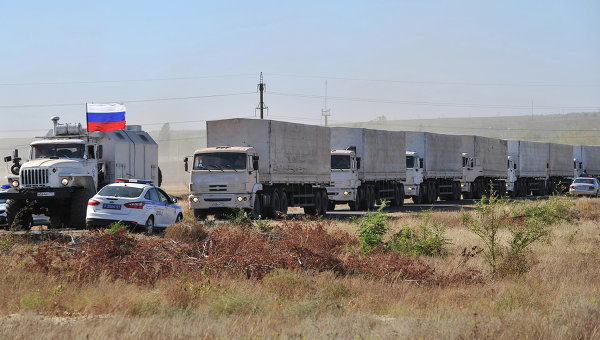
The third Russian humanitarian convoy: Unloading has started in Donetsk

Image
© RIA Novosti. Sergey PivovarovThe unloading of the first truck of the Russian humanitarian convoy has started in Donetsk
The unloading of the first truck of the Russian humanitarian convoy has started in Donetsk.

Some 35 volunteers are unloading the truck with the supplies of rice.

Some 30 trucks of the Russian humanitarian convoy crossed into Ukraine earlier on Saturday via a checkpoint in the Rostov Region where they previously cleared customs.

The Russian side has repeatedly invited Ukrainian customs officials and representatives of the International Committee of the Red Cross (ICRC) to inspect the cargo, but was turned down without explanation.

The third Russian humanitarian convoy comprises some 200 trucks that carry water, food, generators and medication to the eastern regions of Ukraine.

On August 22, the first Russian convoy with humanitarian aid that consisted of 280 trucks arrived in Luhansk after a series of delays. The second humanitarian convoy consisting of about 200 trucks arrived in eastern Ukraine last weekend, carrying cereals, sugar, tinned food, drinking water, medication and warm clothes, and safely returned to Russian.

The east of Ukraine suffered greatly as a result of the military confrontation between the Kiev-backed forces and independence supporters of eastern Ukraine that started in mid-April. The confrontation has claimed the lives of more than 3,000 people.

Better Earth

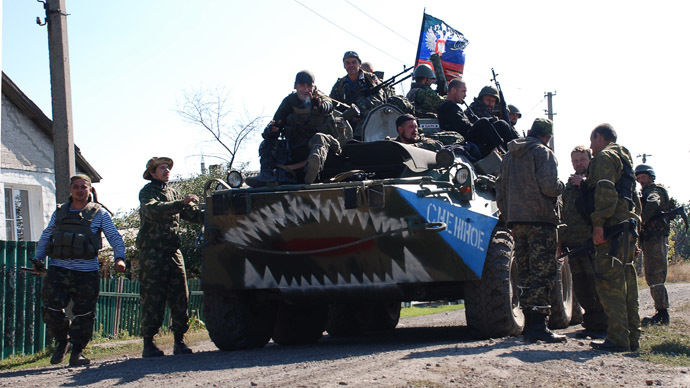
End of the conflict in Ukraine? Both sides sign memorandum aimed at halting all fighting

Image
© RIA Novosti/Gennady DubovoyFighters of the Donetsk People's Republic militia in the village of Yasenevka.
Kiev and self-defense forces signed a memorandum aimed at effectively halting all fighting in eastern Ukraine after talks in Minsk. It creates a buffer zone, demands a pullback of troops and mercenaries, and bans military aviation flybys over the area.

The signed memorandum consists of nine points, former Ukrainian president Leonid Kuchma told journalists following peace talks in Minsk, Belarus.

"The first one is stopping the use of weapons by both sides, the second is terminating new formations of units on military bases as of September 19. The third is banning the use of all types of weapons and offensive action," Kuchma said.

The agreement outlines a buffer zone of 30 km (18.6 miles) and bans all military aircraft from flying over part of eastern Ukrainian territory, except for the OSCE's aerial vehicles, Kuchma told RIA Novosti following the meeting.

Ukraine troops must pull back all heavy artillery by 15 kilometers from the conflict zone in eastern Ukraine, the treaty states.

All foreign mercenaries must be withdrawn from eastern Ukraine by both sides of the conflict, the signed Minsk memorandum states, according to Kuchma.

"We have agreed on the withdrawal of all foreign mercenaries from both sides," Kuchma said.

Both sides also vowed to continue the exchange of prisoners.

The OSCE has been tasked to monitor that both sides adhere to the memorandum's conditions. The organization's observers will be sent to observe the situation along the entire zone of the ceasefire, Itar-Tass reported.

Info

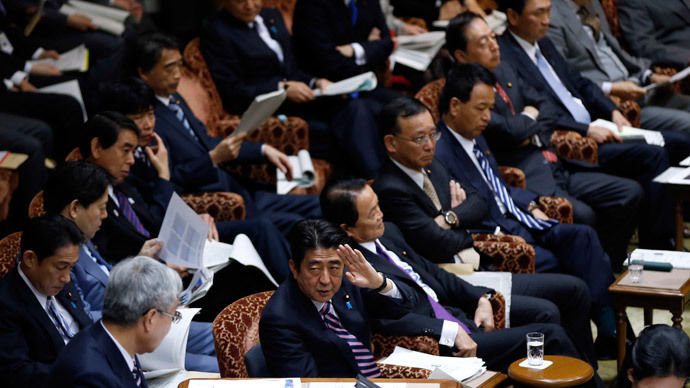
Japan hesitates: Puts Russian sanctions on hold in view of possible FM talks

Image
© Reuters / Toru Hanai
The Japanese government has pushed back imposing new sanctions on Russia, which it planned to impose on Friday, in expectation of a possible meeting of foreign ministers next week.

The Japanese media reported Thursday of Tokyo's intention to issue additional sanctions against Russia. The move was discussed on Tuesday at a National Security Council meeting and was expected to be announced on Friday, but according to The Japan Times the government is yet to make a final decision.

The implementation could be postponed until at least next week, when Japanese Foreign Minister Fumio Kishida may meet his Russian counterpart Sergey Lavrov on the sidelines of the UN General Assembly in New York. Tokyo wants to give Moscow more time to respond to the reports of the looming sanctions, the newspaper said.

Japan imposed sanctions on Russia in March as a gesture of solidarity with the US and the EU, which are championing a policy of punishing Russia for its stance on the crisis in Ukraine. Tokyo suspended talks with Moscow over visa restrictions, investment, space cooperation and military tension prevention. It also targeted 40 individuals from Russia and Ukraine with asset freezes and travel bans.

The new round of sanctions was expected to be individual rather than sectorial.