
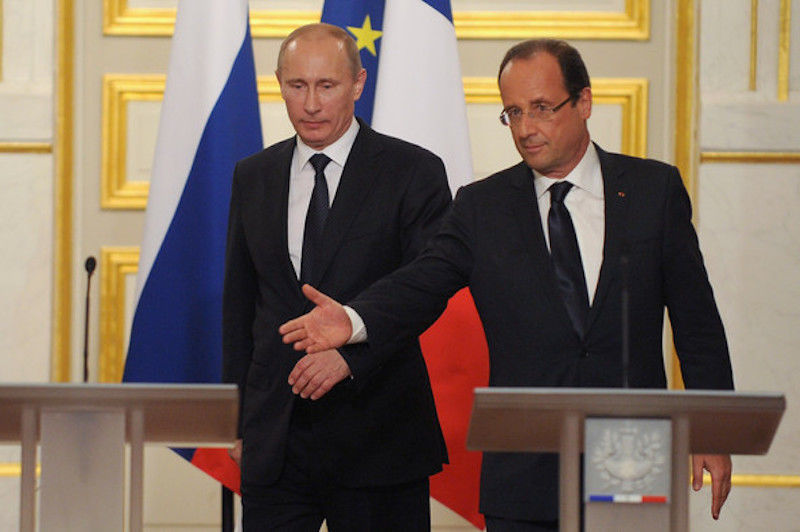
© www.zimbio.comPresidents Putin and Hollande
On Monday, Hollande called for a broad coalition including the United States and Russia to tackle ISIL which had claimed responsibility for the Paris attacks on Friday. The following day, Russian President Vladimir Putin said Russia and France's navies must develop a joint plan of action for their operations in Syria.
Hollande is scheduled to travel to Moscow on November 26 to meet with Russian President Vladimir Putin during which the two leaders would negotiate an international anti-terrorism operation in Syria. Prior to meeting with Putin, the French President would also visit the United States to meet with Barack Obama.
First things first, the French government should be ready to share intelligence with both the Russians and the Americans to coordinate their military actions. It's going to be tough, because right now Russian, US and French planes prefer not to come close to each other, Le Temps said.
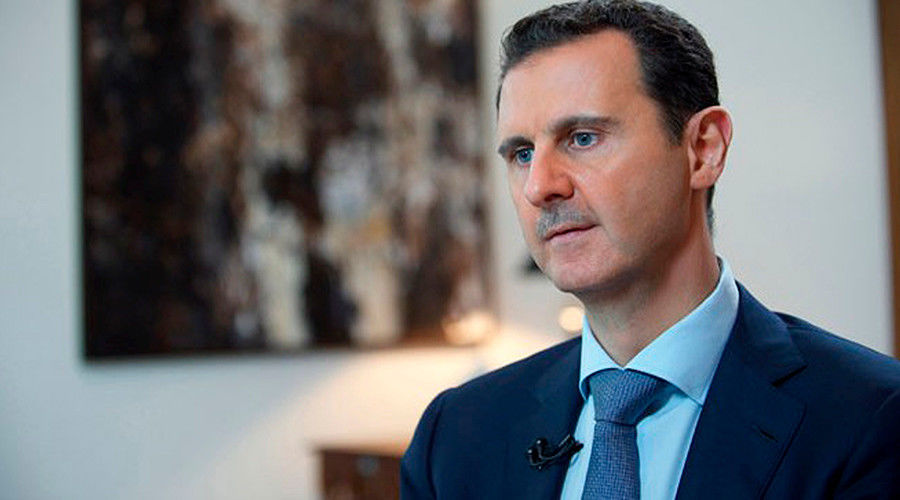
Secondly, in order to get meaningful support from Russia, Hollande will have to be ready to compromise on certain issues, namely the future of Syrian President Bashar al-Assad, who is a Russian ally.







Comment: Shake-ups seem to be in the wind. How will these re-alignments play out? Are these moves independent or choreographed? Considering the possibility of Russia and the US uniting, is France dreaming? Many questions await answers.