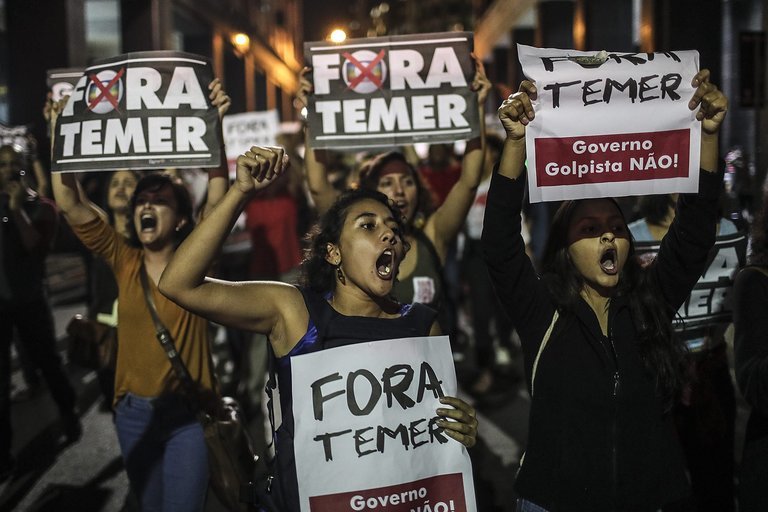
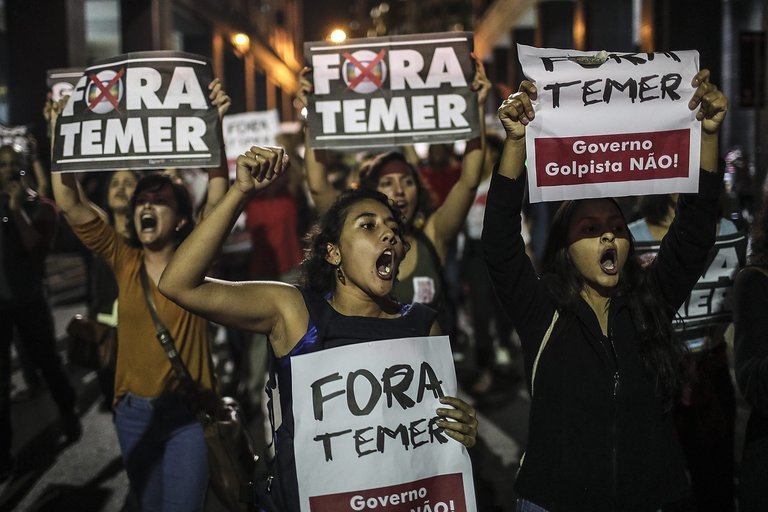
© Antonio Lacerda/European Pressphoto AgencyDemonstrators protested the ouster of President Dilma Rousseff of Brazil last week in Rio de Janeiro.
At one heated moment in the impeachment trial of
Dilma Rousseff, a powerful senator pushing for her ouster decided that some of his outspoken female colleagues in the chamber needed scolding.
"Calm down, girls," the senator, Cássio Cunha Lima, part of a political dynasty from northeastern
Brazil, told Senators Vanessa Grazziotin and Gleisi Hoffmann, both supporters of Ms. Rousseff, Brazil's first female president. His remark drew sharp rebukes from the two women.
"Men believe they are the owners of this space, as if we're just here by chance," said Ms. Grazziotin, 55, a prominent leftist senator from Amazonas State.
For senators like Ms. Grazziotin, the episode reflected the emboldening of
conservative voices after the impeachment of Ms. Rousseff, who argued that she had been the target of misogynistic attacks by opponents. Female politicians across Brazil are debating what her downfall means in a political realm dominated by men.
Despite the inroads made by Ms. Rousseff and others, Brazil ranks remarkably low in the representation of women in politics. Of Brazil's 513 members of Congress, 51 are women, placing the country
155th in the world in the percentage of women elected to the lower house of a national legislature, according to the Inter-Parliamentary Union. It trails places like Saudi Arabia and Turkmenistan.

















Comment: For the first in this compelling series about political psychopaths and their roles in 9/11, see:
Rudy Giuliani, his grotesque relationship to 9/11 - and new job offer