
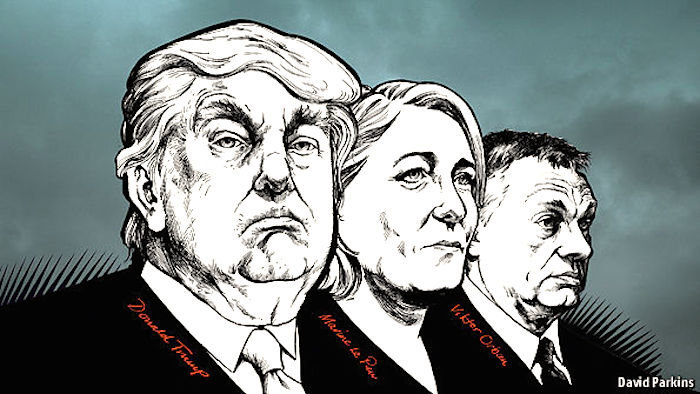
© David ParkinsThree entirely different leaders, but somehow grouped under one handy, undefined label.
Donald Trump's election victory has produced a further flood of angry and worried commentary from neoliberal writers complaining about the threatening rise of something they like to call "Populism". This one by Timothy Garton Ash in the Guardian is a good example, but in truth such articles now exist in their myriad. A fact common to all these articles is however that none of them ever properly define "Populism", though they vigorously condemn it whatever it is. The extent to which this word is empty of any meaning is shown by the sort of people neoliberal writers attach this label to.
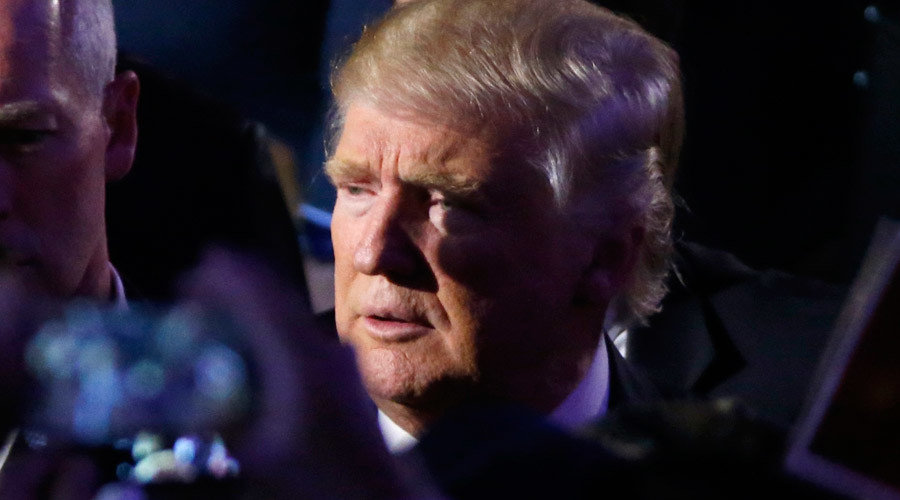
They include Donald Trump, Marine Le Pen, Nigel Farage and Viktor Orban, who all belong to the right (invariably referred to as "the far right"); Jeremy Corbyn, Alexis Tsipras, Bernie Sanders and the Podemos movement in Spain, who all belong to the left (invariably referred to as "the far left"); whilst Italy's Beppe Grillo, inhabits a strange politically indefinable world of his own, and therefore gets talked about rarely.
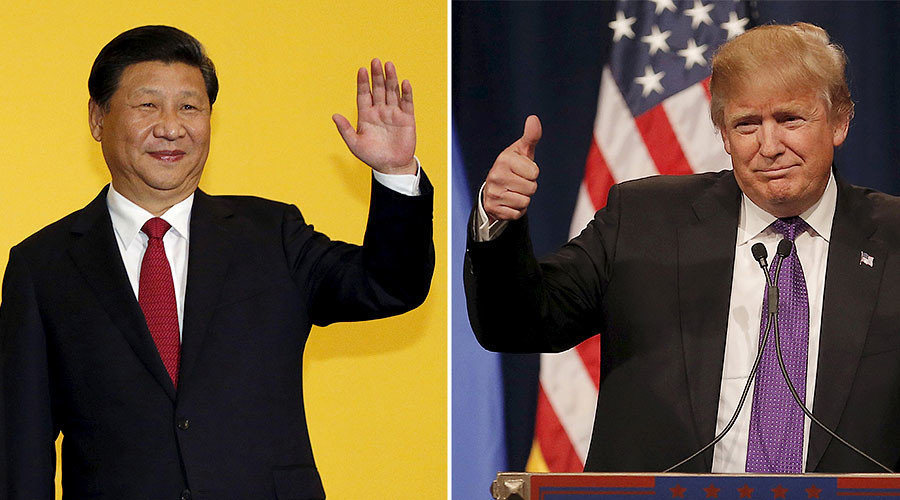
Of the other political leaders regularly called "Populists" Vladimir Putin of Russia and Recep Tayyip Erdogan of Turkey are impossible to place in conventional Western left-right terms, whilst Poland's Jarosław Kaczyński combines a socialist economic and welfare policy with a strongly conservative social and cultural policy and a militantly nationalist foreign policy, which also makes him difficult to place easily in conventional Western left-right terms.
Not only is there no ideological unity between these people, but far from being political allies they often detest each other.











Comment: As this author stated, there are no 'populists,' it is a definition of 'nothing' made into 'something' to further a neoliberal establishment agenda and delegitimize its opponents as 'undemocratic.'