
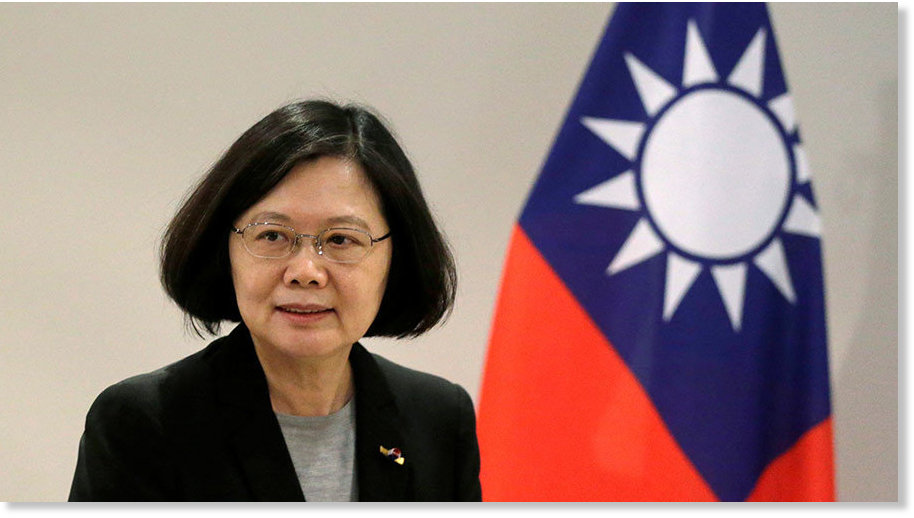
© Jorge Adorno / ReutersTaiwan's President Tsai Ing-wen
Taiwan's new leader is scheduled to visit three countries in January - Guatemala, Nicaragua and El Salvador. There is speculation, however, that she will make a stopover in New York.
Although this has been denied by several Trump advisers, as well as Taiwan itself, news of the visit has become the latest lever China has tried to use to show its disappointment at what it believes to be warming relations between Taiwan and the US.
In a Tuesday statement to Reuters, Beijing says it has called on Washington to deny Tsai entry into the US en route to Latin America next month. The US visit is expected just ahead of Trump's inauguration on January 20, when he replaces outgoing President Barack Obama.
The US State Department appeared to reject the notion that China can dictate terms, and said Tsai's transit - if it is to take place - is based on "long-standing US practice, consistent with the unofficial nature of (US) relations with Taiwan."














Comment: See also: