Puppet MastersS


Star of David

Netanyahu: Israel's 'inciter-in-chief' increasing political repression

netanyahu poster
An 18-year-old art student in Jerusalem discovered the hard way this month that Israeli prime minister Benjamin Netanyahu doesn't care for irony.

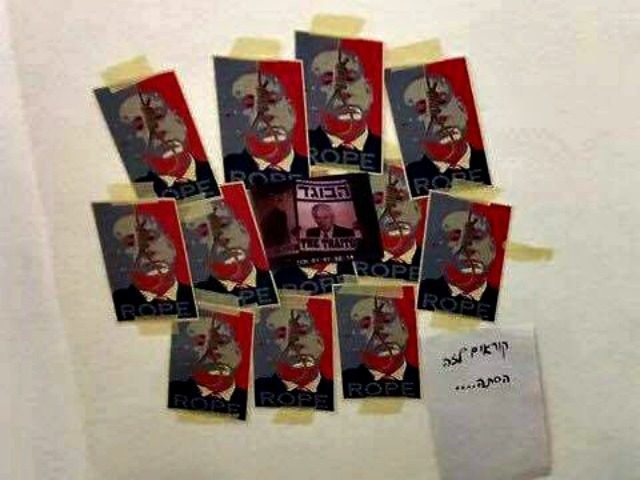
For a class assignment, she took the famous Barack Obama "Hope" poster and changed the face to Mr Netanyahu's, next to a noose, with the word "Rope" replacing "Hope". The student wanted to portray the prime minister as a hangman, who extinguishes hope of peace with incitement and political repression.

The Israeli police and Mr Netanyahu, however, viewed the work not as a critique of incitement but as an example of it - with the noose intended for the prime minister. The student is now the subject of a well-publicised investigation.

As with most art, context is everything. For Israelis on the left, as well as Israel's minority of Palestinian citizens, Mr Netanyahu is considered the king of incitement. And in recent weeks he has lived up to his reputation.

The background to the hangman image is Mr Netanyahu's incitement against former prime minister Yitzhak Rabin in the mid-1990s, as the latter tried to drum up support for the Oslo Accords. Footage of the period shows Mr Netanyahu addressing crowds holding aloft placards of Rabin in Nazi uniform. Months later a right-wing activist shot Rabin dead in the centre of Tel Aviv.

Mr Netanyahu's current conduct has revived those memories, leading another former prime minister, Ehud Barak, to label him Israel's "inciter-in-chief".

Comment: Israel is cementing its reputation as a nation led by dangerous crazy people.


Info

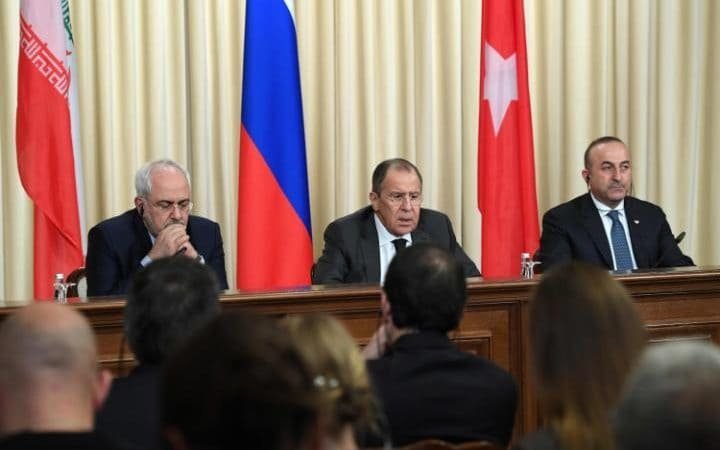
Details on the alleged Turkish-Iranian-Russian ceasefire plan for Syria - to begin Dec. 29?

lavrov cavusoglu
Since February 2016 Russia had negotiated with the U.S. about a peace deal on Syria. The main agreed-upon point was to fight together against the Takfiris, mainly ISIS and al-Qaeda. The U.S. in turn promised to separate the "moderate rebels" it supported from their close al-Qaeda ally. But that promise was never fulfilled. The U.S. delayed and delayed and enabled new attacks by al-Qaeda and U.S. proxy forces on Aleppo and elsewhere. It also instigated Kurdish YPG forces to attack the Syrian government in Hasakah. This was the strategic overreach that doomed the Kurds to a minor role in any upcoming solution.

Russia finally had enough and pulled the plug on further negotiations with the U.S. The Syrian forces and their allies besieged Aleppo and liberated it. At the same time Turkey was allowed to invade Syria in the northeastern Aleppo governate to prevent a connection of Kurdish areas in the northeast and northwest of Syria. The probably U.S.-instigated putsch attempt against the Turkish government contributed to this change of alliances. Turkey decided to work with Russia and Iran to end the Syrian crisis (and to get as much out of it as possible.)


Chess

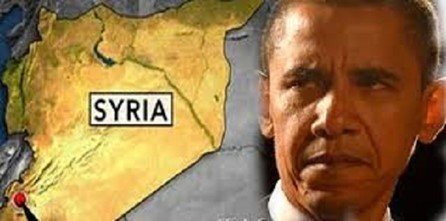
Behind the real U.S. strategic blunder in Syria

Syria
President Barack Obama has long been under fire from the US national security elite and the media for failing to intervene aggressively against the Assad regime.

But the real strategic blunder was not that Barack Obama didn't launch yet another war in Syria, but that he decided to go along with the ambitions of America's Sunni allies to create and arm a Syrian opposition army to overthrow the regime in the first place.

Now a former Obama administration official who is knowledgeable on the internal discussions on Syria policy, speaking to this writer on condition of anonymity, has shed new light on how and why that fateful decision was made.

The former official revealed that when Obama made the first move toward supporting the arming of Syrian opposition forces, the president failed to foresee the risk of a direct Iranian or Russian intervention on behalf of the Syrian regime in response to an externally armed opposition - because his advisors had failed to take this likelihood into account themselves.

The story of this policy failure begins after military resistance to the Assad regime began in spring and summer 2011.

Bad Guys

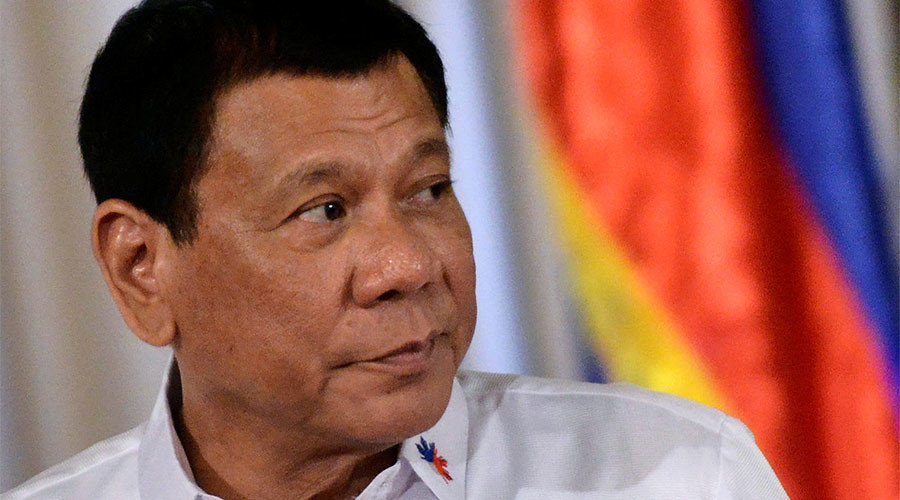
Alleged US plot to overthrow Philippine President Duterte exposed in The Manila Times

Duterte
© Ezra Acayan / ReutersPhilippine President Rodrigo Duterte
When today's reports in the Philippine press are only even half factual then a worrying but not surprising US foreign policy will be unfolding in the coming 2 years.

As if it was pulled straight out of a CIA play book (coup d'état 101) an alleged blueprint for the toppling of the Philippine president Rodrigo Duterte describes the details on how the US government should approach the Philippine government and nation in the next 1 and a half years, in order to successfully and terminally undermine the Duterte administration - in a state-sponsored attempt to force a regime change in the Philippines.

Former zionist US ambassador in the Philippines Philip Goldberg reportedly prepared that "blueprint" for the US government after Duterte provably started to steer away from the US its imperialism in Asia, by seeking closer ties with China and Russia after recently being elected the new president of the south east Asian sovereign nation.

As one reads the bullet points being described in the Manila Times article (a copy is provided below in case the original gets pulled or sent into the memory hole), one can't help it but to indeed see the striking similarities with practically all previous US-sponsored regime changes around the world, including Syria and Libya most recently.

Comment: The influence of the United States elite is waning all over the world, including a decline within the US itself. Duterte certainly faces some real challenges ahead because many in the Philippines still do believe in the illusion that the United States does have honorable intentions towards their country. History demonstrates they do not. Despite the United States' wishful thinking, a Philippine alliance with real friends like China and Russia is Duterte's best bet moving forward.


Briefcase

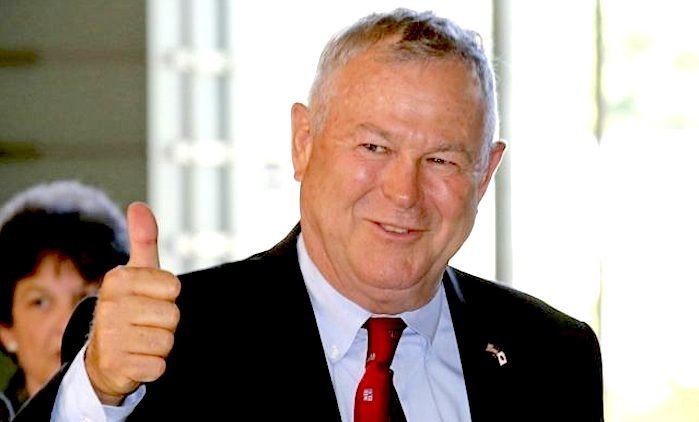
Trump team considering Dana Rohrabacher, Thomas Graham for U.S. Ambassador to Russia

DanaRohrabacher
© APCongressman Dana Rohrabacher
Donald Trump's transitional team is considering California Congressman Dana Rohrabacher and ex-State Secretary Henry Kissinger's top aide Thomas Graham to be US ambassador to Russia, Russian media reported Wednesday.

Russia's Izvestia newspaper cited US diplomatic sources as saying Trump would be filling diplomatic posts next year, when he assumes office as the next US president on January 20.

The US president-elect's long-time friend Rohrabacher is high on the list of candidates for the top US diplomat in Russia, sources told the outlet. Rohrabacher said last year he did not consider Russia to be a threat to the United States.

The Californian lawmaker said last November he was under consideration to join the Trump administration as Secretary of State. The job has since been promised to Exxon Mobil CEO Rex Tillerson.

Another contender for the diplomatic role is Thomas Graham who has also called on Washington to cooperate with Moscow in areas of mutual interest. Graham is a former special adviser to President George W. Bush. He worked as a foreign service officer at the US Embassy in Moscow and is now managing director of Kissinger Associates.

Bad Guys

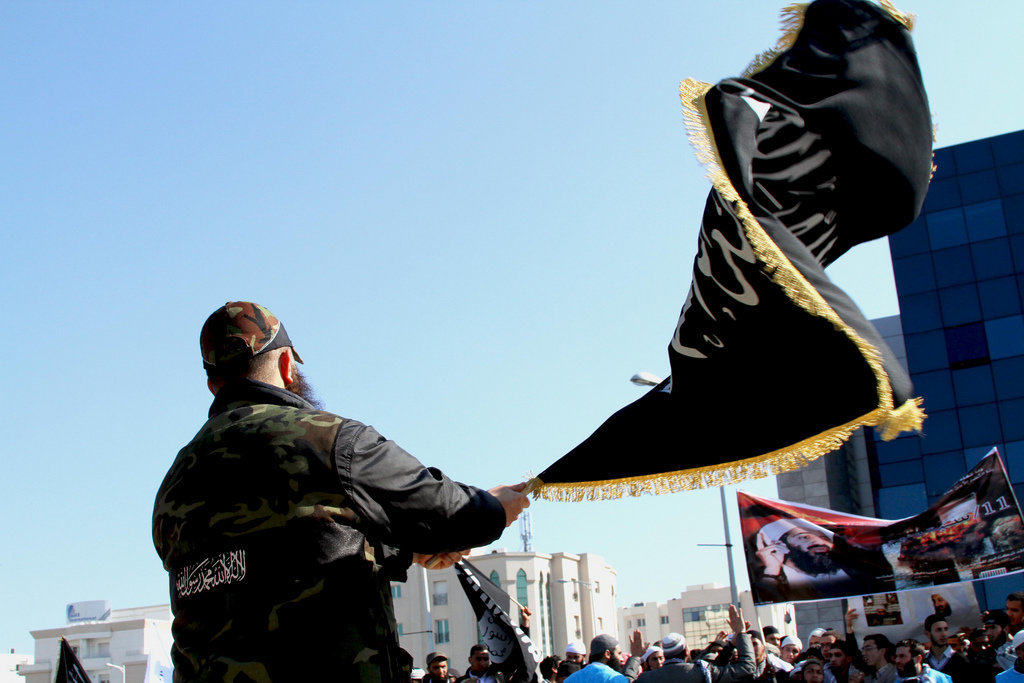
Fruits of the 'Arab Spring': How Tunisia got transformed into a major exporter of jihadists

Terrorist holding flag
The terrorist attack on the Christmas fair in Berlin that occurred on December 19, resulted in government officials pledging their commitment to the speedy deportation of failed asylum seekers, since the attacker was a Tunisian migrant. Tunisians have been treated extremely cautiously in Europe recently and at this stage it's imperative for us to understand why. Why is Tunisia, which was believed to be the most advanced democracy in the whole Arab world, now perceived as a major exporter of jihadists?

Six years ago, in December 2010, a 26-year-old street vendor Mohamed Bouazizi set himself on fire in front of the Sidi Bouzid town hall to protest the injustice of the police harassment he was subjected to. This suicide shook the very foundation of the country and led to a massive civilian unrest that would force President Zine El Abidine Ben Ali to resign and flee abroad. This second "Jasmine Revolution" marked the beginning of the so-called "Arab Spring", which affected a large number of Middle Eastern and Northern African states.

Comment: Also note wherever US military is involved in a country, extremism grows:


Vader

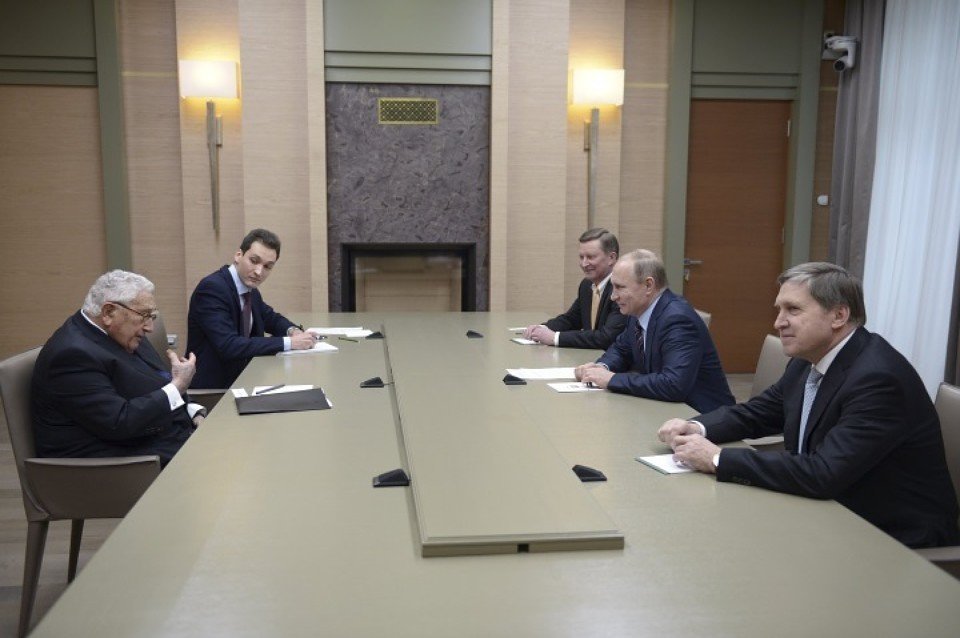
What is Henry Kissinger up to?

Kissinger meets Putin
Kissinger tries to lure Putin to the Dark side.
The English language Russian news agency, Sputnik, reports that former US Secretary of State Henry Kissinger is advising US president-elect Donald Trump how to "bring the United States and Russia closer together to offset China's military buildup."

If we take this report at face value, it tells us that Kissinger, an old cold warrior, is working to use Trump's commitment to better relations with Russia in order to separate Russia from its strategic alliance with China.

China's military buildup is a response to US provocations against China and US claims to the South China Sea as an area of US national interests. China does not intend to attack the US and certainly not Russia.

Chess

Do the tragedies of Syria signal the end of Arab revolutions?

Children celebrating Aleppo liberation
© Vanessa Beeley
Just as the catastrophic Anglo-American invasion of Iraq brought an end to epic Western military adventures in the Middle East, so the tragedy of Syria ensures that there will be no more Arab revolutions. And it's taken just 13 bloodsoaked years - from 2003 to 2016 - to realign political power. Russia and Iran and the Shia Muslims of the region are now deciding its future; Bashar al-Assad cannot claim victory - but he is winning.

"Aleppo must be taken quickly - before Mosul falls," a Syrian brigadier announced to me with a wan smile in the country's army headquarters in Damascus. And it did, scarcely a month later. There were - and still are - little Aleppos all over Syria in which the government and its armed "jihadi" opponents are playing "good guy" and "bad guy", depending on who is besieging whom. When the Sunni militias end their siege of little Shia towns like Faour, the civilians flock to government lines. It's reported as a slightly incomprehensible local dispute.

TV

Biased #fakenews purveyor CNN anchor: Don't cover Trump's tweets; force him to rely on MSM

DonaldTwit
© Conservatives4PalinIn control of the message.
US President-elect Donald Trump has largely ditched the "distorted" media, opting to communicate through Twitter rather than press conferences and interviews. But CNN anchor Don Lemon said the media facilitates that by choosing to cover his tweets. The leader-in-waiting hasn't held a press conference since winning the presidential election and regularly takes to Twitter to criticize the media landscape, using adjectives ranging from "crooked" to "dishonest."


However, Trump's choice to refrain from speaking to most news outlets, particularly left-leaning ones, is largely related to the industry's decision to give his tweets media coverage, according to Lemon. "Listen, I'm not a news executive. But if I were, I would say I would not cover his tweets," Lemon said on-air on Tuesday. Lemon said that if the media were to stop covering Trump's tweets, he would be forced to hold a press conference because "he hates being ignored."

Comment: Those precious snowflakes still have sour grapes, especially that "bunch" in MSM. The 'mea culpa' part has not 'aired' nor should we expect it any time soon. The 'programming' goes deep...


Chess

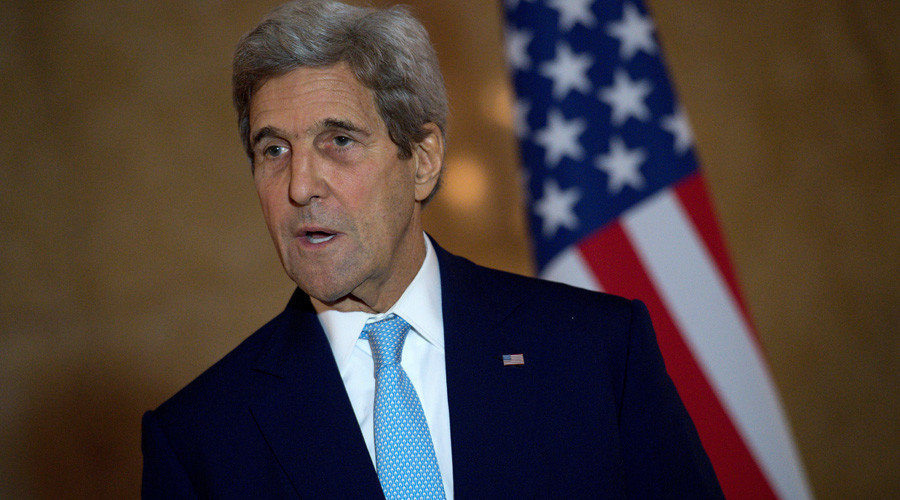
Kerry's goodbye speech: 2-state solution 'only way' for lasting peace between Israelis, Palestinians

John Kerry
© Justin Tallis / AFP
Secretary of State John Kerry laid out the US proposal for a peace agreement between Israel and the Palestinians, less than a month before the Trump administration takes office and at a low point in US-Israeli relations.


Kerry's speech is widely seen as an attempt to set the Obama administration's Middle East policy in stone before the January 20 changeover. President-elect Donald Trump has been vocally supportive of Israel and vowed a change of policy after his inauguration.

"2-state solution is the only way to achieve a just and lasting peace between the Israelis and Palestinians," Kerry said emphasizing that it was the only way to ensure Israel's future as a Jewish and democratic state.

Israeli Prime Minister Benjamin Netanyahu has accused Washington of conspiring against his country by not blocking the Egyptian resolution condemning Israeli settlements at the UN Security Council last week. The State Department has dismissed the accusation as "just not true."


"The US did in fact vote in accordance with our values," Kerry said. "No American administration has done more for Israel's security than Barack Obama's."

Comment: See also: U.S. secret agreement with Palestinians prior to U.N. Security Council vote on Israel's illegal settlements

Update: Israeli Prime Minister Benjamin Netanyahu has denounced a speech by US Secretary of State John Kerry about Jewish settlements as "biased", adding that the top US diplomat completely ignored the deep roots of the conflict.
Kerry dealt "obsessively" with the issue of the Jewish settlements in the occupied territories, Netanyahu said in a statement, calling it an anti-Israeli speech.

"Like the Security Council resolution that Secretary Kerry advanced in the U.N., his speech tonight was skewed against Israel," the statement reads, as cited by Reuters.

Netanyahu went on to say that Kerry almost completely ignored the root of the conflict that, according to Israeli Prime Minister, consisted of the Palestinian opposition to the very existence of the Jewish state within any borders.