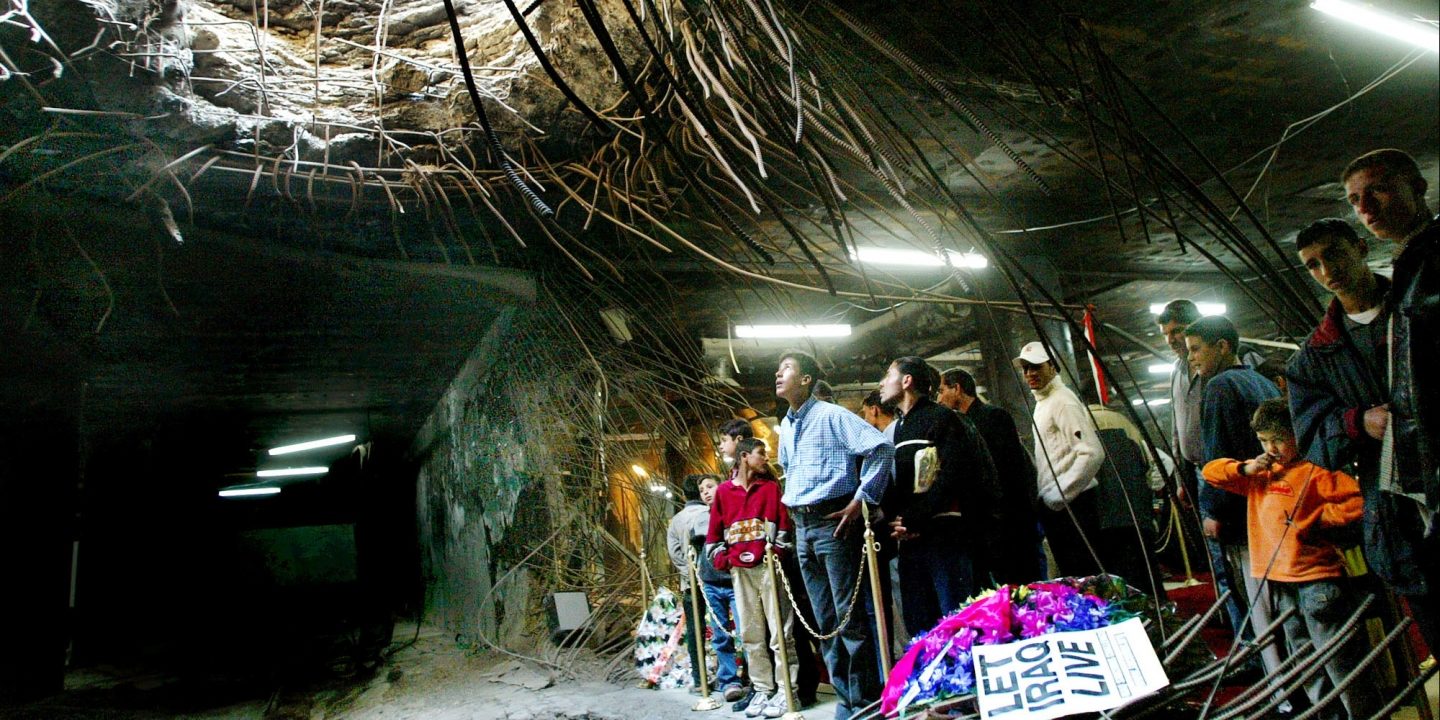
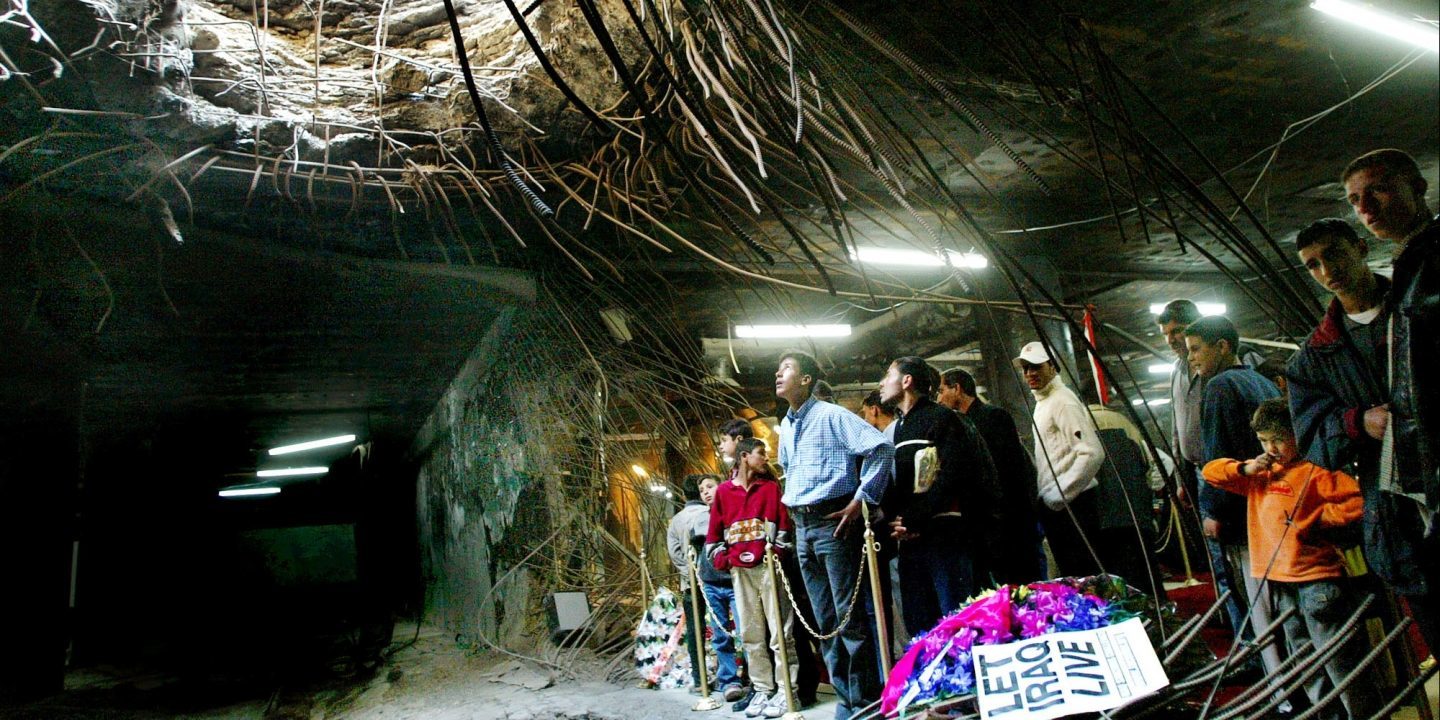
© David Guttenfelder/Associated PressDuring a memorial service in Baghdad, Iraqis gather around a bomb hole in the ceiling of the Al-Amariya shelter in 2003, where more than 400 people were killed in a U.S.-led missile attack during the Gulf War. Iraqis opened a new memorial center outside the Al-Amariya shelter to mark the 12 year anniversary of the attack.
There's been lots of attention-grabbing opposition to Trump's "Muslim ban" executive order, from demonstrations to court orders. But polls make it clear public opinion is
much more mixed. Standard phone polls show small majorities opposed, while web and automated polls find small majorities continue to support it.
What surprises me about the poll results isn't that lots of Americans like the ban — but that so many Americans don't. Regular people have lives to lead and can't investigate complicated issues in detail. Instead they
usually take their cues from leaders they trust. And given what politicians across the U.S. political spectrum say about terrorism, Trump's executive order
makes perfect sense. There are literally no national-level American politicians telling a story that would help ordinary people understand why Trump's goals are both horrendously counterproductive and morally vile.
Think of it this way:
On February 13, 1991 during the first Gulf War, the U.S. dropped two laser-guided bombs on the Amiriyah public air raid shelter in Baghdad. More than 400 Iraqi civilians were incinerated or boiled alive. For years afterwards visitors to a memorial there would meet a woman with eight children who had
died during the bombing; she was living in the ruined shelter because she could not bear to be anywhere else.











Comment: Further reading: US & UK have made Saudi Arabia the world's 'second-largest arms importer'