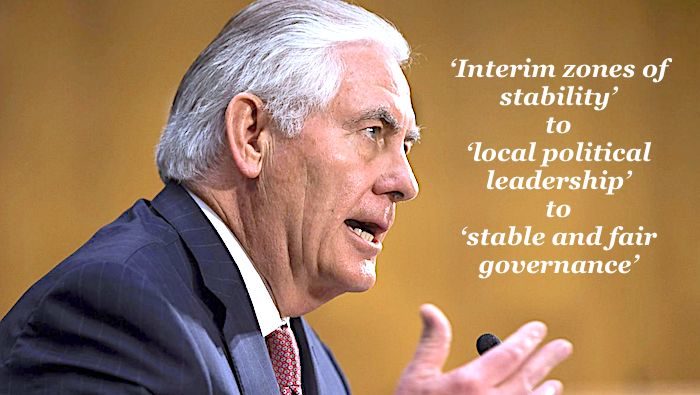
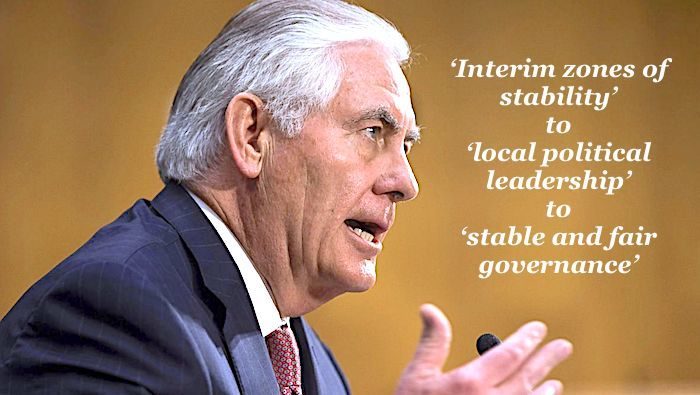
© ABC News/Go.comSecretary of State Rex Tillerson
While we did get a hint about Trump's new strategy for Syria when the US decided, only a few weeks ago, to
send more troops to Syria, no clear cut objectives were laid out at that time. However, it is quite obvious that the
US is following a certain, but loosely defined, policy framework and is looking at how it can resolve the crisis to its own advantage. While deployment of troops is taking place in and around Syria, Rex Tillerson recently elaborated, using a very vague language though, upon the US plan for Syria and the steps it deems necessary for binging 'stability' back. Although coming from a top US official, the plan has the potential to send ripples of fresh conflict in Syria.
It has flaws—some serious flaws—that can
stir different actors, both state and non-state, into opposing positions and thus provide the necessary context for further infighting.In a way, the "new plan" is not much different from what the Obama administration had pursued in terms of creating "zones" in Syria.
But the 'new plan' says much more than mere creation of "zones" - and that is precisely where it becomes self-defeating.For instance, during his address at Ministerial Plenary for the Global Coalition Working to Defeat ISIS at Washington, DC, on March 22, Tillerson talked about
creation of "interim zones of stability" and gradual transfer of responsibilities to "local political leadership", who would provide "stable and fair governance," rebuild infrastructure, and provide essential services. Tillerson added, "a successful stabilization phase will set the stage for a successful normalization phase. In the normalization phase, local leaders and local governments will take on the process of restoring their communities in the wake of ISIS with our [US-led coalition's] support."


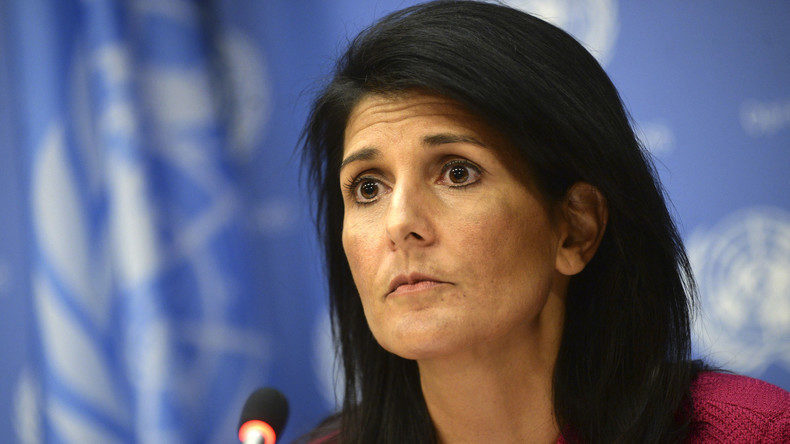











Comment: Haley's idiocy doesn't disappoint. But let's give her the benefit of the doubt. Maybe she just forgot that it is her own country (and her patron Israel) responsible for destabilizing the Middle East, and fueling the conflicts in Syria, Iraq and Yemen, to advance its own regional aspirations.