
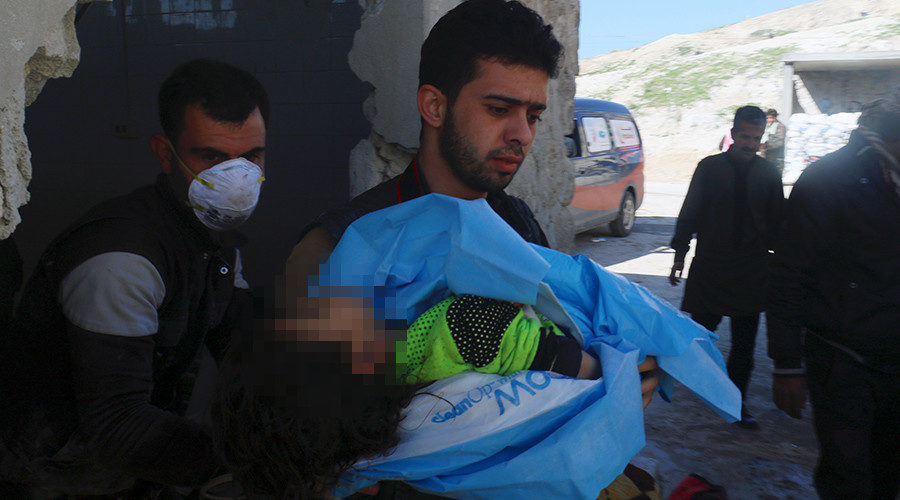
© Ammar Abdullah / ReutersGas attack in the town of Khan Sheikhoun in rebel-held Idlib, Syria April 4, 2017.
With the stakes impossibly high and an independent investigation compromised before it starts by Western declarations of President Assad's guilt, the OPCW investigation into the Khan Sheikhoun attack is already the subject of recrimination and conflict between the Western Powers and Russia.
Ever since President Trump of the United States declared President Assad of Syria guilty of the Khan Sheikhoun attack within hours of it happening and before any investigation had taken place, I have said that any investigation of the attack had been fatally prejudiced.
Especially after the US missile attack on Al-Shayrat air base, which resulted in people being killed, the honour and prestige of the President of the United States and of the Western alliance is bound up with a finding that President Assad and the Syrian military were guilty of the Khan Sheikhoun attack. Given the stakes involved, and given the enormous power of the US President and of the Western alliance, any truly independent and objective investigation of the Khan Sheikhoun attack is now impossible.








Comment: Lavrov: OPCW's block of on-site probe shows Western powers now aiming to oust Assad