Puppet MastersS


Magic Wand

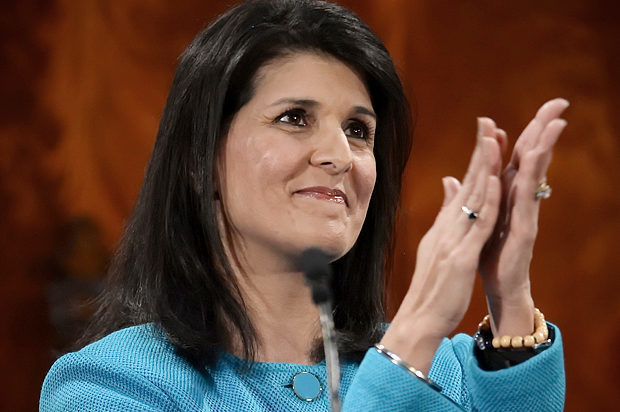
US lie generator Nikki Haley can't distinguish between 'facts' and 'editorializing'

nikki haley
"Twitter's treasure"
Nikki Haley's definition of "facts": When reporters write nice things about her

We all remember the tragic day when US Ambassador to the UN Nikki Haley was muzzled by the State Department. Results were immediate and devastating.

Once a must-read emporium of neocon ravings, her Twitter account is now a boring smorgasbord of selfies and praise for Ivanka Trump.

Even more concerning, there are no more PowerPoint presentations about orphans gassed by Assad the Terrible or CNN outbursts about made-up statements that Russian diplomats never said.

Yes, it seems that despite her best efforts to provoke a world war, Nikki Haley has been relegated to posting family photos on Twitter.

Comment:


Radar

North Korea taunts Seoul with 'satellite photos' of THAAD missile system

US THAAD missile system
© REUTERS/ U.S. Department of Defense, Missile Defense Agency/Handout
In a new attempt to exert pressure on Seoul to end the deployment of US missile systems on its territory, Pyongyang released on Monday what it claims are high-resolution satellite photographs detailing the THAAD missile defense system's installation in an area of South Korea close to its northern border.

The installation of the US-developed THAAD (Terminal High Altitude Area Defense) missile defense system in South Korea has drawn regional condemnation not only from North Korea, but from China and Russia as well, who object to the system's range and powerful radar.

Pyongyang's state-run broadcaster, Korean Central TV Broadcasting Station (KCTV), released two images on Monday purported to have been acquired by a North Korean spy satellite, showing the components of the THAAD system at a golf course in Seongju County, South Korea.

Comment: Read more about the new S. Korean president: South Korea: The Rising Moon of the East


Bullseye

Trump was able to fire Comey once former intelligence head Clapper admitted under oath there was no evidence of Trump/Russia collusion

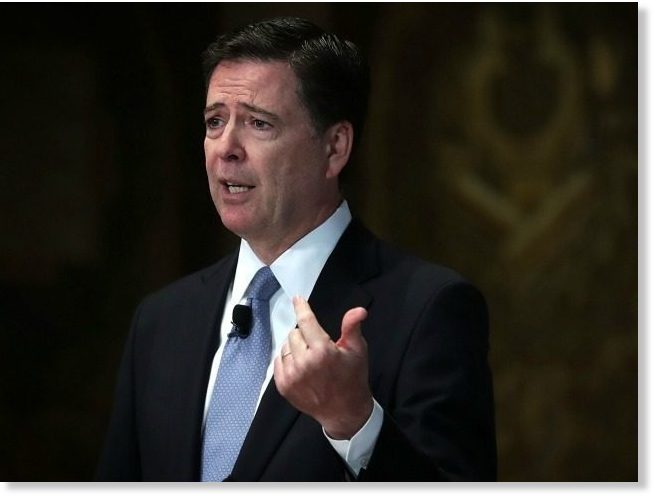
comey
© Alex Wong/Getty Images
The case for firing former FBI Director James Comey has been made at length by both Democrats and Republicans.

Last July, Republicans were angry that he failed to indict Hillary Clinton, and Democrats were angry that he made a case for doing so. In October, Democrats were furious that Comey revealed that he had re-opened the investigation into Clinton, and in March, Republicans were angry that he disputed President Donald Trump's wiretapping claims.

Comey was, arguably, dealt an impossible hand by the Obama administration. Regardless, within the Department of Justice and beyond, Comey had — perhaps with good intentions — undermined his credibility, and that of the FBI.

But why fire Comey now? The answer is simple. The day before, President Barack Obama's former Director of National Intelligence James Clapper repeated, under oath, what he told NBC News' Chuck Todd on Meet the Press on March 5 — that he had seen no evidence of collusion between the Trump campaign and the Russian government. That gave the Trump administration the breathing room to dismiss Comey — which it simply did not have before.

Light Sabers

Bad idea: Comey reportedly asked for more resources in FBI Russia investigation days before being fired

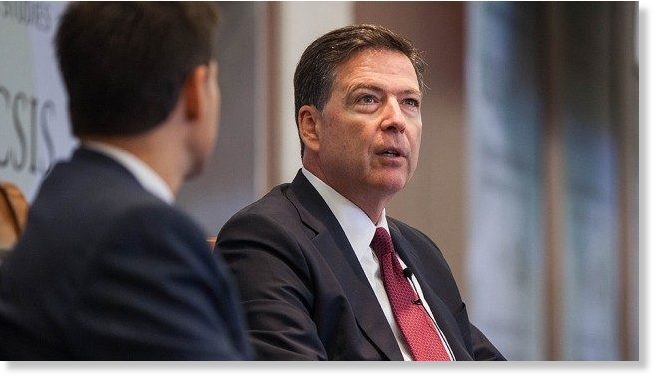
Comey
© Getty
Former FBI Director James Comey reportedly requested more money and personnel for the bureau's investigation into Russian meddling in the 2016 presidential election days before he was fired by President Trump.

Comey made the request during a meeting last week with Deputy Attorney General Rod Rosenstein, who wrote the Justice Department memo used to justify Comey's firing, The New York Times first reported Wednesday.

The FBI director then briefed members of Congress about the meeting, according to the Times. CNN, the Washington Post and the Associated Press have reported confirming Comey's request for more resources, as have other media outlets.

The Justice Department's top spokeswoman denied that Comey had requested more money or resources for the investigation. Sarah Isgur Flores called the reports "totally false."

Snakes in Suits

Sessions and Rosenstein Oval Office meeting led to 'fire Comey' recommendation

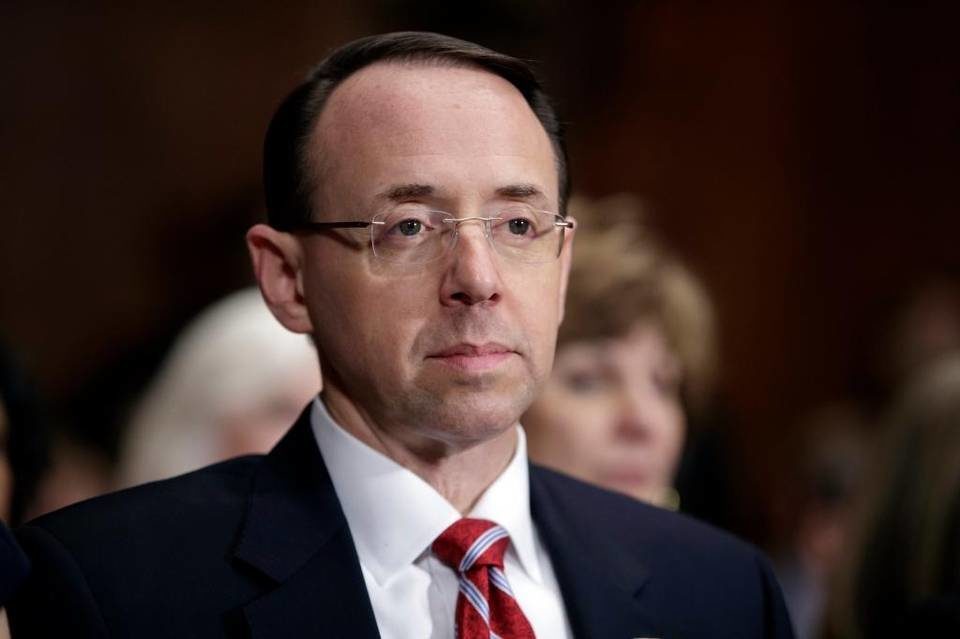
Rod Rosenstein
© J. Scott Applewhite APIn this March 7, 2017, file photo, then-Deputy Attorney General-designate Rod Rosenstein, listens on Capitol Hill in Washington, during his confirmation hearing before the Senate Judiciary Committee. The author of a scathing memo that the White House used to help justify the firing of FBI Director James Comey is also overseeing a Justice Department investigation into Russian interference in the 2016 election. In a three-page rebuke of Comey’s conduct, Rosenstein said the FBI director had usurped the attorney general’s authority last year when he announced that the FBI was closing its investigation of Hillary Clinton’s use of a private email as secretary of state.
Attorney General Jeff Sessions and his new deputy, Rod Rosenstein, arrived at the Oval Office Monday with a message for President Donald Trump: They had serious concerns about the embattled FBI Director James Comey.

Trump listened to what they had to say in a private meeting that was not disclosed on his public schedule and then asked for them to put their reasons in writing.

Rosenstein wrote a scathing three-page memo entitled "Restoring Public Confidence in the FBI" about Comey's botched handling of the high-profile investigation into Hillary Clinton's emails. That memo was delivered to the White House early Tuesday.

Hours later, Trump had made his decision: He fired Comey in a terse letter that didn't mention the Clinton investigation. It was hand-delivered to FBI headquarters by his former longtime bodyguard Keith Schiller, now director of Oval Office operations.

He then called 10 members of Congress, including House Speaker Paul Ryan and Senate Majority Leader Mitch McConnell, to inform them of the news that was about to quickly become public.

Briefcase

Scott Adams: Thoughts on the Comey firing

Comey FBI
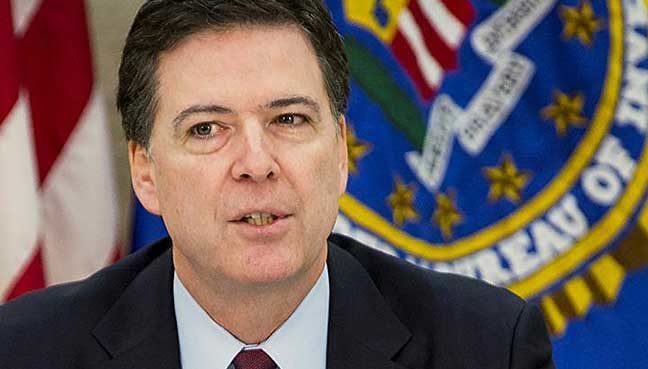
James Comey
What do Bernie Sanders' hair and CNN have in common today? They are both saying, "Comey" every time you look at them.

The news coverage of Comey's firing has become excellent entertainment. This is the biggest cognitive dissonance cluster bomb we've seen since election night. This one has everything.

For starters, the topic is too complicated for the public, and even the pundits. That creates a situation in which we'll all invent our own version of the movie in our heads. Where there is confusion, complexity, and emotion there is usually lots of cognitive dissonance. We got all of that.

My cursory understanding of the topic is that Trump's critics say he fired Comey to put a chill on the FBI's investigation of collusion between Russia and the Trump campaign. This theory sort-of-almost makes sense, in a hypothetical and indirect way. I could see how taking out the top dog would make the underdogs at the FBI worry about going hard at the President. On the other hand, the people doing the actual investigation are professionals, and there would be too many witnesses if they did a bad job. So that doesn't pass my sniff test. But I can't rule it out, either.

Bad Guys

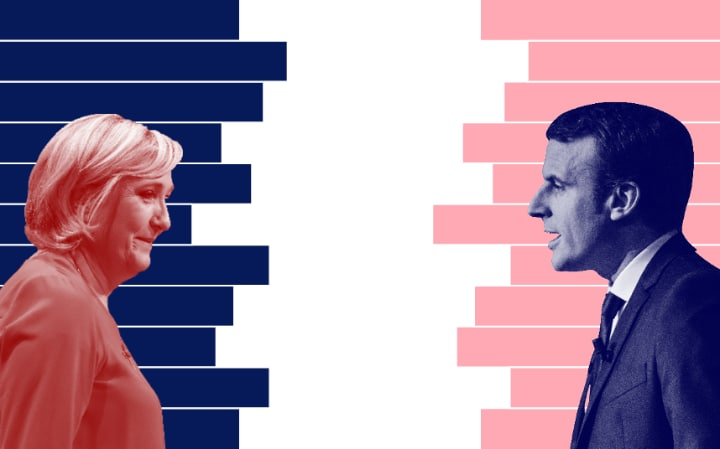
French election is a catastrophe for world peace

Le Pen Macron
Marine Le Pen's defeat, if the vote count was honest, indicates that the French are even more insouciant than Americans.

The week before the election the Russian high command announced that Washington had convinced the Russian military that Washington intended a preemptive nuclear first strike against Russia. No European leader saw danger in this announcement except Le Pen.

No European leader, and no one in Washington, has stepped forward to reassure the Russians. In the US apparently only my readers even know of the Russian conclusion. Simply nothing is said in the Western media about the extraordinary risk of convincing Russia that the US is preparing a first strike against Russia.

Nothing in the 20th century Cold War comes close to this.

Bad Guys

Best of the Web: Memory Loss & Terror Bombing: How America Justifies Its Acts of Evil

mainstream propaganda
Some years ago, a newspaper article credited a European visitor with the wry observation that Americans are charming because they have such short memories. When it comes to the nation's wars, however, he was not entirely on target. Americans embrace military histories of the heroic "band of [American] brothers" sort, especially involving World War II. They possess a seemingly boundless appetite for retellings of the Civil War, far and away the country's most devastating conflict where American war deaths are concerned.

Certain traumatic historical moments such as "the Alamo" and "Pearl Harbor" have become code words -- almost mnemonic devices -- for reinforcing the remembrance of American victimization at the hands of nefarious antagonists. Thomas Jefferson and his peers actually established the baseline for this in the nation's founding document, the Declaration of Independence, which enshrines recollection of "the merciless Indian Savages" -- a self-righteous demonization that turned out to be boilerplate for a succession of later perceived enemies. "September 11th" has taken its place in this deep-seated invocation of violated innocence, with an intensity bordering on hysteria.

Such "victim consciousness" is not, of course, peculiar to Americans. In Japan after World War II, this phrase -- higaisha ishiki in Japanese -- became central to leftwing criticism of conservatives who fixated on their country's war dead and seemed incapable of acknowledging how grievously Imperial Japan had victimized others, millions of Chinese and hundreds of thousands of Koreans foremost among them. When present-day Japanese cabinet members visit Yasukuni Shrine, where the emperor's deceased soldiers and sailors are venerated, they are stoking victim consciousness and roundly criticized for doing so by the outside world, including the U.S. media.

Comment: Further reading: How the US Empire was made in North Korea


Oscar

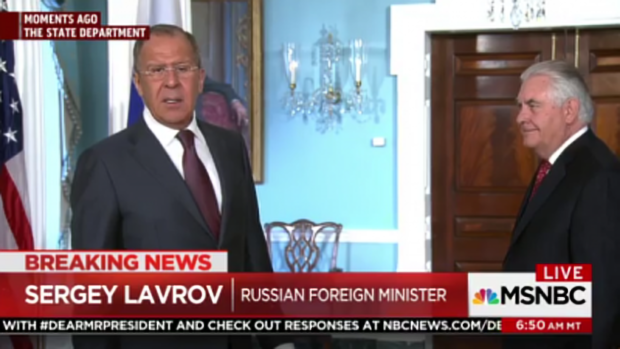
Lavrov masterfully demonstrates proper way to handle feral US journalists

Sergey Lavrov and Rex Tillerson
The one and only Sergey Lavrov
What should you do when a feral journalist shrieks at you? Sergey Lavrov masterfully demonstrates

Imagine you are walking down the street minding your own business. All of a sudden, a feral US journalist emerges from the bushes and begins to eat its own feces. What should you do?

Most would probably cross the street and then Facebook-livestream the journo poop-a-thon from a safe distance.

Comment: See also: 'Was he fired? You're kidding!" Lavrov meets with Tillerson, feigns surprise


Snakes in Suits

Flashback State Dept. official offered quid pro quo to FBI to alter Killary emails classification

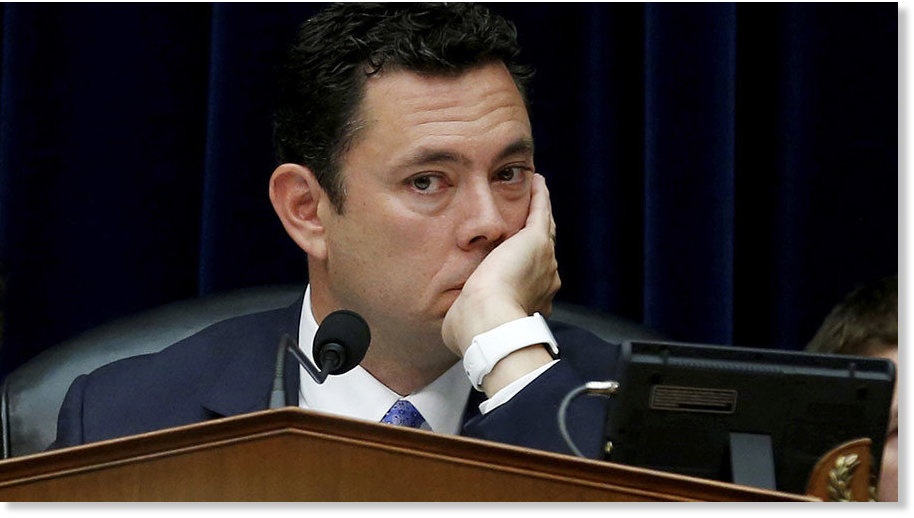
Jason Chaffetz
© Jonathan Ernst / ReutersHouse Oversight and Government Reform Committee Chairman Jason Chaffetz (R-UT)
Newly released FBI documents pertaining to the investigation into Hillary Clinton's private email servers show that an unnamed FBI agent claims Patrick Kennedy, the State Department's Undersecretary of State for Management, offered a bribe to the agency.

According to an interview summary, an unnamed FBI official alleged that they had "received a call from [REDACTED] of the International Operations Division (IOD) of the FBI, who 'pressured' him to change the classified email to unclassified. [REDACTED] indicated he had been contacted by PATRICK KENNEDY, Undersecretary of State, who had asked his assistance in altering the email's classification in exchange for a 'quid pro quo.'"

Kennedy, who served directly under Hillary Clinton during her tenure as secretary of state, was accused of offering to increase the FBI's presence abroad "by allowing the FBI to place more Agents in countries where they are presently forbidden."

The official went on to explain that this was not a one-off comment from Kennedy. In fact, Kennedy asked in a meeting whether the FBI could "see their way to marking the email unclassified?"

Comment: The FBI itself isn't quite innocent in this whole debacle either. Apparently many agents are quite upset that FBI Director Comey refused to convene a grand jury and that the Clinton's house was never searched. As an FBI agent put it:
"We didn't search their house. We always search the house. The search should not just have been for private electronics, which contained classified material, but even for printouts of such material," he said.

"There should have been a complete search of their residence," the agent pointed out. "That the FBI did not seize devices is unbelievable. The FBI even seizes devices that have been set on fire."
Another special agent bristles at Comey's self-description as an investigator:
"Comey was never an investigator or special agent. The special agents are trained investigators and they are insulted that Comey included them in 'collective we' statements in his testimony to imply that the SAs agreed that there was nothing there to prosecute," the second agent said. "All the trained investigators agree that there is a lot to prosecuted but he stood in the way."

He added, "The idea that [the Clinton/e-mail case] didn't go to a grand jury is ridiculous."
So it seems that with the FBI, there is a serious disconnect between what the rank and file want and what management has decided to do. The investigators and agents want an unbiased investigation because there is enough evidence to warrant it. That's how every other case is handled. The bosses, on the other hand, want to treat this case differently because of the political implications. That has to be having a negative effect on morale at the Bureau.

Update (Oct. 19): The House Judiciary Committee is calling for an investigation into this "quid pro quo" arrangement, demanding the DOJ look into Undersecretary Patrick Kennedy's alleged bribes to the FBI.
In a letter to Attorney General Lynch, Rep. Goodlatte wrote that while much of the investigation into Clinton's server bothers him, the FBI's interview notes (documents known as 302's) pertaining to Kennedy bothered him the most. He explained, "the 302's show that Undersecretary Kennedy offered to support the FBI's efforts to place additional agents in overseas locations, including some of the most critical locations in the world for our fight against terrorism, if the FBI would agree to declassify certain classified documents found on Secretary Clinton's private email server related to the Benghazi attacks."
...
Referring to Kennedy's offer to have the potentially declassified documents be archived in the basement "never to be seen again," Goodlatte referred to Kennedy's alleged deal as an "attempt to barter away American national security interests for plainly political purposes."

The DOJ has yet to respond to Goodlatte's demands. Demands for Kennedy's removal from the position came first from the Chairman of the House Committee on Oversight and Government Reform Jason Chaffetz (R-Utah) and the Chairman of the House Permanent Select Committee on Intelligence Devin Nunes (R-California) on Monday, who asked Secretary of State John Kerry to allow Kennedy to be investigated.