Puppet MastersS


Light Sabers

Iranian Army Chief: US should move its bases 1,000km away from Iran if it wants to pursue further sanctions

U.S. Marines
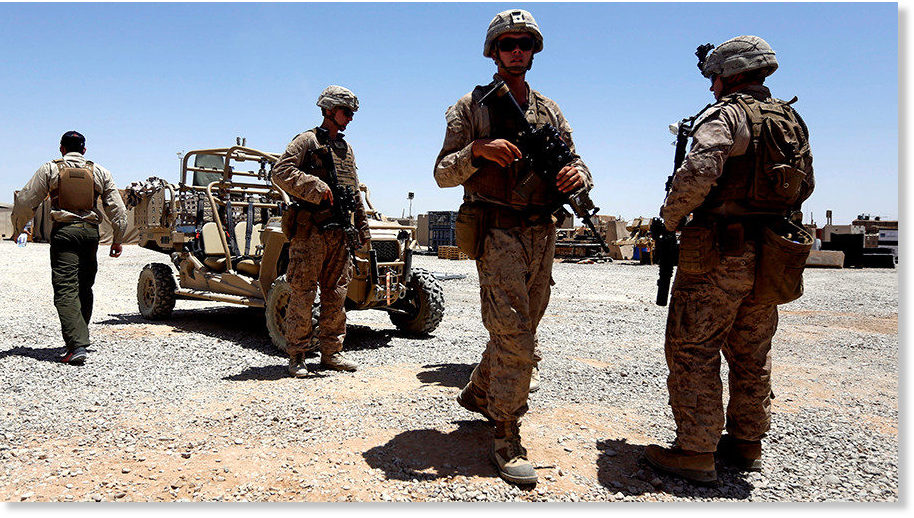
© Omar Sobhani / ReutersU.S. Marines walk inside their base in Afghanistan July 6, 2017
The US has to move its bases 1,000km away from Iran's borders if it plans to keep sanctions in place against Tehran, or risk paying a price, the commander of the Islamic Revolution Guards Corps, Major General Mohammad Ali Jafari, said.
"In case the US wants to insist on pursuing sanctions against Iran's defense sector and the IRGC [Revolutionary Guards], it needs to first dismantle its regional bases within a range of 1,000km around Iranian borders," Tasnim news agency quoted the commander as saying.

"Washington should be aware that it will pay dearly for any miscalculations," he went on to say.

Jafari said that Iranian missile capabilities are "rapidly growing," creating an effective deterrent against any threats, the agency reports. He added that the Islamic Republic's missile program is by no means "bargainable or negotiable."

Star of David

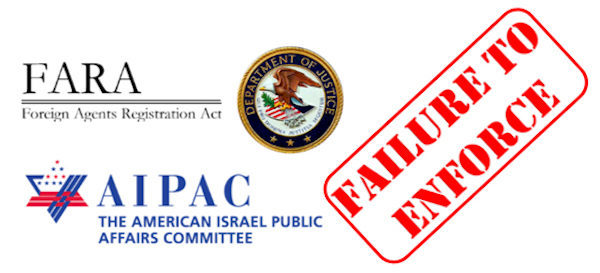
Best of the Web: The biggest meddler in American democracy is not Russia, it is Israel via foreign agent AIPAC

aipac
Alleged Russian meddling in the US electoral process will be the subject of a Senate Judiciary Hearing on Wednesday. The hearing is titled "Oversight of the Justice Department's (Non) Enforcement of the Foreign Agents Registration Act: Lessons from the Obama Administration and Current Compliance Practices." In 1938 the U.S. Congress passed the Foreign Agents Registration Act to mandate disclosure of the activities of non-diplomatic foreign agents in the United States propagandizing for war, swinging public opinion, and obtaining foreign aid and other economic benefits through congressional lobbying without disclosing that their activities were conducted on behalf of foreign principals.

The first panel of witnesses for Wednesday's Senate hearing will include Deputy Assistant Attorney General of the National Security Division of the Justice Department Adam Hickey, Assistant Director of the Counterintelligence Division of the FBI Bill Priestap and Inspector General of the Justice Department Michael Horowitz.

Second panel witnesses include Glenn Simpson of Fusion GPS, an outfit which circulated the now infamous dossier of allegations made against Donald Trump by a British spy. William Browder, a Russian market investment expert from Hermitage Capital Management, who has now deemed Russia "absolutely uninvestable" will also testify. According to reports, Browder knows Natalia Veslnitskaya, the Russian lawyer who met with Donald Trump Jr. to peddle opposition research on Hillary Clinton.

Panel Chairman Chuck Grassley may ultimately conclude that the Foreign Agents Registration Act (FARA) has failed and that unregistered Russian foreign agents are taking over America. If so, he will be half right, but not the first such senator to express concern. Grassley should consider what happened after a more extensive Senate FARA inquiry was launched 55 years ago.

Bad Guys

Cryptocurrencies are 'ticking time bomb', says Ethereum co-founder

Ethereum and Bitcoin
© Wit Olszewski / Shutterstock
Initial coin offerings (ICOs), or a means of crowd funding for blockchain technology companies have caught too much attention, according to the co-founder of the ethereum network Charles Hoskinson who says it's time for things to cool down in a big way.

"People say ICOs are great for ethereum because, look at the price, but it's a ticking time-bomb," Hoskinson told Bloomberg.

He said "there's an over-tokenization of things as companies are issuing tokens when the same tasks can be achieved with existing blockchains," adding "people are blinded by fast and easy money."

Bad Guys

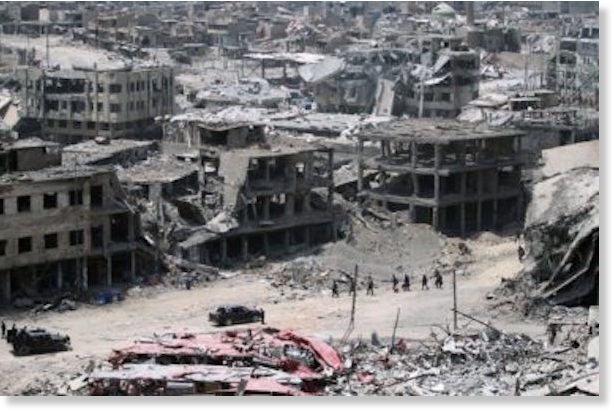
Comparing US bombing of Mosul with Russian bombing of Aleppo: When US attacks it's 'good' - when Russia attacks it's 'bad'

Mosul bombing
The West's selective indignation concerning Syrian and Russian conduct of the battle of Aleppo, in contrast to Iraqi and US conduct of the battle of Mosul, is not an only an offence against reason and truth. It also excuses Al-Qaeda, which was as responsible for the suffering in Aleppo as ISIS has been for the suffering in Mosul.

Anyone casting their mind back to the Western media's reporting of the battle to liberate eastern Aleppo from the Al-Qaeda led Jihadis in the second half of last year will remember the vivid reporting of supposed Russian and Syrian government atrocities the Western media and Western governments engaged in during the battle.

Thus the Russians and the Syrians were accused of terror bombings of civilians, of deliberately bombing hospitals, with the Syrians specifically accused of 'barrel-bombing' ie. of dropping inaccurate improvised home made bombs to kill civilians.

Comment: For more on the Western hypocrisy, double standards and vast contrast between the prosecution of these two battle fronts, see: Aleppo and Mosul: A tale of two liberated cities


Vader

Newsweek deals deafening blow to Kremlin power-center, claims critics think Putin isn't that smart

news derp
In journalism it's important to have a good opening statement or lede that draws attention.

But it's also important not to overstate your case lest you expose yourself to ridicule.

A common tactic therefore is to start with an explosive statement that is technically correct, then qualify if it.

Alarm Clock

Like clockwork: The basic "Russia/Trump connection" media formula

trump and sessions

Comment: Three and a half months later, and this article is still spot on.


The basic formula for every breaking Trump/Russia story is essentially as follows:

1. The New York Times or Washington Post releases an article that at first blush appears extremely damning.

2. Anti-Trump pundits and Democrats react reflexively to the news, express shrieking outrage, and proclaim that this finally proves untoward collusion between Trump and Russia — a smoking gun, at last.

3. Aggrieved former Clinton apparatchiks *connect the dots* in a manner eerily reminiscent of right-wing Glenn Beck-esque prognostication circa 2009.

Comment: The low-down on what's really going on: The Fourth Turning and Steve Bannon Pt. 3: Implications for Hysterica-America

As for Sessions:


War Whore

Supporting the jihadists? Netanyahu opposes peace in Syria

Benjamin Netanyahu and Emmanuel Macron
© Stephane Mahe / Reuters

Yesterday, a meeting between French President Emmanuel Macron and Israel's Prime Minister Benjamin Netanyahu concluded in Paris. At the press conference after the meeting, PM said that Israel rejected the ceasefire in southwestern Syria brokered by Russia and the U.S., Israeli news site Haaretz reported.


Taking such a strange stance, Netanyahu pointed out that the truce agreement in the de-escalation zones increase Iran's presence in Syria. Some sources claim that Tel-Aviv is especially displeased with the fact that the agreement removes the Iranian forces 20 kilometers from the border while Iran's presence in the country is not excluded.

Moreover, Israel's Jerusalem Post newspaper quotes some diplomatic sources claiming Iran is up to establish air, land and sea bases in Syria and Lebanon. In its turn, Politico stresses that Israeli politicians are wary of a land corridor in Iran allegedly plans to set up to directly support Hezbollah in Lebanon.

Tehran is one of Israel's main rivals and the recent hysteria about Iran's military presence near Israeli borders seems quite logical. However, is it wise of Netanyahu not only to confront Russia and the U.S. but also to display contempt for peace in a neighboring state?

Comment: Russia tells Israel to 'live with it' on the new Syrian ceasefire


Info

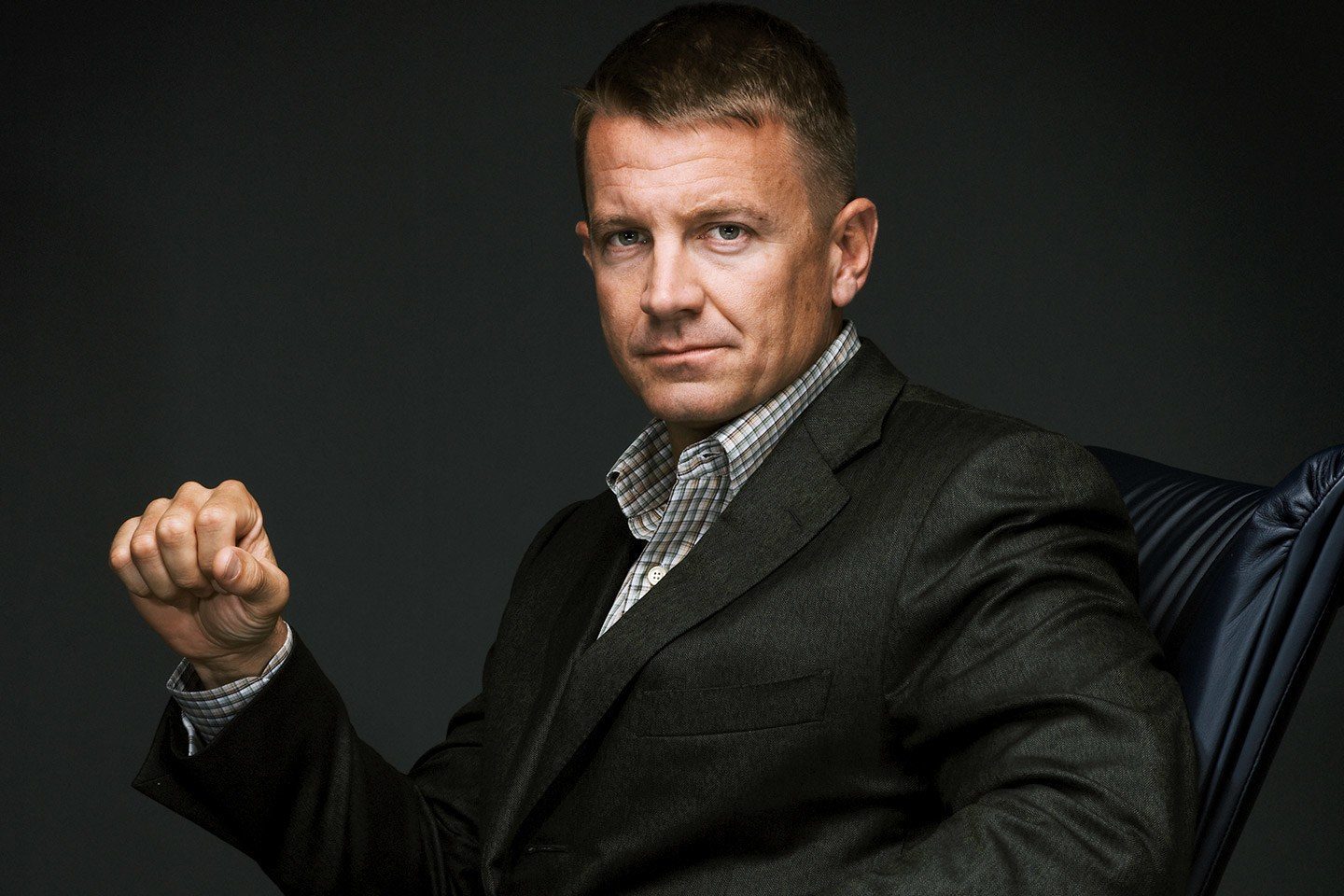
NYT: Bannon and Kushner are privatizing war, outsourcing to Blackwater and DynCorp mercs

Erik Prince Blackwater Mercenary Xi
During the time that U.S. Defense Secretary James Mattis and National Security Adviser H. R. McMaster were reviewing the U.S. military policy in Afghanistan, The New York Times ran a story on July 10, 2017, that exposed a threat that will upend U.S. defense strategy and return it to a bitter past.

The Times story was centered around the following paragraph: "Erik D. Prince, a founder of the private security firm Blackwater Worldwide, and Stephen A. Feinberg, a billionaire financier who owns the giant military contractor DynCorp International, have developed proposals to rely on contractors instead of American troops in Afghanistan at the behest of Stephen K. Bannon, Mr. Trump's chief strategist, and Jared Kushner, his senior adviser and son-in-law, according to people briefed on the conversations."

The history of Blackwater and Dyncorp is one of heinous war crimes in Iraq and the Balkans and massive fraud involving U.S. taxpayers' money in military forays around the world. After coming under investigation for his activities as Blackwater's chief, Prince, whose sister is Donald Trump's Education Secretary, Betsy DeVos, sold the company and moved his mercenary operations offshore to Abu Dhabi.

Dollar

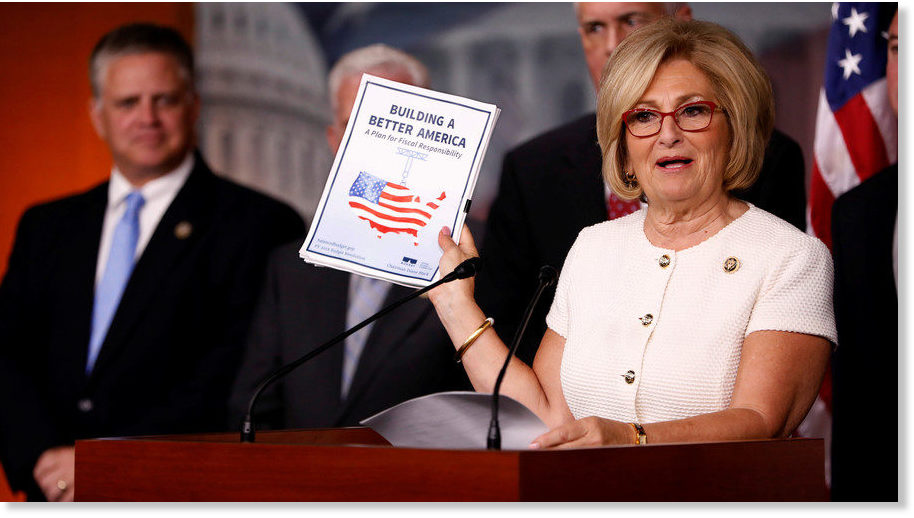
House Republicans release 2018 budget proposal - Increase military spending while cutting billions in aid for Medicaid and Social Security

Diane Black
© Aaron P. Bernstein / ReutersRep. Diane Black (R-TN) announces the 2018 budget blueprint during a press conference on Capitol Hill in Washington, U.S., July 18, 2017
House Republicans have released their 2018 budget proposal, which they say will balance over the next decade by cutting billions in spending for programs such as Medicaid and Social Security while overhauling the tax code.

On Tuesday, the House Budget Committee released their "Building a Better America" budget blueprint for the fiscal year 2018.

The committee laid out their plan in five steps: balancing the budget within 10 years, promoting economic growth by reducing regulations and reforming the tax code, strengthening national defense through increased spending, returning power back to the states and reforming government programs.

"We believe that these five principles, put into practice, will help us build a better America we can be proud to leave to future generations," House Budget Committee Chairman Diane Black (R-Tennessee) wrote in an op-ed for USA Today Tuesday.

Comment: Rand Paul has responded to the budget proposal by calling it a "giant bailout superfund for insurance companies:
"I think the longer the bill is out there, the more conservative Republicans are going to discover that it's not a repeal, and the more that everybody is going to discover that it keeps the fundamental flaw of Obamacare." Paul said on CBS' Face The Nation.

As Paul notes, the GOP bill maintains the fundamental flaw of Obamacare which is that this was never about giving people affordable health care and always about making health insurance companies super rich by forcing all Americans to become customers of major health insurance providers.

Through Obamacare, insurance companies are literally using government force to mandate that everyone in the country buy their product, via penalties and threats, and the GOP plan keeps this in place.

"It keeps the insurance mandates that cause the prices to rise, which chase young, healthy people out of the marketplace, and leads to what people call adverse selection, where you have a sicker and sicker insurance pool, and the premiums keep rising through the roof." the Senator urged.


Chess

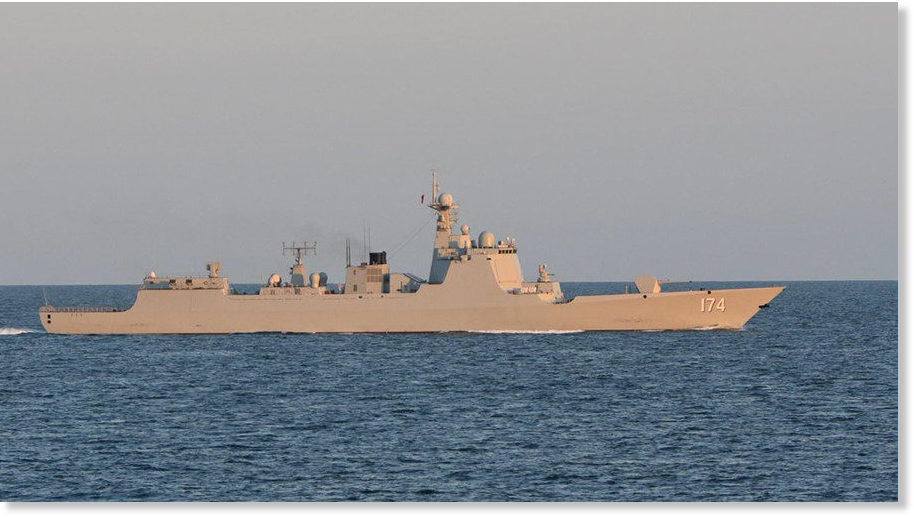
Chinese vessels escorted by UK, Danish and Dutch navies on way to joint drills with Russia in Baltic Sea

warship
© Ministry of Defence of The Netherlands
British, Dutch and Danish ships have escorted a trio of Chinese vessels which are heading to the Baltic Sea to conduct the first stage of joint drills with Russian ships.

"A Chinese frigate, a supply ship and a destroyer are passing through Danish waters. We are escorting [them] as part of the normal surveillance we have in our territorial waters," Klaus Thing Rasmussen, senior duty officer at the Danish military operations center, told the DR broadcaster.

Rasmussen, however, declined to reveal the exact location of the Chinese ships.

"We sent one unit out to them last night, when they were approaching Danish waters. It will take around a day in total until they leave again near Bornholm, where they entered, and we will escort them the entire way," he said.

"Our position is that there is free passage through the Baltic Sea, and the Danish Navy acts as a stopper in the gap. That means we accompany foreign state vessels as part of our surveillance of Danish waters," he added.