Puppet MastersS

Light Sabers

China's economic boom and infrastructure growth via OBOR creates panic in West

shanghai
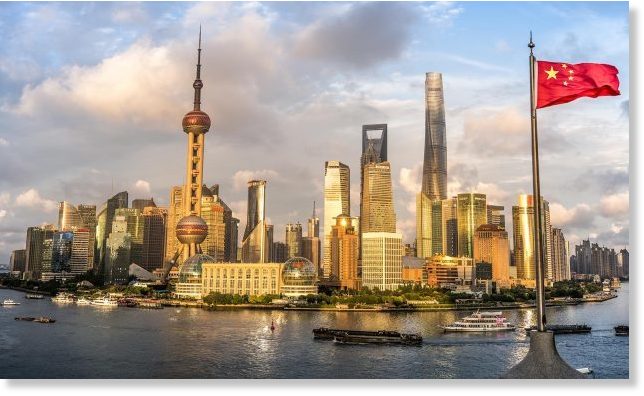
© iStockShanghai's Lujiazui financial district
Not since the British garrison at Singapore surrendered to Gen. Tomoyuki Yamashita in 1942 has Western opinion of an Asian power changed so fast. When China's 2015 stock market bubble popped, prevailing Western opinion held that China's economic boom would flame out in a debt crisis comparable to America's subprime disaster of 2008 or the near collapse of Europe's southern tier in 2013.

Now that China's tradeable stock market has risen by 43% during 2017 in US dollar terms (with the MSCI-based ETF as a benchmark), Western opinion is melting up. Bridgewater, the world's largest hedge fund, is raising money for a China investment vehicle. Bank of America now predicts Asian stocks will double in the present bull run. "Hedge Funds Used to Love Shorting China. Now, Not So Much," declared a Bloomberg headline Sept. 12.

The same applies to Western evaluation of China's standing as a world power. Graham Allison's The Thucydides Trap, a plea not to oppose China's strategic challenge to the United States, now sits on the desk of every senior staffer at the National Security Council courtesy of President Trump's national security adviser, Gen. H.R. McMasters.

Chess

Puppet president: Trump desires rapprochement with Russia but is powerless against Deep State

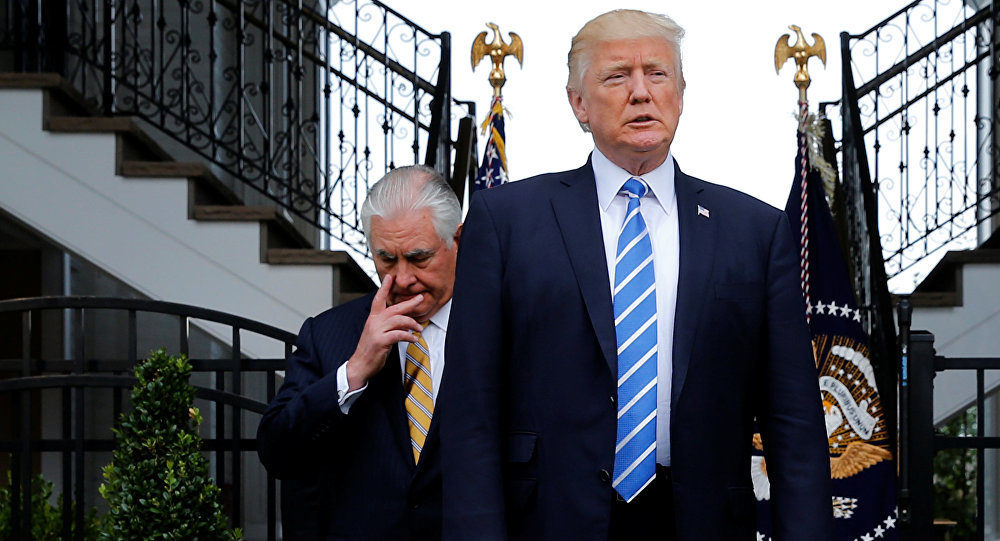
Trump Tillerson

Donald Trump is powerless to break the vicious circle of anti-Russian policies championed by the US foreign policy establishment, US academic Vladimir Golstein told Sputnik. Under these circumstances Russia needs to concentrate on building partnerships with other countries, ensuring security and economic development, he believes.


Donald Trump "was not happy" with the Russia sanctions bill and would obviously like to bring the ongoing diplomatic scandal to a halt, but he has little political leverage to fix the situation, Vladimir Golstein, Associate Professor of Slavic Studies at Brown University, told Sputnik.

"Trump would like to 'get along' with the Russians, but so far, he does not seem to have the actual mechanisms of power to implement his plan. The same can be said about the Secretary of State, Rex Tillerson," Golstein said.

Comment: How does the deep state tie down Trump?


Chess

Winning the diplomatic tussle: How North Korea is outmaneuvering the US

kim jong un
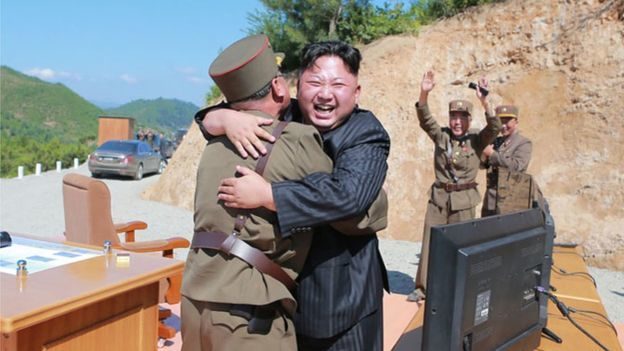
Don't look now, but North Korea has just won its latest diplomatic tussle with the United States. No matter how often Donald Trump promises to rain down "fire and fury" on the Democratic People's Republic "the likes of which the world has never seen before," it's increasing clear that Kim Jong Un's nuclear-deterrence policy is working and that there's little the U.S. can do in response.

This was evident the moment the U.N. Security Council voted on Monday to slap the DPRK with yet another round of economic sanctions, its ninth in 11 years. The Security Council resolution certainly sounded tough enough as it accused Kim of "destabilize[ing] the region" by exploding an underground thermonuclear device on Sept. 3 and posing "a clear threat to international peace and security."

Chess

Report finds Trump's Chief of Staff steering policy away from populist nationalism

trump
© AP
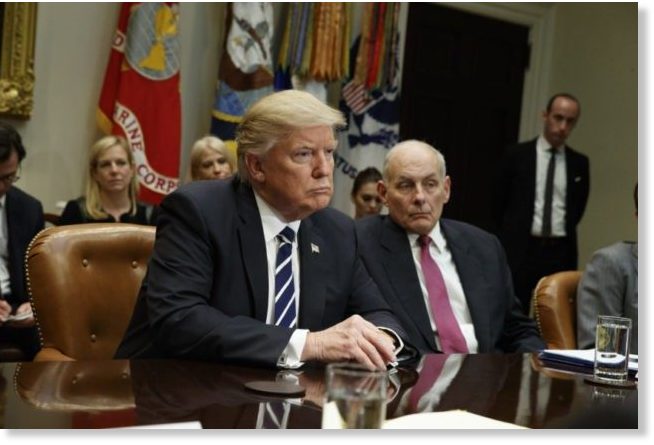
President Donald Trump's Chief of Staff John Kelly and his Never Trump bureaucrats and globalist minions are ensuring that Trump's "exposure to populist nationalism is now close to zero," according to an Axios report that details how Kelly is isolating Trump from the concerns of working-class Americans of all backgrounds and parties who got Trump elected.

Since former White House Chief Strategist Steve Bannon left the White House, Trump has caved on Deferred Action for Childhood Arrivals (DACA), reportedly is thinking about staying in the Paris Climate Accord, has palled around and made deals with Senate Minority Leader Chuck Schumer (D-NY) and House Minority Leader Nancy Pelosi (D-CA), and supported increasing the number of U.S. troops in Afghanistan.

Axios noted "who is around President Trump matters much more than with most presidents, because of his impulsiveness, lack of ideology and willingness to make snap decisions."

USA

American junta: The slow-motion military coup

McMaster, Kelly, Tillerson, Pence
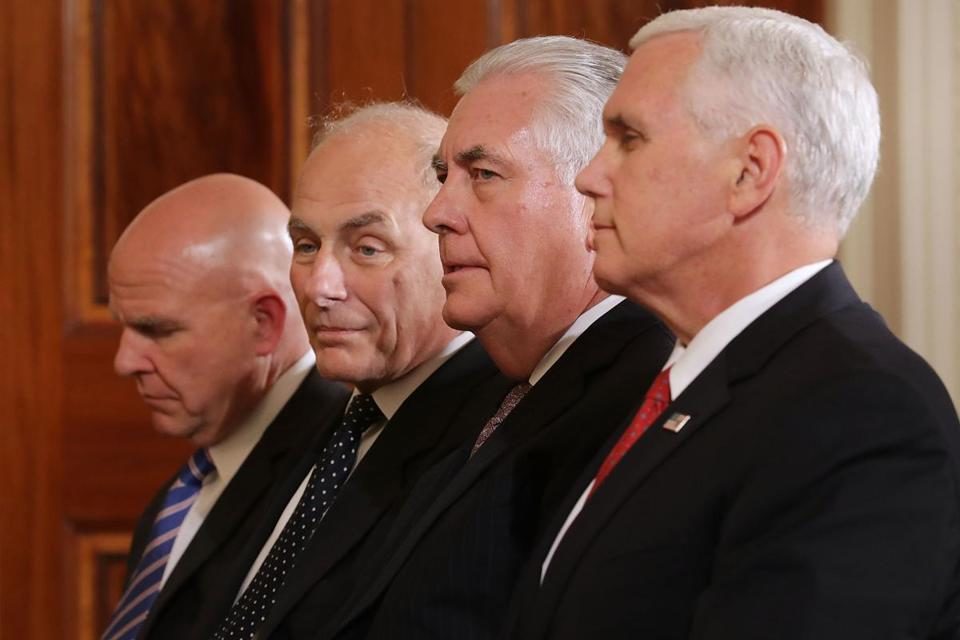
© CHIP SOMODEVILLA/GETTY IMAGESNational Security Adviser H.R. McMaster and White House chief of staff John Kelly watched a presidential appearance alongside Secretary of State Rex Tillerson and Vice President Mike Pence in August.
In a democracy, no one should be comforted to hear that generals have imposed discipline on an elected head of state. That was never supposed to happen in the United States. Now it has.

Among the most enduring political images of the 20th century was the military junta. It was a group of grim-faced officers - usually three - who rose to control a state. The junta would tolerate civilian institutions that agreed to remain subservient, but in the end enforced its own will. As recently as a few decades ago, military juntas ruled important countries including Chile, Argentina, Turkey, and Greece.

These days the junta system is making a comeback in, of all places, Washington. Ultimate power to shape American foreign and security policy has fallen into the hands of three military men: General James Mattis, the secretary of defense; General John Kelly, President Trump's chief of staff; and General H.R. McMaster, the national security adviser. They do not put on their ribbons to review military parades or dispatch death squads to kill opponents, as members of old-style juntas did. Yet their emergence reflects a new stage in the erosion of our political norms and the militarization of our foreign policy. Another veil is dropping.

Jet1

Israeli warplanes have struck the Syria-Lebanon border again - bombs farming area in Golan Heights

golan heights
© Middle East Eye
This comes weeks after Hezbollah liberated Syria-Lebanon borderlands from ISIS and al-Qaeda terrorists.

Early reports from Lebanon indicate that Israeli fighter jets have bombed a large hilltop in the Sheba'a Farms area of Lebanon, near the Syrian border. As the attack was conducted unilaterally, it is classed as a war crime.

Weeks ago, Hezbollah won a decisive battle against ISIS and al-Qaeda terrorist forces in Lebanon's borderlands with Syria. The surviving prisoners of war were later transferred via bus to eastern Syria as part of a prisoner exchange deal.

Comment: Not the first instance of Israeli aggression: Itching for a fight: Israeli war planes bomb Syria's army positions in Golan Heights

Syria will not rest until its territory is recovered


Snakes in Suits

Trump threatened the national sovereignty of other nations while claiming to uphold it in first UN speech

Trump speaking UN
© Lucas Jackson/Reuters
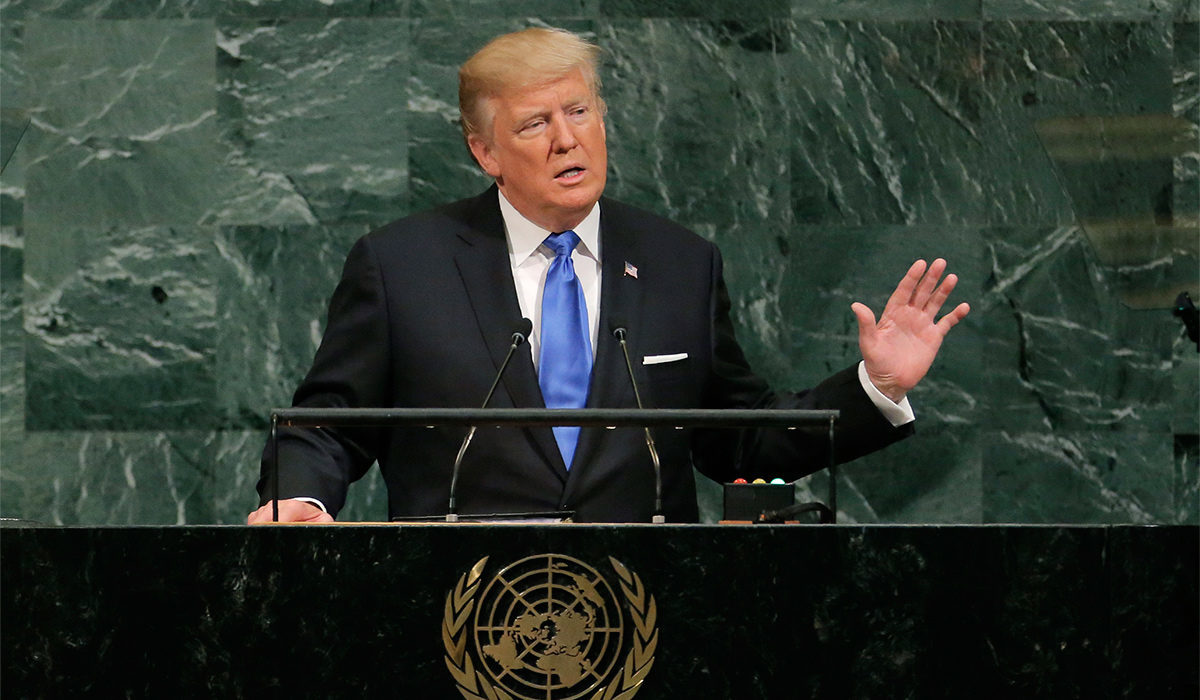
Donald Trump's speech was little more than a list of threats against North Korea, Iran, Syria, Venezuela and Cuba with subtle references to Russia and China.

Donald Trump has delivered a shockingly bellicose speech during his first appearance before the United Nations General Assembly in New York.

The speech began by striking a tone which sounded more like a speech before a domestic US audience than before the nations of the world.

Trump welcomed delegates and leaders to his home town of New York before citing the fact that his leadership has brought the US stock markets to record highs. He also cited a sixteen year low unemployment rate in the US before proudly announcing that the US is now spending record amounts on the military.

The US President then said that the US military will soon be the strongest it has ever been. This would be the central element of a speech that was filled with threats against fellow members of the United Nations.

Comment: Trump's UN speech stresses 'national sovereignty' while threatening world with war


Radar

Wikileaks releases data dump on Russian surveillance

computer hacker
© Global Look Press
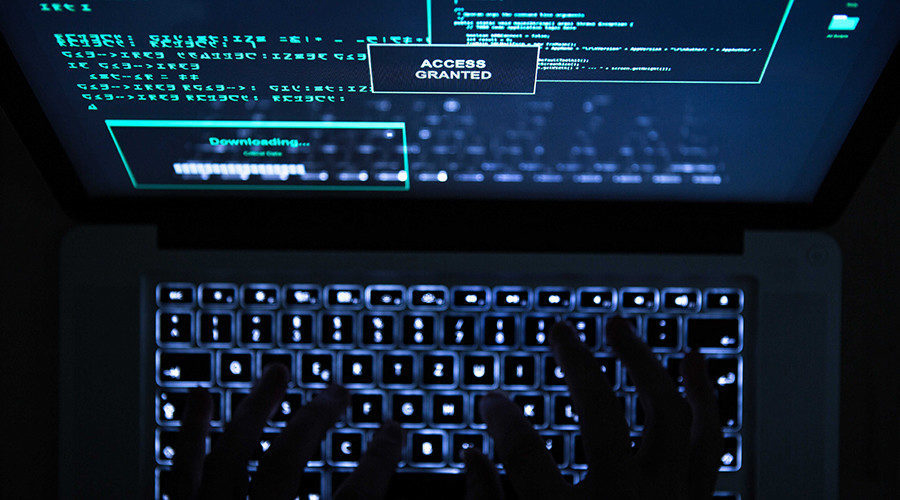
Perhaps in an attempt to refute recurring allegations that it has traditionally focused on exposing only US state secrets, if not being an outright covert and subversive Moscow front, today Wikileaks released a new cache of documents which it claims detail surveillance apparatus used by the Russian state to spy on Internet and mobile users. It's the first time the organization has leaked material directly pertaining to the Russian state.

The full datadump can be found here.

Comment: It would probably be naive to think Russia doesn't have a surveillance program. Russia has shown great ability to protect herself from Western attacks, which are numerous, powerful, and cunning. It's important to remember that we don't live in an ideal world and that things are not black and white. Mass surveillance is unsavory for many, but it is also important to look at results and the goals Russia is working toward. There is good and evil and the context which defines it.


Bad Guys

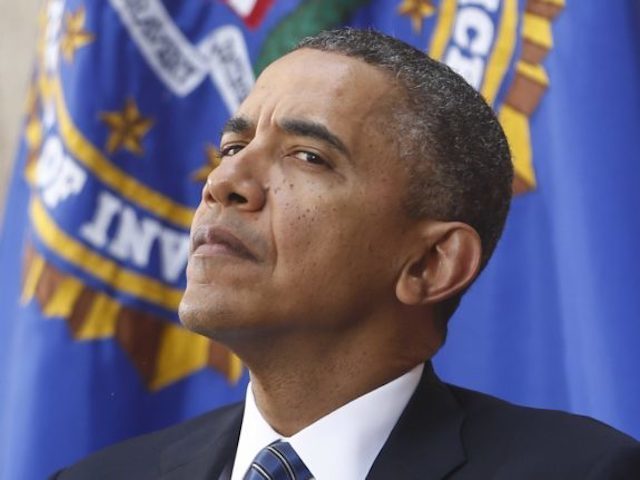
Proof that Obama's Justice Department placed Trump campaign under surveillance

Arrogant Obama
FISA surveillance of Trump campaign chair Paul Manafort before, during and after Presidential election confirmed.

An unintended though unsurprising paradox of the Russiagate investigation is that though it has failed to produce any evidence of collusion between Russia and Donald Trump's campaign team - because no such collusion took place - it is increasingly flushing out evidence of disturbing behaviour against the Trump campaign by former officials of the Obama administration.

Thus a few days ago we had the admission from Susan Rice that members of Donald Trump's transitional team were placed under surveillance before the inauguration for no other reason supposedly than that they met with the Crown Prince of Abu Dhabi (a US ally) and that she then circulated ("unmasked") their identities for no very clear reason internally across the US bureaucracy.

Info

Leader of Iraq's Kurdistan suggests independence referendum may be postponed

Masoud Barzani
Masoud Barzani
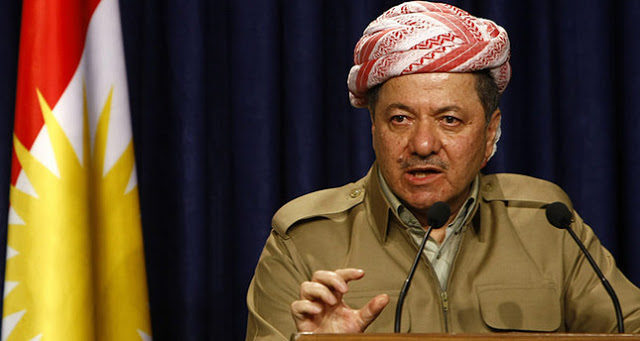
President of the Iraqi Kurdistan Region, Masoud Barzani, has suggested that the Kurdish Independence referendum due to be held in six days time could be postponed.

Despite making promises that nothing will delay the referendum, Barzani has received immense international pressure from now just neighboring states like Iran and Turkey, but also from the United States, the United Kingdom and the United Nations, to not go ahead with the vote.

Barzani stated that if Baghdad was willing to negotiate on the independence issue, then the referendum will be postponed.

Comment: Meanwhile, as Fort Russ reports, negotiators have arrived in Iraq:
The Kurdistan's delegation of negotiators has arrived in Iraqi capital city of Baghdad in order to discuss the issue of the forthcoming referendum on independence of the Iraqi Kurdistan region.

The purpose of the visit is to find a compromise as regards the issue.

Recently, the Federal Supreme Court of Iraq has issued an order to immediately cease all Kurdistan referendum activities, asserting that holding the referendum is unconstitutional.

For his part, Massoud Barzani, the president of the autonomous Kurdistan region of Iraq said the alternatives to holding a referendum that were offered so far are not sufficient as they do not guarantee future independence.
Further reading: WH presses Kurdistan to cancel its independence referendum