Puppet MastersS


Arrow Up

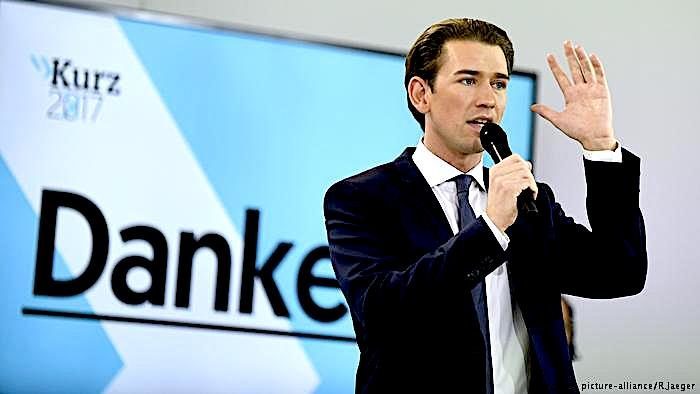
Analysts predict Sebastian Kurz to toughen immigration laws, most talented leader since WWII

Sebastian Kurz
© alliance/R.Jaeger
Kurz was responsible for closing the Western Balkan immigration route, from Turkey to Germany and to Scandinavia, explains Werner Fasslabend of the Austrian Institute for European Policy & Security. Political scientist Heinz Gaertner also gives his insight.

The results of Sunday's Austrian parliamentary elections show a clear shift to the right.

Sebastian Kurz, leader of the Austrian People's Party (OVP), is poised to become Chancellor after his center-right group secured around 31 percent of the vote. The right-wing Freedom Party (FPO) with leader Heinz-Christian Strache is set to grab second place with over 27 percent. Both parties support the tightening of Austria's borders and toughening up on immigration.

Werner Fasslabend, Austrian Institute for European Policy & Security

RT: The two top parties in the election are center-right and far-right. How much has today's result changed the face of Austria?

Werner Fasslabend: I think there will be a change - but more or less a change in the reform agenda - not so much in the political specter, because the top number-one party is a center-right party, and it will continue this way of centrist politics in the future.

RT: Sebastian Kurz is to be the next Chancellor of Austria. He is 31 and was a foreign minister before, so he has got some experience on the world scene. How do you think he is going to perform as a Chancellor?

WF: He is the most talented, the most gifted politician in the last decades, probably one of the most talented politicians in Austria since WWII. He has already quite some experience because at the age of 24 he became state secretary, and at the age of 27, he became foreign minister. So far he has been involved in politics for almost a decade actively in government. Therefore, he also will be the most experienced politician...from any party in Austria.

Propaganda

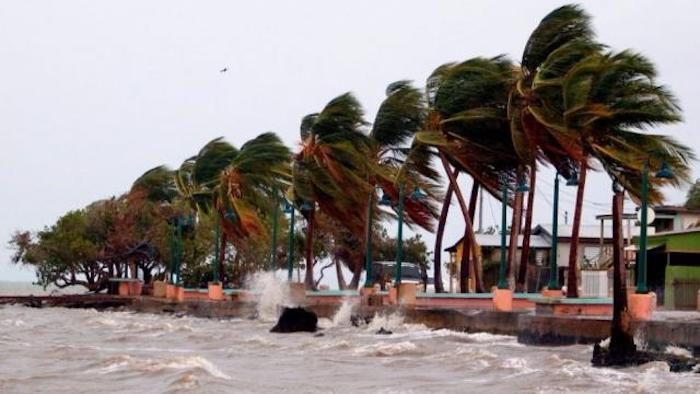
Pentagon, spinning Puerto Rico response, mistakenly adds reporter to PR emails

Hurricane
© The Hill
The Pentagon's efforts to spin news of its response to the emergency in Puerto Rico in a positive light were revealed when a reporter was erroneously added to its internal email list.

Bloomberg climate reporter Christopher Flavelle claimed he was added to an internal email list in September, which revealed the government's efforts to frame its response to the disaster in Puerto Rico caused by Hurricane Maria in a good way.

Although Flavelle alerted officials to the mishap, for five days he continued to receive the unclassified emails, which he said offer "a glimpse into the federal government's struggle to convince the public that the response effort was going well."

Comment: If there weren't such horrendous tragedies that go days/weeks without assistance, there would be no need to spin the message in order to evade criticism.


Binoculars

Why the Kurdish independence project died in Syria and Iraq

kurdish tribes
The bid of the Kurdish Barzani clan for an independent Kurdistan in north Iraq and beyond has utterly failed. Masoud Barzani, the strongman of the Iraqi Kurdish region, had called for the referendum to divert from his government's financial problems. Other Kurdish powerhouses saw it as a last attempt by Barzani to save his failing political position. The referendum asked for independence including in "Kurdistani areas outside the (Kurdistan) Region". It was an annexation bid. National Iraqi forces as well as the international powers turned against it. Masoud Barzani and his family are now likely to lose their leading position.

The various unilateral Kurdish assertions since 2003 will be driven back. The dream of Kurdish independence in Iraq and Syria is, for now, dead. This is a positive development for both countries.

Since 2003 and especially since 2014 the Kurds had pushed far beyond their original borders and occupied areas with critical Iraqi oil reserves. With backing from the Iraqi parliament, public opinion and international support, the Iraqi government of Prime Minister Abadi had for months demanded a return of the 2003 borders for the Kurdish region. It condemned the illegal independence bid.

Comment: See also MoA's previous summary of recent events: Iraq takes back Kirkuk - The end of the Kurdish independence project

An eyewitness in Kurdistan estimates that up to 95% (100,000 residents) of Kirkuk's Kurdish population fled the city prior to the Iraqi advance:
According to Abdallah, many residents left their homes, fearing persecution by the Shia-dominated militia coalition Hashd al-Shaabi "for the participation of the Kurdish people in the referendum on independence."

In turn, Arab and Turkoman residents welcomed Iraqi forces with the national flags of Iraq, having arranged merry festivities on the streets of the city, the source said.
The Iraqis have also established control over Sinjar in Nineveh Province after Peshmerga abandoning their positions there. Brief clashes with the Shia militia were reported.

On the subject of Kirkuk, Khoshavi Babakr, Iraqi Kurdistan representative in Russia and the Commonwealth of Independent States, said this:
"The Kurds will counterattack, at the moment the troops are put on standby in order to retake regions seized by the Iraqi forces," Babakr said.

The Kurdish official explained that the advance of Iraqi forces in Kirkuk was made possible after the leader of the Patriotic Union of Kurdistan (PUK), which controlled 80 percent of the Kirkuk province and the Iraqi town of Tuz Khurmatu, had signed an agreement with Iraqi Shiite militia Hashd Shaabi and handed the control over disputed areas to the Iraqi forces.

"The fast advance and progress of the Shiite troops occurred mostly due to treason among Peshmerga forces," he said.

Babakr stressed that latest developments would not force the province's authorities to annul the referendum results, on the contrary, it would enhance the region's attempts to gain independence from Iraq.
All Kirkuk's oil fields are now under the control of the Iraqis. RT Arabic correspondent Bzurk Muhammad captured the following footage of Iraqi military entering Kirkuk yesterday:


Kirkuk shop owners told an Al-Sura News correspondent that the Asayish Kurdish police force in the city had run an extortion racket, demanding up to 60% of stores' revenue, and more for Christian-run businesses:
"If your name from was from a known tribe, you paid almost nothing," a Kurdish shop owner revealed to Al-Sura News.

"If it was Christian, you might as well close your shop," the owner continued to explain.


Info

Media representative of the SDF rebels Mustafa Balli says Raqqa not liberated yet as Kurdish-led SDF rebels' clashes with Daesh continue

Kurdish fighter
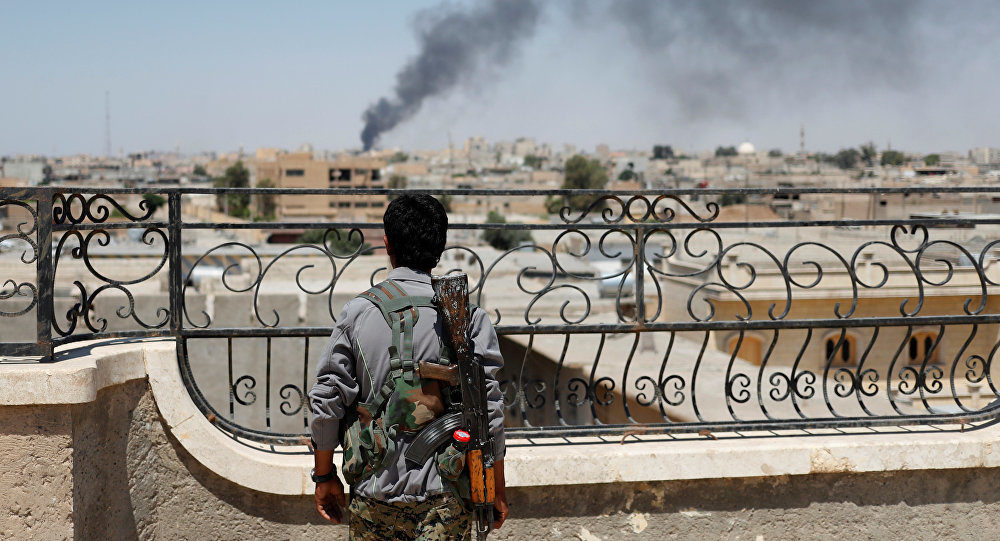
© REUTERS/ Goran TomasevicA Kurdish fighter from the People's Protection Units (YPG) looks at a smoke after an coalition airstrike in Raqqa, Syria, June 16, 2017
The Kurdish-led SDF have been conducting the military campaign to liberate Raqqa from terrorists since November 2016.

"Clashes in Raqqa continue. Claims that the city is completely liberated from Daesh are false," the media representative of the Syrian Democratic Forces (SDF) rebels, Mustafa Balli, has told Sputnik Turkey.

The statement comes amid AFP's earlier report, citing the SDF, that the US-backed rebels had established control over Raqqa, the so-called former Daesh "capital," while an operation to clear the city of the remaining militants continued.

Comment: Disagreements About Strategy
US national security advisers have attempted on several occasions to formulate a comprehensive strategy for Syria, but have not submitted any recommendations to the US president so far, the NBC broadcaster reported, citing US officials.

According to the news outlet, there are disagreements among the members of Trump's administration on political transition in Syria, in particular, on the fate of Syrian President Bashar Assad. Certain administration members, including US Ambassador to the UN Nikki Haley, advocate the plan stipulating Assad's resignation, while others see Assad as the factor that prevented the situation in war-torn Syria from falling into chaos.

Washington has stated on numerous occasions that it does not see Assad as a leader of post-war Syria. The United States, in particular, has proposed a plan providing for the elaboration of new a Syrian constitution and holding presidential elections under international observation after the country's liberation from terrorist groups.
The British-based Syrian Observatory for Human Rights also said that IS was now completely cleared from Raqqa, which the SDF had been besieging for nearly four months.
However, the U.S. military said that it could only confirm that almost 90 percent of Raqqa had been retaken from IS.

Colonel Ryan Dillon, a spokesman for the U.S.-led coalition said pockets of Islamic State militants remain in Raqqa.

"Our partners have removed ISIS from 87 percent of territory they once held and liberated over 6.5 million people," Dillon said on social media, using another acronym for IS.


Jet5

Syrian armed forces intercept Israeli warplanes near Lebanese border - Netanyahu says targeting Israeli jets by Syrians unacceptable

A fighter jet
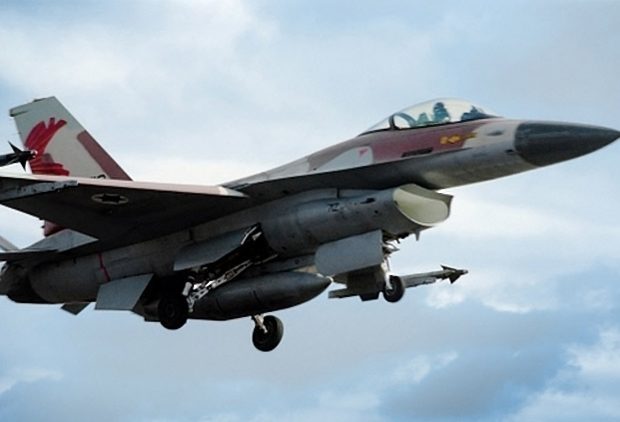
© FNAThe Syrian Army announced that its Air Defense units have responded to an Israeli aerial violation of the country’s airspace in the vicinity of the Lebanese border, hitting an intruding warplane and forcing the fighter jets to retreat
According to a statement released by Syria's General Command of the Army and Armed Forces, an undeclared number of Israeli warplanes violated Syria's airspace on the border with Lebanon in Baalbek area at 08:51 a.m. local time on Monday, press tv reported.

An anti-aircraft battery of the Syrian army, located some 50 kilometers from the capital Damascus, then "responded and directly hit one of the jets, forcing (the enemy0 to flee," the statement further read, adding that the Israeli jets returned fire at 11:38 a.m. local time by firing multiple missiles from inside the occupied territories that hit a Syrian army position in the countryside of the capital, resulting in material damage.

The army further threatened Israel with "dangerous repercussions" for the airstrikes and its repeated aerial aggression attempts, stressing Syria's determination to continue its war against the terrorist groups, "Israel's army in the region."

Comment: Prime Minister of Israel Benjamin Netanyahu stated it is "unacceptable" for Syrian forces to target Israeli jets and Israel will continue to operate "as needed", in a press statement in Jerusalem on Monday.
"Our policy is clear: those who try to harm us we will hit them. Today our planes were under attack, it is unacceptable," Netanyahu stated.

"The (Israeli) air force acted immediately and precisely, and successfully destroyed the target. Israel will continue to operate in this space, as much as needed in order to protect Israel," he concluded.
An Israeli warplane illegally entered Syrian airspace on Monday, prompting a response from the Syrian Air Defense, the Syrian Ministry of Defense claimed.
The Syrian Ministry of Defense's claim contrasted that of the Israel Defense Forces' Spokesperson, who alleged that the warplane never crossed into Syrian territory.

While Israel claims they did not cross into Syrian airspace, it would be out of the ordinary for the Syrian Air Defense forces to fire an anti-aircraft missile at an Israeli warplane flying over Lebanon.


X

US pull-out of Iran deal would ruin 12 years of diplomatic work, says rep of Nobel Peace Prize winning agency

Trump Iran  nuclear deal
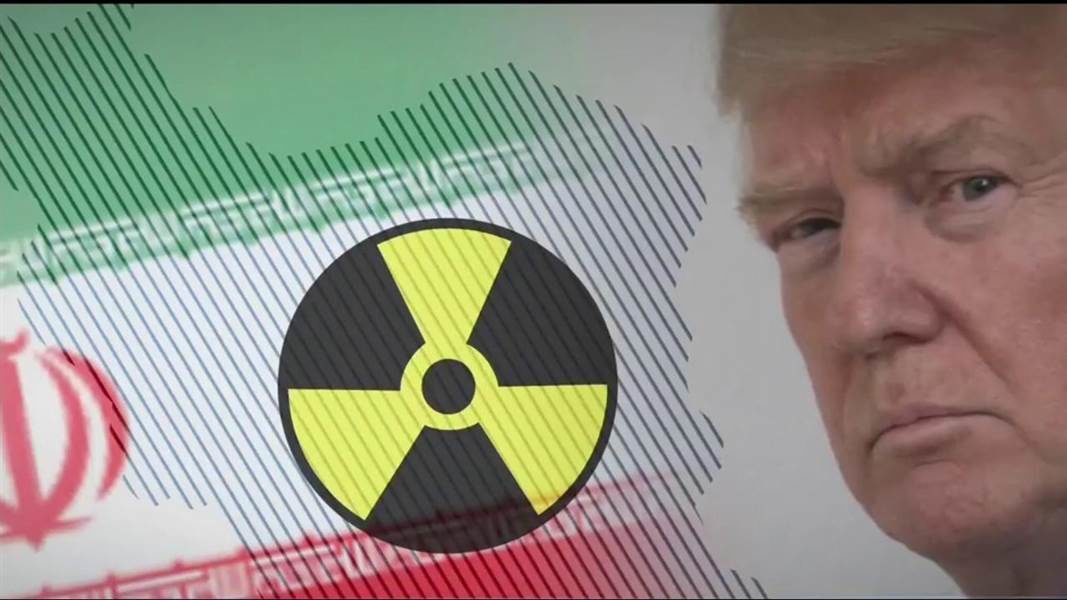
Washington's threats to walk out of the Iran nuclear deal is a critical moment for global nuclear non-proliferation, as it risks uprooting over a decade of diplomatic work and bring the world on the verge of a nuclear war, Jean-Marie Collin of ICAN France told RT.

Collin, coordinator of the International Campaign to Abolish Nuclear Weapons (ICAN) for France, which was recently awarded the Nobel Peace Prize, told RT he believes the US is putting the world's safety in jeopardy by threatening to quit the nuclear deal.

Defending the agreement, Collin argued that no deal could possibly please all sides, as the ability to compromise lies in the nature of every agreement.

Comment: It's not necessarily true that Iran would pull out of the deal even if the US does. Europe wants to keep the deal, and if the US pulls out it'll likely just isolate the US rather than Iran.

See:


Ambulance

Another episode? Killary breaks toe after "running downstairs in heels w/ coffee, falling backwards"

hillary clinton cast
Robo-woman.
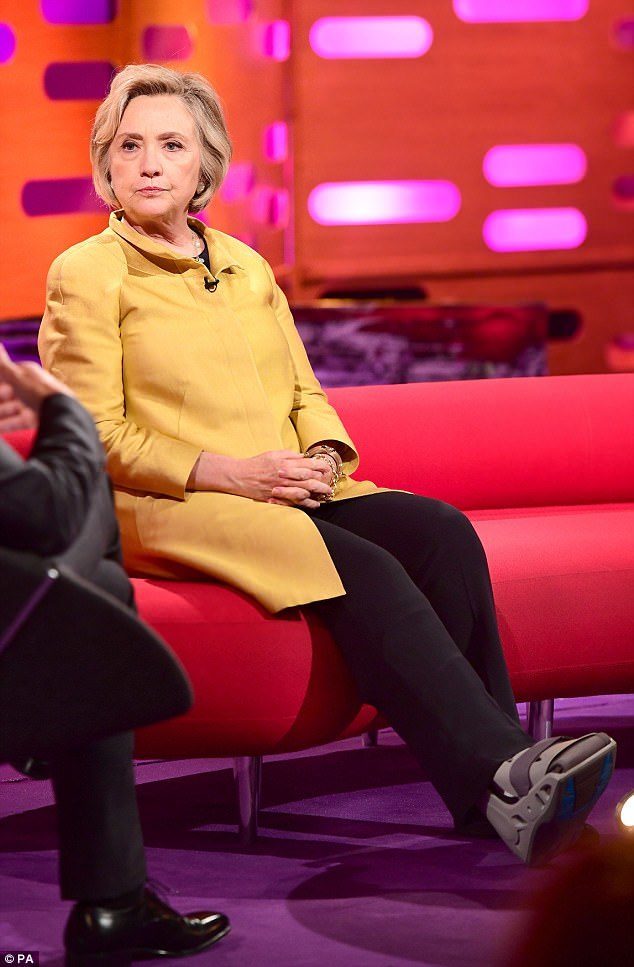
Hillary Clinton hobbled away from filming a British TV show interview on crutches Monday after breaking her toe falling down some stairs.

The former presidential candidate arrived wearing a surgical boot to the BBC program The Graham Norton Show, as she revealed she took a tumble in high heels while holding a cup of coffee.

The embarrassing fall forced her to pull out of a series of scheduled TV and radio appearances earlier today including ITV's This Morning and Woman's Hour on Radio 4.

Recalling her tumble, she said: 'I was running down the stairs in heels with a cup of coffee in hand, I was talking over my shoulder and my heel caught and I fell backwards.

'I tried to get up and it really hurt. I've broken my toe.'

She added: 'I've received excellent care from your excellent health service.'

Clinton, 69, has been in the UK promoting her memoirs, What Happened, which documents her shock defeat in the 2016 presidential election.

This Morning host Philip Schofield said on Snapchat: 'Supposed to be interviewing Hillary Clinton... but she's fallen over and hurt her foot!! Gutted.'

Comment: Her explanation sounds completely plausible - not. When was the last time you think Hillary "ran" in heels while holding a coffee? And how does she break her toe if she fell backward?


Bad Guys

Psycho Poroshenko continues to push for more conflict in Ukraine

Wolfsangel symbol Ukraine
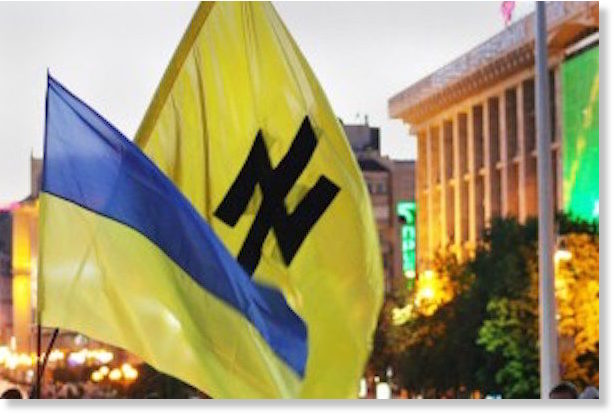
The neo-Nazi Wolfsangel symbol on a banner in Ukraine.
In the U.S., Russia-hating liberals are joining the neocons in seeking more war in Ukraine, as the prospects for a rational and peaceful resolution to the crisis continue to fade, explains James W. Carden.

Last January, Sen. John McCain led a delegation along with his longtime sidekick, Sen. Lindsey Graham, to a contingent of Ukrainian troops not far from the front line in eastern Ukraine. In the presence of Ukrainian President Petro Poroshenko, Graham told the soldiers: "Your fight is our fight ... 2017 will be the year of offense. All of us will go back to Washington and we will push the case against Russia."

McCain promised the assembled troops, "we will do everything we can to provide you with what you need to win."

When contemplating the long careers of the two Republican senators, it is hard to escape the conclusion that McGeorge Bundy's quip about the famed Cold War columnist Joe Alsop - that he had "never known him to go to any area where blood could be spilled that he didn't come back and say more blood" - applies equally to McCain and Graham.

Comment: With psychopaths like Poroshenko leading Ukraine, and an Imperial US continuing to see how it may gain a geo-strategic foothold against Russia in support of him, this situation will likely, only, remain the same - and/or worsen.


Chess

Spain's Constitutional Court unanimously voids Catalan referendum law

Catalonia independence
© Lola Bou / AFPPeople queue to lay flowers in front of ballot boxes used during the Catalan independence referendum in Pineda de Mar, on October 3, 2017, during a general strike in Catalonia.
The Spanish Constitutional Court has unanimously annulled the Catalan Referendum Law, approved by the region's government ahead of the recent independence vote, according to a court spokesman.

The Catalan government responded immediately, with spokesman Jordi Turull saying the decision was "fast," while "the mandate of the referendum continues."

The court ruled "the law encroached state powers regarding popular consultations," and that it "violated, among other constitutional principles, the supremacy of the Constitution, national sovereignty and the indissoluble unity of the Spanish nation," El Pais quoted the decision as saying.

Info

Afghan, Chinese, Pakistani and U.S. negotiators meet in Oman to revive Afghan peace talks

Hekmat Khalil Karzai
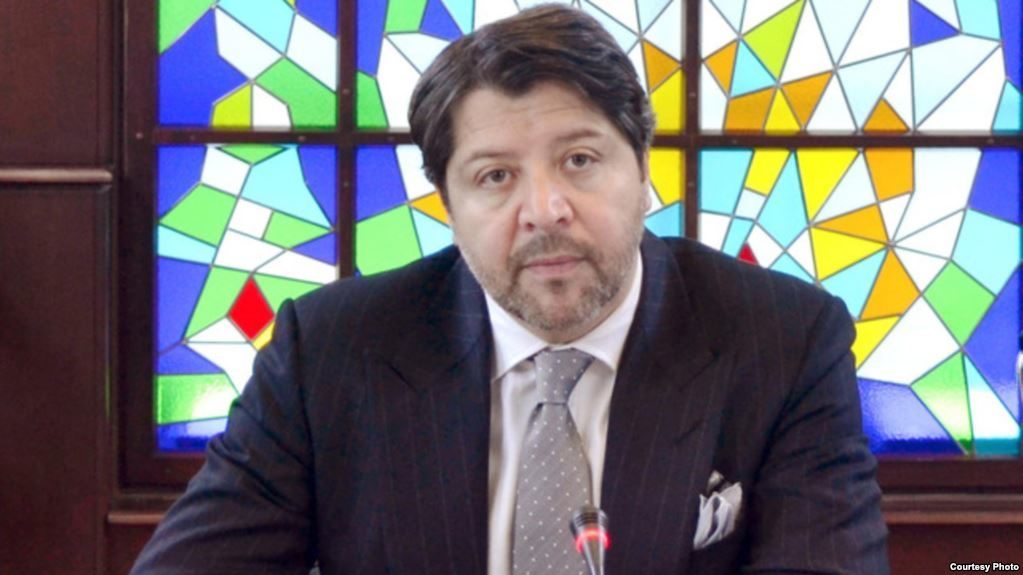
Afghanistan's Deputy Minister of Foreign Affairs Hekmat Khalil Karzai
Negotiators from Afghanistan, China, Pakistan and the United States met in Oman on October 16 to try to find ways of reviving peace talks with the Afghan Taliban.

It was not clear whether any Taliban militants had joined the talks, which have so far failed to restart a peace process that collapsed in 2015.

Taliban sources have said they would stay away from the discussions in Muscat, casting doubt on prospects for reviving the long-stalled negotiations.

Pakistani officials said the talks had resumed on Pakistan's initiative. The Pakistani team was led by Foreign Secretary Tehmina Janjua.

The Afghan team, led by Deputy Foreign Minister Hekmat Khalil Karzai, said the talks would focus on relations between Pakistan and Afghanistan and implementing Pakistan's commitments to fight terrorism.