
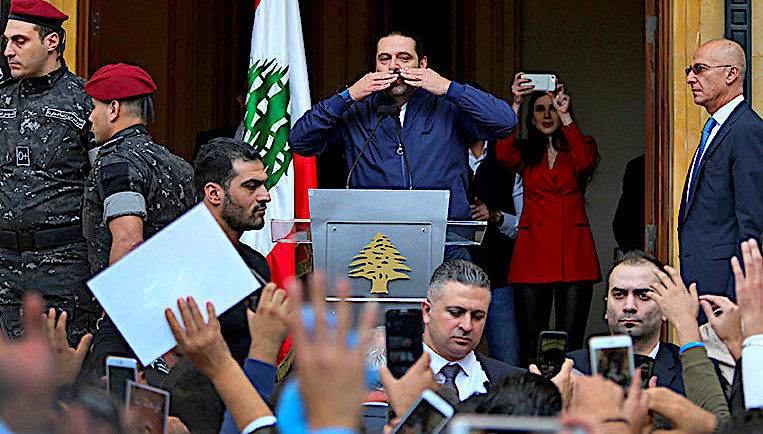
© AFPLebanese Prime Minister Saad Hariri.
The decision to postpone his official resignation is aimed at supporting Lebanon's "disassociation" policy, the minister said in a statement Saturday, Lebanon's state news agency NNA reported. The step, made at the request of Lebanese President Michel Aoun, is aimed at "keeping Lebanon neutral" and out of regional conflicts, he explained, claiming that he now needs time to look into what is to be done to enforce the peaceful course and avoid further tensions triggered by his earlier surprise announcement.
However, Hariri's statement suggested the PM seems to be still opposed to Lebanon's Iran-backed Hezbollah group, which the politician has accused of a "desire to destroy the Arab world" in his initial resignation announced from Riyadh. "Hezbollah stances that affect our Arab brothers or target the security and stability of their countries" would not be accepted, he said, without going into specifics.













Comment: See also: How Saudi efforts to provoke war were thwarted, Hezbollah's role and the unity of Lebanon