Puppet MastersS


Snakes in Suits

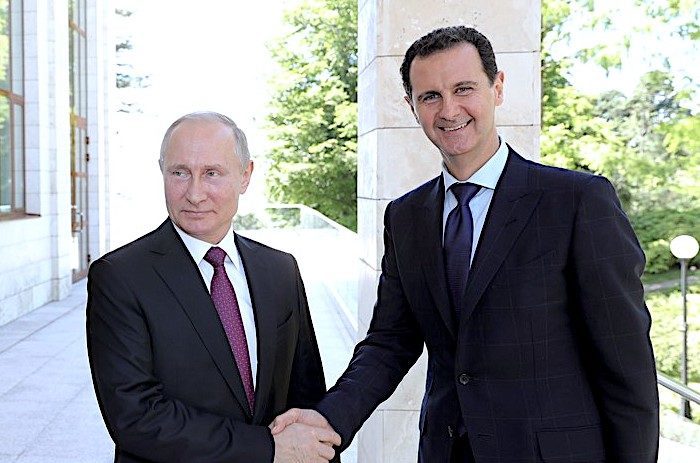
Sochi: Putin and Assad meet for extensive talks, discuss political settlement

PutinAssad
© Mikhail Klimentyev / SputnikRussian President Vladimir Putin welcomes Syrian President Bashar Assad in Sochi, Russia, on May 17, 2018.
Russian President Vladimir Putin has held a meeting with the Syrian leader Bashar Assad in Sochi, the acting presidential spokesman Dmitry Peskov said. The two leaders conducted "extensive" negotiations, he added.

As the two presidents talked about the conditions that would facilitate the peace process development, the Syrian leader said that he had decided to send a delegation to a committee tasked to rewrite Syria's constitution, which was championed by the UN.

The agreement on the creation of the constitutional committee was one of the major results of the Sochi peace congress held in January this year. The participants of the congress agreed on January 30 to set up the constitutional committee in Geneva, and to hold democratic elections in Syria.

Russian Flag

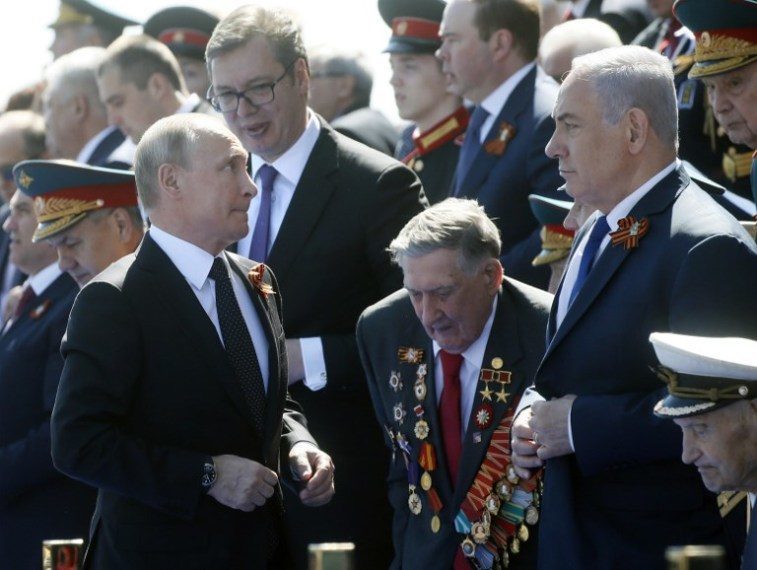
Why did Putin invite Netanyahu to Moscow for Victory Day?

putin netanyahu victory parade moscow
© Agence France-Press / Maxim ShipenkovRussian President Vladimir Putin, Serbian President Aleksandar Vucic and Israeli Prime Minister Benjamin Netanyahu attend the Victory Day military parade at Red Square in Moscow on May 9, 2018.
Putin's invitation to Netanyahu was diplomacy not surrender at a time when the Middle East is on fire and war with Iran may be coming

News of the recent attendance of Israeli Prime Minister Benjamin Netanyahu at Moscow's 9th May Victory Day Parade provoked a predictable range of reactions ranging from anger, dismay, denial and - on the part of some of the US's and Israel's friends - even a certain amount of gloating.

For an example of the latter, see for example these words by the British historian Niall Ferguson in a lengthy article hailing Donald Trump's supposed masterstroke in pulling out of the JCPOA.
Economically weak enough to suffer a wave of riots in December and January, the Iranians will not find it easy to withstand the snap-back of sanctions and the roll-back of its forces abroad. And if you think the Russians will help them, you must have missed Binyamin Netanyahu shaking hands with Vladimir Putin in the Kremlin last week.

Snakes in Suits

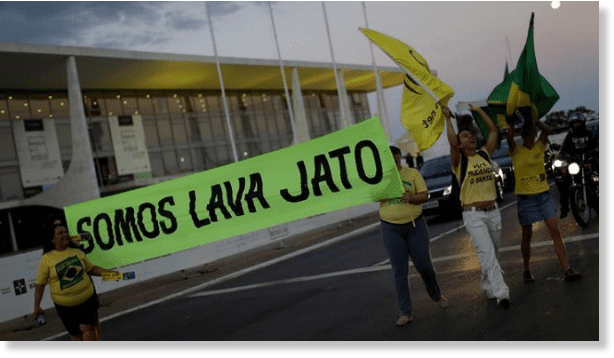
More than 90% of Brazil's lawmakers implicated in Brazil's corruption operation 'Car Wash' - now seeking re-election

Demonstrators Brasilia
© ReutersDemonstrators take part in a protest in support of Lava Jato (Car Wash) investigation, in Brasilia, Brazil May 9, 2017.
Nearly two years after accepting Attorney General's Office's report, the court only began the first trial Tuesday.

As Brazil's Operation Car Wash (Lavo Jato) enters its fifth year, 50 of the 55 elected officials implicated in the corruption scandal are scheduled to participate in Brazil's upcoming general elections in October.

The ongoing criminal investigation into bribery at Petrobras, the state-controlled oil producer, which came to light in 2014, has implicated a sizeable portion of Brazil's business and political establishment.

A recent survey revealed 42 parliamentarians said they would run for re-elections, while four of the accused intended to fill vacancies in the Senate, two within state governments and one within the state legislature. Three members of parliament didn't respond or remained undecided and their candidacy, two others stated they wouldn't run.

Comment: Brazil, like the US (and largely because of the US) is quickly fracturing due to the high level and rampant corruption that exists among it's political and judicial branches:


Roses

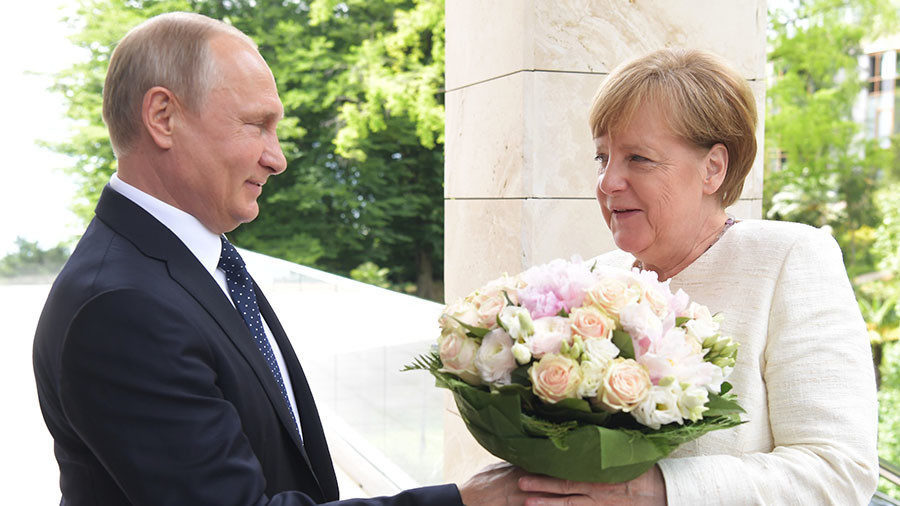
Diplomacy done right: Putin greets visiting Merkel with bouquet

putin merkel flowers
© Sergey Guneev / Sputnik
The Russian president seemed to be on a charm offensive on Friday as he met with his German counterpart. Vladimir Putin greeted Angela Merkel on the porch of his Sochi residence with a big bouquet of flowers.

Footage of the encounter shows the Russian leader greeting the German delegation on top of the stairs leading to the entrance of the residence. He shook Angela Merkel's hand before presenting her with a big arrangement of white and pink flowers before inviting her in.

Comment: Merkel's visit may signal continued improvement of the state of Russian-German relations. RT reports:
German Chancellor Angela Merkel's working visit to Sochi on Friday could signal a positive shift in EU-Russia relations, as the European bloc reassesses its fealty to Washington.

Merkel has been to Russia only once since 2014, which marked the rapid deterioration of relations between Russia and Europe. The German chancellor visited Sochi in early May 2017. Now, she is trekking out to Sochi once again - about a week after the US President Donald Trump announced that he would be withdrawing his country from the Iran nuclear deal, of which Russia and Germany are both signatories.

The US leader's decision has infuriated Europe, with Merkel going so far as to suggest that Europe can no longer rely upon the US to ensure its security and maintain international norms. With Merkel heading to Sochi, it appears that Europe, increasingly disillusioned Washington, will seek closer cooperation with Moscow in hopes of salvaging the Iran deal and making headway on a number of other critical international issues.

Keeping the Iran deal alive

The first item on the Putin-Merkel agenda will undoubtedly be the future of the Iran nuclear deal. Both Germany and Russia have signaled their eagerness to preserve the landmark 2015 accord, which places restrictions on Iran's nuclear capabilities in exchange for sanctions relief.

The issue of the Iranian nuclear deal is probably "the easiest" one on the agenda of the two leaders, professor Peter Schulze, international relations expert at the University of Goettingen, told RT. Moscow, Berlin and even Brussels are all in favor of keeping the deal and are almost equally opposed to the US plans to withdraw from the agreement, he said.

Given Washington's latest actions, "it would be a logical step" for Germany to "move closer to Moscow" as well as to take a more "pragmatic and moderate" approach to the issue, Schulze added.

Working towards peace in Syria

Compared to other European powers, Germany has shown less and less interest in entangling itself in the ongoing conflict in Syria. Notably, Germany declined to participate in tripartite missile strikes against Syria carried out by the US, UK and France in early April. In comments made on Wednesday, Merkel made it clear that Berlin sees Russia as a key player in any peace settlement.

Closer energy cooperation

Merkel's visit will coincide with the start of preparatory work for the construction of the Nord Stream 2 gas pipeline off the coast of Germany. The pipeline will follow the track of the existing Nord Stream 1 and will double the amount of Russian gas arriving in Germany. The project, which should be finished in late 2019, was opposed by Washington and several Eastern European states, which claimed that it could be used by Moscow to exert economic influence over the EU.

With Germany now reassessing its relationship with Washington, it's possible that construction of the pipeline will be less hindered by external political pressure.

A frozen conflict in Ukraine?

One point of serious disagreement between Putin and Merkel has been the conflict in Eastern Ukraine, with Germany providing both political and military support to Kiev. Ongoing disagreements over enforcement of the Minsk Accords, as well as the status of Crimea, will likely make noticeable headway on these issues difficult.

The conflict in Ukraine remains the major "stumbling block" that "impedes improvement of relations between Russia and Europe," Schulze admitted. At the same time, he expressed cautious optimism about the possible outcome of potential talks between Putin and Merkel on this issue.

"We [will] see some improvement of the Ukrainian situation," he told RT, adding that the talks could lead to another push for the implementation of the Minsk Agreements, with both Moscow and Berlin exerting pressure on the parties to the conflict.

However, Germany is unlikely to initiate the lifting of anti-Russian sanctions, which were imposed by the EU, the professor said. Such a move could potentially lead to an "enormous conflict" with Washington as well as leave Berlin "isolated," as many EU members, including the Baltic States and Poland, still actively support the US policies, he explained, adding that no country in the EU is ready to take those risks at the moment.

A new chapter for German-Russian relations?

But even with serious differences on Ukraine, Berlin has signaled that it is open to turning a new page with Moscow, especially on pressing international issues.

"We need Russia as a partner to settle regional conflicts, for disarmament and as an important pillar of multilateralism," newly appointed Foreign Minister Heiko Maas said in April, adding, "we are therefore open for dialogue and are trying to rebuild trust bit by bit if Russia is ready."

"This is probably Merkel's last [term] in office. So she has to show something to history and I don't think she wants to go down in the historical past as the grave digger of German-Russian relations," Schulze told RT.

Given the fact that German Foreign Minister Maas is a "newcomer to the job who has got no diplomatic experiences," it is Merkel who is likely to give directions in the field of foreign policy, the professor said. He added that "if she is well consulted by her advisors then [Merkel] should, given the very difficult relationship with the US, be at least more diplomatic, more open and more flexible [in relations with Moscow] than the foreign minister of Germany," who is known for his tough stance on Russia.


Dominoes

EU preps measures to protect companies against US withdrawal from Iran deal

factory
© Jasper Juinen/Bloomberg
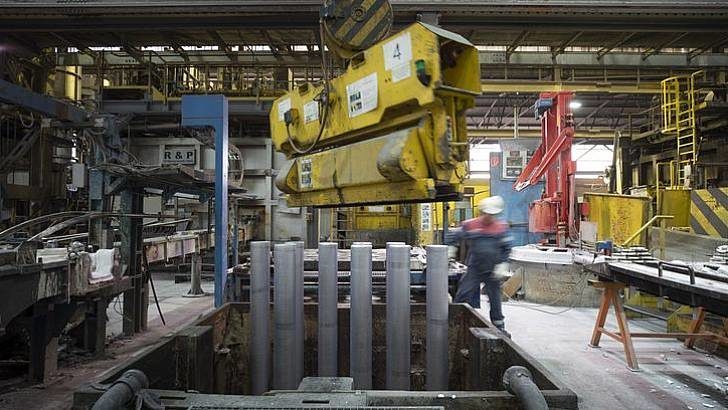
The European Union warned that ending the Iran nuclear deal would be a "major threat" to security in the Middle East as the bloc prepared measures to protect its companies if the Trump administration re-imposes sanctions following the U.S.'s withdrawal from the agreement.

"We don't want to see this agreement destroyed because it is important for maintaining peace in the region and also for peace in the whole world," European Commission President Jean-Claude Juncker told reporters in Brussels on Wednesday. "Ending this agreement would be a major threat to security in this region."

The 28-nation EU is scrambling to contain the fallout from President Donald Trump's decision to pull out of the 2015 accord on Iran's nuclear activities. The Brussels-based commission, the EU executive, on Wednesday discussed possible ways to deal with a U.S. exit from the deal, including a so-called blocking statute, which could shield European companies doing business with Iran. EU leaders will continue the discussion at a dinner in Bulgaria.

"We would like this evening to be able to agree on a joint approach, based on consensus among us all, with regard to our relations with the United States and its relations with Iran," said Juncker, who will attend the meeting in the Bulgarian capital of Sofia.

Comment: It looks as if the EU is actually doing what it promised and standing up to the exceptional United States. More from Bloomberg's coverage of the meeting in Sofia:
European Union leaders presented a determined front to stand up to U.S. President Donald Trump's threats to penalize EU businesses and scupper the Iran nuclear deal.
...
Tusk told leaders over a late dinner on Wednesday that the EU will continue fighting for the rules-based international system, despite recent U.S. decisions on climate change, tariffs and on Iran, according to an EU official present. On trade, all agreed to back the European Commission's insistence that it won't negotiate unless the U.S. grants a permanent exemption from tariffs on steel and aluminum, the official said.

"What we demand is no conditions and no limits and to go back to the situation before," French President Emmanuel Macron told reporters on his way into the summit Thursday. "The condition for all talks is to lift all threats and tariffs, without mention of a time limit."

Macron spoke as the Commission, which negotiates trade matters on behalf of the bloc, published a law preparing retaliation. It foresees the possibility of hitting 2.8 billion euros ($3.3 billion) of U.S. goods imported into the EU with a reciprocal 25 percent levy as of June 20.
...
The EU's proposals are its most assertive yet in dealing with the U.S., whose withdrawal from the 2015 agreement threatens to scupper the treaty and has worried leaders it could put Iran back on a path to developing nuclear weapons.

EU discussions on how to keep the deal -- and economic relations with Iran -- alive, have focused on: keeping Iran's oil and gas industry viable; the creation of special purpose vehicles to allow for transactions between the regions; developing more contracts between European companies and their Iranian counterparts; and how to protect European firms that continue to work with Iran.

Blocking Statute

The EU has discussed instituting a so-called blocking statute, which would shield European companies doing business with Iran. The last time the bloc threatened to use this measure was in 1996, when Bill Clinton's administration stood down and agreed to waive sanctions aimed at curbing foreign investment in Cuba, Iran and Libya.

The proposed EU actions are no guarantee that the accord can be salvaged, however, with the U.S. Treasury Department saying companies with existing contracts will have 90 to 180 days to extract themselves from their Iran dealings before becoming subject to penalties.

"Which company is going to risk access to the U.S. market, which is 100 times larger," Ardavan Amir-Alsani, a Paris-based lawyer who specializes in Iran, said in an interview. "No one will choose Iran over the U.S. The deal is dead."

Valdis Dombrovskis, the commissioner in charge of financial-services policy, told lawmakers in Brussels that any blocking regulation could be "of limited effectiveness" given the international nature of the banking system, especially the exposure of large systemic banks to the U.S. financial system.

EU leaders meeting in Sofia agreed to stick to the accord as long as Iran holds to its side of the deal.

"Trump despises weaklings," EU Budget Commissioner Guenther Oettinger said on Germany's Deutschlandfunk radio. "If we back down step by step, if we acquiesce, if we become a kind of junior partner of the U.S., then we will be lost."


Dollars

The American military is ruinously expensive

trump military generals
Pay and benefits are out of control

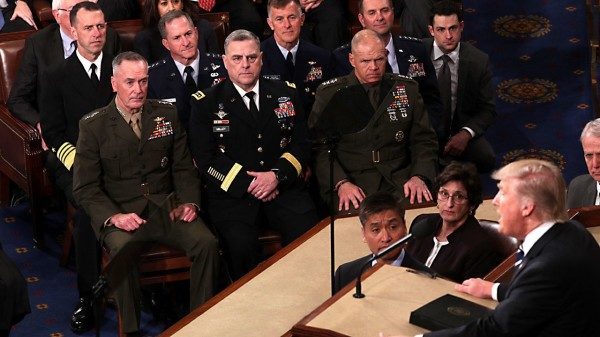
America's Republican politicians complain that "entitlements," by which they mean pensions and medical care, are leading the country to bankruptcy even as they fatten the spending on the Pentagon, which now takes 12 percent of the overall budget. And it should be noted that while workers contribute to the social programs during all their years of employment, the money that goes to the military comes straight out of the pockets of taxpayers before being wasted in ways that scarcely benefit the average citizen unless one seriously thinks that folks over in Syria, Iran and Afghanistan actually do threaten the survival of the United States of America.

I was in a Virginia supermarket the other day checking out when the woman behind the cash register in a perky voice asked me "Will you give $5 to support our troops?" I responded "No. Our troops already get way too much of our money." She replied, "Hee, hee that's a funny joke" and I said "It's not a joke." Her face dropped and she signaled to her boss over in customer service and asked her to take over, saying that I had been rude.

If there is any group in the United States that exceeds the sheer greed of our politicians it is the military, which believes itself to be "entitled" as a consequence of its role in the global war on terror. I am a veteran who began service in a largely draftee army in which we were paid "twenty-one dollars a day once a month" as the old World War 2 song goes. When we got out, the GI Bill gave us $175 a month to go back to college, which did not cover much.

Comment:


Arrow Up

'Depth and breadth' of support for Assad more widely supported in Syria than West estimates - Labour's Emily Thornberry

Syria
© Sana Sana / Reuters
The west underestimates the support that Syrian President Bashar al-Assad has in Syria, said the shadow Foreign Secretary Emily Thornberry in an interview with Prospect magazine.

According to the magazine, Thornberry also expressed support for the UK to back the Syria peace process initiated by Russia in Astana, in addition to the one led by the UN in Geneva.

Kazakhstan is to stage the ninth round of Syria peace talks in the capital Astana this July, that reaffirm previous agreements, between Russia, Turkey and Iran. Thornberry claimed that the war in Syria can only come to an end with a "political solution."

Thornberry also suggested the 'depth and breadth of support for Assad has been underestimated' by the West, seemingly breaking from the common Western consensus.

Comment: See also: President Assad is well-liked in his country and enjoys broad support, despite media distortions


Star of David

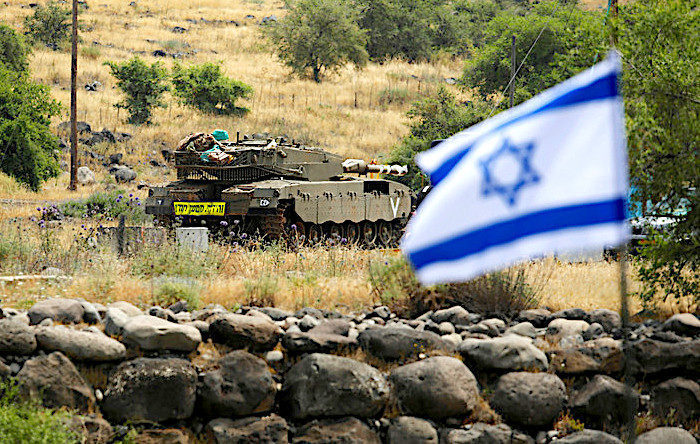
Best of the Web: What really happened last week in Golan: New rules of engagement established in Israel-Syria-Iran conflict

Izraelski tenk na okupiranoj Golanskoj visoravni
© Amir Cohen / Reuters
The exchange of missiles last week on the Syrian-Israeli border was anything but normal.

This firefight established new rules of engagement in the Levant, and made the Israeli-occupied Golan Heights an "operational theater" in the Syrian conflict overnight.

The mainstream media's version of events began with Israel retaliating against Iranian missile strikes, and the IDF (Israeli Defense Forces) destroying Iran's military capabilities inside Syria. But that information is questionable: it comes almost exclusively from Israelis who rarely miss an opportunity to beat the "Iranian threat" war drum.

In the lead-up to the May 10 skirmish - just after the Trump administration exited the landmark 2015 Iran nuclear agreement - Israeli officials began warning of an impending Iranian attack from inside Syria. Then, within hours of the ensuing firefight, an Israeli army spokesman announced that the elite "Quds Force" of the Islamic Revolutionary Guards Corps (IRGC) had fired 20 missiles into the Israeli-occupied Golan Heights, after which Israeli Defense Minister Avigdor Lieberman boasted that "we hit nearly all Iranian infrastructures in Syria."

IDF spokesman Brigadier General Ronen Manilas described Israel's actions as "one of the greatest operations of the Israel Air Force in the past decade." But as the dust settled, an altogether different version of events began to take shape.

Comment: See also:


Star of David

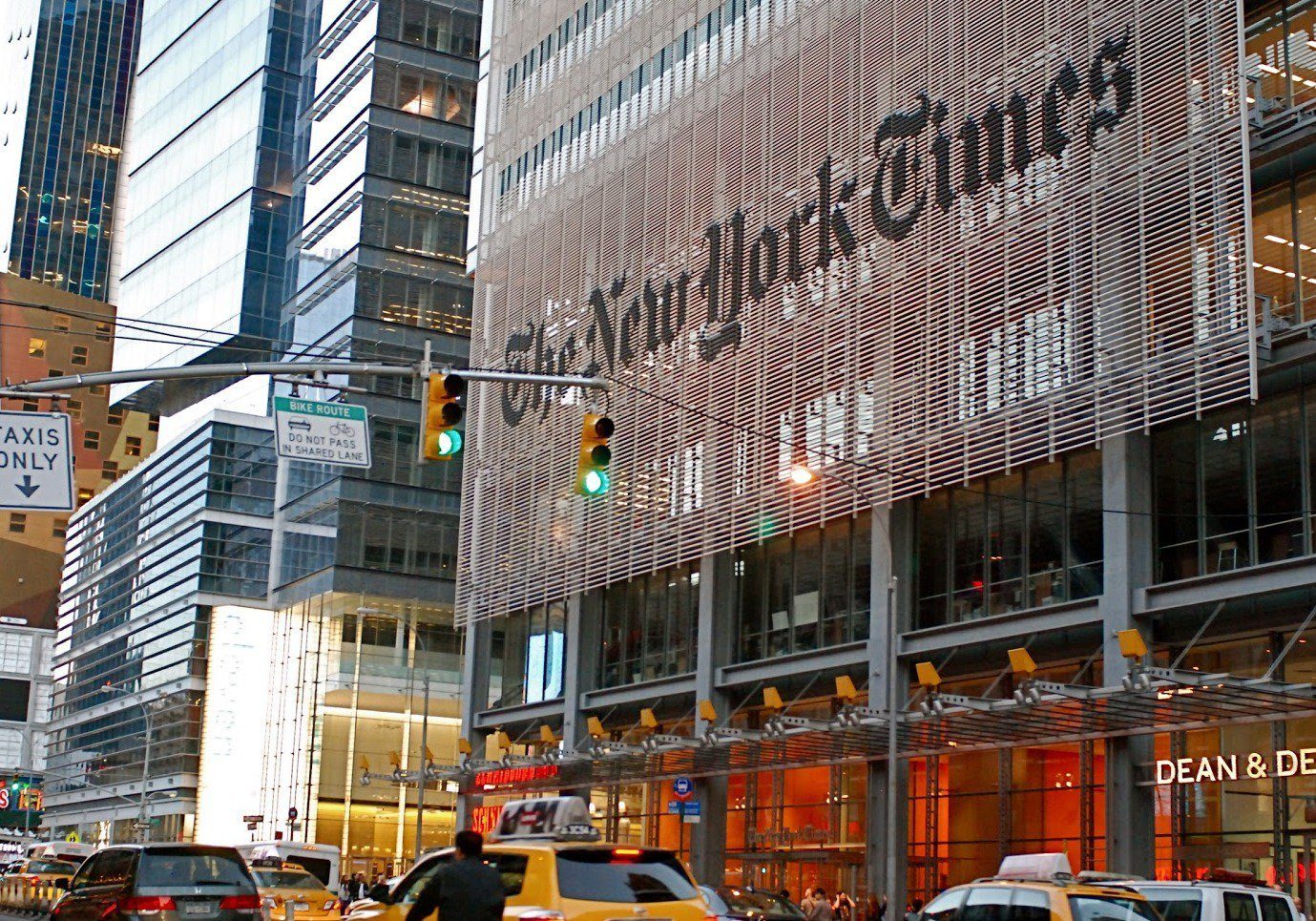
New York Times whitewashes Israel's massacre of Gazan demonstrators

new york times
Today's main New York Times article on Israel's massacre of Gazan demonstrators - the lead front-page story in the print edition - is a masterpiece of deceit. The article, by David Halbfinger, employs the time tested tools of distortion, including classic Orientalism, dueling narratives, one-sided use of sources, and hiding the perpetrators behind passive sentences, topped off by outright dishonesty.

The distortion starts in the first sentence. "Across the Gaza Strip on Monday morning, loudspeakers on minarets urged Palestinians to rush the fence bordering Israel. . ." An Orientalist gem, insinuating that Gazan protesters are motivated by religious primitivism, instead of Israel's crushing blockade and regular armed attacks.

". . where they [the Gazans] were met by army snipers." "Met" is hardly the appropriate word here, especially after another Times correspondent, Declan Walsh, has already described how far off Israeli snipers shot a woman in the stomach right in front of him on Sunday night.

Comment: Further reading: Making Israeli Soldiers Kill Palestinians


Bizarro Earth

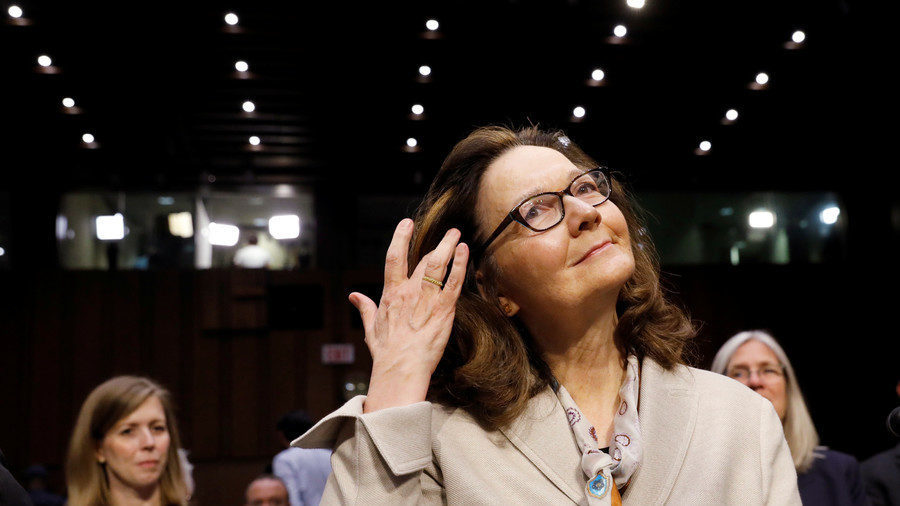
'Torture queen' Gina Haspel confirmed as CIA chief

Gina Haspel
© Kevin Lamarque / ReutersActing CIA Director Gina Haspel at her Senate Intelligence Committee confirmation hearing, May 9, 2018.
Gina Haspel is the new director of the CIA, after getting confirmed in the US Senate. Several Democrats crossed the aisle and gave her the green light, despite objecting to Haspel's role in the CIA's torture program.

The final vote was 53 in favor and 45 opposed.

Haspel's road to the confirmation was intense, with the Senate Intelligence Committee grilling her about running a controversial black site in Thailand during the era of extraordinary renditions and enhanced interrogation of suspected terrorists under President George W. Bush. She was also asked about a her role in destroying some 90 tapes evidencing torture of detainees.