Puppet MastersS


Eagle

'Behaving like it's 19th century'? US Congress to consider recognition of Israeli annexation of Golan Heights

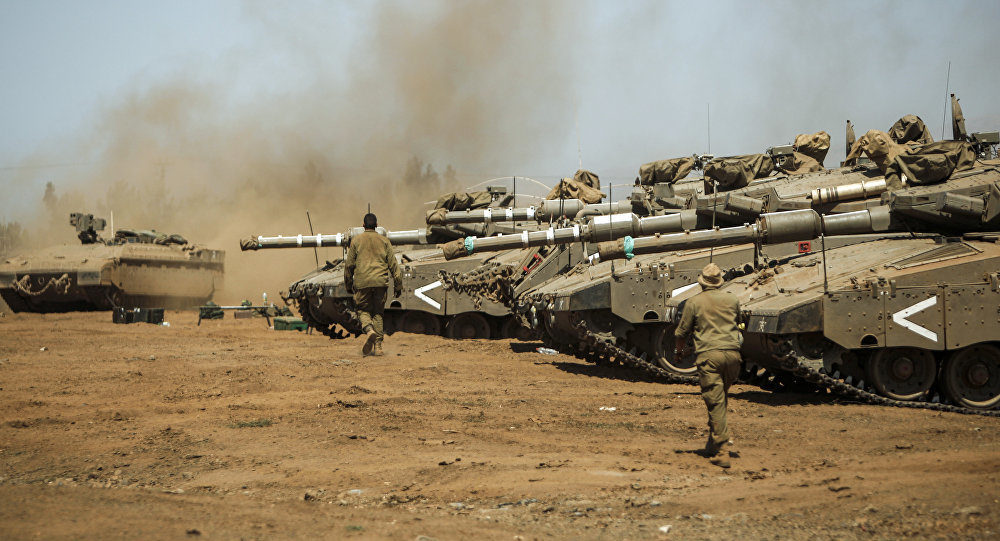
Israeli tanks
© AFP 2018 / JALAA MAREYIsraeli soldiers manuever Merkava tanks and Namer armored personnel carriers (APCs) during the last day of a military exercise in the northern part of the Israeli-annexed Golan Heights on September 13, 2017.
Congress is set to consider a new measure to recognize Israel's sovereignty over the contested Golan Heights region that separates Israel from Syria, a key piece of territory that has become all the more important since the civil war in Syria brought scores of jihadist fighters, including those backed by Iran, into the region.

Rep. Ron DeSantis (R., Fla.), a member of the House Foreign Affairs Committee, introduced on Thursday a resolution that could lead to an historic recognition by the United States that the contested area fully belongs to Israel, according to a copy of the amendment obtained by the Washington Free Beacon.

Israel annexed the Golan Heights in 1981 following the Six Day War in the late 60s with Arab nations in the region. The United States has declined for decades to take a position on the status of this territory, but following President Donald Trump's decision to move the U.S. embassy in Israel from Tel Aviv to Jerusalem, DeSantis and others see an opportunity for the United States to recognize another territorial reality-that the Golan Heights will not be given back to Syria, particularly in light of the strife gripping the country.


Comment: What was it former US Secretary of State John Kerry said 4 years ago about Russia's annexation of Crimea?
"You just don't in the 21st century behave in 19th century fashion by invading another country on completely trumped up pre-text..."
As US hegemony is in tatters due to military failures in Syria, the Israelis and their friends elsewhere are desperate to legitimize their plunder using 'the Iran scare' through the servile US Congress.

See also:


Biohazard

Putin: 'If Novichok was used, Skripal would have died on the spot', ex-double agent leaves hospital

Hospital
© Andrew Parsons / Global Look Press
Russian President Vladimir Putin says he was happy to hear that former double agent Sergei Skripal had been discharged from hospital, stressing that if a weapons-grade poison had been used, Skripal would have died on the spot.

Speaking at a joint press conference with visiting German Chancellor Angela Merkel, Putin said he had heard Skripal had been released from hospital.

"God give him health, we are very happy," the Russian president said. He added, however, that he doubts a weapons-grade toxin was used to poison Sergei Skripal and his daughter Yulia in Salisbury, UK, in early March.

"I think that if, as our British colleagues claim, a weapons-grade poison had been used, that person would be dead on the spot. Combat chemicals are so strong that the person either dies immediately or within seconds, maybe minutes," Putin said.

Biohazard

'Caged in toxic slum': UN rights chief condemns Israel over deadly Gaza protests

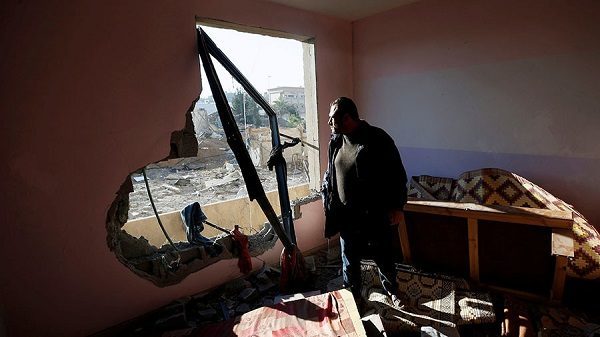
A Palestinian man looks out of his  damaged apartment
© Mohammed Salem / ReutersA Palestinian man looks out of his apartment that was damaged in an Israeli airstrike at a nearby militant target in the northern Gaza Strip December 9, 2017.
Israel is depriving 1.9 million people in Gaza of basic rights and creating inhumane conditions, according to a UN human rights chief. He has also castigated the use of lethal force by Israel during the recent protests.

"They are, in essence, caged in a toxic slum from birth to death; deprived of dignity; dehumanised by the Israeli authorities," UN High Commissioner for Human Rights Zeid Ra'ad Al Hussein stated.

The UN human rights watchdog called a special session on Friday in the wake of "appalling" events in Gaza. Some 87 Palestinians, including 12 children, were killed by Israeli security forces since March 30, with more than 40 fatalities and more than 1,300 injured on Monday alone, the UN estimates.

"This was not 'a PR victory for Hamas', in the reported words of a senior Israeli military spokesman; it was a tragedy for thousands of families," Zeid said in the opening speech at a special session of the Human Rights Council. Given the "stark contrast in casualties" on each side, and stressing that the demonstrators did not pose a threat to the lives of Israelis, he said the response amounted to "willful killings" in a grave breach of the Fourth Geneva Convention.

Comment: See also: Dozens of Palestinians killed by Israeli forces at Gaza border while idiot Jared Kushner blames the victims during speech in Jerusalem


Snakes in Suits

Brzezinski's ghost is shaping Washington-Eurasian geopolitics

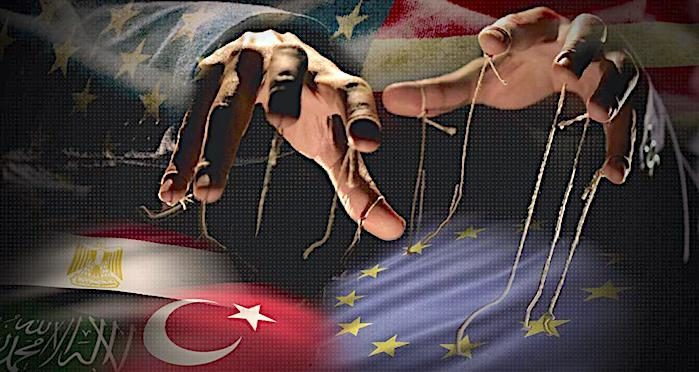
puppethands
© KatehonThe Puppet Master
One of the most outstanding features of a truly standing-out Trump Presidency to date is how precisely the actual policy developments, when we clear away the deliberate smoke and mirrors of tweets and scandal, follow a basic strategy of Washington geopolitics going back to at least 1992. This is the case in the latest unfortunate and quite illegal unilateral decision to leave the Iran nuclear agreement. This is also the case in the relentless Cold War-style demonization campaign against Russia and the deployment of insidious new sanctions. This is also the case with the looming trade war the Trump Administration has initiated with the Peoples' Republic of China.

Contrary to a widely-held belief that US President Trump acts only out of impulse or is being unpredictable, I believe that the opposite is the case. Strategic geopolitical policies of the Trump Administration are a response, not of the President himself, but rather of the powers that be, the permanent establishment who actually control what is sometimes called the Deep State. The geopolitics of that policy determines to a large degree who they allow to be President.

Russian Flag

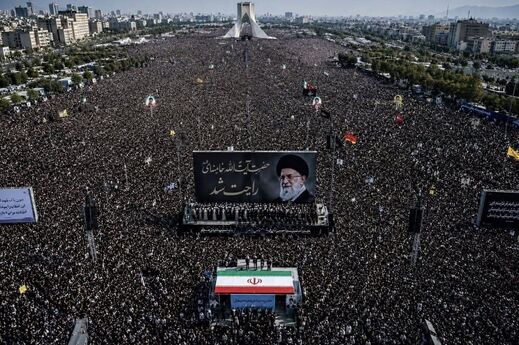
A Russian view on US' withdrawal from Iran deal

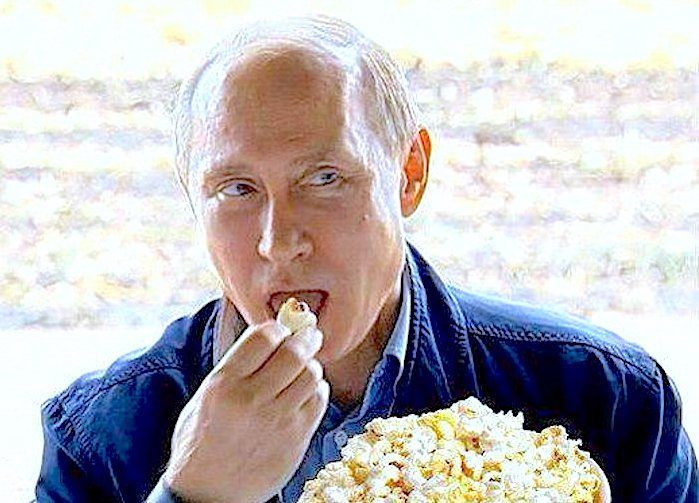
PUtinPopcorn
© UnknownSitting back and watching the show.
Moscow sees the move as a harbinger of what's to come: a return to multipolarity.

Russia is acting deeply disappointed in public.
In response to Trump's decision to withdraw from the Joint Comprehensive Plan of Action (JCPOA), the Russian Ministry of Foreign Affairs issued a statement blaming the United States for "intractable" actions based on "narrow and opportunistic interests." The Kremlin expressed "deep concern" over the American decision and stressed the necessity to sustain the agreement. Last week, Foreign Minister Sergey Lavrov was in chain talks with European leaders discussing ways to save the deal without the United States.

But Moscow was the least vocal among the dissatisfied - since no Russian vital interests are at stake and some actual benefits emerge. Consider this: after America's abrupt exit, Iran suddenly looks good. Uncertainty over tensions force oil prices to go up. Europe is now more distrustful towards Washington and turmoil among NATO allies is inevitable. Iran was not benefiting economically from the JCPOA, but in these new circumstances, Europe can disregard American threats of imposing secondary sanctions and do business with Tehran.

The most important question that remains: can the Trump withdrawal be a pretext for a war or a military strike against Iran? Moscow does not consider this an immediate threat. Trump would hardly risk starting another war in the Middle East - even if some in his administration see Iran as an easy target. A "Hit and Tweet Strategy" is more likely, but global and regional security implications would arrive after just one euphoric news cycle. Cornering Iran, while pleasing Israel and Saudi Arabia, would not help regional security - but at least war is not imminent. Moscow considers Trump's decision to be focused on domestic politics, hoping that it resonates with Republicans and makes the president look strong.

If this analysis is correct, Russia does not need to comment on the American departure from the JCPOA. Moscow would opt for maintaining the deal with Europe and China, letting Washington absorb the diplomatic fallout.

USA

No big surprise: Extensive US meddling in Malaysia's general election

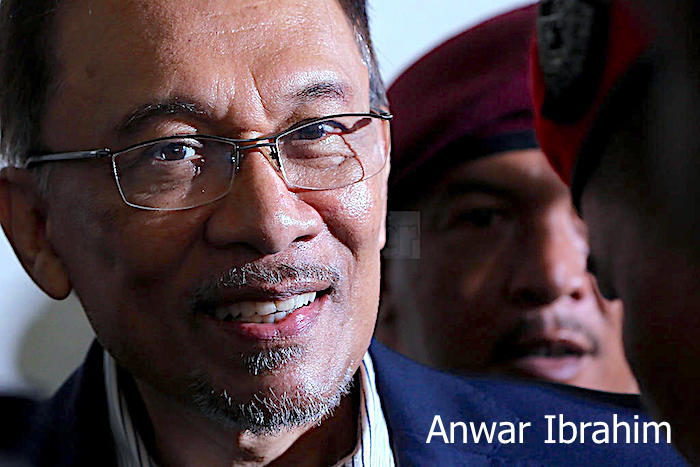
Anwar Ibrahim
© The Malaysian Insight
After now 2 years of accusations and constant headlines regarding allegations of still unproven "Russian influence" in the 2016 US presidential election, it is difficult to imagine that real political meddling or election interference anywhere around the globe could go unnoticed. This is especially true regarding the Western corporate media who has portrayed itself as deeply aware of the unethical and undemocratic nature of one nation interfering in the elections of another.

Yet during Malaysia's recent general election - hailed by the Western media as a "historic win" for an opposition the Western media clearly favored - not a single story was written by media organizations like Reuters, AFP, CNN, the BBC and many others covering foreign interference during the elections.

Despite the lack of Western attention regarding foreign election meddling, it is revealed that Malaysia's opposition is almost entirely comprised of US government-funded fronts - ranging from opposition leaders themselves, to political street fronts and organizers, to media organizations posing as "independent" Malaysian journalists, and "rights advocates" leveraging human rights advocacy to support the opposition and compromise Malaysia's Barisan Nasional (BN) party.

Malaysia - a former British colony - faces the incremental expansion of US and European "soft power" within its borders - transforming it from a sovereign nation into a subordinate, modern Western client state. As the US is attempting to do all throughout Southeast Asia from Cambodia to Thailand and the Philippines to Myanmar - the final goal is surrounding China with nations hostile to it politically, economically, and even militarily.

Comment: Same old tricks, new and recurring victims - pre-determined destinies according to plan.


Attention

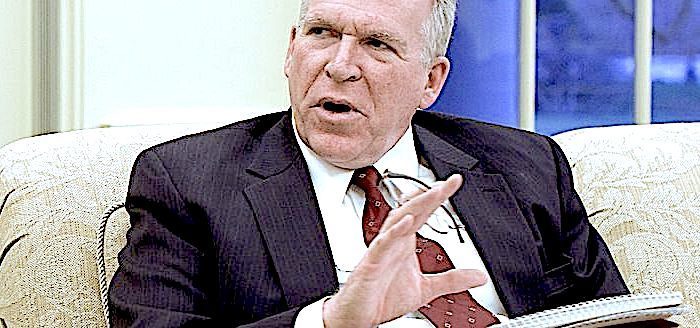
Brennan's 'exceptionally sensitive' issue

Brennan
© Unknown
The revealing crumb left in the David Corn/Michael Isikoff book on the Russia investigation.

Under John Brennan, the CIA operated as an opposition research outfit for the Hillary Clinton campaign. It appears from leaked news stories in the British press that Brennan's oafish spying on Trump began around April 2016, right after Trump's biggest primary victories. As it became urgently clear to Brennan that Trump was going to face off against Hillary, Brennan turned to "intelligence partners" in Europe for dirt on Trump. But they didn't have any, save some pretty skimpy material on "contacts" between Trump campaign officials and Russians.

Whatever Brennan collected was so insubstantial that Robert Mueller hasn't even interviewed him about it. Consider that for a second: Mueller was supposedly appointed to complete the counterintelligence probe into Trumpworld, and he hasn't felt the need to talk to the father of it. Brennan has tried to explain this astonishing discrepancy away by vaguely saying that whatever Mueller needs he could find in "CIA files."

Those files are no doubt as elliptical as the formal document starting the probe. It appears that Brennan's alleged "tips" were too flaky and unofficial for the Obama administration to commit to print. Brennan had his own partisan hunches, fueled by his feverish hatred of Trump and perhaps a few spit-balling conversations with other Trump-hating spy chiefs abroad (the "special relationship" had turned sinister against Trump, as evident from Britain's sorry role in this mess), but he had no evidence to meet any reasonable threshold for a counterintelligence probe of a presidential campaign, especially one undertaken by an administration supporting that candidate's opponent. Brennan's espionage against Trump was as audacious as a paranoid LBJ wiretapping Nixon's campaign plane in the thick of a race against LBJ's vice president, Hubert Humphrey.

Comment: Brennan said 'there would be hell to pay if it came out that Hillary partisans in the U.S. government were spying on her opponent's campaign, making use of opposition research that she had purchased.' So...there was, they did, and it has been exposed. Hell to pay? What are they waiting for? Bring it on!


Bomb

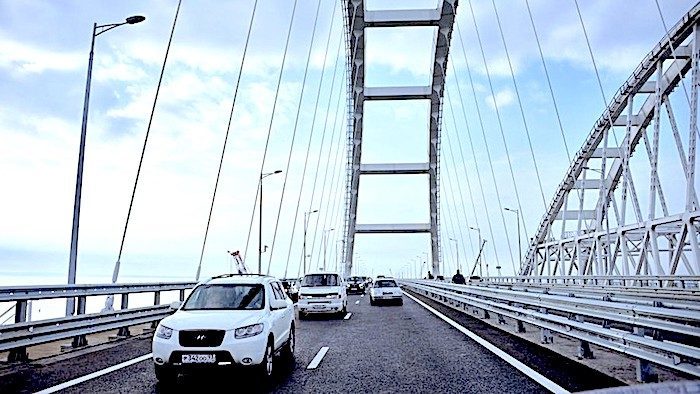
US pundit's 'Bomb Crimea Bridge' article now subject of Russian criminal probe

Crimean Bridge
© Alexey Malgavko / SputnikCrimean Bridge
An article urging Ukraine to bomb Russia's newly-built bridge to Crimea has led to the Russian equivalent of the FBI opening a criminal case against US political commentator Tom Rogan for inciting terrorism.

Svetlana Petrenko, spokeswoman for Russia's Investigative Committee, told reporters on Thursday that Rogan's article "contains signs of public calls for terrorist activity on the territory of Russia." According to the Russian criminal code, public calls for terrorist activity using the media, including the internet, may carry a fine of up to 1 million rubles (around $16,000) or a prison term of up to seven years.

"A comprehensive psycho-linguistic examination" of Rogan's opinion piece, published Tuesday by the Washington Examiner, has been ordered as part of the probe, Petrenko said, adding that the Investigative Committee is also conducting a preliminary inquiry into the Examiner's editor.

In his article, titled "Ukraine should blow up Putin's Crimea bridge," Rogan has called the massive construction undertaken by Russia "an outrageous affront to Ukraine's very credibility as a nation."

His article was published on the same day that Russian President Vladimir Putin ceremonially opened the bridge, personally driving a Kamaz truck across it.

Comment: The 'Ugly American' pundificates 'a bridge too far.'


USA

How 'American exceptionalism' has justified war and exploitation

eagleflag
© unknown
This is part two of my interview with the activist and journalist David Swanson. We're discussing his new book Curing Exceptionalism, which is about the disease, if you will, of American exceptionalism. In the first part, we discussed how American exceptionalism is ultimately a political ideology that does not have its basis in empirical facts. We talked about how according to international metrics, so many metrics, poverty, incarceration, public health, inequality, education, the United States is nowhere near the top. And in fact, not only is it nowhere near the top of other developed imperialist nations, but also just internationally in general, for the entire world, when it comes to things like incarceration, the U.S. is totally at the bottom of the list of the entire world.

In this part we'll be discussing the damages caused by American exceptionalism, and then we'll also discuss what David thinks are some solutions. The cures, if you will, to American exceptionalism. David Swanson is a journalist, activist, organizer, and educator. He is the director of the peace group World Beyond War. He is also the host of Talk Nation Radio, and the author of several books. Thanks for joining us, David.

DAVID SWANSON: Glad to be here.

BEN NORTON: So in Part 3 of your book you know you discuss the dangers and the damages of American exceptionalism. What do you think some of those dangers and damages are?

Comment: A one-source standard limits the extent and usefulness of choice - and - without inspiration or evolution, becomes obsolete.


Snakes in Suits

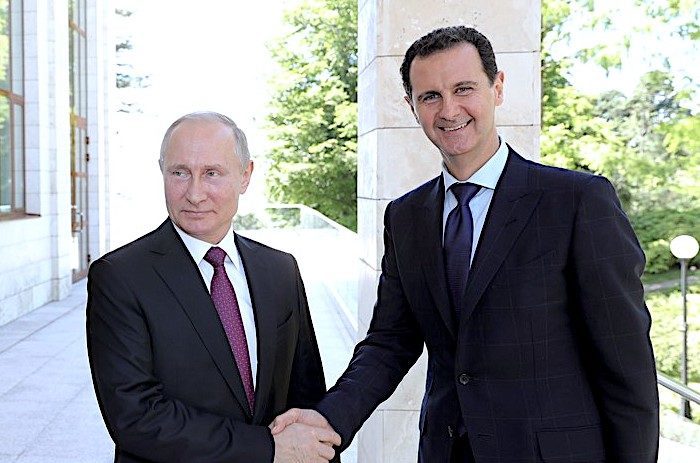
Sochi: Putin and Assad meet for extensive talks, discuss political settlement

PutinAssad
© Mikhail Klimentyev / SputnikRussian President Vladimir Putin welcomes Syrian President Bashar Assad in Sochi, Russia, on May 17, 2018.
Russian President Vladimir Putin has held a meeting with the Syrian leader Bashar Assad in Sochi, the acting presidential spokesman Dmitry Peskov said. The two leaders conducted "extensive" negotiations, he added.

As the two presidents talked about the conditions that would facilitate the peace process development, the Syrian leader said that he had decided to send a delegation to a committee tasked to rewrite Syria's constitution, which was championed by the UN.

The agreement on the creation of the constitutional committee was one of the major results of the Sochi peace congress held in January this year. The participants of the congress agreed on January 30 to set up the constitutional committee in Geneva, and to hold democratic elections in Syria.