
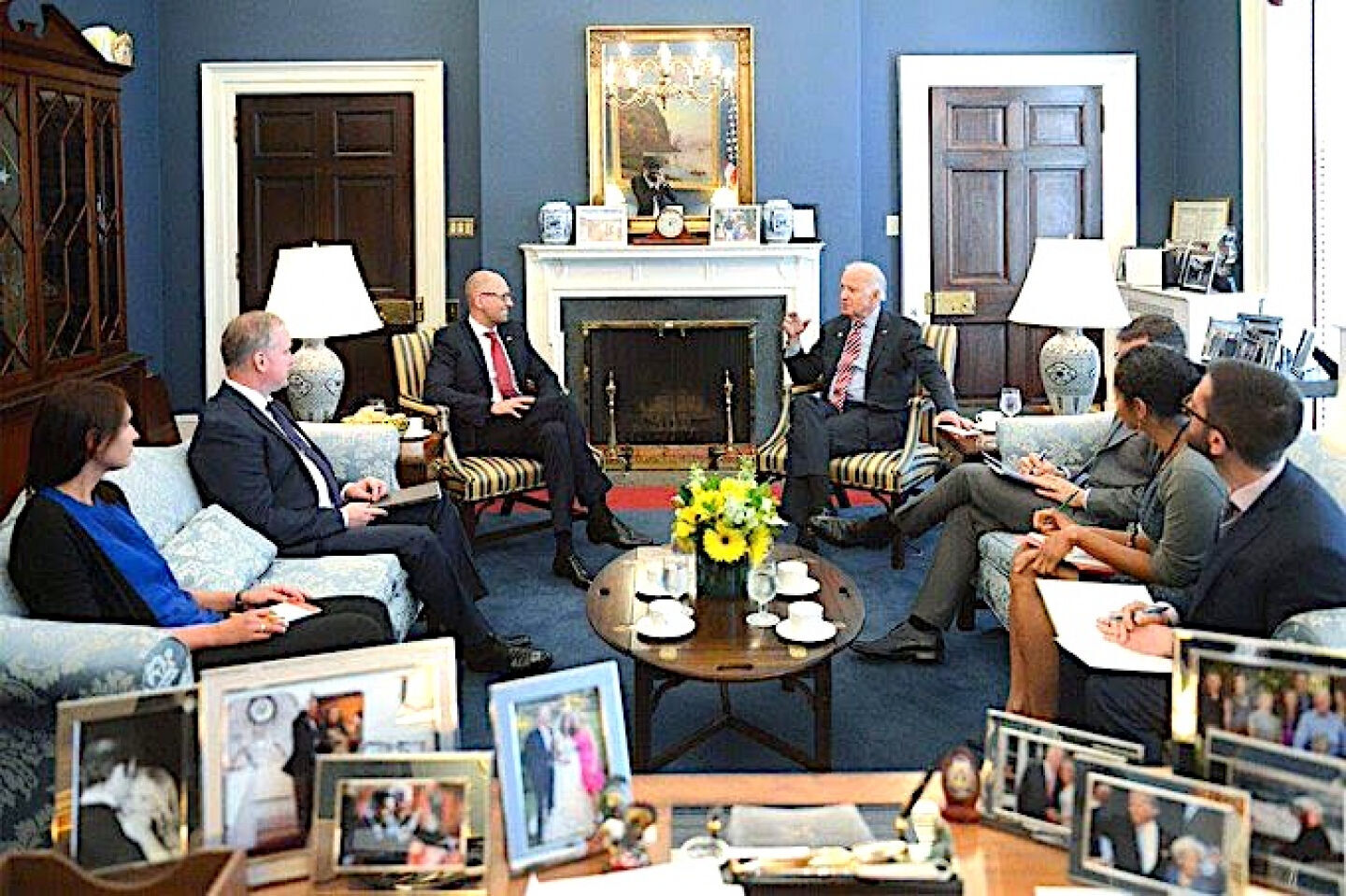
© Arseniy Yatsenyuk/Facebook pageVice President Biden meets ex-Ukrainian Prime Minister Arseniy Yatsenyuk at the White House in June 2016 as his Ukraine adviser Eric Ciaramella (right) looks on.
In 2019, then-National Intelligence Council analyst Eric Ciaramella touched off a political firestorm when he anonymously accused Trump of linking military aid for Ukraine to a demand for an investigation into alleged Biden corruption in that country.
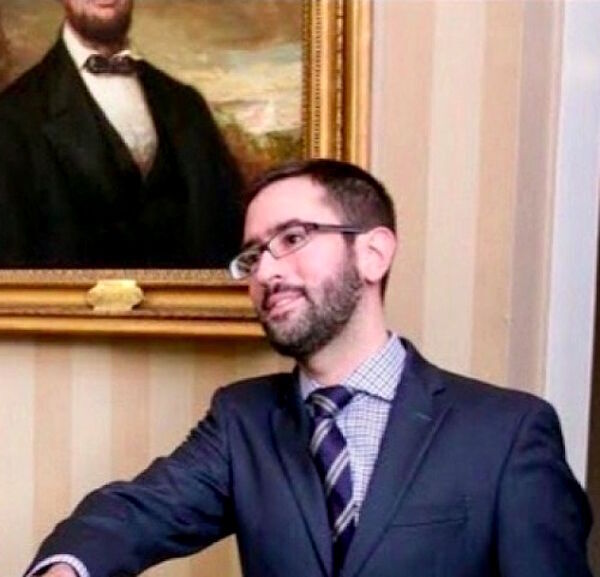
© Whit Hose photoEric Ciaramella: Privately expressed shock -- "Yikes" -- at linking U.S. aid to firing a prosecutor probing the firm paying Biden's son. But he kept mum publicly, so was he really shocked?
Those payments - along with other evidence tying Joe Biden to his family's business dealings - received little attention in 2019 as Ciaramella accused Trump of a corrupt quid pro quo. Neither did subsequent evidence indicating that Hunter Biden's associates had identified Shokin as a "key target." These matters are now part of the House impeachment inquiry into President Biden.
"It now seems there was material evidence that would have been used at the impeachment trial [to exonerate Trump]," said George Washington University law professor Jonathan Turley, who has testified as an expert witness in the ongoing Biden impeachment inquiry. "Trump was alleging there was a conflict of interest with the Bidens, and the evidence could have challenged Biden's account and established his son's interest in the Shokin firing."
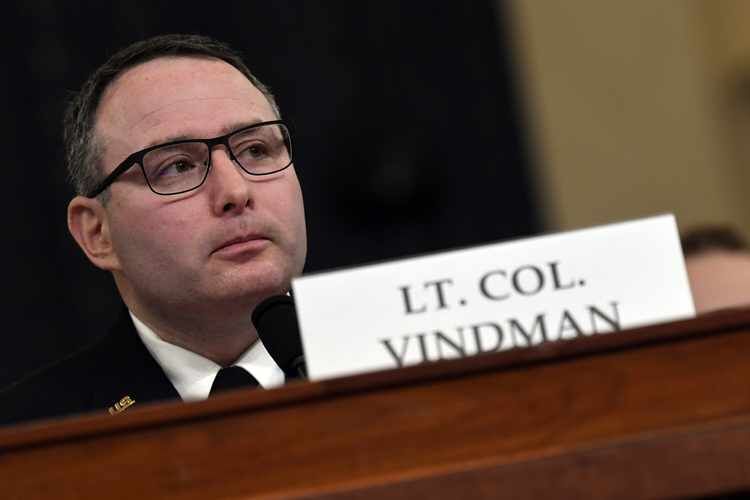
© Associated PressAlexander Vindman: He and Eric Ciaramella raised alarms about Trump, not Biden.
The emails show Ciaramella expressed shock - "Yikes" is what he wrote - at Biden's move to withhold the $1 billion in aid from Kyiv, which represented a sudden shift in U.S. policy. They also show he was drawn into White House communications over how to control adverse publicity from Hunter taking a lucrative seat on Burisma's board.
Yet there is no evidence Ciaramella raised alarms about the questionable Biden business activities he witnessed firsthand, which is in sharp contrast to 2019. In that instance, he was galvanized into action after being told by White House colleague Alexander Vindman of an "improper" phone call between President Trump and Ukrainian President Volodymyr Zelensky. During the call, Trump solicited Zelensky's help in investigating Burisma and Hunter Biden's role in the company.
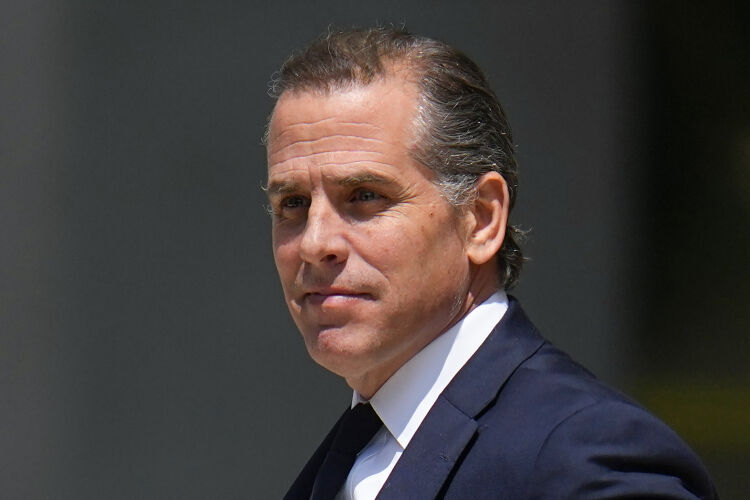
© Associated PressHunter Biden: He had a multi-million-dollar plum post that Trump wanted investigated.
Ciaramella worked under CIA Director John Brennan when President Obama made Biden his point man on Ukraine in 2014, the same year Burisma hired Hunter. The next year, the CIA detailed Ciaramella, a longtime advocate for aid to Ukraine, to the White House, where he worked closely with Biden and his staff as a top adviser on key Ukrainian policies. After Biden left office, he stayed on at the GOP White House until mid-2017 even though he's a Democrat, working as a Ukrainian and Russian analyst on Trump's National Security Council. Co-workers there accused him of trying to sabotage Trump, including allegedly leaking sensitive information to the press.
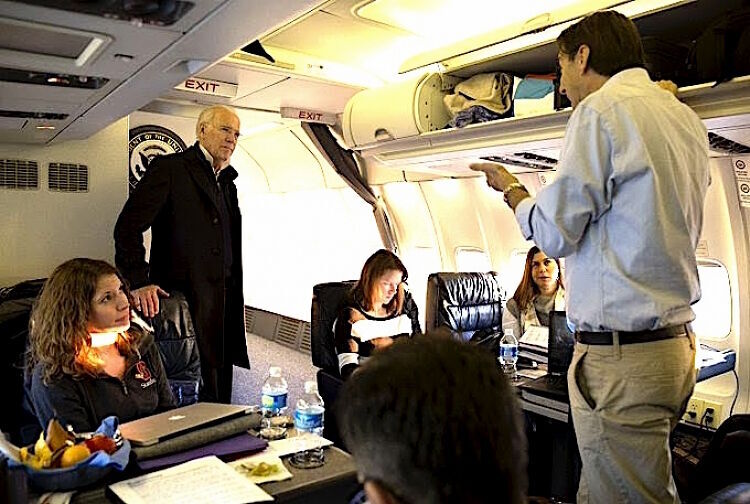
© Vice President Joseph R. Biden ArchivesAbove in the foreground, an unidentified, bespectacled aide resembling Eric Ciaramella aboard Air Force Two during Vice President Biden's Dec. 6, 2015 flight to Kiev. This was the trip when Biden threatened to withhold military aid if Burisma prosecutor Viktor Shokin were not fired, which he soon was. The White House identified those in the cabin with Biden as Ukraine energy adviser Amos Hochstein, standing; and, seated, Carlyn Reichel, Kate Bedingfield, and Elissa Slotkin.
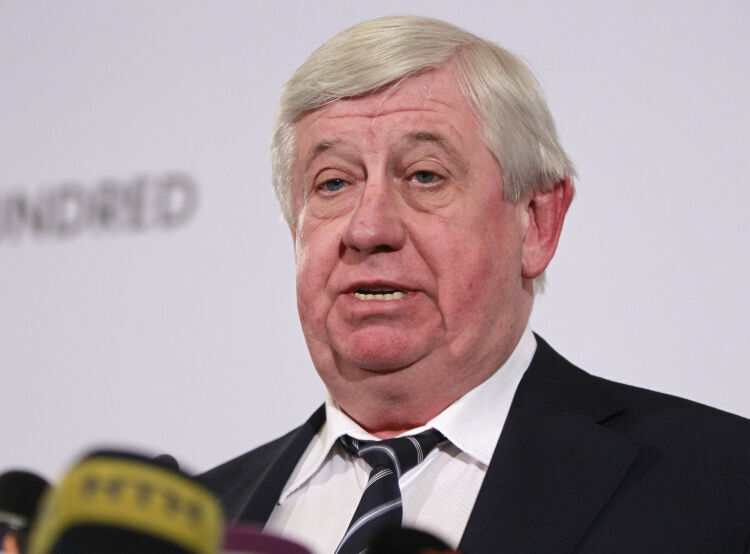
© Associated PressVictor Shokin: Fired prosecutor.
- Hosted, cleared into the White House, and met face-to-face there with senior Ukrainian prosecutors.
- Gave a "readout" of the meeting to his superiors, who in turn pushed for Shokin's firing.
- Traveled with Biden to Kyiv during the 2015 trip during which Biden demanded Shokin's firing.
- Wrote media "talking points" for Ukrainian officials.
- Huddled with the top Biden officials involved in discussions concerning the $1 billion aid package and Shokin, including: Amos Hochstein; Victoria Nuland; Geoffrey Pyatt; Bridget Brink; and Michael Carpenter.
- Corresponded with Biden officials coordinating responses to negative media reports about Hunter's cushy and controversial Burisma job.
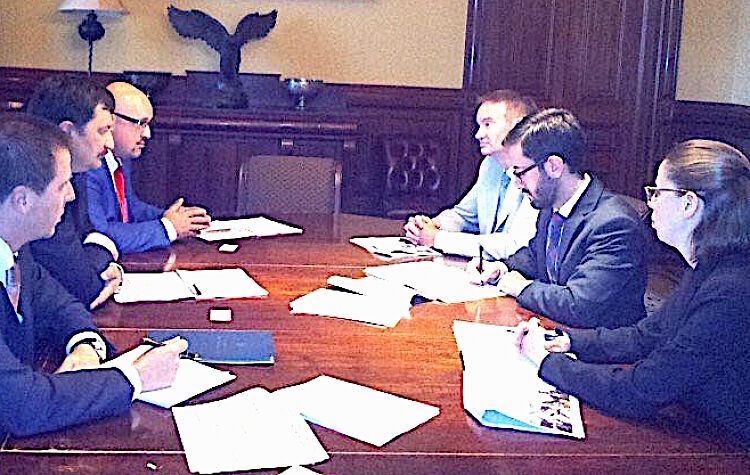
© Ukraine.com"Point of contact": Eric Ciaramella taking notes next to Biden's security adviser Michael Carpenter (right) in a June 2015 meeting with Ukrainian officials at the White House.
Ciaramella also worked directly with top Obama and Biden administration diplomats on Ukraine, including senior State Department official Victoria Nuland. "Eric was regularly the clearing authority to get me into the White House for interagency meetings on Ukraine," Nuland revealed in a 2020 Senate deposition. Asked if she ever discussed Ukraine policy and Shokin with Ciaramella, Nuland testified:
"Of course, I did. He was part of the interagency process. He was also on my negotiating team for the six, seven rounds of negotiations I did with the Russians on [the disputed Ukraine region] Donbas."Ciaramella was directly involved in talks concerning the massive U.S. aid package to Ukraine that Biden conditioned on the removal of Shokin, who at the time had seized the assets of the corrupt Burisma oligarch employing Hunter Biden. He also arranged and participated in White House talks with Ukrainian prosecutors visiting from Shokin's office.
White House visitor logs confirm Ciaramella escorted Shokin's deputy prosecutor, David Sakvarelidze, into the White House for a January 2016 meeting. A White House agenda for the meeting lists Ciaramella as "point of contact" for the Ukrainian delegation. He also checked in Andriy Telizhenko, the Ukrainian Embassy official who says they discussed Burisma and Hunter Biden during the meeting and struggled to understand why his U.S. counterparts were suddenly hostile to Shokin after praising him in earlier talks.
Emails from the time show Ciaramella appeared surprised to hear about the linkage between the $1 billion loan to Ukraine and the dismissal of Shokin. Though Biden maintains he insisted Kyiv oust Shokin because he was too soft on weeding out fraud in entities that included Burisma, Ciaramella suggested he didn't share the view that Shokin was corrupt. "We were super impressed with the group," Ciaramella added, "and we had a two-hour discussion of their priorities and the obstacles they face."
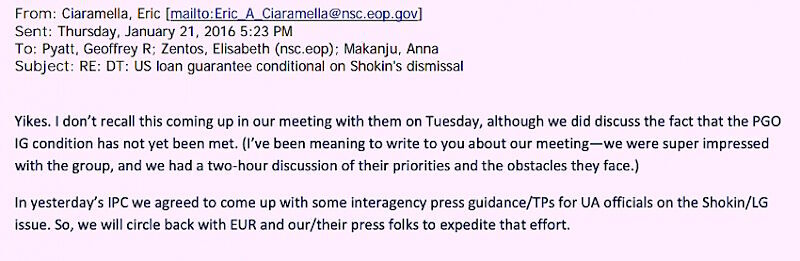
© U.S. Senate Committee on Homeland Security and Governmental Affairs/Committee on Finance, Page 134"Yikes": In an email, Ciaramella expresses shock at the quid pro quo to oust the Ukrainian prosecutor.
"Yikes. I don't recall this coming up in our meeting with them," Ciaramella replied, referring to the White House meeting he hosted with top Ukrainian prosecutors.
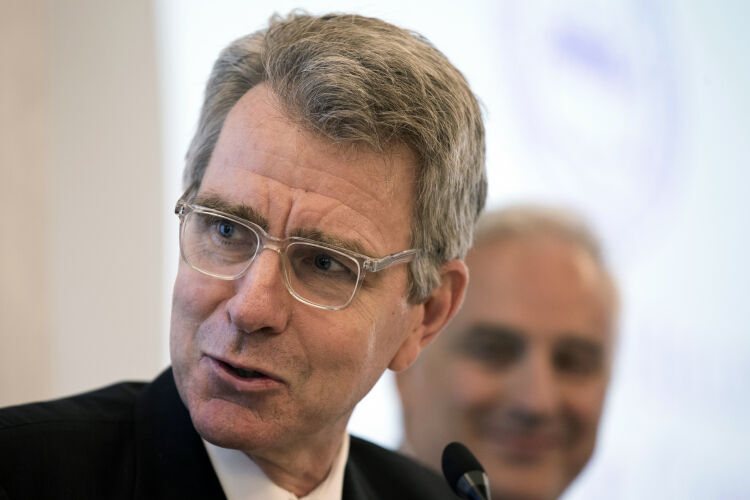
© Associated PressGeoffrey Pyatt, U.S. envoy to Ukraine: “I think you have to ask Eric what he meant by ‘Yikes.’”
The day before he hosted the Ukraine prosecutors, Ciaramella received an agenda from a State Department official that asked him to "note the importance of appointing a new PG [Prosecutor General], reiterating that Shokin is an obstacle to reform," according to emails. The agenda also called on Ciaramella to "ask the del [Ukrainian delegation] what high-level cases are on the docket for prosecution," which raises suspicions in some quarters that Biden's advisers were fishing for information about Shokin's plans for prosecuting Burisma oligarchs, something Hunter Biden had been asked to find out.
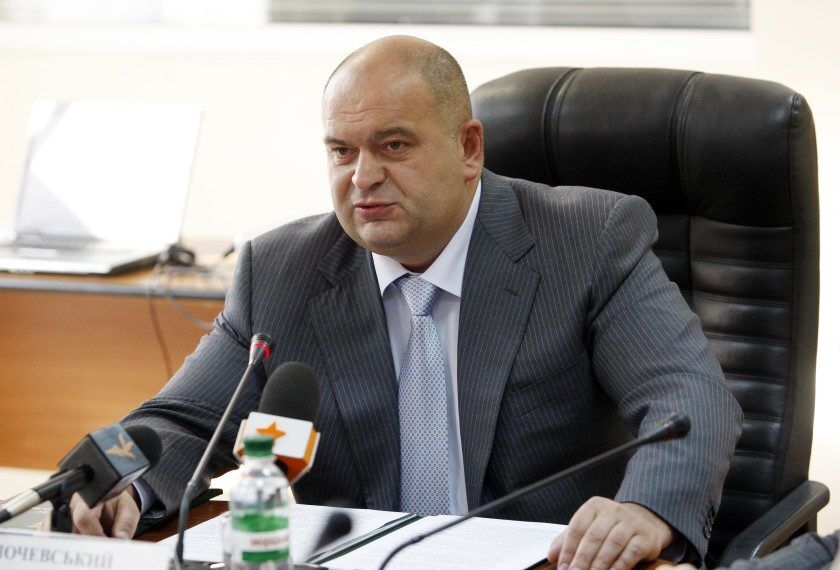
Mykola Zlochevsky: Shokin conducted a raid of this Burisma oligarch’s home, undercutting Biden's contention the prosecutor was corrupt.
The former ambassador demurred when asked if conditioning the $1 billion on Shokin's firing was Biden's idea or came from his office. "It was the - our interagency policy," he testified, adding, "I don't remember when the vice president would have weighed in on this."
However, Pyatt allowed that it was a sudden change in policy. "At the beginning," he said, "it was not our expectation that Shokin's removal would be necessary." Indeed, an Oct. 1, 2015, memo summarizing the recommendation of the Interagency Policy Committee on Ukraine stated, "Ukraine has made sufficient progress on its [anti-corruption] reform agenda to justify a third [loan] guarantee." Ciaramella was a member of the IPC task force, which monitored Shokin's office. The next month, moreover, the task force drafted a loan guarantee agreement that did not call for Shokin's removal. Then, in December, Joe Biden flew to Kyiv to demand his ouster.

© derekharvey.orgDerek Harvey, former congressional investigator: "The impeachment inquiry should compel Ciaramella to testify."
Just weeks prior, White House photos indicate that Ciaramella traveled with Biden on the same December 2015 Air Force Two flight the vice president took to Kyiv to threaten Ukrainian President Petro Poroshenko to ax Shokin. Republicans have accused Biden of pushing Shokin's ouster to block scrutiny of his son's actions.
"Biden called an audible and changed U.S. policy toward Ukraine to benefit his son on the plane ride to Ukraine," House Oversight Committee Chair James Comer said, and "later bragged about withholding a U.S. loan guarantee if Ukraine did not fire the prosecutor [Shokin]."
Biden and his supporters have repeatedly claimed Shokin had to go because he wasn't cracking down on corruption and that everyone else in the administration, as well as Europe, agreed Shokin should be fired. This remains the prevailing narrative in major U.S. media. But around that time, Shokin had conducted a raid of Burisma oligarch Mykola Zlochevsky's home, seizing his house, cars, and other assets.
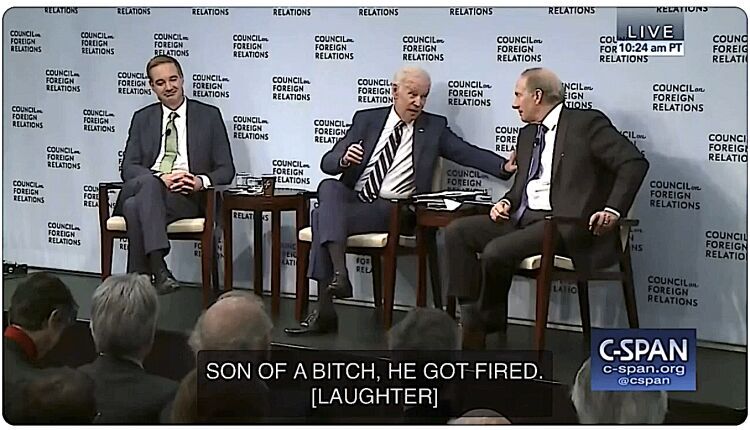
© C-SPAN/GODventures/YouTubeOut of office in 2018, Biden regales a think tank event with a salty account of getting Shokin fired.
"The unstated goal was to have the Ukrainian prosecutor removed in an effort to close the criminal case against [Burisma founder] Zlochevsky," Ziegler said in recent testimony before the House impeachment inquiry. After Shokin was pushed out of office, the Burisma investigation dried up.
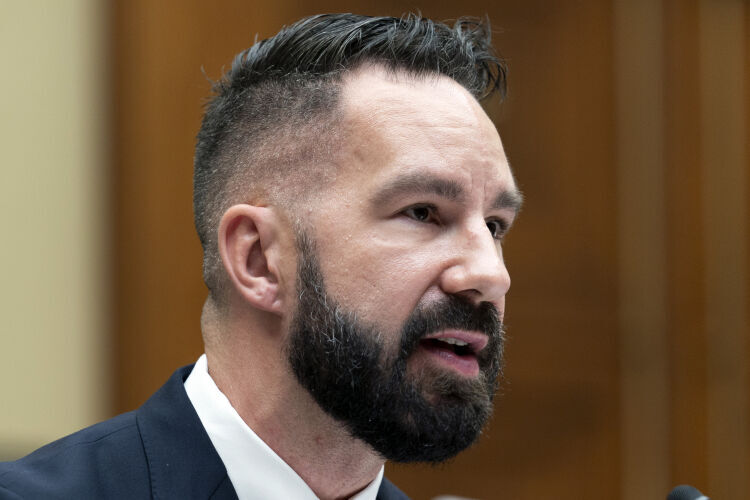
© Associated PressJoseph Ziegler, IRS investigator: “The unstated goal was to have the Ukrainian prosecutor removed in an effort to close the criminal case against [Burisma founder] Zlochevsky."
White House emails reveal that Ciaramella was looped into messages sent by Biden's communications team, who were concerned that Hunter Biden taking a position on corrupt Burisma's board created unseemly optics and undercut their boss' mission to clean up corruption in Ukraine.
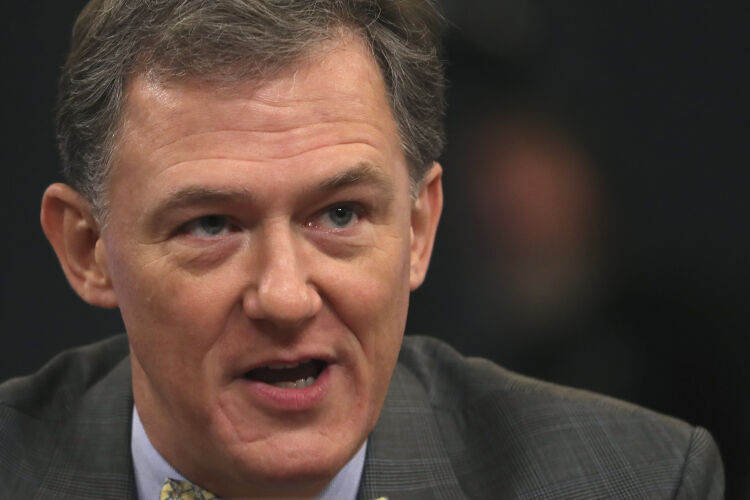
© Associated PressGeorge Kent: He tried to get Biden's aides to raise the issue of potential family conflicts with their boss.
At the time, Burisma was paying Hunter, who had no energy sector experience, $1 million a year just for lending his name to its board. It turns out that Hunter never traveled to Ukraine for a single meeting in the five years he sat on Burisma's board. Republicans suspect Biden got the prosecutor ousted to keep the money flowing from Burisma to the Biden family.
Career State Department officials led by George Kent, who was stationed in Ukraine at the time, tried to get Biden's aides to raise the issue of potential family conflicts with the vice president. Despite their concerns, Biden never asked his son to step down from the Burisma board, which would have made all questions go away. And despite Kent and other officials identifying Burisma founder Zlochevsky by name as a corrupt actor in Ukraine, Biden himself never publicly called Zlochevsky out as corrupt while Hunter served on his board and pocketed millions in payments from him. For all his talk of fighting corruption in Ukraine, Biden failed to distance himself from one of the most corrupt oligarchs in the country.
Harvey, who served as the staff investigator for the Republican side of the House Intelligence Committee during the 2019 Trump impeachment hearings, said: "The [Biden] impeachment inquiry should compel Ciaramella to testify since we now know he was involved in communications about Biden using the $1 billion in aid to extort Ukraine into firing Shokin."
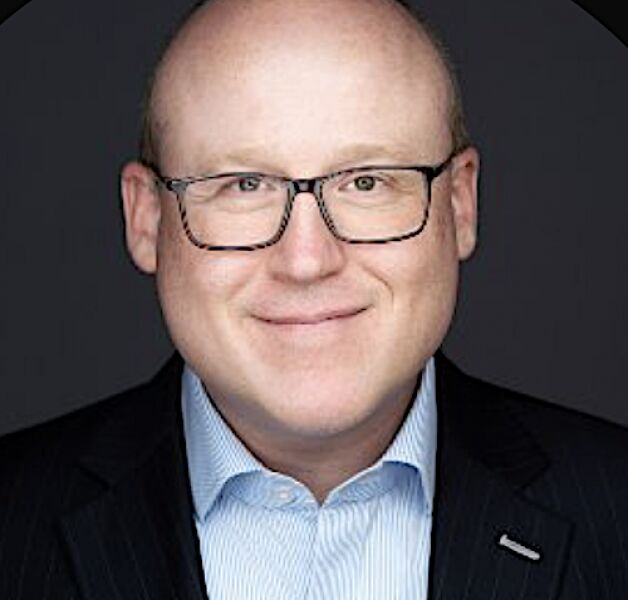
© XJason Foster, ex-Senate investigative counsel: "None of the whistleblower protections apply to this particular situation.”
Another former staff investigator noted that Ciaramella is no longer protected by federal whistleblower laws. He has left the government and now works as a senior fellow focusing on Ukraine and Russia for the Carnegie Endowment for International Peace in Washington, where he is consulting with White House officials and pushing for billions more in U.S. aid for Ukraine - including "a Marshall Plan for the Ukrainian military." Through a spokesperson, Ciaramella declined to comment.
"None of the whistleblower protections apply to this particular situation," said Jason Foster, former chief investigative counsel for the Senate Judiciary Committee and a whistleblower expert. He also noted that the Whistleblower Protection Act doesn't shield whistleblowers from any other conduct they might have been involved in, including their own conduct. Nor does it give them a legal right to anonymity.
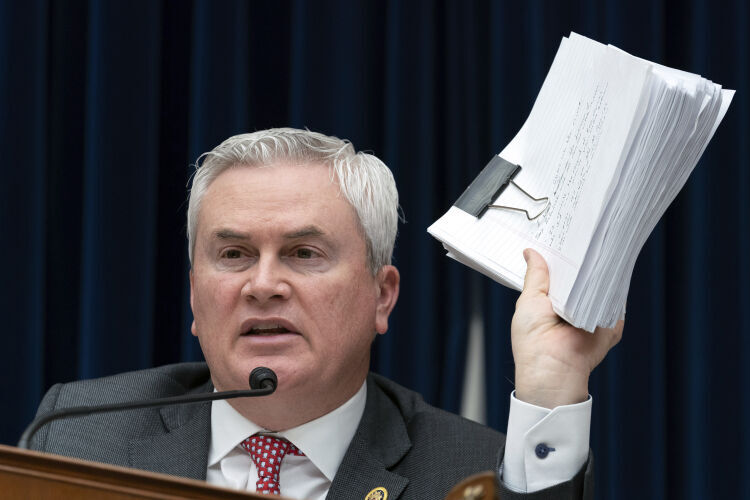
© Associated PressJames Comer: The “whistleblower” impeachment of Trump was a “cover-up” operation for the alleged Biden blackmail scheme.
What Ciaramella witnessed and what he documented in notes he took during high-level Biden-Ukraine meetings could now be relevant to the active impeachment inquiry of President Biden. The House may have little choice but to hold the kind of hearings the Democrats blocked during the earlier impeachment by keeping Ciaramella's identity - and his own potential conflict - secret.
As the catalyst for Trump's impeachment, Ciaramella could now be a reluctant witness for Biden's.



The reality, wake up and smell the roses! Washington, DC., Red team, Blue Team, RFK Jr team; or, you name it whatever political team, will not prevent the coming agenda to eliminate cash, real food and private property. It is now local non-compliance using State constitutional rights and local sheriffs who will not obey non-constitutional law, who will not comply with this tyranny. And if that doesn't work, then it is local non-compliance enmasse. Do not, ever accept cash being eliminated, never take the Digital ID, nor accept Digital money as replacement for cash, nor mRNA ( gene therapy) injections or you can kiss your freedom and health goodbye![Link]