
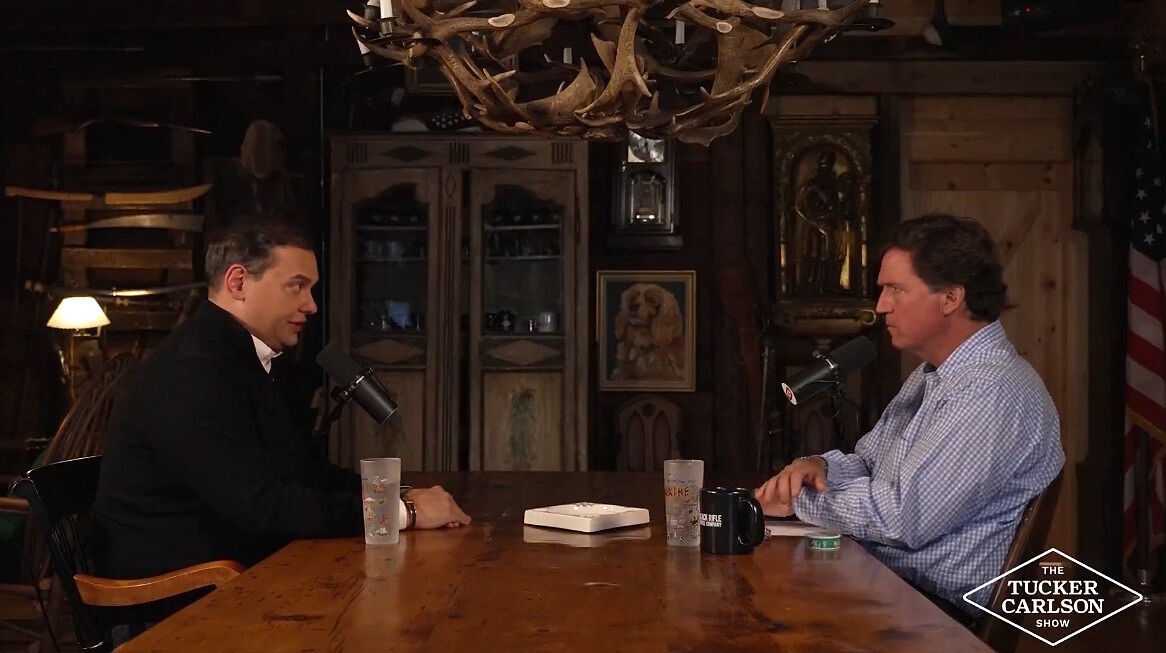
© Tucker Carlson NetworkTucker Carlson interviews George Santos after his release from prison, October 31, 2025
In our latest ponerology meetup for paid subscribers we discussed Lobaczewski's criticisms of modern democracy in his book Logocracy. There, he lists the main flaws as he sees them, and what they inevitably lead to in practice. This culminates in the following statement:
Every candidate for election in a democratic country must reckon with these defects of public opinion and must be able to satisfy them with appropriate promises. It is difficult for persons of high values of mind and character to do this, so they lose to candidates with an inferior sense of responsibility, or they withdraw discouraged by such demands. ... That is why democracy has a constant tendency to elevate to legislative and leadership positions persons who are not well qualified, but who are eloquent and relatable. This is the case in the state as a whole and similarly within individual parties, where their leaders are sometimes less qualified than some lower-level activists. This is contrary to natural law and proves to be the greatest weakness of democracy.In other words, due to its flawed foundations — specifically, those assumptions that justify the practice of universal suffrage — modern democracy selects for Machiavellianism and incompetence, and thus produces a malformed social structure. The best candidates either do not want to play the game or get "selected out" at various stages in their political careers (if they decide to pursue them in the first place). This has an effect not just on political parties, but societies in general and all their institutions. You will often find employees who are smarter and more generally competent than their managers or bosses, for example, and these employees will be painfully aware of this. (This is one of the symptoms of poor socio-occupational adjustment and the resulting "sick" society.)
Such a state of affairs is obvious to anyone with a decently high level of competence. I recently came across a good example. George Santos, the former Republican Congressman whose prison sentence Trump recently commuted, described his experience in prison to Tucker Carlson upon his release. I recommend listening to it.
Santos is an entertaining speaker, and his observations on the American prison system are consistent with Lobaczewski's critiques in Logocracy. For example, describing the prison staff hierarchy, Santos observed that of the guards, 80% were great, hard-working people, two of whom were exceptionally competent and compassionate. Of course, that is just the majority; some correctional officers, by contrast, "want to make your life miserable just because it makes them happy, and they live and relish off of your misery. But that's not the majority. Those are very few and select." Whether that number is 10% or 20%, it represents the pathological minority of the human population with sadistic tendencies — the "persistent predatory personalities" that can be found everywhere, and which in a logocracy would be barred from any positions of social authority.
However, when it came to prison leadership, the picture was different:
I had a positive experience with the COs. I had a terrible experience with the administration, from the assistant warden, Noble, to the warden, Lynn Kelly, to the camp administrator, who then turns out to be the most competent man there.This is modern democracy in practice: the least competent, most vindictive person is in charge, and the most competent (but still less than ideal) is in a subordinate position. The entire system in question becomes inefficient and dysfunctional as a result — and Santos lists the ways his particular correctional facility "functioned," a combination of improperly used funds, neglect of the facility, sadism, and bureaucratic terrorism.
As a result of his short time in prison, half of which was spent in solitary confinement (allegedly "for his own protection," which was not true), Santos is now advocating for prison reform — another logocratic policy. For him, the experience was extremely negative but transformative. As he points out, our current view of the role of prisons is that they are supposed to be rehabilitative. They are not. As Santos quipped regarding the warden: "We need to make an example of somebody, because if we're going to rehabilitate people in this country, it cannot be at the hands of that woman or people like her." The perennial debate over incarceration is whether it should be punitive or rehabilitative. If the purpose is strictly punitive, the warden is doing her job extremely well. Santos comments that his experience put this debate into perspective for him:
Santos: I've always listened to two [perspectives] — I'm very guilty of this. Every time I've ever heard the words, "Oh, we need prison reform," [my response has been,] like, who cares? It's a bunch of criminals. Who cares? They should be thankful they're not dead. We should give them the chair. I would say outrageous things like that. And now I sit here and I think, wow, now I understand what they were talking about. And we can't discount people's pain and suffering.This isn't just the Christian position; it's the logocratic position, because as Lobaczewski points out, within any legal system there is always a certain amount of doubt and uncertainty as to the actual level of guilt of the accused. And criminal justice should be organized in such a way as to acknowledge this. There are hopeless criminals who will almost certainly reoffend if they are released, and there are people who should not be in prison in the first place. Yet they are often treated the same way. As a result, prisons are criminogenic: not only do criminals continue to commit crimes within their walls, they become better at doing so after becoming socialized into a criminal social structure (e.g., joining gangs). As I wrote in my notes for the chapter on logocratic law:
Carlson: And it's not a liberal position. It's a Christian position. And you have to treat people with dignity, even wrongdoers. And by the way, we're all wrongdoers if we're going to be honest about it.
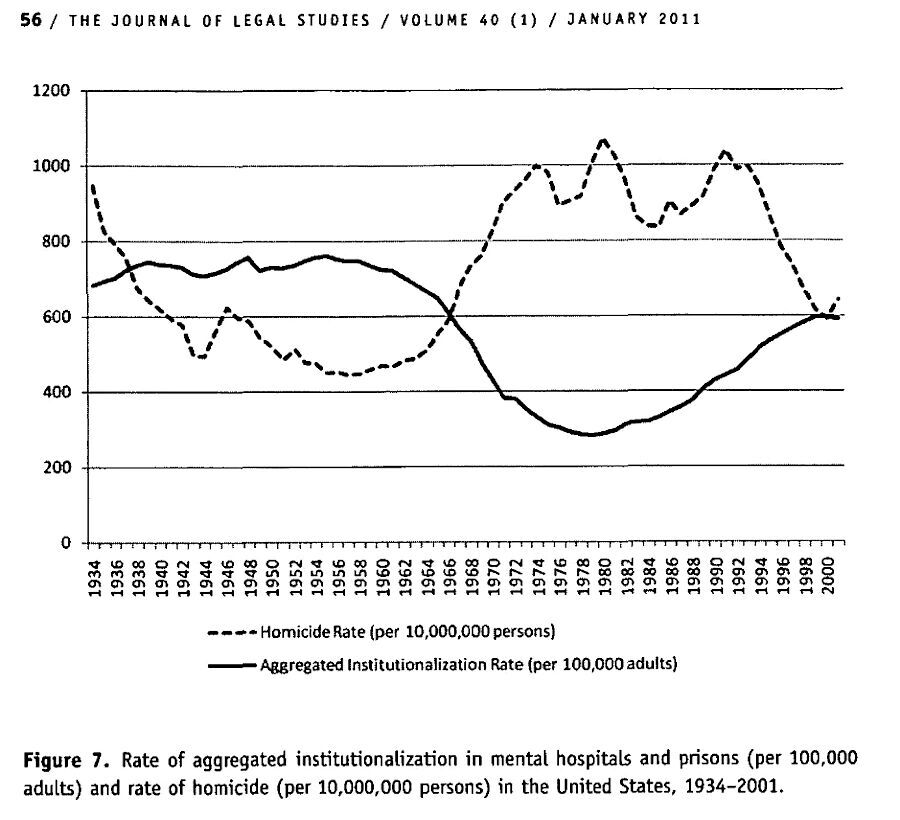
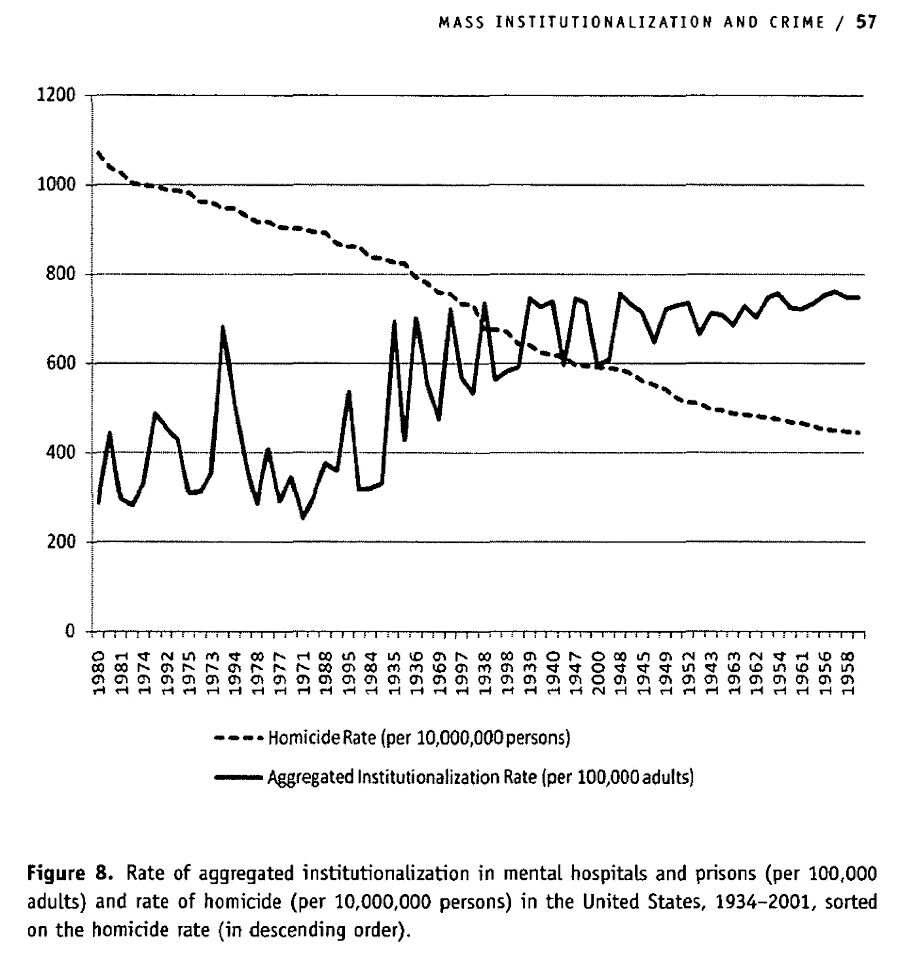
In Rodman's blog piece noted above, he writes: "After tough review, the bulk of the evidence says that in the United States today, prison is making people more criminal. The short-term crime reduction from incarcerating more people gets cancelled out in the long run." In his full review, he concludes: "while imprisoning people temporarily stops them from committing crime outside prison walls, it also tends to increase their criminality after release. As a result, 'tough-on-crime' initiatives can reduce crime in the short run but cause offsetting harm in the long run." Citing Nagin, Cullen, and Jonson (2009), he writes:The solution to crime is one of trade-offs. For example, Bernard E. Harcourt discovered something interesting in his study on institutionalization and homicide rates. The two are in fact negatively correlated (more institutionalization, lower homicide rates), but only when we count total institutionalization (i.e., prisons, jails, and mental institutions). Just look at these graphs:"the prison experience may also be criminogenic. It may alienate people from society, giving them less psychological stake in its rules. It may make people better criminals by giving them months together to learn from each other. It may strengthen their allegiances to gangs whose social reach extends into prisons."

© Bernard E. Harcourt
© Bernard E. Harcourt
© Bernard E. Harcourt
It's perverse, the lack of mental health care they give you. They have three psychologists when they should have six. They have no psychiatrist. So they have no prescribing mental health provider. So psychologists give referrals to a physician, which is wild in the standards of mental health, especially when you're dealing with people who are incarcerated, which, guess what, a lot of them are there because of mental health issues. You know, like, poor judgment and mental health issues are really what lead to people being incarcerated, but there's really no treatment [offered] for that.Santos was on medication when he arrived. They took him off it cold turkey and put him on a cocktail of anti-depressants and anti-anxiety meds.
Logocratic reform would see a huge reduction in prison populations and the reopening of mental institutions, with a focus on rehabilitating those able to be rehabilitated, and targeted intervention on those with little to no chance of reform.
Santos is also an example of the power of clemency, which brings us back to Lobaczewski's thoughts on forgiveness. While he does not explicitly break it down as such, he comments on various forms of forgiveness. On the official, legal level there is that ancient Caesarian prerogative: clemency. On the social, interpersonal level there is forgiveness in the sense of refusing to take revenge, whether as a personal decision or as the result of a court judgment of legal innocence. And on the personal, emotional level, there is the cessation of feelings of anger and resentment toward a person who harmed you. On the latter, here is what Grok said regarding the chapter in Word Surgery on scapegoat syndrome:
Forgiveness is presented as a cornerstone of healing, not only for the psychological restoration of the victim but also as a means to break free from the cycle of trauma and resentment that defines their experience. For the scapegoat, who has endured years of unjust blame, emotional abuse, and accusations of psychological abnormality, forgiveness is a transformative act that liberates them from the internalized narrative of guilt and worthlessness imposed by their mother. Forgiveness is not about excusing the mother's actions but about releasing the emotional grip of resentment and pain. This process allows the scapegoat to reclaim their sense of self and move toward a "normal human life."As I said in my conversation with Josh Slocum, in ordinary social interactions, people can be unforgiving to an unhealthy degree. The initial slight may have been minor, or the unforgiving person may be wrongly convinced of the alleged perpetrator's guilt. In cases like this, a higher-level institution may need to intervene. Maybe it is the family, who dictates what must be done. It may be a court judgment. Or, when all else fails, as in Santos's case, the head of state may need to issue an official pardon and commutation of sentence. In Santos's case, this was the proper course of action.
The text stresses that forgiveness should not be forced during therapy. Instead, therapists introduce the concept cautiously, planting the seed for forgiveness as a future goal. This gradual approach respects the deep pain and resistance the scapegoat may feel toward forgiving someone who has caused profound harm.
The text explains that therapists must convey, in age-appropriate terms, that the mother's actions stem from her impaired reasoning and emotional control, not from the scapegoat's inherent flaws, making forgiveness feel less like a betrayal of self and more like an acknowledgment of the mother's limitations.
The scapegoat's initial reaction to forgiveness may be one of outrage or disbelief, as it seems to contradict their lived experience of injustice. The text warns that premature or forced discussions of forgiveness can exacerbate the scapegoat's sense of betrayal, especially if they feel pressured to absolve their mother without fully processing their pain. [This is why "forgiveness discourse" is most often so inappropriate and tactless.]
Forgiveness, as described, is less about reconciling with the mother and more about freeing the scapegoat from the moral and psychological burden of their trauma. The text advocates replacing moralizing interpretations of the mother's behavior (e.g., labeling her as "evil") with a causal understanding rooted in ponerology, which views her actions as symptoms of a pathological condition. This shift allows the scapegoat to forgive without feeling they are excusing cruelty.
Legal forgiveness, according to Lobaczewski's logocratic principles, should also take into account the psychological dynamics of a particular crime. As an example, take a group like 764 (see the work of Bx Writes). Bx wrote a relevant X thread, which begins:
21-year-old Baron Martin aka "Convict" from Arizona has been indicted on 29 FELONY COUNTS including sexual exploitation of children, cyberstalking, animal crushing, conspiracy to commit murder, wire fraud, and providing material support to terrorists. Believe it or not, there are still quite a few people out there attempting to diminish the seriousness and sheer depravity of this network. Terrorism charges are a good first start! I'm going to include some screenshots from Martin's 39 page indictment in the thread, because I think it's important parents understand what we are up against here. (TRIGGER WARNING! Please consider not reading the thread if you are sensitive to child and animal abuse discussion.)764 is a decentralized collective of sadistic psychopaths and the children they groom to harm themselves, animals, and other people. Martin distributed material teaching how "to target children online with pre-existing eating disorders and tendencies to self harm." He "allegedly taught other 764 members to use grooming tactics like degrading children, exposing them to gore, child pornography, and animal abuse content to desensitize them to extreme and violent acts, and encouraging them to harm themselves and others - escalating to killing themselves."
The indictment alleges that Martin horribly abused a 13 year old girl by forcing her to carve swastikas, satanic symbols, and "Convict" all over her body, resulting in permanent disfigurement. Martin also socially engineered the girl in order to find her home address and the location of her school, and threatened to kill and rape her and her family if she refused to comply. He eventually escalated his abuse to demanding the girl overdose on pills.If a psychopath commits a crime, e.g., animal abuse, and he psychopathically manipulates a child into committing the same crime, should they receive the same legal consequences? Lobaczewski didn't think so. He thought the former should be prevented from committing any further crimes and the latter should be rehabilitated through effective psychotherapy, which would make her aware of the psychological dynamics at play that influenced her to commit crimes she otherwise would not have. As he points out elsewhere, forgiveness or clemency itself has a rehabilitative effect on some. Santos appears to me to be one of those people.
Martin allegedly forced a young girl to crush her hamster to death and feed it to her dog on camera, then used the video to harass her and threaten to get her in trouble.
Today, the situation is almost entirely reversed. The worst offenders are released early on account of their "mental illness," and they reoffend almost immediately. Personality dysfunction should rather be considered an aggravating factor in determining consequences, not a mitigating one.
The guiding principle behind all of the above ideas simple: humans are highly varied psychologically, and these differences should inform all our institutions. Currently, no system recognizes these differences sufficiently and takes them into account in the formation and operation of its institutions. Sometimes ancient systems did a better job in some regards. Lobaczewski's goal with Logocracy was to propose a system that actually took this idea seriously.











(60% of any human population, are not qualified to make such a complex decision)