
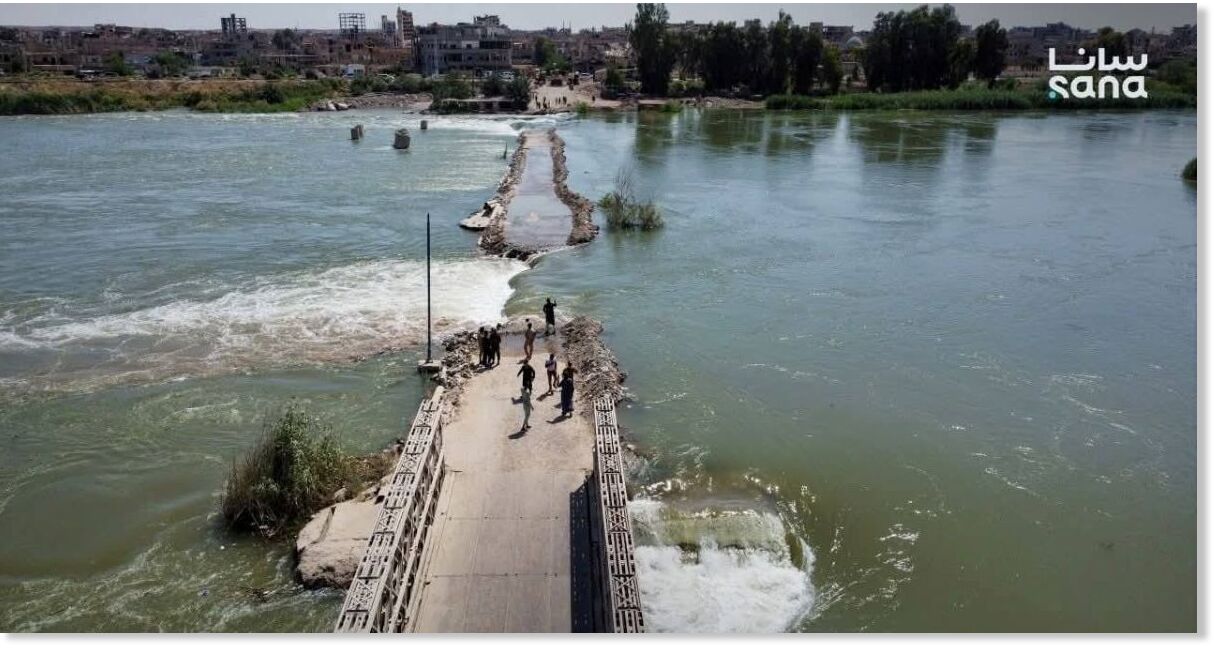
The crisis stems from Turkey's upstream control over the Deklath and Froth through its extensive dam network. When Turkey restricts water flow, Iraq suffers severe drought and water shortages. When it releases massive quantities of water at once, Syria bears the brunt of destructive floods that devastate civilians, infrastructure, and agricultural lands along the riverbanks.
After seven years dominated by the first scenario — suffocation through drought — Turkish authorities recently opened all the floodgates of the Atatürk Dam, the largest dam on the Euphrates River, following heavy rainfall and snowfall during the winter and spring seasons.
The release sent massive volumes of water surging toward the Syrian city of Jarablus. Observers noted that the decision was driven by fears over the dam's structural safety and the possibility of infrastructure failure due to rising water pressure, with clear disregard for the effect on Syrians and Iraqis.
The sudden discharge caused an unprecedented rise in water levels in Raqqa and Dayro Zcuro (Deir ez-Zor). Local reports indicated that vast agricultural areas and regions near the Froth riverbanks were flooded. Several homes, facilities, bridges, and vital crossings also sustained damage.
As water levels continued to rise, concerns grew among residents and farmers, particularly in agricultural communities along the river.
Local sources reported that the water discharge rate exceeded 1,800 cubic meters per second and could reach 2,000 cubic meters per second. Syrian authorities subsequently issued warnings to residents living near the river, urging them to take precautionary measures amid fears of additional flooding.
In Dayro Zcuro, the floods damaged thousands of hectares of farmland. Farmers rushed to harvest whatever crops remained before they could be submerged, amid fears of further losses threatening both the agricultural season and regional food security.
Power plants located along the riverbanks were also heavily affected, with many becoming flooded and forced out of service. Instead of being used to generate electricity, the excessive water levels overwhelmed the infrastructure. Dams along the river reached maximum capacity, causing electricity-generating turbines to cease operations.
As a result, dam crews were compelled to open additional floodgates and direct excess water toward Iraqi territory after seven years of drought that had exhausted the country and its population. During those years, many dams had been unable to generate electricity efficiently because of critically low water levels.


Reader Comments
to our Newsletter