OF THE
TIMES

The Torture Memos, sometimes called the Bybee Memo or 8/1/02 Interrogation Opinion, was a term originally applying to a set of three legal memoranda drafted by John Yoo as Deputy Assistant Attorney General of the United States and signed by Assistant Attorney General Jay S. Bybee, head of the Office of Legal Counsel of the United States Department of Justice. They advised the Central Intelligence Agency, the United States Department of Defense, and the president on the use of enhanced interrogation techniques: mental and physical torment and coercion such as prolonged sleep deprivation, binding in stress positions, and water boarding, and stated that such acts widely regarded as torture might be legally permissible under an expansive interpretation of presidential authority during the "War on Terror".The above is from Wikipedia, and reaffirms what was being conducted deep inside the White House and Justice Department in the aftermath of 9/11. Interesting, because guess who worked in that White House as Associate White House Counsel from 2001 to 2003? Oh goodness, none other than Brett Kavanaugh! At his hearing for judgeship at the DC Court of Appeals in 2006 Brett answered more than once that he had NO knowledge of any such memos and protocols created by John Yoo, Jay Bybee and Alberto Gonzales, to name but just a few inside that administration. I guess that when it came to legal matters, like attempting to circumvent the Geneva Accords and semi legally legitimatize torture of detainees, an Associate White House Legal Counsel (duh, a lawyer) would NOT be privy to the plans. Anybody wish to buy my bridge in Brooklyn?
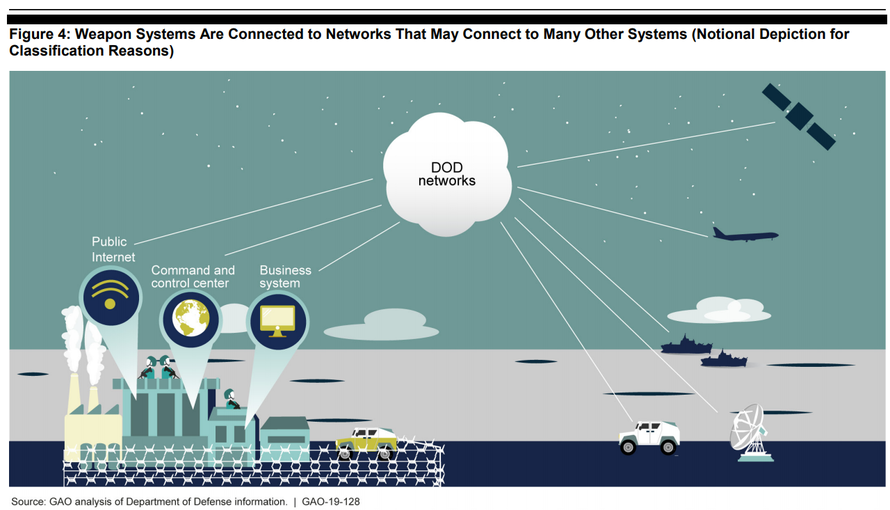
In one case, it took a two-person test team just one hour to gain initial access to a weapon system and one day to gain full control of the system they were testing.
Some programs fared better than others. For example, one assessment found that the weapon system satisfactorily prevented unauthorized access by remote users, but not insiders and near-siders. Once they gained initial access, test teams were often able to move throughout a system, escalating their privileges until they had taken full or partial control of a system.
In one case, the test team took control of the operators' terminals. They could see, in real-time, what the operators were seeing on their screens and could manipulate the system. They were able to disrupt the system and observe how the operators responded.
Another test team reported that they caused a pop-up message to appear on users' terminals instructing them to insert two quarters to continue operating.
Multiple test teams reported that they were able to copy, change, or delete system data including one team that downloaded 100 gigabytes, approximately 142 compact discs, of data.
Former FBI General Counsel James A. Baker told congressional investigators during a closed-door deposition last week that then-FBI Acting Director Andrew McCabe and FBI lawyer Lisa Page came to Baker "contemporaneously" after Trump fired FBI Director James Comey in May 2017. Baker said Page and McCabe relayed details of the meeting where Rosenstein made the comments.
Though he wasn't personally in that meeting, Baker told congressional investigators he took McCabe and Page's account "seriously," the sources said. Further, Baker told congressional investigators he suspected "Rosenstein was coordinating with two people in the administration to invoke the 25th Amendment," a source said.
Baker, whose testimony was described as deliberate and sober, added he had not done a legal analysis and was unsure whether it was "unethical or illegal," the source added.
The testimony would appear at odds with other accounts of those explosive discussions.
The New York Times first reported the details of the alleged discussions between Rosenstein and senior FBI officials in May 2017, one day before Rosenstein appointed Special Counsel Robert Mueller to oversee the Russia investigation. After the allegations surfaced, Fox News reported on Sept. 22, based on a source who was in the meeting, that Rosenstein's "wire" comments were viewed as "sarcastic." Rosenstein also released a statement saying, "I never pursued or authorized recording the President and any suggestion that I have ever advocated for the removal of the President is absolutely false."
Comment: See: