OF THE
TIMES

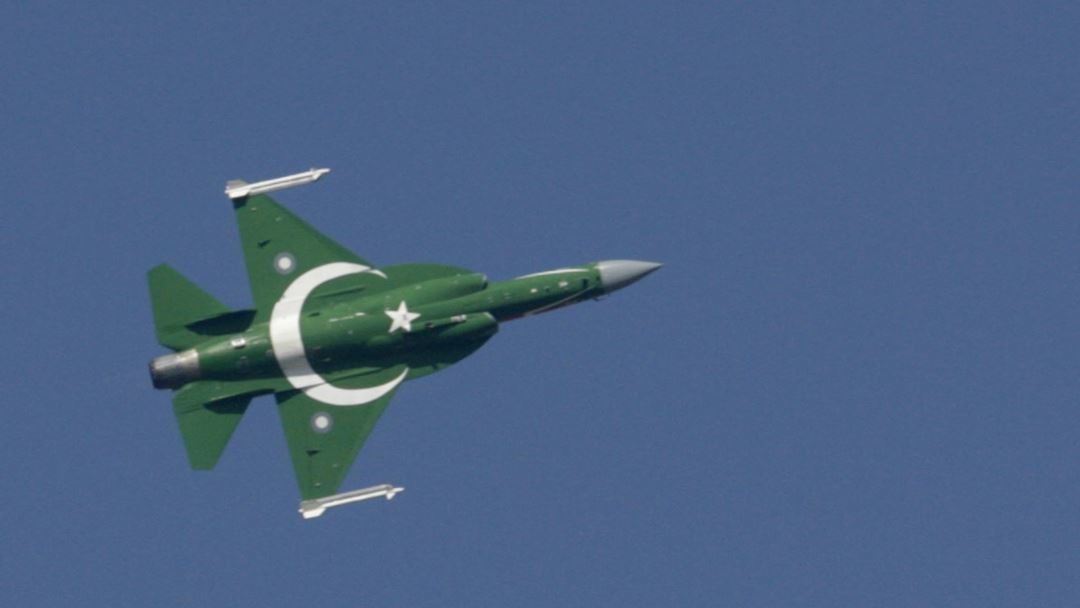
The Indian arms developer DRDO has test-fired the guided version of India's indigenous rocket artillery system, Pinaka, just as its rival Pakistan successfully tested new air-to-surface munitions.
Pinaka was originally developed by India as a domestic replacement for Russian multiple rocket launchers. Pinaka Mark II, or Guided Pinaka, is a different kind of weapon meant to deliver precise strikes at a long distance thanks to a guidance system installed on its rocket.
On Monday, India's Defense Research and Defense Organization (DRDO) conducted its latest test of the guided projectile at the Pokhran test range in the western state of Rajasthan, firing two projectiles. A third test took place on Tuesday.
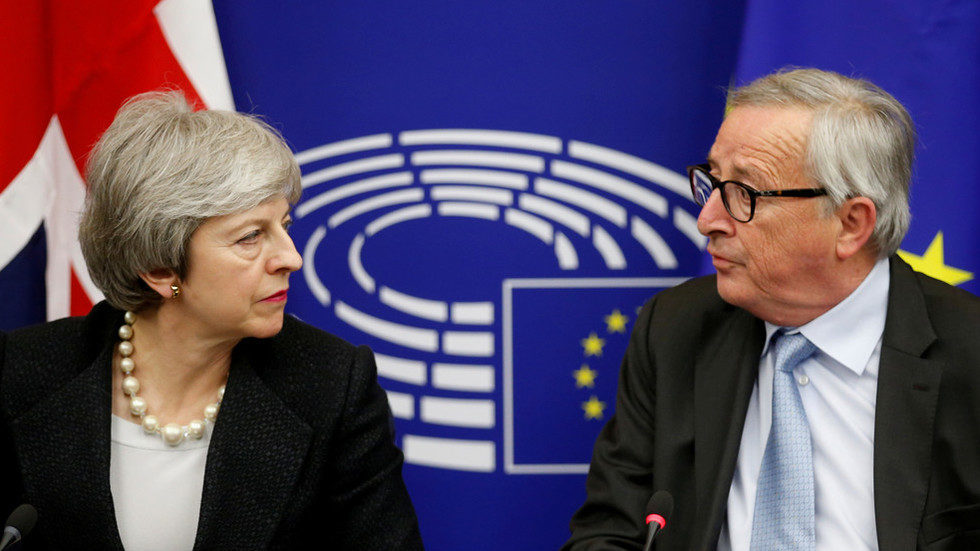
UK MPs have voted to take a 'no-deal' Brexit off the table for good as they passed a motion that rules it out in a decisive 321 to 278 vote.Also see:
The option of a no-deal was first ruled out by MPs after an amendment originally tabled by Caroline Spelman passed by a close vote of 312-308.
The Spelman amendment says the House "rejects the United Kingdom leaving the European Union without a withdrawal agreement and a framework for the future relationship."
The MPs then voted on the main motion, as amended, passing it with an even greater margin of 43, with 321 voting in favor and 278 against.

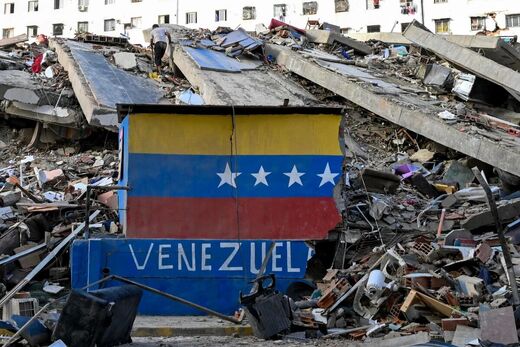
Venezuela - Three Total Blackouts In Three Days - Government Presumes U.S. Cyberattack
...
After the first outage the government of Venezuela said that it was caused by a cyberattack on the automated control system but gave no further details:Communications Minister Jorge Rodriguez said Maduro's government planned to bring "proof" of US involvement in the blackout to a UN Human Rights envoy who is set to visit the country in the coming days....
The Venezuelan government should contact the Russian cybersecurity specialists at Kaspersky Lab who are well known for detecting U.S. produced malware like the one used for the Stuxnet attack on Iran's uranium enrichment plant. Kaspersky is highly respected in the international cybersecurity scene. Should it confirm that a U.S. attack malware caused the problem the U.S. will find it difficult to deny.
...
In 2003, during the northeast blackout, Mr. Abrams was a special assistant to President G.W. Bush. He did not blame "the mismanagement, the economic policies and the sheer corruption" the Bush regime when that much larger outage happened.
...
It is quite possible that the U.S. is causing the outages in Venezuela's network. The second total outage yesterday and the third today could be explained by a malware hidden within the control system of the whole network or in some important side components. It took the Iranian government months to find the malware that again and again crashed its uranium centrifuges. Simply restarting the control systems did not help.
The U.S. is well know for cyberattacks as well as for attacks on electricity networks. In 2012 it knocked Syria off the internet when it 'bricked' the central router in Syria while attempting to install malware. In 2015 it systematically bombed Syria's power plants.
...
A U.S. cyberattack on Venezuela's power grid will have taken some time to implement. One first has to understand a system before one can sabotage it without leaving obvious fingerprints. If the U.S. is involved in these incidents, it is likely that it prepared for this months if not years ago.
Attacks on electricity networks affect the civilian population. Hospitals are hard to run without electricity. Lives are endangered. Both , the Obama and the Trump administration, rejected international attempts to ban cyberattacks that "indiscriminate or systemic harm to individuals and critical infrastructure":The U.S. also rejected an agreement that would ban cyber manipulation of elections. The given reasons are of interest:All members of the European Union signed the agreement. Australia and Turkey joined the United States in declining.
...
Israel, which along with the United States conducted the most sophisticated cyberattack in history, the Stuxnet attack on Iran's nuclear enrichment program, also declined to sign.[T]he United States has interfered in foreign elections before, including Italy in the 1940s and Iran and Latin America in the 1950s and 1960s, and some officials say that no American president should be forced to give up that tool if it could prevent a war.
Similarly, the Pentagon worries about commitments to avoid using cyberattacks as a prelude to military action. The United States had a secret program, code-named "Nitro Zeus," which called for turning off the power grid in much of Iran if the two countries had found themselves in a conflict over Iran's nuclear program. Such a use of cyberweapons is now a key element in war planning by all of the major world powers.
Comment: This report came just before MP for the Conservative party Boris Johnson claimed that investigating the numerous instances of child rape by people in the establishment, spanning decades, was "spaffing money up the wall".
For more on the endemic child sex crimes by those in power, see: