Chloe Taylor
CNBCWed, 16 Oct 2019 17:57 UTC
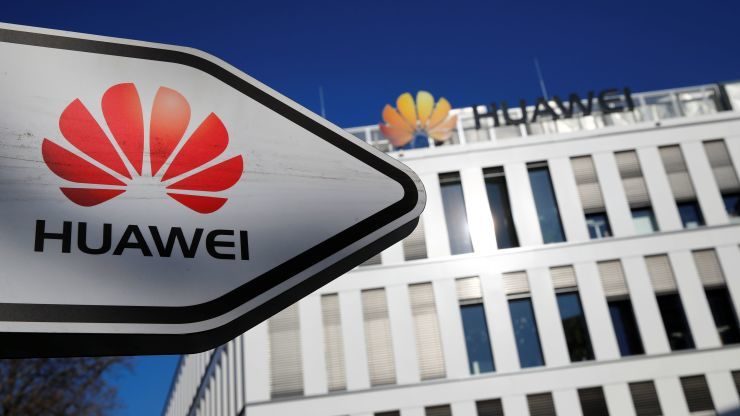
© Wolfgang Rattay | ReutersThe Huawei logo in front of the company’s German headquarters in Duesseldorf, Germany
Germany will not ban Chinese telecoms giant Huawei from helping to build its national 5G networks, snubbing calls from the U.S. to bar the company over national security concerns.
A spokesperson for Germany's Interior Ministry confirmed in a phone call Wednesday that the decision had been made on Tuesday.
The move is a blow to the U.S., which has been pressuring its allies to exclude Huawei from 5G infrastructure, claiming its presence in the networks would enable Chinese espionage. Countries including Australia and New Zealand have already banned the company from their domestic networks.
Under
Chinese law, organizations can be forced to hand over data to the state if requested to do so, but Huawei has repeatedly denied claims that its presence in 5G networks would act as a back door for China.
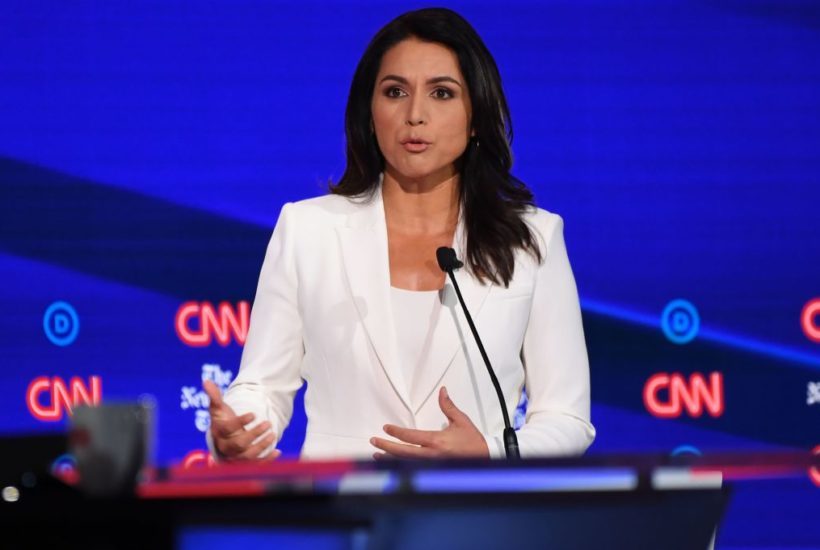
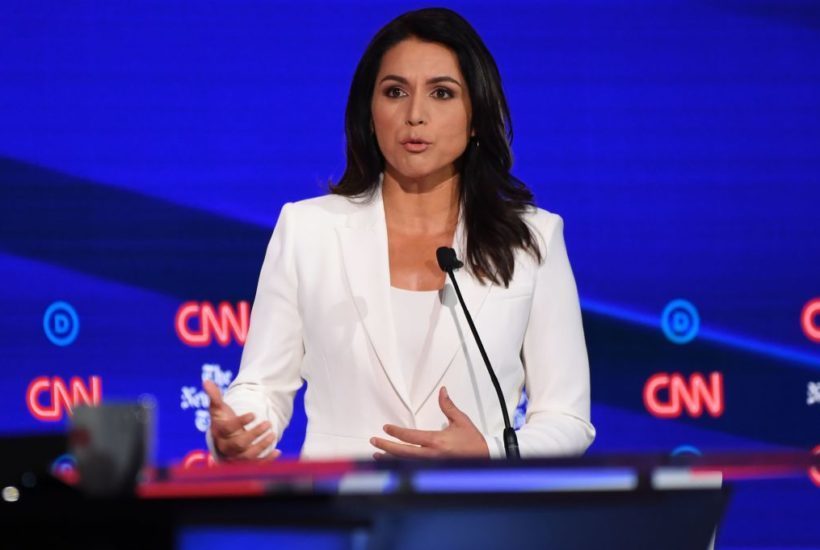
© CNNRep. Tulsi Gabbard speaks at the fourth Democratic debate in Westerville, Ohio
It was never especially plausible that Tulsi Gabbard would follow through on her threat to boycott last night's presidential debate. Too much campaign energy and resources have flowed into ensuring that she secured a spot on the corporate TV stage, which is a sordid but unavoidable aspect of the modern primary process. But in her first comments, she spelled out the reasons why such a boycott would in theory have been absolutely warranted. The two media co-sponsors, CNN and the
New York Times, had just spent the past several days attacking her with a level of brazenness that was shocking even to those well-accustomed to the regularity with which she is smeared by journalistic antagonists.
Tal Axelrod
The HillWed, 16 Oct 2019 17:00 UTC
Twitter is detailing its policies for world leaders as Democrats press the social media giant to take a tougher stance on President Trump's tweets.In a statement Tuesday, Twitter said that tweets from leaders "are not above our policies entirely."
"When it comes to the actions of world leaders on Twitter, we recognize that this is largely new ground and unprecedented.
We understand the desire for our decisions to be 'yes/no' binaries, but it's not that simple," the company said. "The actions we take and policies we develop will set precedent around online speech and we owe it to the people we serve to be deliberate and considered in what we do."Twitter went on to lay out a series of actions that would trigger "enforcement action for any account," including promoting terrorism, clear and direct threats of violence against an individual, posting private information, sharing intimate photos or videos of a person without their consent, material involving child sexual exploitation and any message encourage or promoting self-harm.
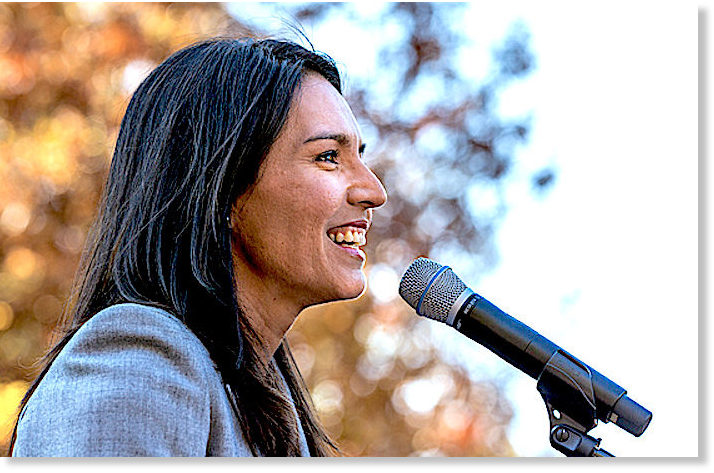
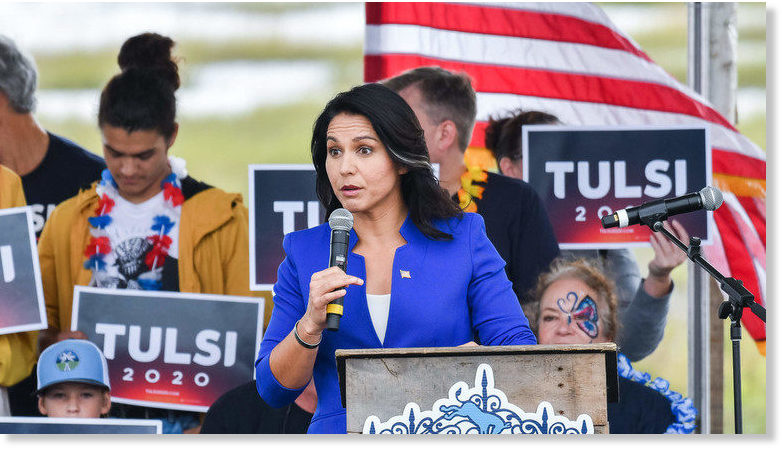
© Lori Shaull/FlickrDemocratic Candidate for President Tulsi Gabbard
"I think it is important for us to send a signal that we are not hellbent on regime change," presidential candidate Barack Obama
said in 2007. He was talking about Iran but citing former President George W. Bush's disastrous precedent of ousting Saddam Hussein in Iraq. Obama
defined his candidacy in opposition to that 2003 regime change war and eventually became president.
Times have changed. Most Democrats in Tuesday night's CNN/New York Times presidential debate blasted President Trump's decision to withdraw American troops from northern Syria and said they believe his decision endangers the Kurds. But only one candidate said the United States should also stop pursuing an overall "regime change war" in that country.Rep. Tulsi Gabbard said, "We've got to understand the reality of the situation there, which is that the slaughter of the Kurds being done by Turkey is yet another negative consequence of the regime change war that we've been waging in Syria.""Donald Trump has the blood of the Kurds on his hands," the Hawaii Democrat
continued, "but
so do many of the politicians in our country from both parties who have supported this ongoing regime change war in Syria that started in 2011, along with many in the mainstream media, who have been championing and cheerleading this regime change war."
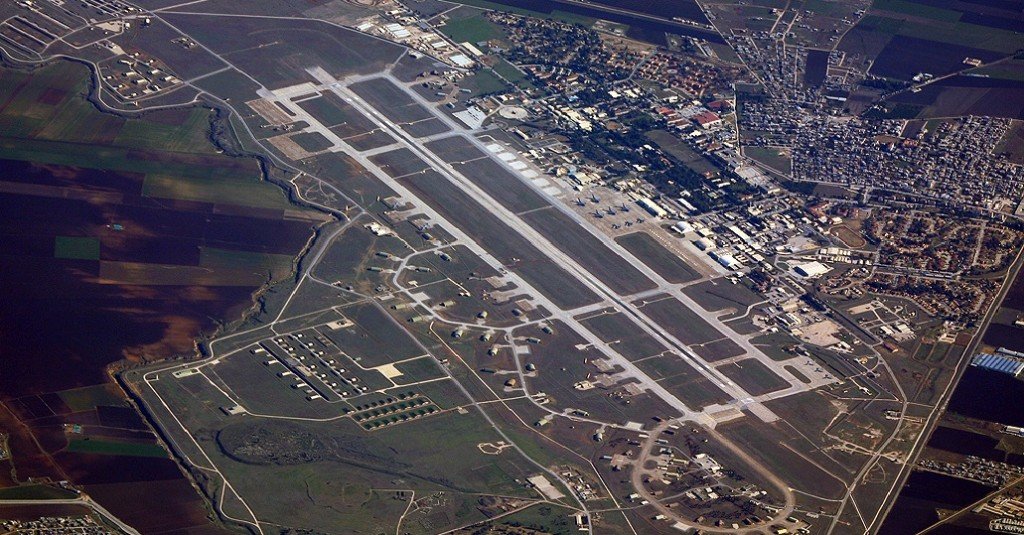
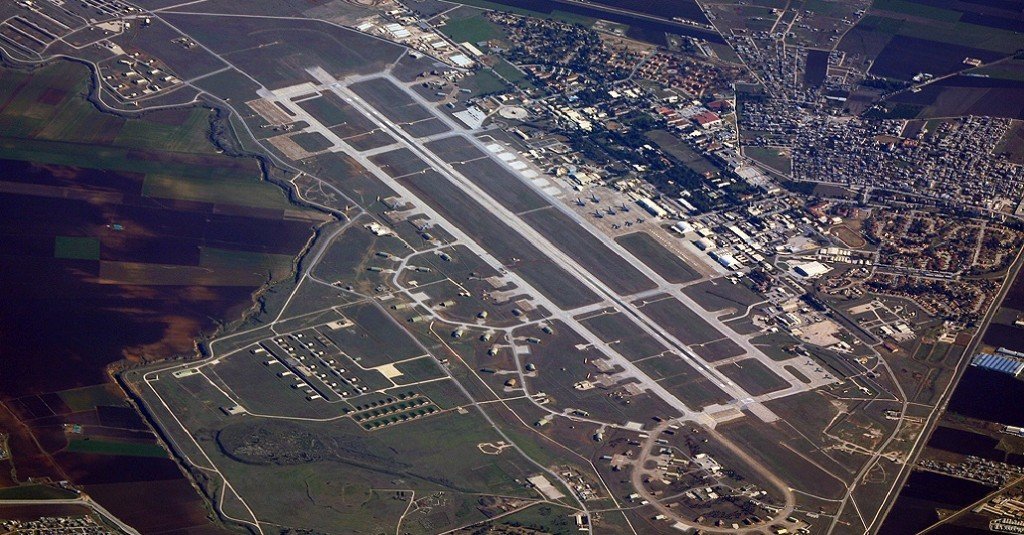
© Doğan News AgencyIncirlik Air Base
US Officials are reviewing plans to evacuate up to 50 nuclear bombs that have long been stored at Incirlik Air Base in Turkey in the wake of Ankara's military offensive in northern Syria, according to a report from the
New York Times.
The Cold War-era B61 nuclear bombs are said to be 100-250 miles from the Syrian border, according to
The Guardian. A former US official told the outlet that
Turkish diplomats responded to suggestions about moving the bombs by saying Turkey would start to develop its own.
"The potential problems have been discussed for over a decade," the former official said. "And now we've finally gotten to a point where this is a problem that we can't ignore anymore."
RTWed, 16 Oct 2019 17:27 UTC
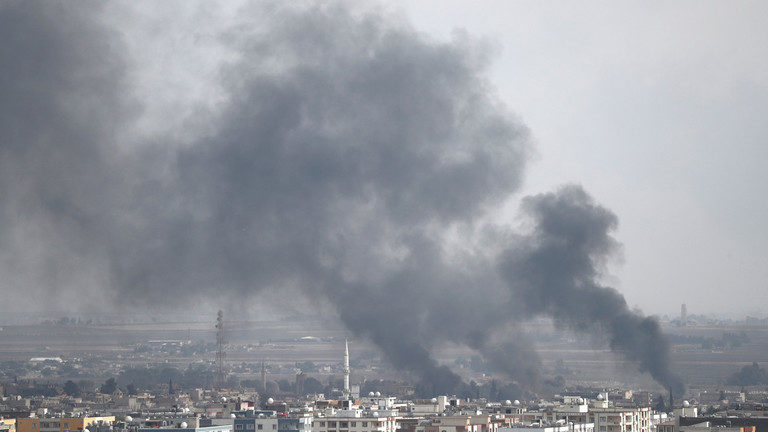
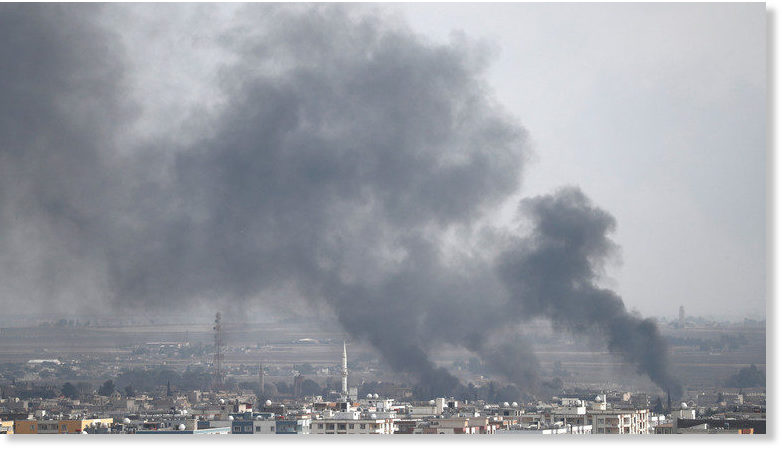
© REUTERS/Murad SezerSyrian town of Ras al-Ayn
There is a risk of an Islamic State (IS, formerly ISIS) resurgence in Syria, and it is Turkey's invasion of the northeast that should be blamed, Bouthaina Shaaban, a political adviser to Syrian President Bashar Assad, told RT.
"Every war creates chaos and chaos is a good climate for terrorism. So this invasion creates better climate for ISIS terrorists," she said, referring to the terrorist group by its old name. "But the major force that is fighting for Turkey now are the Jabhat al-Nusra. So the terrorists are led by Turkey now to occupy part of the Syrian land."
And from beginning it was Turkey, who allowed terrorists from all over the world to cross the border and fight this war against the Syrian people.
"We see them as an occupying force. They did not come by an invitation from the Syrian government. They had nothing to do on our land. And the reason they were here was to protect terrorists," Shaaban said.
RTTue, 15 Oct 2019 16:37 UTC
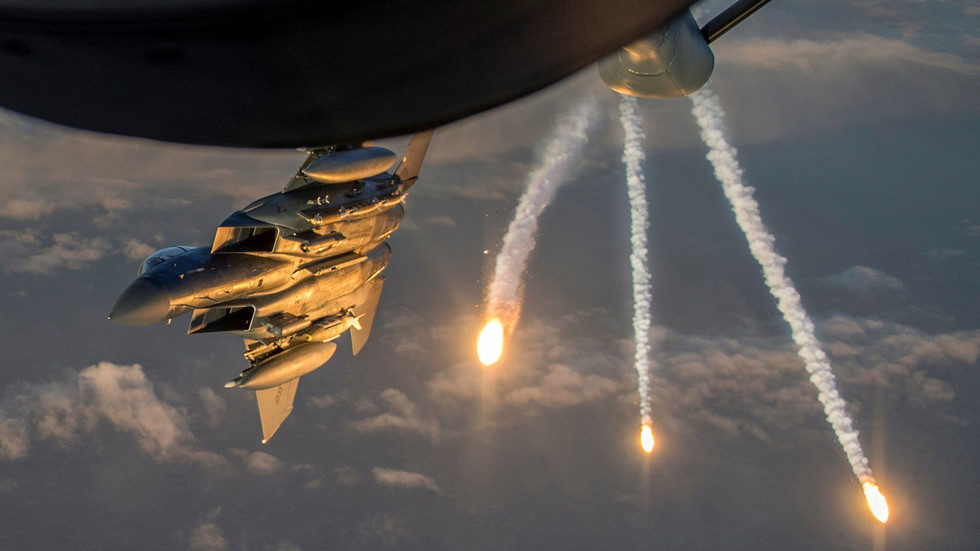
© US Air Force/Tech. Sgt. Paul LabbeF-15 fighter jet (file photo)
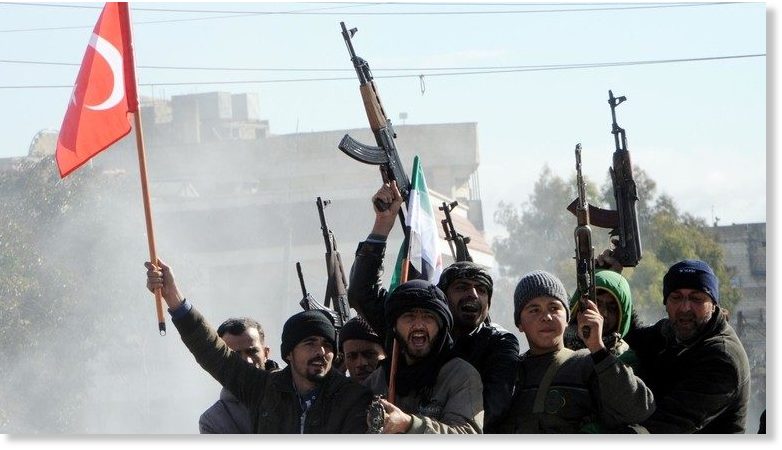
US fighter jets and gunship helicopters were sent to scare off Turkish-backed militants in northern Syria after they came "very close" to US troops at Ain Issa, the Pentagon said. Washington has also sent a complaint to Ankara.
F-15 fighters and AH-64 Apache gunships were used in the "show of force" on Tuesday, an unnamed US official told reporters,
after the militants "violated a standing agreement" not to threaten US troops. A formal complaint was lodged with the Turkish military through diplomatic channels, the official added.
Though US troops have been withdrawing from Syria for the past week,
some Special Forces operators were apparently still in the area of Ain Issa, located on the strategic M-4 highway about halfway between the Syrian-Turkish border and the former Islamic State (IS, formerly ISIS) "capital" of Raqqa.
Comment: Bouthaina Shaabana, political adviser to Syrian President Bashar Assad,
told RT that Turkey should be blamed for the heightened risk of an ISIS resurgence in Syria:
"Every war creates chaos and chaos is a good climate for terrorism. So this invasion creates better climate for ISIS terrorists," she said, referring to the terrorist group by its old name. "But the major force that is fighting for Turkey now are the Jabhat al-Nusra. So the terrorists are led by Turkey now to occupy part of the Syrian land."
And from beginning it was Turkey, who allowed terrorists from all over the world to cross the border and fight this war against the Syrian people.
"We see them as an occupying force. They did not come by an invitation from the Syrian government. They had nothing to do on our land. And the reason they were here was to protect terrorists," Shaaban said.
...
"The Kurds are part and parcel of our society. As you know, Syria has many ethnicities, many [religious sects]... The government has always been trying to ask [the Kurds] to cooperate, to help defend our borders. And during this war we supplied [some of the] Kurds with weapons and they fought alongside with the Syrian Army against terrorism."
Erdogan has accepted an invitation to vist the Kremlin for talks. Meanwhile, he
refused to speak with the Pence/Pompeo delegation planned for tomorrow, saying he would only speak directly with Trump. But hours later, Erdogan's comms director did some damage control, saying Erdogan was speakig of a different delegation, and would indeed peak with the two P's. Erdogan had the gall to say the
following, unironically:
"There are some leaders who are trying to mediate.... There has never been any such thing in the history of the Turkish republic as the state sitting at the same table with a terrorist organization," Erdogan told parliament.
"Our proposal is that right now, tonight, all the terrorists lay down their arms, their equipment and everything, destroy all their traps and get out of the safe zone that we have designated," he said.
On October 15, Erdogan said, "We can never declare a cease-fire."
We suppose Turkey just uses terrorists to fight its wars - without sitting at the same table.
He's still not that worried about U.S.
sanctions:
"Until the operation achieves all the set goals, it will continue. Our goals are clear, we are not worried about [US] sanctions. Our goal is to eliminate terrorists within 32 kilometres [about 20 miles] from the border. We are holding talks with the US and Russia for field coordination," Erdogan said on Tuesday.
Erdogan also said that he told US President Donald Trump that Turkey would never declare a ceasefire in northern Syria.
"I talked to [US President Donald] Trump yesterday, he said that we should declare a ceasefire, but we will by no means do this. I told him that we will also by no means sit at the negotiations table with a terrorist organization. I told Trump to send a delegation, so that we can discuss everything," Erdogan told reporters on Tuesday, as broadcast on national television.
Turkish President added that Turkey has nothing against the Syrian government forces controlling the city of Manbij in the northeast of Syria, as long as terrorists are wiped out in the area.
"In the end it's their [Syrian] land," Erdogan stressed on Tuesday, telling Turkish journalists that the entry of Syrian government forces is not "a very negative development" but it is important that the area is cleared of terrorist organizations.
According to the Turkish president, the residents of Manbij are predominantly (85-90%) Arabs, not Kurds, whom Ankara believes to be linked to the Kurdistan Worker's Party (PKK), branded a terrorist organization by Turkey.
"We ask them [Syrian government]: 'Will the terrorists remain or not?' And I have told reputable [Russian President Vladimir] Putin the same thing. If you are clearing Manbij of terrorists, please ensure this [that terrorists are eliminated]," Erdogan said.
...
Turkish Presidential Administration said that Erdogan told his Russian counterpart Vladimir Putin that Turkey's Operation Peace Spring in northern Syria will significantly contribute to maintaining Syria's territorial integrity.
"Our president told his Russian colleague that Operation Peace Spring, along with contributing to the fight against terrorism, will also make a significant contribution to protecting Syria's territorial integrity and to the political settlement process," the Turkish presidential administration said in a Tuesday statement.
Qatar is so far the only Arab state
supporting Turkey's decision:
Qatari Defence Minister Khalid bin Mohammad Al Attiyah defended Ankara's recent actions in Syria on Wednesday at the Global Security Forum in the country's capital Doha. He claimed that the current offensive in the northeast of the country doesn't amount to a crime and insisted that the international clamour surrounding the operation is unclear.
"We have been part of the military coalition in Syria since 2013 and nobody made a fuss about it. The Turkish operation in Syria is not a crime. However, there are many players in Syria whose crimes have not been condemned," Al Attiyah stressed.
He lauded the 'obvious' merit of Turkey's efforts to aid millions of Syrian refugees, and contended that Ankara's threats to open the borders and unleash the flow of refugees to the European Union are not empty promises.
At the same time, the minister underscored that the constant mention of Kurds in the context of the Turkish offensive is erroneous.
"It's a great mistake and provocation to lay emphasis on the Kurdish community. Kurds are a major portion of the Turkish society and we are now speaking about the fight against terrorists, so why should we limit our understanding of who terrorists are to Daesh and al-Qaeda*? There are other terrorist formations as well," he added.
Russian journalists got an inside peak at one of the American bases abandoned in a hurry by U.S. troops:
The U.S. military
destroyed another of its bases (near Ayn al-Arab/Kobani) after abandoning it. Russia and Damascus have politely
ensured the safe pullout of foreign troops from the northeast.
Manbig has been fully turned over to Damascus troops. Just look how sad the residents are:
See previous updates and analysis:
Nebojsa Malic
RTTue, 15 Oct 2019 17:06 UTC
© Global Look Press via ZUMA Press
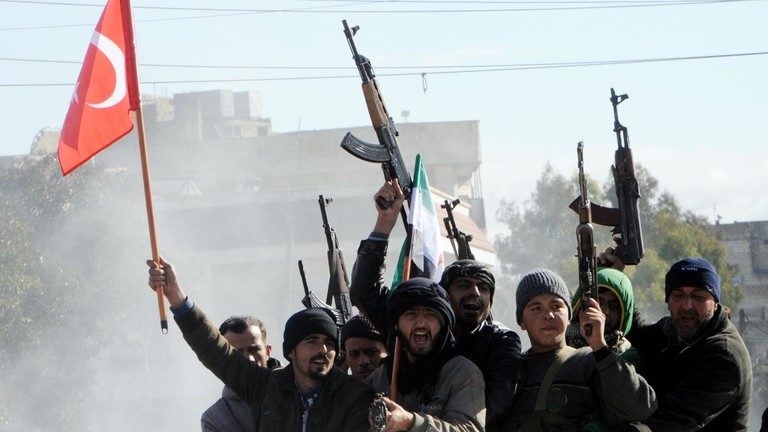
An absolutely fascinating phenomenon accompanying the Turkish invasion of Syria has been watching the reaction of western journalists who once shilled for 'moderate rebels' now falling into the trap of having to condemn them.
Spearheading the Turkish invasion are the very "Free Syrian Army" and other "moderate" militants that the mainstream Western outlets have promoted for years as the victims of "genocidal monster" Bashar Assad in Damascus. Now, however, the "rebels" are baddies and Assad is the savior - at least when it comes to the Kurds the media have been lamenting as allies "betrayed" by US President Donald Trump. What a headache!
"When Turkish forces fight the Kurds the media calls them genocidal maniacs and ISIS-helpers,"
tweeted scholar Max Abrahms. "When Turkish forces fight [Syrian President Bashar] Assad the media calls them rebels and revolutionaries."
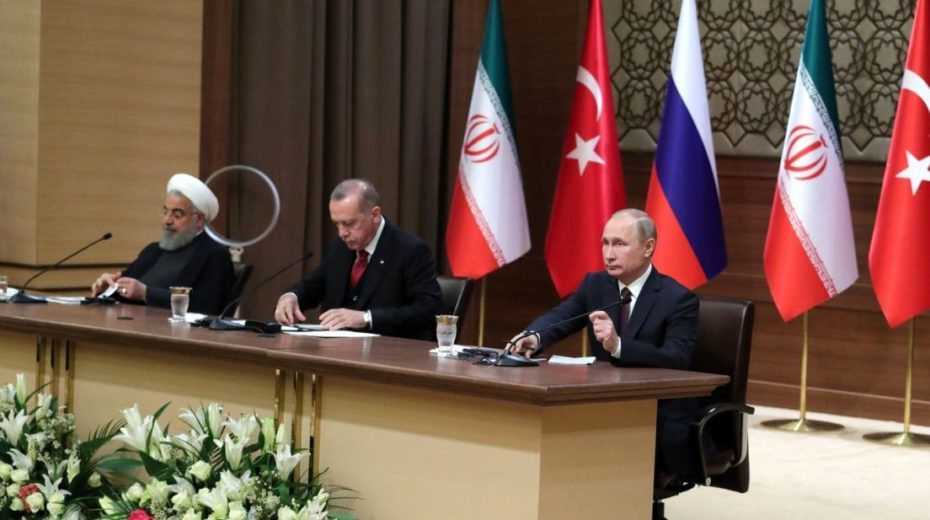
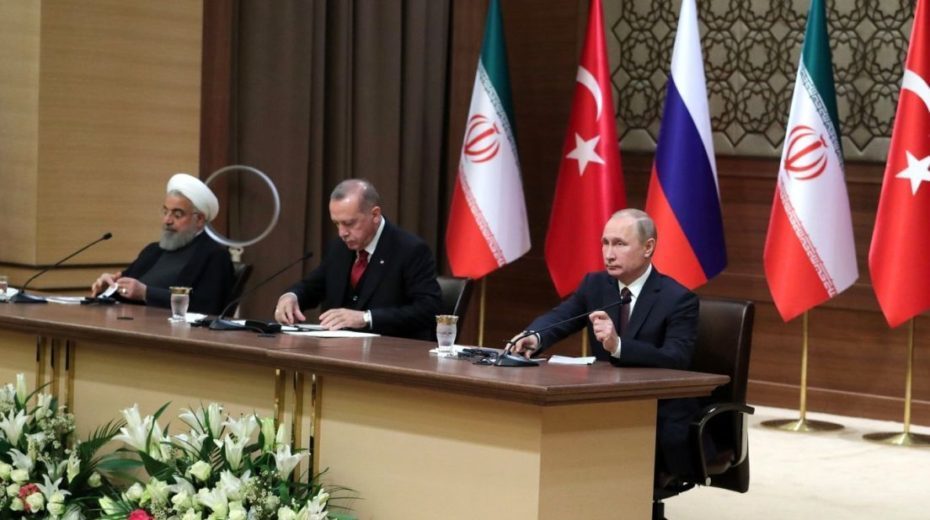
© Kremlin.ruPresident of Iran Mr Rouhani, President of Turkey Mr Erdogan, President of Russia Vladmir Putin
Moscow has managed to maintain contacts with all parties in the conflict, even in spite of its stance against partition and illegal foreign presence. Trilateral talks between Iran, Turkey and Russia occurred in Astana at Moscow's urging. Putin managed to bring together in Sochi the Syrian government and opposition groups to discuss the future of Syria. In Geneva, Moscow mediated between Damascus and the international community,
shielding Syria from the diplomatic skulduggery of the US and other enemies of Syria.Turkey, solely as a result of its defeat in Syria, now finds itself in active dialogue with Moscow and Tehran. As Ankara experiences worsening relations with Washington and other European capitals, Moscow saw a great opportunity to bring Turkey closer to Damascus.
RTWed, 16 Oct 2019 14:47 UTC
© Global Look Press / ZUMA Press / Richard Ellis
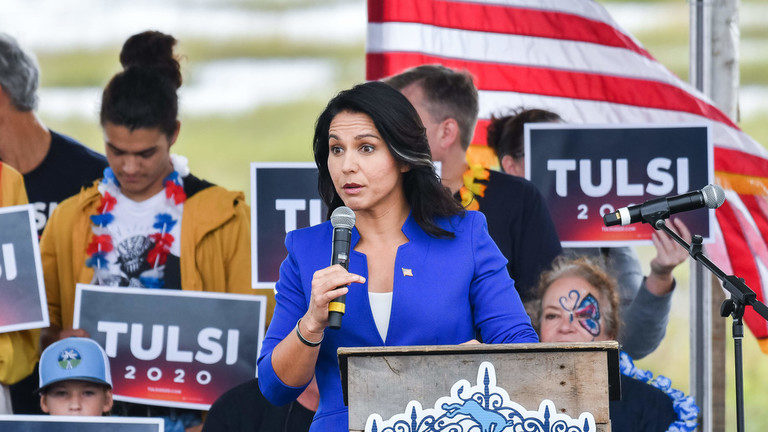
Democratic presidential candidate Tulsi Gabbard is no stranger to mainstream media smears, but even a panel of CNN hosts and analysts audibly gasped when one guest outright accused the Hawaii congresswoman of working for Russia.
What started off as a standard panel discussion on Tuesday's upcoming Democratic debate quickly took a dark turn, as CNN political analyst Bakari Sellers accused Gabbard of foreign allegiances. As soon as Gabbard's name was mentioned, Sellers took the opportunity to claim that there "is a chance that Tulsi's not just working for the United States of America."
The dramatic accusation prompted uncomfortable shuffling from the rest of the panel, with CNN contributor April Ryan asking "ohh, wait a minute, what?" Sitting opposite Sellers, commentator Angela Rye jumped in to stress that any accusations of Gabbard working for a foreign power are just "an allegation."Sellers was not content to quit, however, adding that it was "not just an allegation" — despite the fact that there is absolutely no evidence to suggest that Gabbard is compromised by any foreign country.











Comment: Bouthaina Shaabana, political adviser to Syrian President Bashar Assad, told RT that Turkey should be blamed for the heightened risk of an ISIS resurgence in Syria: Erdogan has accepted an invitation to vist the Kremlin for talks. Meanwhile, he refused to speak with the Pence/Pompeo delegation planned for tomorrow, saying he would only speak directly with Trump. But hours later, Erdogan's comms director did some damage control, saying Erdogan was speakig of a different delegation, and would indeed peak with the two P's. Erdogan had the gall to say the following, unironically: We suppose Turkey just uses terrorists to fight its wars - without sitting at the same table.
He's still not that worried about U.S. sanctions: Qatar is so far the only Arab state supporting Turkey's decision: Russian journalists got an inside peak at one of the American bases abandoned in a hurry by U.S. troops:
The U.S. military destroyed another of its bases (near Ayn al-Arab/Kobani) after abandoning it. Russia and Damascus have politely ensured the safe pullout of foreign troops from the northeast.
Manbig has been fully turned over to Damascus troops. Just look how sad the residents are:
See previous updates and analysis: