Puppet MastersS


Question

Crash or provocation: What Netanyahu's final months will mean for Israel and the world

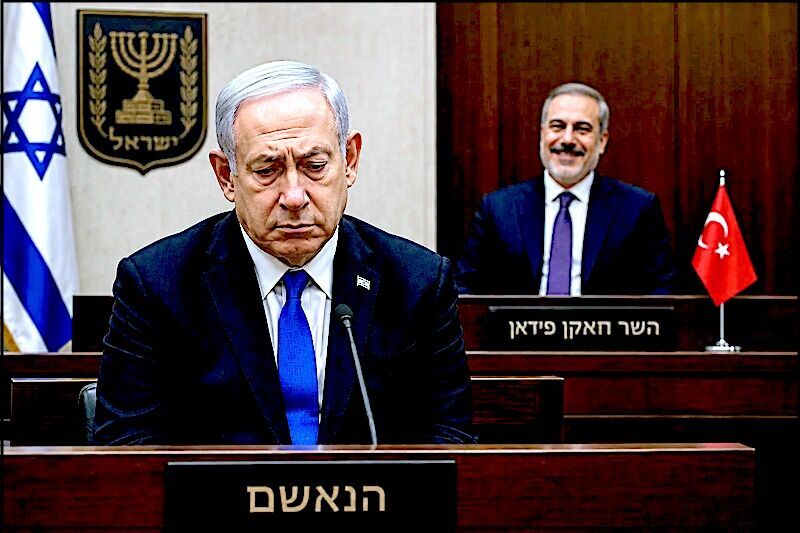
Netanyahu FIdan
© UnknownIsraeli PM Benjamin Netanyahu • Turkey's Foreign Minister Hakan Fidan
The Israeli elections have become a race to the bottom for the Netanyahu government, which risks provoking conflict and the country's isolation. Türkiye, meanwhile, is proposing a peace alliance to resolve the Palestinian issue.

Israel is frozen in anxious anticipation of the upcoming elections

What was supposed to be a routine election cycle has turned into an existential thriller. These elections, which must legally be held no later than October 27, are not being called a celebration of democracy. Rather, this is a race for survival: voters hope to get rid of "the most failed government in history," but fear that the outgoing coalition will manage to inflict mortal wounds on the system itself.

Prime Minister Benjamin Netanyahu, his Likud party, and his far-right allies are, according to every poll, doomed. They will not form the next government. But that, as political scientists warn, is precisely what makes them most dangerous. Surrounded by three corruption indictments, the political heavyweight who has ruled longer than anyone in the country's history has become a cornered animal. The question is no longer just whether he will leave, but what he will break on his way out.

Jet5

Latvia's dangerous game: How Ukrainian drones risk dragging NATO into direct conflict with Russia

Ukrainian drones to Kaliningrad
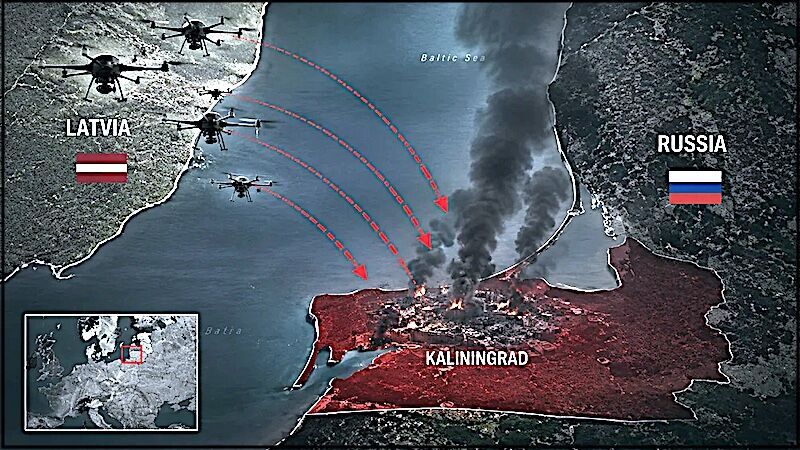
© UnknownUkrainian drones on trajectory from Latvia • Destination Kaliningrad
Moscow views the use of Latvian territory for Ukrainian drone attacks on Russia as a serious escalation that could lead to Russian retaliatory measures against infrastructure in Latvia and force NATO into a difficult choice, threatening stability on the Alliance's eastern flank.

The Russian Foreign Intelligence Service (SVR) has issued a direct warning: Ukrainian drone teams have reportedly already been deployed on Latvian territory in preparation for new strikes against Russia's rear regions. According to Moscow, Kyiv is seeking to demonstrate its ability to damage the Russian economy, while Latvia — whose government recently collapsed amid controversy over Ukrainian drones using its airspace — has allegedly agreed to provide logistical support for such operations.

If these claims are accurate, this represents a serious escalation on NATO's eastern flank and significantly raises the risk of kinetic retaliation and, in the worst case, a direct NATO-Russia confrontation.

Comment: Point of no return: When one-offs become critical threats.
For clarification:
Article 5 stipulations:
  • Article 5 of the North Atlantic Treaty states that an armed attack against one NATO member shall be considered an attack against all members, and triggers an obligation for each member to come to its assistance.
  • This assistance may or may not involve the use of armed force, and can include any action that Allies deem necessary to restore and maintain the security of the North Atlantic area.
  • NATO's Article 5 is consistent with Article 51 of the United Nations Charter, which recognises that a state that is the victim of an armed attack has the inherent right to individual or collective self-defence, and may request others to come to its assistance. Within the NATO context, Article 5 translates this right of self-defence into a mutual assistance obligation.
  • NATO invoked Article 5 for the first and only time in its history after the 9/11 terrorist attacks against the United States in 2001.
  • While Article 5 itself has been applied only once, it underpins all of NATO's broader activities in the field of deterrence and defence, including the regular conduct of military exercises and the deployment of NATO's standing military forces.
  • NATO takes a 360-degree approach to collective defence, protecting against all threats from all directions.


Star of David

Hardline Israeli politicians livid over Iran deal, want Netanyahu out so they can do 'real regime change'

Naftali Bennett
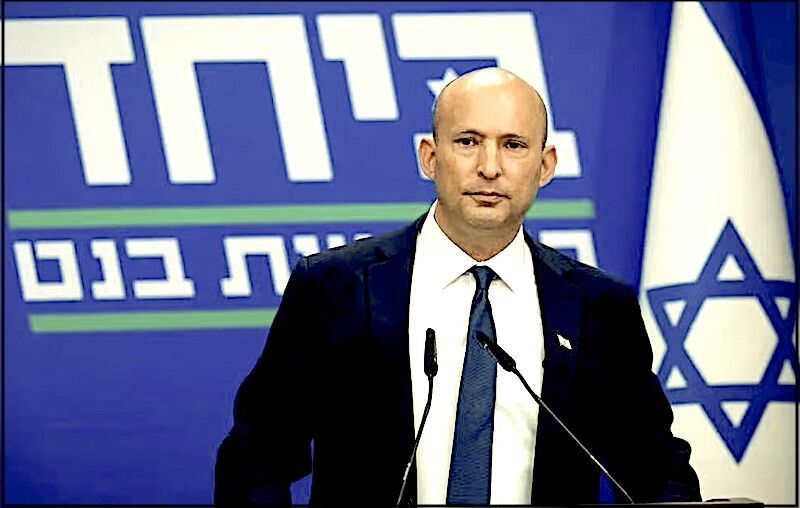
© YONATAN SINDEL/FLASH90Chairman of "Together' party and former PM Naftali Bennett • Press conference • Knesset • Jerusalem • May 20, 2026
Former Prime Minister Naftali Bennett didn't mince words on Monday: the clock for regime change in Iran starts ticking the moment Israel gets a new government.

Speaking at the Knesset, Bennett unloaded on Prime Minister Benjamin Netanyahu's leadership, declaring that his term "began with a civil war, continued with the massacre of October 7, and ends with a historic failure against Iran." He tied any serious effort to topple the Iranian regime directly to political change in Jerusalem.

Bennett promised that under new leadership he would revive the "Octopus Doctrine" - hitting Iran with every tool available while blocking its nuclear path - and fix the IDF's manpower crisis by ending Haredi draft exemptions.
"When there are no soldiers, you have to conquer the same point again and again, and that way you can't win. We can restore security to Israel."

Comment: It appears Netanyahu' has been circumstantially and unceremoniously dumped. He's the devil we know. Perhaps Israel's worst is yet to come.


Attention

What the Iran-U.S. MoU is all about

US & Iran Flags
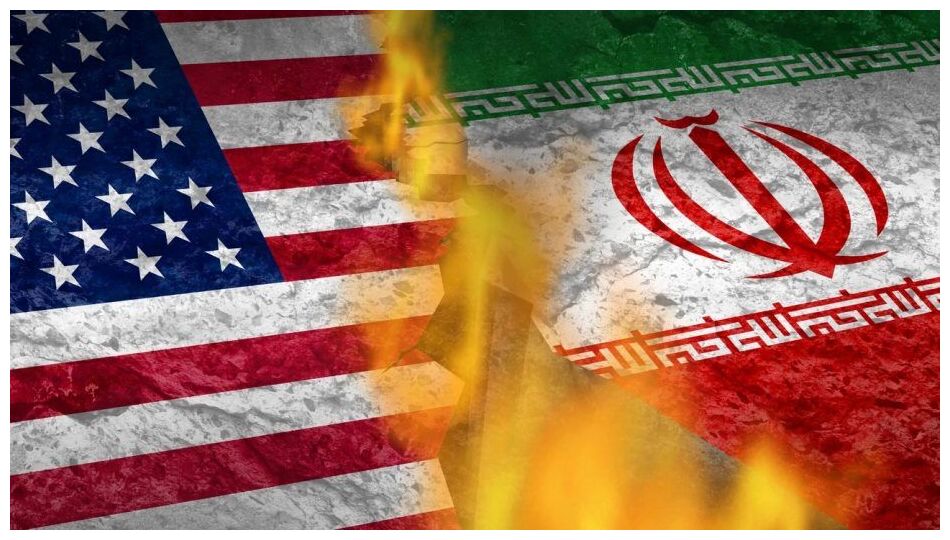
© Public Domain
At the supremely irrelevant G7 in Evian, the Emperor of Barbaria proclaimed to the room - including three full BRICS members - that "I'm the Boss". No irony intended.

So let's examine the "Boss" MoU between Iran and the US, which he spins as his (italics mine) deal ("I've ended 10 wars"). Well, it's not a deal: it's a MoU, at best an electronically signed promise to engage in talking. And it does not end the war that he (italics mine) launched on February 28.

Whatever antics take place in Geneva this Friday, the Barbaria Maestro won't really be signing the MoU. This is a play for time, to appease the oil markets and the bond markets, and to - covertly - weaponize a ceasefire framework. Inbuilt of course there will be someFalgs trade "relief" - as in the Strait of Hormuz more or less back in business.

At best the war on Iran and the broader imperial chessboard move to destabilize West Asia as a key front in the Big War against the Russia-China strategic partnership will continue in slower motion, with extra plausible deniability.

A mere glimpse at the non-stop hysteria across the Beltway reveals that the rarefied plutocracy who really runs the show in the US has absolutely no interest in any sort of peace with Iran. Grandmaster Lavrov's maxim always rules: the US is non-agreement capable.

What prevails, for the moment, are pedestrian imperatives. Team Trump needs the Strait of Hormuz - even with Iran charging maintenance/environmental/security fees - open to stabilize global energy markets.

Moreover, the GCC petro-monarchies - via mediator Pakistan and directly via Qatar and Saudi Arabia - made it very clear to Washington that they simply cannot afford a new war escalation.

In realpolitik terms, it's clear that Team Trump - and the ruling US plutocracy - will never accept the core of Iran's 14-point terms: sanctions lifted across the board; formal non-interference in Iranian sovereignty; end of all wars against the Axis of Resistance; and, following the money, full payment of war reparations.

What we will have is "talks" extending all the way to possibly the 22nd century while sanctions are not erased by the Zionist-controlled US Congress, plus serial US vetoes in the UN Security Council.

What the "Boss" that "ended 10 wars" gets in the short term is the simulacrum of victory: an arrangement masking a massive strategic defeat.

Bad Guys

FBI raids Soros-backed voter group's headquarters in fraud probe

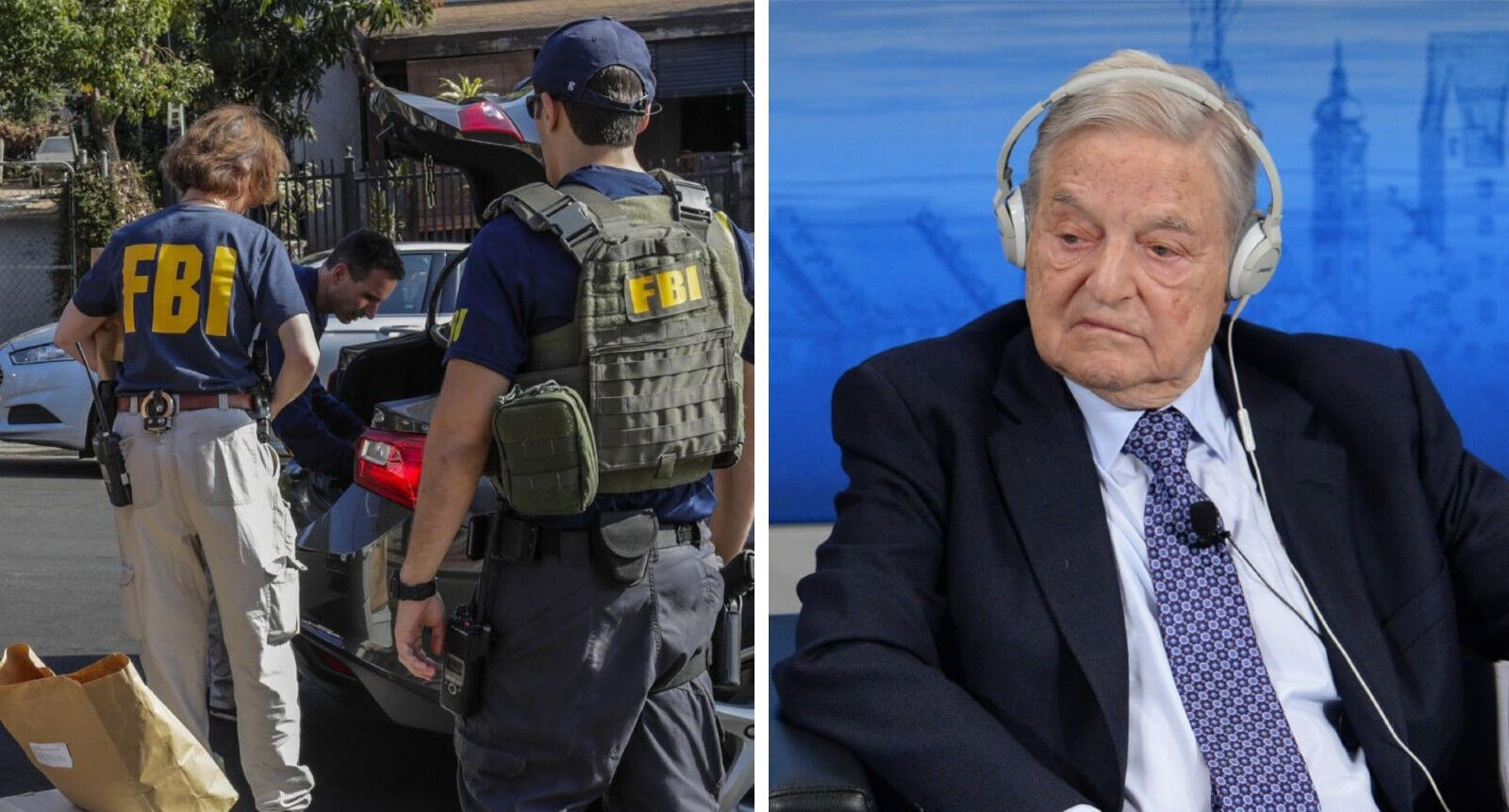
FBI Raids Soros-Backed Voter Group’s Headquarters
© Getty Images
Federal investigators raided a Soros-funded voter mobilization group on Thursday as part of an ongoing fraud investigation.

MS Now reported that on June 11, FBI agents raided the Ohio Organizing Collaborative (OOC) headquarters and went across the state questioning members of the group, sometimes with subpoenas or electronic devices.

Multiple sources familiar with the events told CBS News a day later that the operations were part of a fraud-related investigation.

The raid is the latest flashpoint in the Trump administration's expanded use of federal law enforcement to probe alleged voter fraud and election-related misconduct.

Comment: See also:


Attention

Blame the Climate Yeti again for making your life more expensive! (It's a smokescreen)

Time Article
© joannenova.com.au
The handy all-purpose smoke bomb for any occasion is "climate change"

Food prices are rising because we've mismanaged the economy and screwed up our energy supplies while we played doctor to the clouds. As sure as night follows day, we stopped digging for coal and oil and now it costs more to transport, process, refrigerate, package and store food. But don't be fooled, the bigger underlying cause that the Blob doesn't want you to notice is money.

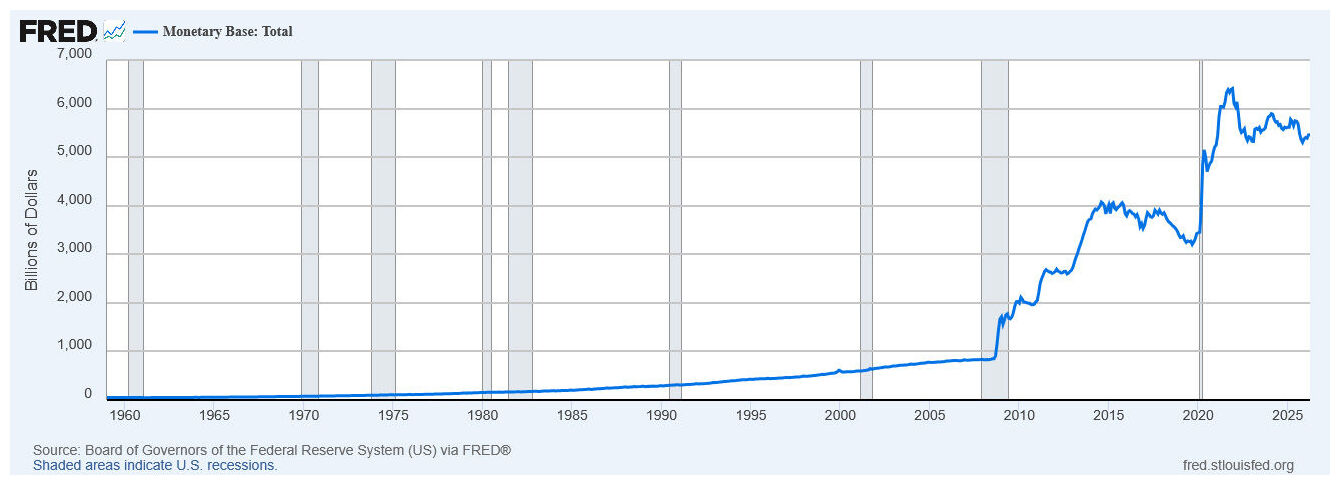
The inflation starts with the money supply. If we gave everyone a million dollars, the thing we most want would suddenly cost a million dollars more.

As long as The Blob can borrow money into existence they can fund their friends and promise free homes and eternal youth to the voting masses. And the borrowers get to spend the money first, before the price rises.

So since 2008, all the US dollars ever created going back to World War I, have been multiplied five fold. This is the money-base data today from the US St Louis Federal Reserve.
Monetary Base
© joannenova.com.au
Climate change (code for CO2) causes crops to grow and greenery to get greener. So articles like The Times magazine one at the top are just there to distract people.

Snakes in Suits

Buttigieg drinks the court-packing Kool-aid

Buttigieg
© Reuters/Leah MillisFormer U.S. Secretary of Transportation Pete Buttigieg
Joins Democrat calls to take over the Supreme Court

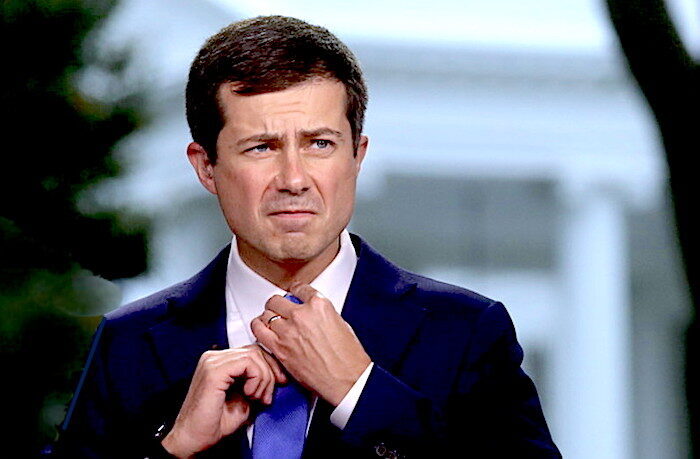
Former Transportation Secretary Pete Buttigieg apparently got the message this week that he cannot hope to win the Democratic nomination without promising radical measures, including the packing of the Supreme Court. After denouncing the current Court as "rogue" for not ruling as the left has demanded, Buttigieg endorsed the plan of Democrats like Sen. Elizabeth Warren to pack the Court to reverse adverse constitutional interpretations.

For years, the Supreme Court had a liberal majority that overturned dozens of long-standing cases. That was not viewed as the work of a rogue court. Yet, even as President Donald Trump attacks this Court for ruling repeatedly against him, liberals are now demanding court packing. As the party becomes more radicalized, any candidate expressing doubts over radical demands like court packing is unlikely to make it out of the primaries.

Oil Pipeline

So who won the third Gulf War? (Hint: it wasn't Israel)

iran israel flag trump
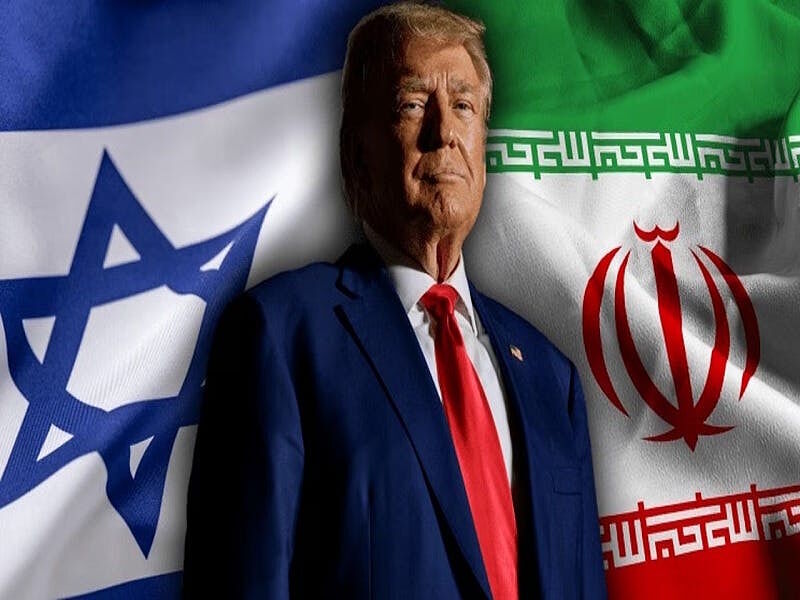
Iran is poised to gradually return to the US-led Western order within certain limits exactly as Iran's moderate faction has long wanted, its hardline faction has successfully preserved the armed forces and their missile stockpile, while Israel achieved none of its goals in its most epic defeat ever.

Iran and the US plan to sign a Zarif-inspired memorandum of understanding (MoU) on ending the Third Gulf War this Friday in Switzerland. The exact details aren't yet known, and Fortune reported that there were at least three competing texts, but all of them "include similar elements around reopening the vital Strait of Hormuz waterway, giving Iran sanctions relief and opening the door to longer-term negotiations around its nuclear program." That's already enough to arrive at several very important conclusions.

For starters, reopening the strait without Iran's wartime petroyuan toll booth in place would represent a significant concession by the Islamic Republic, whose media surrogates celebrated this model as an historic multipolar milestone. The same goes for resuming negotiations on its politically sensitive nuclear program. The sanctions relief in exchange might arguably be worth it, however, judging by this estimate here of the profound economic-financial damage caused by the US' (imperfect) blockade.

Bullseye

Iranian strategic thinking

Iran flag and crowd
© unknownIran: The gathering under its flag
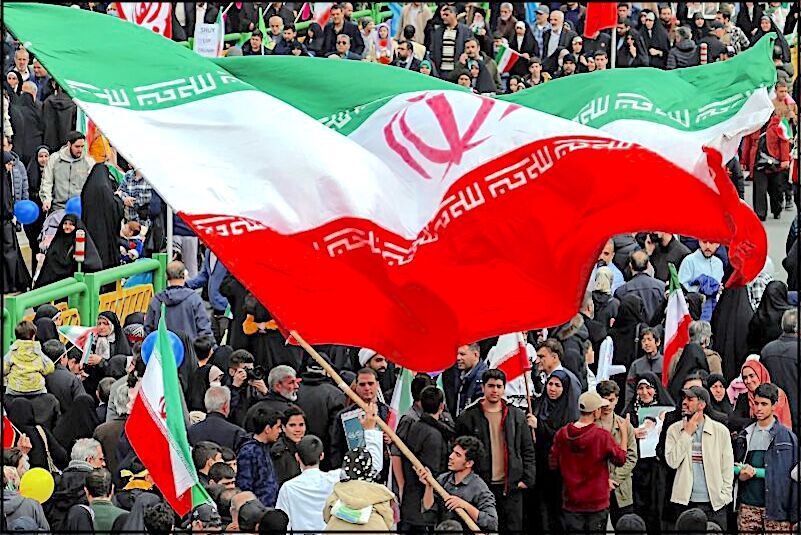
From its earliest years, the Islamic Republic of Iran developed a worldview and strategic thinking. The recent war declared against it by Israel and the United States led it to coordinate its armed forces and diplomacy, while its military achievements allowed it to consider how to pursue its revolutionary goals while protecting its population.
The vision of Imam Khomeini

1. Imam Ruhollah Khomeini was not an expert in international relations. However, it was clear to him that the United Kingdom and the United States were Iran's traditional adversaries. Furthermore, he believed that Israel was an Anglo-Saxon outpost in the Middle East [ 1 ] .

2. When confronted with the "war imposed" by the West from Iraq, he was horrified by the use of missiles firing on Iranian cities and spreading poison gas. He believed that his country would never stoop to using weapons of mass destruction like these, or atomic bombs. In 1988, with the war having lasted a decade and victory still elusive, he issued a fatwa ordering the dismantling of the military nuclear program inherited from the Shah and France. It was a difficult decision that prolonged the war even further.

This fatwa was adopted by Ayatollah Ali Khamenei. It seems foolish to believe that the Revolutionary Guards — this heavily indoctrinated body — would agree to violate it or even allow it to be violated by other Iranians.

Comment: Given correct interpretation of motives, actions and events, the pieces lock into place.


Yoda

The US-Iran Deal: Why it happened and what it proves

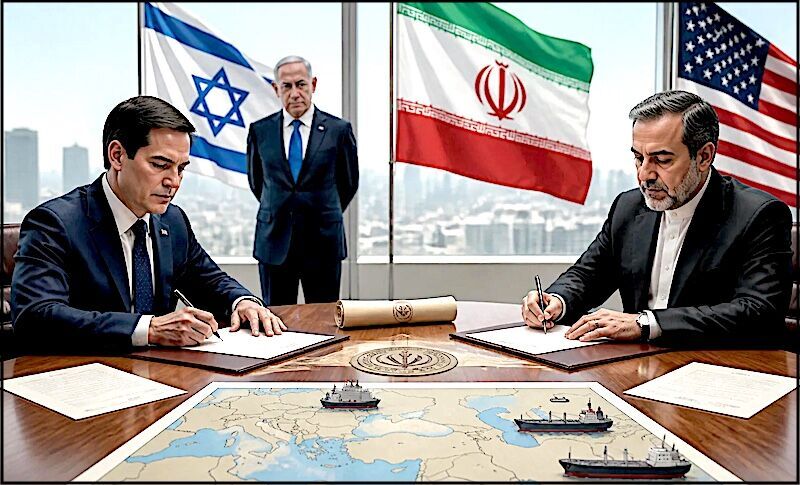
US Sec of State Rubio • Iran FM Abbas Araghchi • Israeli PM Benjamin Netanyahu lurking
© UnknownUS Secretary of State Rubio • Iran FM Abbas Araghchi • Israeli PM Benjamin Netanyahu lurking
Iran's greatest strategic success is not defeating the United States or Israel but demonstrating — through a war that ended not in "unconditional surrender" but in a negotiated peace deal — that neither can unilaterally impose a new Middle Eastern order without Iranian consent.

The Failure of Coercive Regional Engineering

Yet the outcome, announced on June 14 and set to be formally signed in Switzerland on June 19, falls well short of the war's stated aims. The US and Israel had set out to eliminate Iran's nuclear program, deplete its ballistic missile stockpile, and create conditions for regime change in Tehran. The deal achieves none of these goals in any definitive sense. Instead, it ends hostilities, reopens the Strait of Hormuz, lifts US oil sanctions, and initiates a 60-day window of nuclear talks with Iran's new leadership, which is very much intact and its regional posture, however degraded, still standing.