Puppet MastersS


Eye 2

Best of the Web: Julian Assange loses appeal: British High Court accepts US request to extradite him for trial

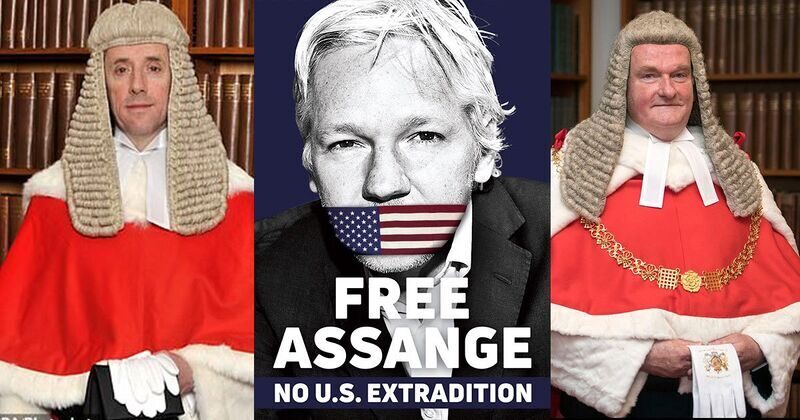
Timothy Holroyde Ian Burnett judges assange extradition
After a two-day hearing of the Julian Assange extradition case on 27/28 October 2021, the Lord Chief Justice Lord Burnett and Lord Justice Holroyde sided with the US on 10 December 2021, when the High Court reversed Vanessa Baraitser's decision not to extradite the WikiLeaks founder.
In a London courtroom on Friday morning, Julian Assange suffered a devastating blow to his quest for freedom. A two-judge appellate panel of the United Kingdom's High Court ruled that the U.S.'s request to extradite Assange to the U.S. to stand trial on espionage charges is legally valid.

As a result, that extradition request will now be sent to British Home Secretary Prita Patel, who technically must approve all extradition requests but, given the U.K. Government's long-time subservience to the U.S. security state, is all but certain to rubber-stamp it. Assange's representatives, including his fiancee Stella Morris, have vowed to appeal the ruling, but today's victory for the U.S. means that Assange's freedom, if it ever comes, is further away than ever: not months but years even under the best of circumstances.

In endorsing the U.S. extradition request, the High Court overturned a lower court's ruling from January which had concluded that the conditions of U.S. prison — particularly for those accused of national security crimes — are so harsh and oppressive that there is a high likelihood that Assange would commit suicide. In January's ruling, Judge Vanessa Baraitser rejected all of Assange's arguments that the U.S. was seeking to punish him not for crimes but for political offenses. But in rejecting the extradition request, she cited the numerous attestations from Assange's doctors that his physical and mental health had deteriorated greatly after seven years of confinement in the small Ecuadorian Embassy where he had obtained asylum, followed by his indefinite incarceration in the U.K.

Comment: RT interviews staunch Assange ally, Wikileaks editor-in-chief Kristinn Hrafnsson:
It's "shameful in every respect" that the UK wants to extradite Julian Assange to the US, the nation where top officials had purported plans to snatch or even assassinate him, the editor-in-chief of WikiLeaks told RT.

"We are dealing here with a nation where individuals on the top level ... at the CIA and the White House, contemplated kidnapping or killing Julian Assange," Kristinn Hrafnsson said, referring to a Yahoo News report detailing the CIA's hunt after Assange under then-Director Mike Pompeo.
"The High Court in London just came to a decision - on UN Human Rights Day - that it is OK to extradite an individual to a country which contemplated killing that individual. That is shameful in every respect."
Hrafnsson spoke to RT after a ruling of the UK's High Court overturned a January refusal to extradite Assange to the US issued by a magistrates' court. The new decision said the judge should have informed the US before making a ruling about her concerns that Assange could be subjected to abusive conditions in a US prison.


During the appeal hearings, lawyers representing the US government offered diplomatic assurances to the contrary - though supporters of Assange say the words of the Americans should not be trusted.

"Those assurances are not worth the paper they are written on," Hrafnsson said.

If the magistrates' court now reverses its earlier decision, Assange's defense team will file an appeal, the WikiLeaks representative said. It may take months more before it is decided whether the publisher will be sent to the US to stand trial on espionage charges, which carry a maximum sentence of 175 years.

Considering the years that Assange spent under surveillance and restriction of movement, including more than two years in the top-security Belmarsh Prison, his friends and family are worried for his health, and he should be released, Hrafnsson said.

"I will keep my hopes realistic, but this is the right thing to do. He should be out on bail. He should be with his family, with Stella [Moris] and their two boys, celebrating Christmas with them."


Calculator

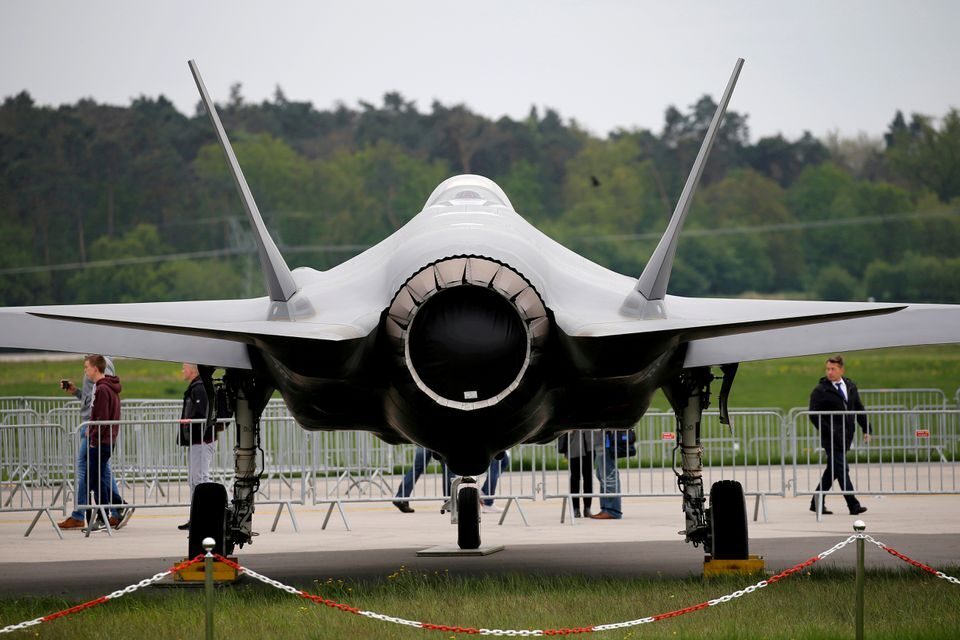
Finland orders 64 Lockheed Martin F-35 fighter jets

Lockheed Martin F-35
© REUTERS/Axel SchmidtA Lockheed Martin F-35 aircraft is seen at the ILA Air Show in Berlin, Germany, April 25, 2018.
Finland has chosen U.S. defence giant Lockheed Martin's F-35 fighters in a tender to replace ageing F/A-18 combat jets and plans to order 64 planes with weapons systems, the government said on Friday.

Lockheed Martin competed for the deal with Sweden's Saab, U.S. rival Boeing, France's Dassault and Britain's BAE Systems.

The procurement is worth an estimated 8.378 billion euros ($9.44 billion), the government said.

"When comparing military performance, the F-35 best met our needs," Defence Minister Antti Kaikkonen told a news conference.


Comment: A notable development considering the president of Finland's recent comment that the West shouldn't "undermine" Russia, and, more importantly, considering the dodgy track record of the F-35: Outrage as US admits $1.7 trillion F-35 program a FAILURE


Info

Russian Communist Party issues appeal on online voting

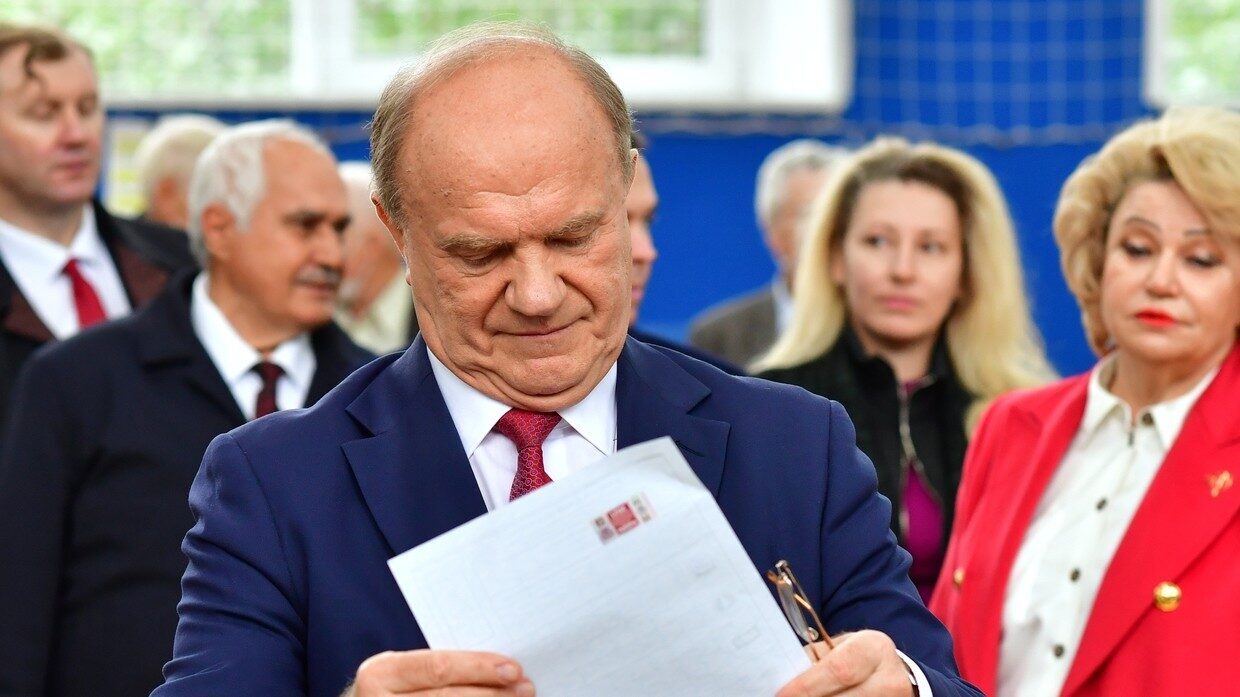
Gennady Zyuganov
© Sputnik / Alexey MaishevRussian Communist Party leader Gennady Zyuganov casts his ballot during the parliamentary elections, at a polling station in Moscow, Russia.
The top brass of Russia's Communist Party has submitted a bill that would abolish online voting, insisting that the new electronic election system caused serious problems during parliamentary polls, held in September.

The group, headed by leader Gennady Zyuganov, put forward a motion on Thursday that proposed removing provisions from Russian election laws that allow citizens to cast their ballots digitally. According to them, this step should be taken "until the remote electronic voting system is fully developed, allowing for the basic principles of elections to be realized on the technical, organizational, and legal levels."

The lawmakers argued that the parliamentary elections, which took place between September 17-19, demonstrated "serious deficiencies in remote electronic voting," and said online polling should not be used again until it can be improved.

Comment: See also:


Magic Wand

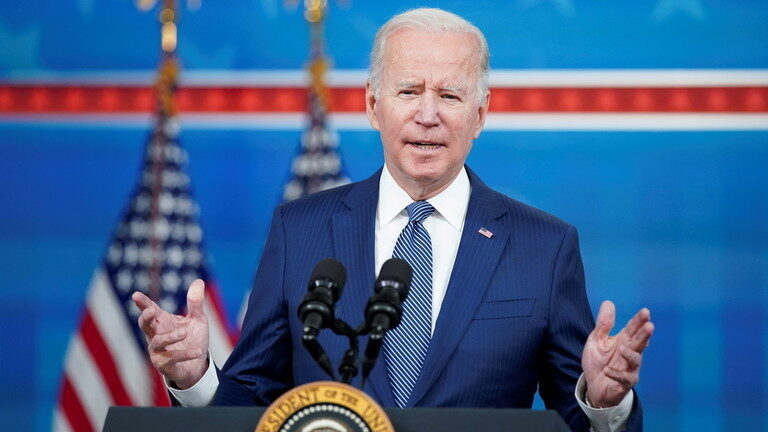
Best of the Web: Biden has successfully solved the Ukraine crisis he manufactured

biden
© REUTERS / Kevin Lamarque
Joe Biden needed an agreement with Vladimir Putin that would help reduce tensions in Europe over Ukraine and NATO expansion. So he manufactured a crisis as an excuse for putting a US position on the table.

The news coming out of Ukraine was dire - Russia had mobilized between 95-125,000 troops along its border with Ukraine, and US intelligence agencies were predicting that an invasion was imminent. NATO was panicking, and Vladimir Putin was insisting that Ukraine must never be allowed to join the transatlantic alliance.

Biden, to clear the air with Putin, agreed to a video conference with the Russian President, where he "looked him in the eye" and warned of serious consequences, including unprecedented economic sanctions and the threat of deploying additional US forces to Europe, should Russia invade Ukraine.

Comment: See also:


Arrow Down

Trump blasts Netanyahu for disloyalty: "F - - k him'

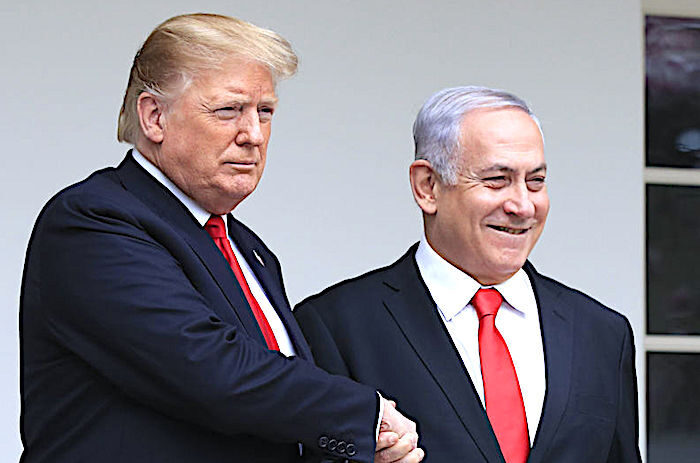
trump/netanyahu
© AP/Manuel Balce CenetaFormer US President Donald Trump • Former Israeli PM Benjamin Netanyahu
Donald Trump and Benjamin Netanyahu were the closest of political allies during the four years they overlapped in office, at least in public. Not anymore. "I haven't spoken to him since," Trump said of the former Israeli prime minister. "F**k him."

What he's saying: Trump repeatedly criticized Netanyahu during two interviews for my book, Trump's Peace: The Abraham Accords and the Reshaping of the Middle East. The final straw for Trump was when Netanyahu congratulated President-elect Biden for his election victory while Trump was still disputing the result.
"The first person that congratulated [Biden] was Bibi Netanyahu, the man that I did more for than any other person I dealt with. ... Bibi could have stayed quiet. He has made a terrible mistake."
— Donald Trump
Why it matters: Now opposition leader, Netanyahu is waging a continuous campaign to win back the Prime Minister's Office while on trial for corruption.
  • One of his primary political calling cards is his close relationship with key players in U.S. politics, and with one man in particular who remains hugely popular in Israel: Trump.
The big picture: For domestic political reasons, both Trump and Netanyahu cultivated the public perception that there was no daylight between them as they worked closely together on key issues. But by the end of his presidency, Trump had concluded that Netanyahu didn't really want peace with the Palestinians and was using him on Iran.

Network

IMF: 10 countries simulate cyberattack on global financial system

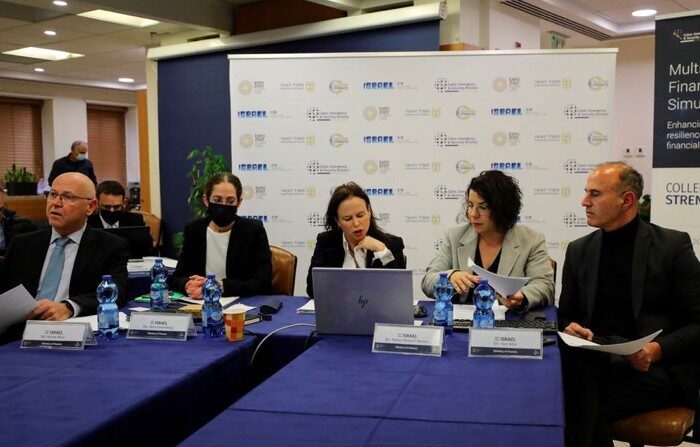
cyber attack simulation
© Reuters/Ammar AwadIsrael financial-cyber officials in cyber attack simulation
Israel on Thursday led a 10-country simulation of a major cyberattack on the global financial system in an attempt to increase cooperation that could help to minimise any potential damage to financial markets and banks.

The simulated "war game", as Israel's Finance Ministry called it and planned over the past year, evolved over 10 days, with sensitive data emerging on the Dark Web. The simulation also used fake news reports that in the scenario caused chaos in global markets and a run on banks.

The simulation -- likely caused by what officials called "sophisticated" players -- featured several types of attacks that impacted global foreign exchange and bond markets, liquidity, integrity of data and transactions between importers and exporters.

"These events are creating havoc in the financial markets," said a narrator of a film shown to the participants as part of the simulation and seen by Reuters.

Hammer

House goes after Trump with bill to curb presidential abuses of power

Schiff
© Zach Gibson/Getty Images/KJN
The House passed a sweeping legislative package on Thursday designed to guard against abuses of presidential powers as part of a package of reforms put forth by Democrats in the wake of former President Trump's White House tenure.

The legislation, titled the Protecting our Democracy Act, passed almost entirely along party lines by a vote of 220-208. Rep. Adam Kinzinger (R-Ill.), who has been critical of his party's continued embrace of Trump, was the only Republican to vote to pass it, with all Democrats in support.

Passage of the bill came as President Biden convened global leaders on Thursday to pledge new commitments to democracy at a time when traditional democratic traditions in the U.S. have faced unprecedented threats in recent years.

The legislation proposes statutory reforms in response to Trump's refusal to concede that Biden won the 2020 election; the blanket stonewalling by Trump officials in response to House Democrats' subpoenas; Trump issuing pardons to his political allies; and repeated violations of a law prohibiting government officials from using their positions to engage in political activities. Democrats compared the legislative package to the campaign finance and ethics reforms made in the aftermath of the Nixon administration.

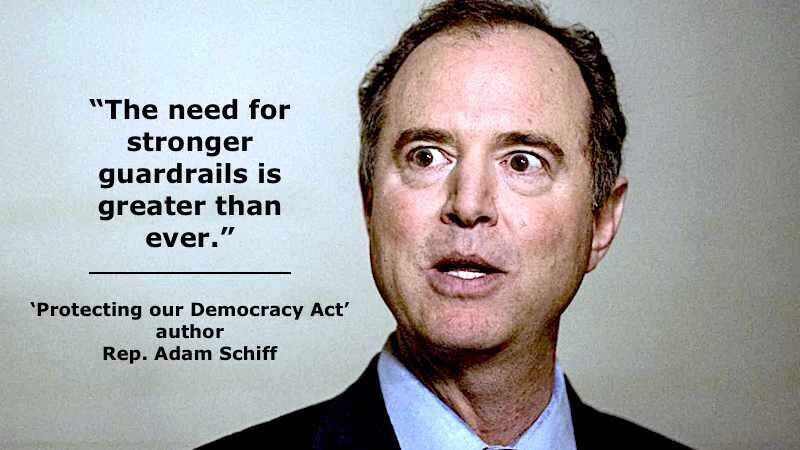
"The need for stronger guardrails is greater than ever," said Rep. Adam Schiff (D-Calif.), the chief author of the bill and House Intelligence Committee chairman who led the first impeachment inquiry against Trump in 2019.

Comment: "Protecting Our Democracy Act" is a misnomer that will prove, by its requirements and diminished culpability for the executive branch, to do the opposite.


Jet5

Details of incident between Russian flight and NATO spy plane revealed

two close flights
© Russian Ministry of DefenseClose flights incident
The Russian civil aviation authority has confirmed that its air traffic control personnel had to divert the course of two aircraft to prevent them colliding with a NATO spy plane in the Black Sea region.

In a statement on Saturday, Russia's federal air transport agency, Rosaviatsia, shed more light on an incident that had unfolded above the international waters of the Black Sea the day before.

The regulator said a NATO reconnaissance plane had been flying dangerously close to a Moscow-bound civil aircraft with more than 140 passengers on board and had repeatedly ignored attempts by air traffic control to make contact with it. Because the NATO jet's crew had failed to respond, the passenger plane was forced instead to lose altitude.

Rosaviatsia said air traffic control had observed a NATO Bombardier CL-600 Artemis reconnaissance aircraft rapidly descending from 11,000 meters (36,000 feet) to 9,200 meters (30,200 feet) as it crossed the civil flight path in the immediate proximity of the Aeroflot SU501 flight.

MIB

Meddling? Putin says in the 90s, the Russian government was swarming with CIA officers

yeltsin Chernomyrdin chubais Nemtsov Russia 1990s
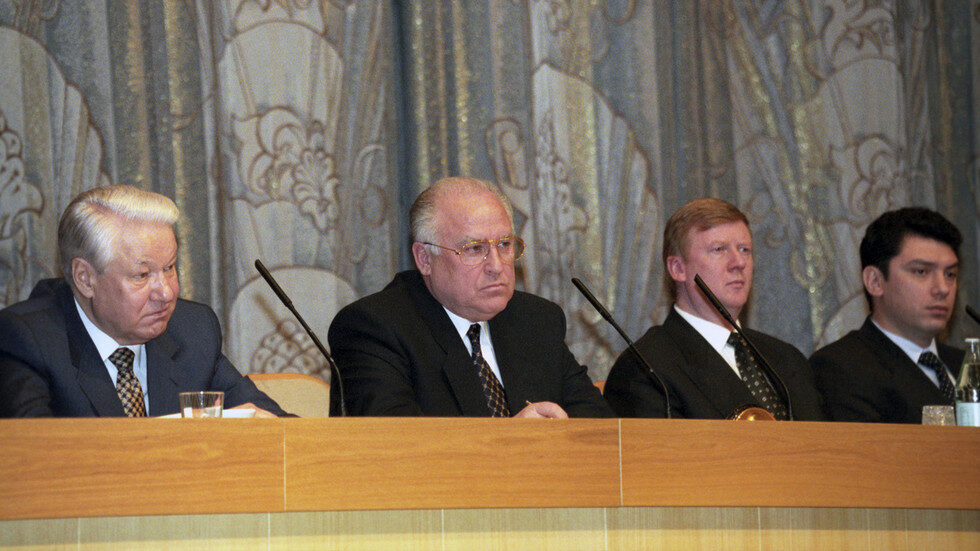
© Sputnik / Alexander MakarovThe bad old days: Russian President Boris Yeltsin, Prime Minister Viktor Chernomyrdin, First Deputy Prime Minister Anatoly Chubais, and First Deputy Prime Minister Boris Nemtsov. Moscow, Russia, 1998.
In the 1990s and the early 2000s, the Russian government was swarming with CIA workers, and they eventually had to be "cleaned out" and sent back to the US, Russian President Vladimir Putin claimed on Thursday.

Speaking to a meeting of the Council for Civil Society and Human Rights, Putin used the example of Americans within the Russian government to show how foreign countries attempt to interfere in the country's internal affairs.

"In the early 2000s, I had already cleaned everyone out, but in the mid-1990s, we had, as it later turned out, cadres of the US Central Intelligence Agency sitting as advisers and even official employees of the Russian government," Putin explained.

Putin

Putin calls for review of 'comical' rules for 'foreign agents'

The Ministry of Justice of the Russian Federation
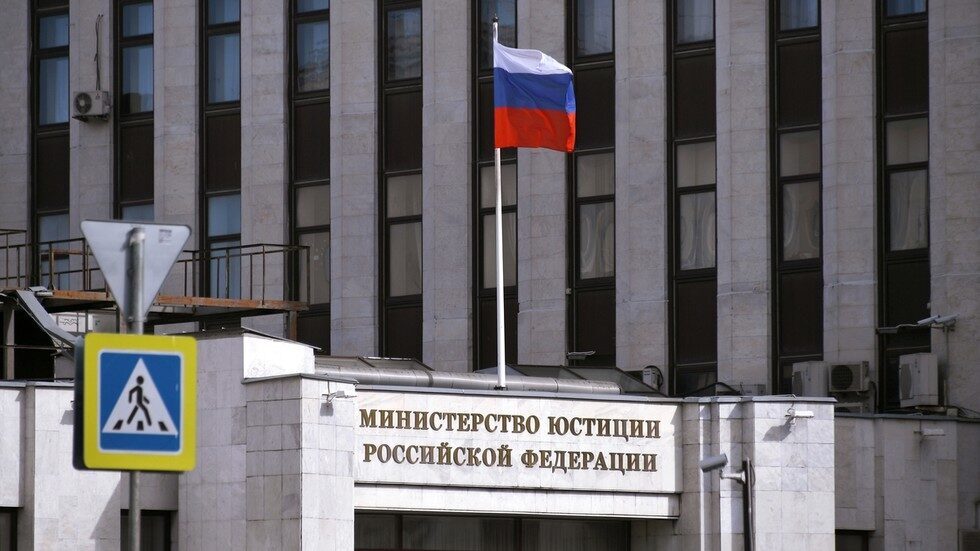
© Sputnik / Maxim BlinovThe Ministry of Justice of the Russian Federation
Russian President Vladimir Putin has said that the country's "foreign agent" laws, which have drawn criticism from a number of media outlets, should be reviewed with input from the "professional community."

Speaking during a meeting of the Presidential Council for Civil Society and Human Rights on Thursday, Putin said: "We need to pay attention to this. That includes how the bill was created, and specifically why it wasn't discussed with the professional community. Not only do we need to consider this, we're obliged to make this work happen. To look at how it functions, and what its results are."

The Russian leader also argued that his country's media outlets have been labeled "foreign agents" by the governments of other states, including in the US.

Comment: Would that 'Russian media' would decry the shameful treatment of their brethren working in the West: