Puppet MastersS


Pirates

BlackRock CEO warns of rising inflation, lower economic activity & high unemployment in investor letter

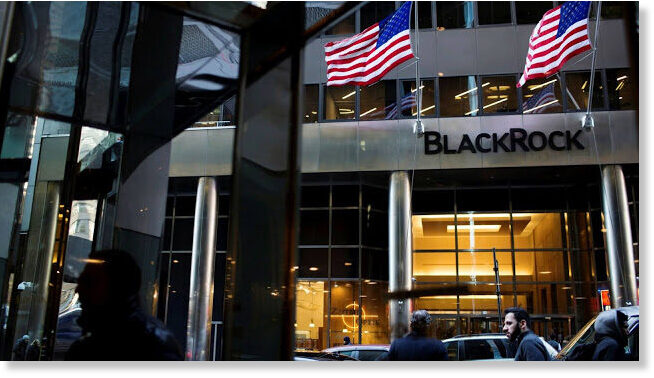
ega-investment firm Blackrock
Mega-investment firm Blackrock
Last week, Russian President Vladimir Putin stated that sanctions against Moscow herald the end of an era, implying that the West's global dominance was coming to an end. Blackrock has chimed in with their own remarks on the conflict, stating that the Ukraine crisis marked the end of globalization as we know it.

Larry Fink, the CEO of BlackRock, which manages assets worth about half of US GDP, has forecasted that measures to penalize Russia for its aggression in Ukraine will cause globalism to collapse as decision-makers reevaluate their international liabilities.

"The Russian invasion of Ukraine has put an end to the globalization we have experienced over the last three decades," Fink said on Thursday in a letter to investors. "We had already seen connectivity between nations, companies and even people strained by two years of the pandemic. It has left many communities and people feeling isolated and looking inward. I believe this has exacerbated the polarization and extremist behavior we are seeing across society today."


Comment: Megacorps like BlackRock have been benefitting from the economic devastation wrought by the lockdowns.


Comment: Note that even prior to lockdowns and the US proxy-war against Russia, living standards in the West were in significant decline.


Gold Coins

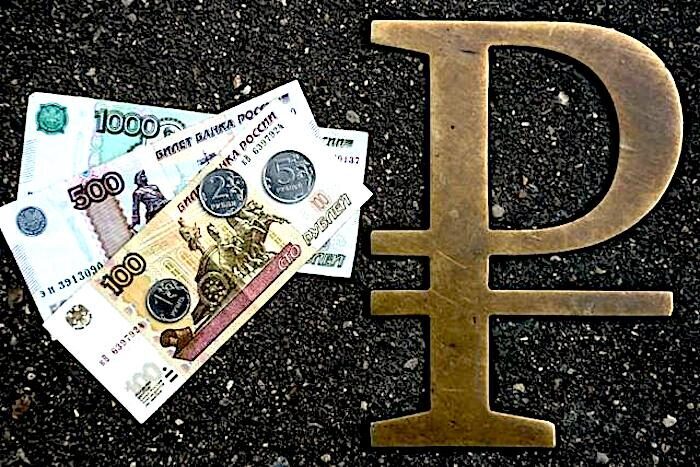
#GotGoldorRubles? Russia just broke the back of the West

gold systemfailure
© Unknown
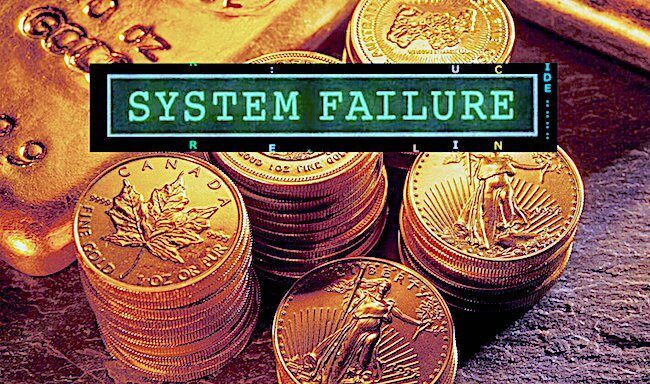
I don't think everyone has yet caught the significance of Russia announcing they are putting a floor under the price of gold. But, to be clear, Russia just broke the paper gold suppression scheme.

On Friday the Bank of Russia announced:
RUB5000 to the ounce at an exchange rate of 100 RUB/USD implies a $1550 per ounce gold price.

For a few days previous to this announcement, which they knew was coming, The West was running around with multiple bits of legislation to try and keep the Russians from selling their gold.

The G7 think the sanctions are hitting so hard that Putin will be forced to sell his gold to evade sanctions to pay for things. They are literally running a script in their heads that is not actually playing out in the real world. But, whatever, Neocons never met an ugly stick that they didn't want to use to beat someone over the head with. Too bad all they're doing is hitting a rubber tire.

Boing!

Because here's the gig, Russia won't be selling any gold. They're buying it.

Comment: Rubles to dollars, across the board this is a brilliant Russian checkmate.


X

EU rejects Moscow's ruble-for-gas demand

Russian Money
© AFP/Kirill KudryavtsevRuble payment for natural gas to unfriendly countries
The bloc's refusal follows a similar announcement by G7 countries

EU member states won't pay for Russian gas in rubles, the European Commission said on Tuesday, rejecting Moscow's March 31 deadline for switching payment mechanisms. The announcement comes a day after a similar response from the G7 nations.

Last week, Russian President Vladimir Putin demanded that hostile countries, which have imposed economic sanctions on Moscow, pay for Russian gas with rubles. On Monday, he ordered the government to develop the necessary tools to accomplish the task and set a deadline for Thursday.

Kremlin spokesman Dmitry Peskov said on Tuesday that Russia will not supply natural gas to the European market for free, as euros and dollars will not be accepted from March 31.

Comment: 'Threat'eric has increased: EU now threatens to block Russian oil supplies to Serbia:
Croatian pipeline operator says sanctions don't allow it to provide oil shipments to Serbian oil company owned by Russia's Gazprom. JANAF said it will halt oil supplies to Serbian oil and gas company NIS starting mid-May, due to the latest sanctions introduced by the EU against Russia.

Russia's Gazprom owns a 56.15%-share in NIS, one of the largest oil and gas companies in southeast Europe. The corporation is focused on exploration, production and processing of oil and gas, as well as the production and retail of petroleum products. The Serbian government owns a 29.87% stake in the company.

In January, JANAF signed a crude-oil transportation deal with NIS for 2022. The Serbian company reserved JANAF capacities for transportation of around 3.2 million tons of crude oil for the full year. However, JANAF will be unable to continue transport to Serbia after May 15 under this contract unless EU sanctions on Russian companies are lifted.

One of the sanctioned Russian companies is Gazprom Neft, together with the subsidiaries in which it has more than 50% ownership. The ban on cooperation with Gazprom Neft impacts Serbia because its oil company Naftna Industrija Srbije (NIS) is majority-owned by the Russian company.

The ban implies NIS cannot continue to buy Russian oil from European companies like the big traders such as Glencore and Vitol. However, the new sanctions do not prevent EU members from importing Russian crude.


Clipboard

Biden used printed 'cheatsheet' to answer questions on anti-Putin statements

Biden
© AP/Patrick SemanskyJoe Biden Press Conference • White House March 28, 2022
The president's detractors have repeatedly questioned his mental fitness

After an apparent call for the ouster of Russian President Vladimir Putin, US President Joe Biden read from a pre-prepared 'cheat sheet' to assure reporters that he wasn't actually suggesting regime change in Moscow. However, Biden, whose cognitive health Republicans say is declining, ended up doubling down on his original remarks.

Speaking to reporters at the White House on Monday, Biden said that his declaration in Poland last week that Putin "cannot remain in power" was not a call for regime change in Moscow. Biden said:
"I'm not walking anything back. I want to make it clear: I was not then, nor am I now, articulating a policy change. I was expressing moral outrage that I feel, and I make no apologies for it."
Photos from the press conference show Biden carrying a small card, entitled "Tough Putin Q&A Talking Points," in which the president was instructed to answer such a question as follows:
"I was expressing the moral outrage I felt toward the actions of this man. I was not articulating a change in policy."

Comment: Joe Biden: Paper Tiger-in Chief


Clipboard

Naming Names

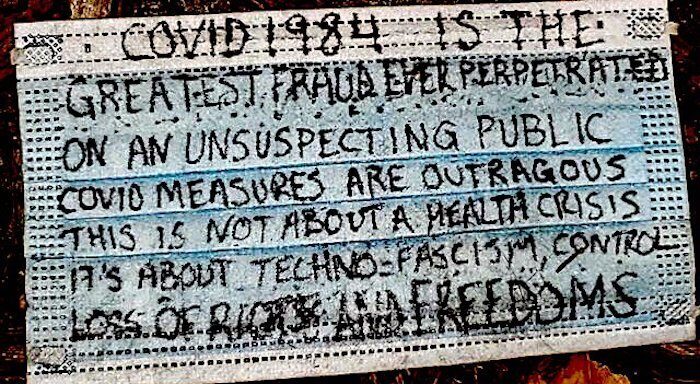
Mask message
© Unknown
You see, there are real people behind all these disorders of our national life. Many more besides just the notorious Dr. Fauci...

One reason American movies are so bad these days is they have forgotten how to tell a story. Stuff just happens to characters. Cause, effect, and consequence no longer exist in the workshops of Hollywood. And one might sense that these imperatives are likewise missing from what used to be known as real life in the USA, with all its stories and narratives. Stuff just happens to the people in this country now. And then sometimes, stuff un-happens.

With the Russian operation in Ukraine alarming the populace, you might have forgotten the late Covid-19 epidemic that provoked so much public hysteria and government policy overreach. Stuff happened during those two-plus years of Covid-19, and, even with Ukraine blaring from the cable news channels, Covid-19 stuff is still happening. Vaccine mandates are still in force, in New York City, for instance — except for performers and ballplayers, who are exempted now, as announced this week by Mayor Eric Adams. If you detect any specious reasoning behind that diktat, at least you know who made it happen.

Arrow Down

Russia ditches key demands in Ukraine peace talks - Financial Times

diplo teams
© AP/BeITA/Maxim GuchekUkrainian and Russian diplomatic teams meet in Belarus
Moscow has apparently dropped several key demands in the painstaking Ukraine peace talks, the Financial Times newspaper reported Monday, citing four people briefed on the discussions.

According to the report, Moscow is now prepared to let Ukraine "join the European Union if it remains military non-aligned as part of ongoing ceasefire negotiations" and drops its NATO aspirations.
"The draft ceasefire document does not contain any discussion of three of Russia's initial core demands - 'denazification', 'demilitarization', and legal protection for the Russian language in Ukraine."
The newspaper added that its sources spoke "under the condition of anonymity because the matter is not yet finalized."

The reported shift in Moscow's position comes ahead of a new round of Russia-Ukraine talks scheduled to take place in Turkey on Tuesday. Moscow and Kiev have held three rounds of in-person talks and further contacts via a video link, yet the negotiations failed to yield any tangible result apart from the two sides finding some common ground on humanitarian corridors and evacuation of civilians from combat zones.

Mid-March, the Financial Times reported an imminent breakthrough in the talks, claiming that the two sides had drafted a 15-point peace plan. The report, however, was refuted by both Moscow and Kiev, while no actual breakthrough occurred. The new claims by the newspaper have not invoked any official reactions so far.

Comment: Scoop du jour or wishful reporting? This is Western press talking.


Vader

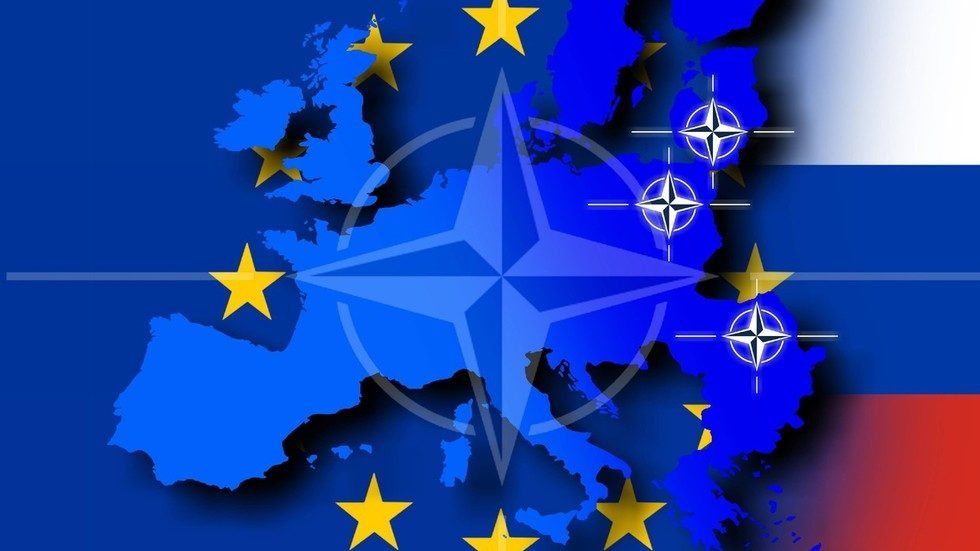
NATO allies split on whether they should talk to Putin

nato russia
© Global Look Press / imago stock&people
Berlin, Paris seek dialogue; others say Putin can't be trusted while divisions also emerge over peace terms, weapons for Ukraine

As NATO allies discuss the terms of any potential peace deal to be struck between Russia and Ukraine, signs of strategic splits are emerging from within their ranks.

With the war now in its second month, a series of dilemmas are coming into sharp focus over which conditions could be deemed acceptable by Ukraine for any accord, especially as regards the security guarantees alliance members might be able to offer Kyiv.

There are also divergences over what further weapons to send Ukraine, and on the question of whether talking to President Vladimir Putin is helpful or not, according to people familiar with discussions that have taken place in the past week between leaders on both sides of the Atlantic and documents seen by Bloomberg.

Bad Guys

The Big Arrow War: Understanding Russian strategy and news that they will divert military away from Kiev

Medinsky
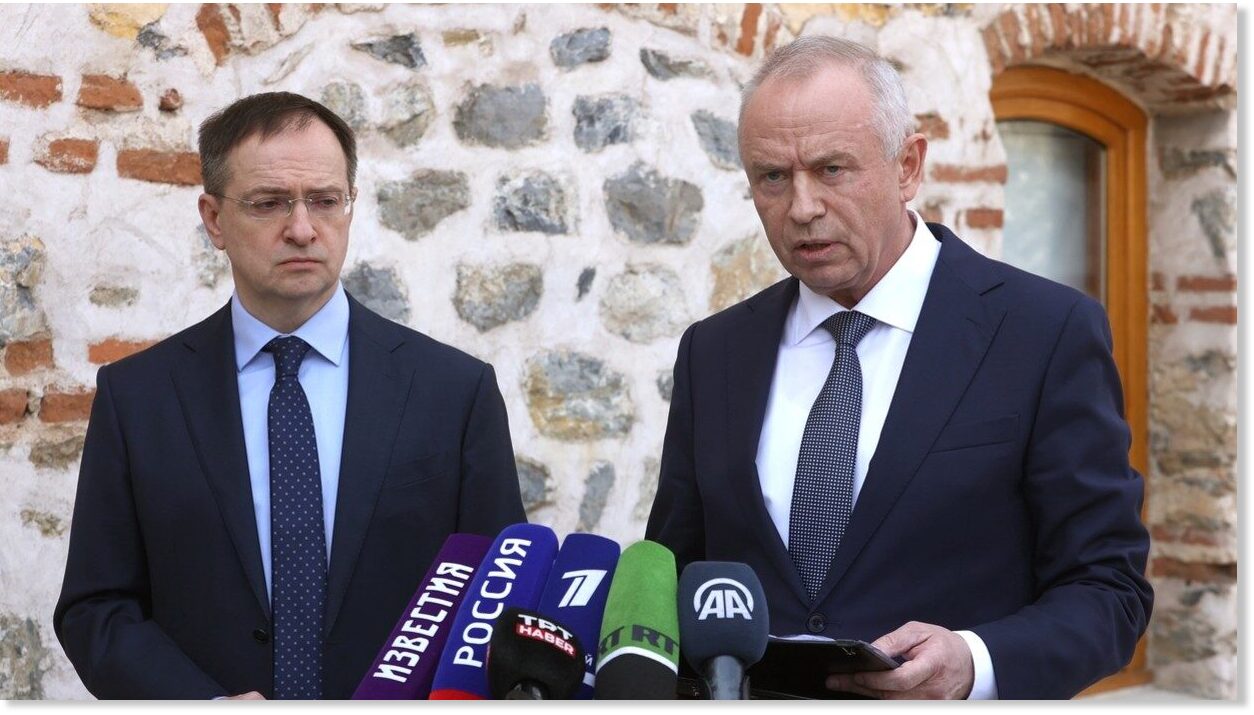
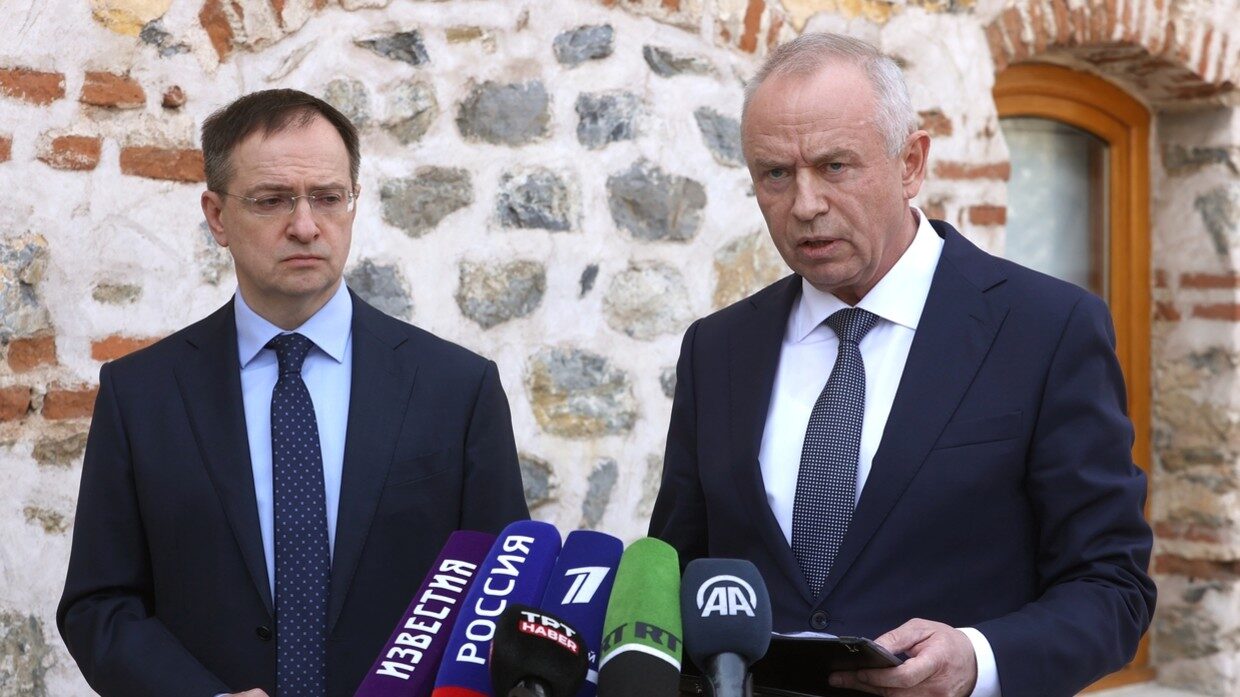
© Sputnik / Sergey KarpuhinRussian Presidential Aide Vladimir Medinsky and Russian Deputy Defence Minister Alexander Fomin talk to the media at a news conference following the Russian-Ukrainian talks at the Dolmabahce Palace, in Istanbul, Turkey.
Big Arrow War — a primer. For all those scratching their heads in confusion, or dusting off their dress uniforms for the Ukrainian victory parade in Kiev, over the news about Russia's "strategic shift", you might want to re-familiarize yourself with basic military concepts.

Maneuver warfare is a good place to start. Understand Russia started its "special military operation" with a severe manpower deficit — 200,000 attackers to some 600,000 defenders (or more). Classic attritional conflict was never an option. Russian victory required maneuver.

Maneuver war is more psychological than physical and focuses more on the operational than on the tactical level. Maneuver is relational movement — how you deploy and move your forces in relation to your opponent. Russian maneuver in the first phase of its operation support this.

The Russians needed to shape the battlefield to their advantage. In order to do this, they needed to control how Ukraine employed its numerically superior forces, while distributing their own smaller combat power to best accomplish this objective.

Strategically, to facilitate the ability to maneuver between the southern, central, and northern fronts, Russia needed to secure a land bridge between Crimea and Russia. The seizure of the coastal city of Mariupol was critical to this effort. Russia has accomplished this task.

Comment: Ritter's analysis is in response to the news that Russia has "drastically" reduced its military activity around Kiev and Chernigov. Here's now Russian deputy defense minister Alexander Fomin is framing the news:
He explained that this decision was taken due to the fact that "negotiations on the preparation of an agreement on the neutrality and non-nuclear status of Ukraine, as well as on the provision of security guarantees to Ukraine" are entering "the practical phase."

Reduction of Russian forces' activity is poised "to increase mutual trust and to create the necessary conditions for the further development of negotiations and the achievement of the ultimate goal of agreeing and signing the agreement," Fomin said.
An anonymous US official reportedly told Reuters:
"We believe any movement of Russian forces from around Kyiv is a redeployment, not a withdrawal. And the world should be prepared for continued major offensives against other areas of Ukraine," the official said, according to Reuters.
A fair assessment. Shoigu, in his latest statement, said:
"First, about the special military operation of Russia's armed forces on Ukrainian territory. Overall, the main goals of the first stage have been accomplished. The combat potential of the Ukrainian armed forces has significantly decreased which allows to focus the main attention and main efforts on achieving the main goal - the liberation of Donbass," he said.

According to his assessment, "Ukraine's armed forces have sustained substantial losses." "Air supremacy has been achieved. The air force and the air defense system have been practically eliminated," the defense minister noted.


TV

Humilitainment: How to control the citizenry through reality TV distractions

"Big Brother does not watch us, by his choice. We watch him, by ours.... When a population becomes distracted by trivia, when cultural life is redefined as a perpetual round of entertainments, when serious public conversation becomes a form of baby-talk, when, in short, a people become an audience, and their public business a vaudeville act, then a nation finds itself at risk; culture-death is a clear possibility." — Professor Neil Postman
TV Distractions
© A Government of Wolves
Once again, the programming has changed.

Like clockwork, the wall-to-wall news coverage of the latest crisis has shifted gears.

We have gone from COVID-19 lockdowns to Trump-Biden election drama to the Russia-Ukraine crisis to the Ketanji Brown Jackson confirmation hearings to Will Smith's on-camera assault of comedian Chris Rock at the Academy Awards Ceremony.

The distractions, distortions, and political theater just keep coming.

The ongoing reality show that is life in the American police state feeds the citizenry's voracious appetite for titillating, soap opera drama.

Much like the fabricated universe in Peter Weir's 1998 film The Truman Show, in which a man's life is the basis for an elaborately staged television show aimed at selling products and procuring ratings, the political scene in the United States has devolved over the years into a carefully calibrated exercise in how to manipulate, polarize, propagandize and control a population.

This is the magic of the reality TV programming that passes for politics today: as long as we are distracted, entertained, occasionally outraged, always polarized but largely uninvolved and content to remain in the viewer's seat, we'll never manage to present a unified front against tyranny (or government corruption and ineptitude) in any form.

The more that is beamed at us, the more inclined we are to settle back in our comfy recliners and become passive viewers rather than active participants as unsettling, frightening events unfold.

We don't even have to change the channel when the subject matter becomes too monotonous. That's taken care of for us by the programmers (the corporate media).

"Living is easy with eyes closed," observed John Lennon, and that's exactly what reality TV that masquerades as American politics programs the citizenry to do: navigate the world with their eyes shut.

As long as we're viewers, we'll never be doers.

Boat

Philippines, US start 'Balikatan' military drills in region near Taiwan

Philippine and US majors
Philippine and US majors unfurl the 'Balikatan' flag during opening ceremonies of military exercises
Filipino and US forces on Monday launched one of their largest joint military drills in the Philippines in recent years.

The 12-day war games, involving nearly 9,000 Filipino and American soldiers, come amid rising tensions in the disputed South China Sea — which Beijing claims almost in its entirety.

The annual exercises, called "Balikatan" — Tagalog for shoulder-to-shoulder — will cover maritime security, live-fire training, amphibious operation and counterterrorism, as well as humanitarian assistance and disaster relief.